Wednesday, March 11, 2026
Home Blog Page 6

India’s UPI Lands in Japan Digital Power Expands to Tokyo

0
India's UPI Lands in Japan

PhonePe & GPay now for 3L+ desi travelers—trial launch FY26

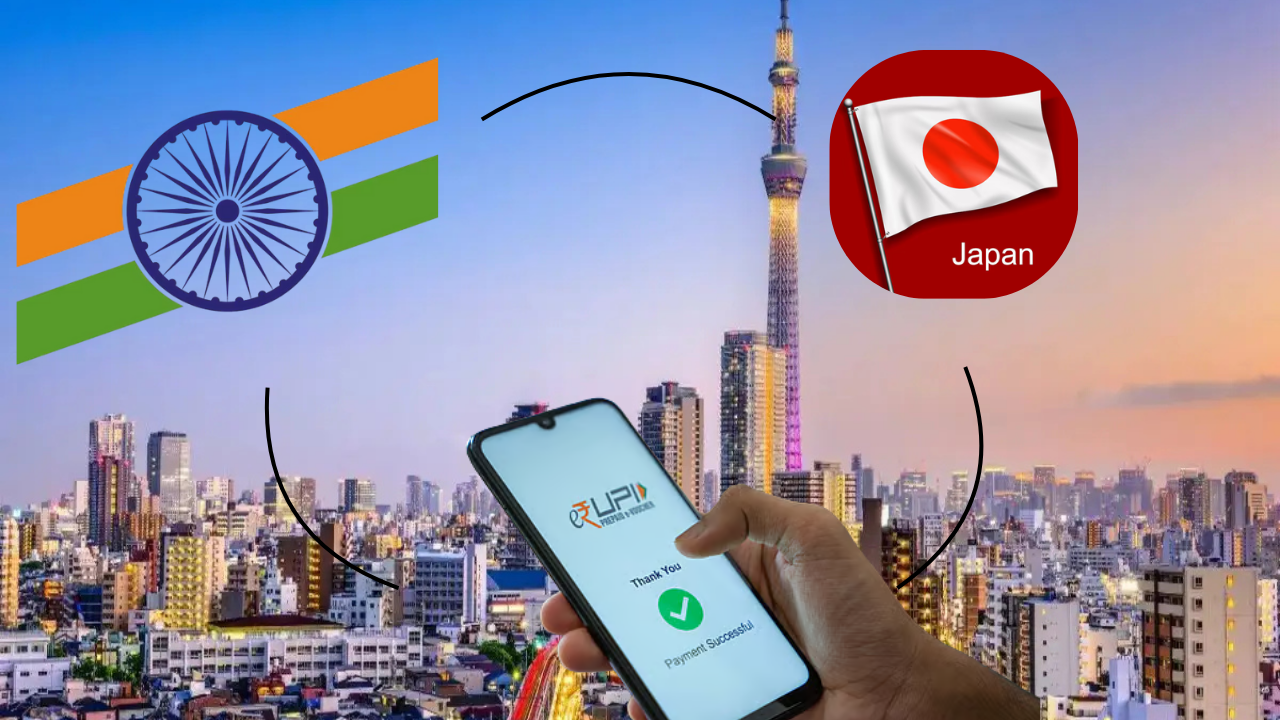
India’s Unified Payments Interface (UPI), the world’s largest real-time payment system, is gearing up for a landmark entry into Japan. This exciting development, announced through a strategic partnership between the National Payments Corporation of India (NPCI) and Japanese tech giant NTT Data, marks a significant milestone in India’s digital diplomacy. As Indian tourists flock to Japan in record numbers, UPI’s trial launch in fiscal 2026 will make payments seamless, affordable, and familiar for desis traveling abroad.

How UPI in Japan Will Work for Indian Travelers

Imagine landing in Tokyo or Kyoto, pulling out your PhonePe, Google Pay, or BHIM app, and scanning a QR code at a local shop or restaurant to pay instantly from your Indian bank account. No foreign cards, no currency exchange hassles, no extra fees—just the simplicity of UPI that we Indians love and trust daily. This is the promise of the upcoming trial rollout.

NTT Data, a leading Japanese IT services firm, has inked a Memorandum of Understanding (MoU) with NPCI International Payments Ltd (NIPL) to enable UPI acceptance at merchants under its network. In the pilot phase, Indian tourists will be able to use their existing UPI apps for QR-based retail payments at select locations like souvenir shops, eateries, and tourist services. Transactions will be processed in real-time, debited directly from users’ Indian bank accounts, ensuring security and convenience without needing a local wallet or card.

The initiative couldn’t come at a better time. Indian tourist arrivals in Japan surged past 315,000 in 2025 alone, making Indians one of the fastest-growing inbound segments for the Land of the Rising Sun. With bilateral ties strengthening under initiatives like the India-Japan Comprehensive Economic Partnership Agreement (CEPA), this move aligns perfectly with booming people-to-people exchanges. Travel experts predict even higher footfalls in 2026, fueled by affordable flights, cultural attractions, and events like the upcoming cherry blossom season.

UPI’s Incredible Journey: From India to Global Fintech Leader

Launched in 2016 as a flagship initiative under the Digital India campaign, UPI has revolutionized payments in Bharat. What started as a domestic solution has ballooned into a global phenomenon. Today, UPI powers over half of the world’s instant payment transactions by volume, processing billions of seamless transfers monthly at zero or minimal cost. Its secret sauce? Interoperability—any UPI app can scan any QR code from any bank, making it inclusive for everyone from street vendors in Nagpur to high-street malls in Mumbai.

The Japan foray is the latest in UPI’s international conquest. It’s already live or accepted in eight countries: Bhutan, Singapore, Nepal, UAE, Sri Lanka, Qatar, Mauritius, and France. In places like Singapore and UAE, UPI has empowered millions of Indian expats and travelers to pay effortlessly. The International Monetary Fund (IMF) has hailed UPI as a model for emerging economies, praising its scalability, low infrastructure needs, and role in financial inclusion.

Experts like Rohit Mahajan, Founder and Managing Partner at plutos ONE, call this expansion a testament to India’s fintech prowess. “Enabling UPI in Japan aligns merchant ecosystems with evolving consumer behavior. It shows our payment infrastructure is not just scalable but globally competitive,” he notes. Similarly, Ravi Gosain, President of the Indian Association of Tour Operators (IATO), emphasizes how it promotes cashless travel and deepens India-Japan bonds in tourism and digital economy.

Why Japan? A Strategic Win for India’s Digital Power

Japan, with its advanced economy and mature digital payments landscape dominated by players like PayPay and LINE Pay, presents a tough yet prestigious testing ground. Unlike developing markets, Japan boasts high QR adoption but fragmented systems. UPI’s entry here isn’t just about tourists—it’s a vote of confidence in India’s Digital Public Infrastructure (DPI). By exporting UPI, Bharat is positioning itself as a fintech exporter, much like how G20 leaders recognized India’s UPI stack during the 2023 summit.

This partnership builds on years of India-Japan collaboration. Remember PM Modi’s visits and the Quad framework? Digital payments are the next frontier. NTT Data’s involvement signals deeper integration plans, potentially linking UPI with Japan’s networks for reciprocal payments. For Indian merchants, this could mean easier acceptance of Japanese yen via UPI in the future. It’s a win-win: Japan gains from India’s 1.4 billion-strong digital economy, while India amplifies its soft power through technology.

From a tourism angle, it’s a game-changer. Indian travelers often complain about card surcharges and cash-handling woes abroad. UPI eliminates these, encouraging more impulse buys—from sushi stalls to high-end electronics. Industry watchers predict a 20-30% uptick in spending by Indian tourists once live, boosting Japan’s post-pandemic recovery while showcasing India’s innovation.

Broader Implications for India’s Global Fintech Ambitions

UPI’s Japan launch is more than a payment tweak; it’s India flexing its digital muscle on the world stage. In an era where countries vie for tech supremacy, UPI embodies ‘Make in India’ success. NPCI, the not-for-profit behind UPI, has processed trillions in transactions without a single major breach, proving reliability at scale. Globally, nations from Brazil to Europe are studying UPI for replication.

For everyday Indians, this means pride. Whether you’re a startup founder in Bengaluru or a family planning a Japan trip from Nagpur, UPI’s reach makes the world smaller and payments simpler. It also opens doors for MSMEs—imagine Indian exporters receiving payments via UPI-linked international QR codes. As NPCI eyes more markets like the US and Europe, UPI could redefine cross-border remittances, cutting costs from 6-7% to near-zero.

Challenges remain, of course. Regulatory alignments, currency conversions, and merchant onboarding need ironing out. But with NPCI’s track record and NTT Data’s local expertise, the pilot is poised for success. Fiscal 2026 rollout means we could see it operational by mid-next year, just in time for peak travel season.

A Proud Moment for Every Indian

As UPI steps into Japan, it’s a reminder of how far India has come—from demonetization queues to global fintech leadership in a decade. This isn’t just about payments; it’s about India’s digital power expanding borders, fostering growth, and making ‘Bharat First’ a reality worldwide. Stay tuned for updates as the trial unfolds—your next Japan trip might just be UPI-powered!

Stock Market Outlook 29 Jan Sensex, Nifty Seen Firm on India–EU Deal, Fed Cues & Budget Buzz

0
Stock Market

Nifty may eye 25,500 as strong domestic sentiment, India–EU free trade pact and pre‑Budget positioning support banks, metals and PSU stocks.

Indian stock market investors will enter Thursday’s session with renewed confidence after benchmark indices extended their rebound and closed comfortably in the green on Wednesday, signalling a firm undertone ahead of the Union Budget 2026 and key global cues. The persistent buying interest across sectors, especially in broader markets, reflects a clear risk‑on sentiment even as traders continue to track the US Federal Reserve’s stance and currency movements.

On Wednesday, the Sensex jumped 487.20 points, or 0.60 percent, to end at 82,344.68, while the Nifty 50 climbed 167.35 points, or 0.66 percent, to settle at 25,342.75. Intraday, Nifty oscillated in a fairly wide band between 25,188 and 25,372, capturing a broad‑based appetite for equities as participants looked beyond recent volatility and focused on supportive macro and policy signals. The tone of the session remained constructive as buying emerged consistently on intraday dips, underlining confidence in India’s medium‑term growth story.

A key highlight of the day was the outperformance of broader markets. The Nifty Midcap index advanced close to 1.66 percent, while the Smallcap index surged about 2.26 percent, clearly signalling strong risk appetite in the wider market space. Such strength in mid and smallcaps typically indicates that investors are willing to go down the market‑cap curve in search of earnings growth, structural themes and valuation comfort, instead of restricting themselves only to frontline largecaps. Market breadth stayed comfortably positive, with a larger number of stocks ending higher than those closing in the red on both the NSE and BSE, reinforcing the message that the rally was not limited to a handful of heavyweights.

Sectorally, cyclicals and high‑beta pockets led from the front. Media, Metal, Energy, Oil & Gas, Realty and PSU Banks rallied in the range of roughly 1–4 percent, supported by favourable macros, robust domestic flows and improved risk sentiment. The strength in metals and energy reflects optimism on global demand and pricing, while gains in realty and PSU banks point to expectations of continued domestic capex, credit growth and policy support. On the other hand, defensives such as FMCG, Consumer Durables and Pharma witnessed profit‑booking and ended marginally lower, indicating a rotation of money from safety plays into more growth‑linked sectors as investors positioned for potential positive surprises from the upcoming Budget and trade developments.

One of the biggest macro tailwinds that has brightened Dalal Street’s mood is the conclusion of the long‑awaited India–European Union Free Trade Agreement. The deal, described by European leaders as the “mother of all deals”, is set to cover a combined market of close to 2 billion people, with the two economies together accounting for roughly a quarter of global GDP. The scale and scope of this agreement underline its strategic importance not just for trade, but also for investment, technology transfer and long‑term competitiveness.

The FTA aims to significantly enhance market access, strengthen supply chains and deepen cooperation across manufacturing, services, clean energy, technology and critical minerals. Over time, tariffs on a very large share of bilateral trade will be reduced or eliminated, allowing companies on both sides to tap new opportunities with greater efficiency and lower cost barriers. EU officials have already highlighted that tariffs on over 96 percent of EU goods exported to India will be cut or removed, while Indian exporters will gain improved access for goods and services into the vast EU single market.

For India, this agreement is in sync with flagship programmes such as Make in India and Aatmanirbhar Bharat. Export‑oriented sectors like engineering goods, textiles, auto components, speciality chemicals and select services are expected to benefit over the medium term as they gain more predictable and favourable access to European markets. In the near term, optimism around the growth and investment potential of this pact is helping underpin domestic equities, especially in sectors with strong global linkages and robust balance sheets. Market participants see this as an important structural driver that can support valuations even in phases of global risk‑off, as India’s integration with major trading blocs deepens.

On the global front, attention remains firmly on the US Federal Reserve’s January FOMC outcome. The Fed left interest rates unchanged, reiterating a cautious, data‑dependent approach in light of still‑elevated inflation and a resilient labour market. This decision broadly matched market expectations, thereby reducing immediate policy uncertainty but stopping short of signalling any aggressive near‑term easing. For Indian equities, the status quo on US rates is constructive but not dramatically bullish – it supports global financial stability, helps cap extreme volatility in bond yields and keeps risk appetite reasonably intact across emerging markets.

However, the absence of a strong dovish pivot also means that global liquidity is unlikely to accelerate sharply in the short term. As a result, analysts expect more of a consolidation phase punctuated by stock‑specific and sector‑specific moves, rather than a one‑way runaway rally. Currency movements and capital flows will remain important watchpoints. The rupee has recently tested record lows against the US dollar, driven by foreign fund outflows and hedging demand, even as domestic growth metrics remain robust. The ongoing tug‑of‑war between Foreign Institutional Investors (FIIs), who can be sensitive to global risk sentiment, and strong domestic inflows via mutual fund SIPs and insurance money continues to anchor market resilience on bad days and amplify rallies on good days.

From a technical standpoint, the Nifty 50 has staged a strong comeback from oversold territory, improving the short‑term setup in favour of the bulls. The index’s move and close above the 25,180 zone is being read by many analysts as confirmation of a short‑term reversal, shifting the bias back towards the upside. A sustained move towards the 25,500 region is now firmly on the radar, provided follow‑through buying appears on intraday dips and global sentiment does not spring any negative surprises.

That said, market experts remain cautious around higher levels. If the index fails to hold above the 25,400 band, it could trigger a phase of sideways consolidation or mild profit‑booking after the recent sharp rebound. On the downside, a slip below the 25,080–25,100 area may weaken the near‑term structure and open room for a deeper corrective phase towards lower supports. Candlestick patterns also back the constructive stance: Nifty has formed a second consecutive bullish candlestick with a higher high and higher low, reflecting continued recovery from oversold conditions and suggesting room for further upside if momentum is sustained.

Even so, the broader expectation is that the index will spend some time within a consolidation corridor roughly between 24,900 and 25,550, especially as the market navigates through Budget announcements and global central bank commentary. In such an environment, traders are likely to prefer stock‑specific strategies, focusing on themes, earnings and sectoral triggers rather than chasing aggressive index‑level moves.

The banking space is sending a similar message of cautious optimism. Bank Nifty has participated in the rebound, though price action indicates some consolidation at higher zones. The index recently formed a doji‑type candle with a higher high and higher low, a pattern that often signals indecision but, in the context of prior gains, still carries a positive undertone. This typically suggests that bulls remain in control, but are encountering supply at elevated levels, leading more to a pause than a reversal.

Upside triggers and support zones are clearly defined. A decisive move above the recent swing high near 60,400 is expected to open the door for a march towards the 61,500 region, according to technical experts tracking intraday and positional charts. On the downside, immediate trading support is seen around 58,000, with stronger demand zones closer to 57,500, from where dip buyers are likely to re‑enter. Daily momentum indicators and trend‑following oscillators on Bank Nifty remain aligned with a constructive bias as long as the index holds above these key supports. This backdrop favours a measured “buy on dips” approach in quality banking and financial names, especially as the street awaits more earnings commentary and Budget‑linked cues for credit growth and public‑sector reforms.

Volatility is expected to stay elevated in the short term as investors and traders position themselves ahead of the Union Budget scheduled for 1 February 2026. Budget expectations around capital expenditure, taxation tweaks, rural spending, infrastructure push and social sector schemes usually trigger sharp moves in sectors such as infrastructure, capital goods, PSU banks, automobiles and consumption‑linked plays. Intraday swings could widen as both FIIs and domestic institutions rebalance portfolios to reflect policy expectations and the evolving earnings landscape.

From a trading strategy perspective, analysts are broadly recommending a disciplined and measured stance rather than aggressive leveraged bets. For index traders, the clearly demarcated consolidation zone for Nifty and the well‑defined supports on Bank Nifty offer useful reference points for placing stop‑losses and profit targets. For stock‑specific traders, the present environment is more conducive to focusing on sectors and companies with strong earnings visibility, healthy balance sheets and identifiable policy tailwinds – such as select banks, industrials, capital goods, metals, energy and export‑oriented names linked to the India–EU FTA theme.

Amid all this, global factors remain a constant presence in the background. While the Fed’s steady policy stance is a mild positive, any surprise move in US bond yields, risk sentiment in global equities or geopolitical developments can quickly influence FII flows and the rupee, thereby impacting near‑term trends on Dalal Street. Against this backdrop, investors are likely to stay selective, preferring fundamentally strong, well‑managed companies over speculative bets despite the recent rebound. The overall mood, however, remains cautiously optimistic as India heads into a crucial Budget week supported by resilient domestic growth and a powerful new trade agreement with the European Union.

Global Copper Crunch World Faces 10 Million Ton Shortage by 2040

0
Global Copper Crunch

Rising EV adoption, renewable energy expansion, and AI data centre growth are driving unprecedented copper demand worldwide.

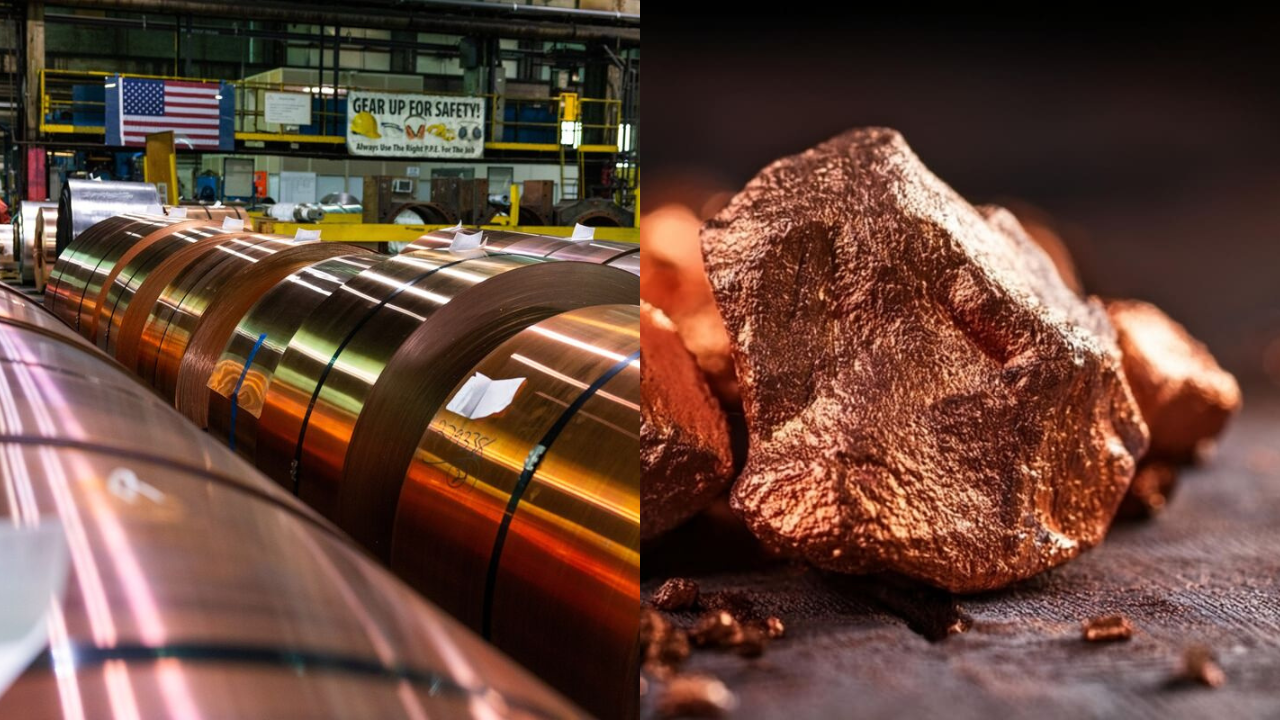
In a development that could reshape global industrial plans, experts have warned that the world may face a shortage of nearly 10 million tons of copper by 2040. This looming shortfall has raised alarms across the electric vehicle (EV), renewable energy, and data centre industries — all of which rely heavily on copper as a core raw material.

The warning comes amid rapidly rising demand for copper driven by the twin revolutions of clean energy transition and artificial intelligence (AI) infrastructure expansion. From India’s renewable power targets to global electric mobility goals, copper is emerging as one of the most critical — and potentially constrained — materials of the next two decades.

The Growing Demand for Copper

Copper, sometimes known as “the metal of electrification,” plays an indispensable role in power generation, transmission, and utilization. It is a key component in EV batteries, charging stations, solar panels, wind turbines, and electrical wiring, as well as in emerging data infrastructure such as AI data centres and 5G networks.

According to global market researchers, copper demand is set to grow by more than 50% by 2040, reaching an estimated 35–40 million tons annually compared to the current supply levels of around 25 million tons. This rising demand will primarily be driven by:

  • The electrification of transport, as governments push for cleaner mobility and phase out combustion engines.
  • The expansion of renewable power projects, especially solar and wind energy, both of which require high copper usage.
  • The unprecedented boom in data centres and AI computing, which demand efficient energy systems and reliable power connectivity.

Why the Supply Squeeze Is Concerning

While demand is surging, global copper production and investment in new mines have not kept pace. Extracting and refining copper is a long, capital-intensive process — often taking over a decade from discovery to production. Many existing mines are reaching maturity, with ore grades declining year after year.

Industry leaders worry that without new discoveries, technological innovations, or large-scale recycling initiatives, supply could stagnate even as demand soars. The result, analysts caution, could be a 10-million-ton shortage by 2040 — a gap large enough to disrupt the global energy transition.

Another pressing issue is resource concentration. More than 50% of global copper output currently comes from just a few countries — notably Chile, Peru, China, and the Democratic Republic of Congo. This geographical dependency leaves the global supply chain vulnerable to both geopolitical tensions and environmental regulations.

Impact on Renewable Energy and EV Ambitions

The copper shortfall could have significant implications for the global push toward net-zero emissions. Every megawatt of solar power requires between 4 to 5 tons of copper, while a single wind turbine uses as much as 8 tons. Similarly, an electric vehicle uses nearly three to four times more copper than a conventional petrol car.

India, for instance, aims to achieve 500 GW of renewable energy capacity by 2030 and transition a large portion of its automotive market to electric vehicles. If copper prices surge or supply tightens, the cost of renewable energy infrastructure and EV manufacturing could rise sharply.

This, in turn, might delay some clean energy projects, making energy affordability and sustainability major policy challenges. For a fast-growing economy like India, balancing energy security with the green transition will require careful resource planning.

The Role of AI and Data Centres

A relatively newer driver of copper demand is the AI and data centre industry. Massive computing clusters, especially those powered by GPUs, require enormous amounts of electricity and efficient cooling systems — both dependent on complex power wiring, thermal systems, and backup networks built largely from copper.

India’s data centre industry, projected to reach 3 GW of capacity by 2027, is part of this global trend. Leading technology firms and cloud providers are expanding their infrastructure footprints in Mumbai, Hyderabad, and Chennai. As AI workloads multiply, copper consumption in these facilities is expected to surge by double digits annually.

The irony is clear: while AI promises to optimize industrial supply chains, including mining and energy, it simultaneously fuels copper demand, pushing the system to its limits.

Mitigation Efforts: Recycling and Substitutes

To address future shortages, countries and companies are emphasizing recycling and resource efficiency. Presently, recycled copper meets about 15–20% of global demand, but experts say that share could rise to 30% with better collection systems and advanced refining technologies.

Innovation is also under way to develop copper alternatives, such as aluminum-based conductors or graphene composites, though none match copper’s performance in conductivity and durability on a large industrial scale.

Another solution lies in urban mining — recovering copper from discarded electronics, motors, transformers, and construction scrap. With India’s growing e-waste sector, this could become an important domestic source of metal in the coming decades.

India’s Strategic Position in the Copper Story

India currently imports a significant portion of its refined copper after the shutdown of key smelting capacities in recent years. However, the country holds potential for expanding domestic refining and mining capacities, particularly in states such as Rajasthan, Madhya Pradesh, and Jharkhand.

As global prices rise, India could witness renewed investments in copper processing, recycling, and value-added manufacturing, especially in EV components, renewable infrastructure, and electronics.

Several policy experts have also urged the government to consider strategic copper reserves, similar to oil or critical mineral stocks, to protect the economy from future disruptions. Additionally, industry players are pushing for faster environmental clearances for mine expansions, smoother trade logistics, and incentives for sustainable resource use.

A Crossroads for the Global Economy

The copper shortage is more than just an industrial challenge — it represents a critical pivot point for the future of green technology, energy equity, and digital infrastructure. With every part of modern life — from smartphones to solar panels — running on copper, the stakes are higher than ever.

Experts believe that timely policy actions, joint industry-government initiatives, and global cooperation will be required to balance demand growth with sustainable supply.

If the warnings hold true, the next decade might witness a “race for copper”, mirroring earlier scrambles for oil and rare earths. The outcome will determine not only who controls the next wave of industrial growth but also how soon the world fulfills its climate commitments.

For now, the message is clear: the world’s green and digital future is wired with copper — and the clock is ticking.

Maharashtra Declares State Holiday After Ajit Pawar’s Tragic Death in Plane Crash

0
State Holiday After Ajit Pawar’s Tragic Death

Chief Minister Devendra Fadnavis announces three-day mourning; leaders across India pay tribute to veteran Deputy CM Ajit Pawar.

In a heartbreaking development that has plunged Maharashtra into deep sorrow, Deputy Chief Minister Ajit Pawar passed away in a tragic plane crash on Wednesday morning. Reacting to the sudden loss, Chief Minister Devendra Fadnavis announced a state holiday and declared three days of mourning across Maharashtra. The announcement was made during a press conference held in Mumbai, where a visibly emotional Fadnavis described the incident as “an irreparable loss to the state and to me personally.”

Ajit Pawar, fondly called “Ajit Dada” by his supporters and colleagues, was among the most experienced politicians in Maharashtra’s political landscape. His untimely demise has sent shockwaves through the state’s political, social, and public circles, with leaders cutting across party lines expressing grief over his passing.

Chief Minister Fadnavis Announces Mourning, Calls It a Personal Loss

Addressing reporters at Mantralaya, Chief Minister Devendra Fadnavis said, “Today, we have declared a state holiday and three days of state mourning. This is a completely irreparable loss for the state of Maharashtra. Ajit Dada was a hardworking and determined leader who never wavered, no matter how tough the circumstances were. His death is not only a loss to the government but also a personal loss for me — a friend has left me.”

He added that a wave of grief has swept across Maharashtra following the news. Fadnavis also confirmed that he, along with Deputy Chief Minister Eknath Shinde, will be leaving for Baramati, Pawar’s hometown, to pay their last respects. “I have spoken to Supriya Tai (Supriya Sule) and Parth Pawar. The details of the last rites will be finalized after consultations with the family,” he stated.

Fadnavis further informed that Prime Minister Narendra Modi and Home Minister Amit Shah had personally reached out to extend their condolences on the tragic loss. “Both have expressed deep sorrow and assured that the entire nation stands with Maharashtra in this moment of grief,” he added.

Emotional Scenes in Baramati as State Mourns

As the news of Pawar’s passing spread, thousands of supporters, party workers, and citizens gathered in Baramati, the political stronghold of the Pawar family. The atmosphere was heavy with emotion as the mortal remains of Ajit Pawar were brought to the Baramati hospital, followed by a large crowd chanting “Ajit Dada Amar Rahe.”

Among those present at the hospital were NCP (Sharadchandra Pawar faction) working president Praful Patel, NCP (Sharad Pawar) MP Supriya Sule, Pawar’s wife Sunetra Pawar, and son Parth Pawar, who travelled from New Delhi following the tragic incident. Senior leaders and dignitaries are expected to reach Baramati by late evening to pay their last respects.

A Political Career Full of Milestones

Ajit Pawar, 66, was one of Maharashtra’s most influential political figures, known for his sharp administrative acumen and grassroots connect. The nephew of veteran leader and NCP founder Sharad Pawar, Ajit Dada carved out his own distinct political identity through decades of tireless service and leadership.

He first entered politics under the mentorship of his uncle, Sharad Pawar, and quickly rose through the ranks owing to his efficient management and decisive leadership style. Over his career spanning nearly four decades, he served as Deputy Chief Minister of Maharashtra six times, a record in the state’s political history. His stints included serving under the leadership of Prithviraj Chavan, Devendra Fadnavis, Uddhav Thackeray, and Eknath Shinde.

Known for his no-nonsense attitude and straightforward communication, Ajit Pawar built a reputation as a doer — someone who preferred results over rhetoric. His administrative skills were evident in sectors such as water resources, agriculture, and infrastructure development, where he introduced several transformative policies and projects aimed at improving the lives of farmers and rural citizens.

Reactions Pour In From Across the Nation

Condolences have poured in from leaders across the political spectrum. Prime Minister Modi described Pawar’s passing as “a monumental loss to Maharashtra’s political fabric,” praising him as a man dedicated to the state’s development and progress. Home Minister Amit Shah also expressed shock, calling the incident “deeply saddening and tragic.”

Sharad Pawar, found at his Baramati residence surrounded by family and supporters, was visibly moved. The NCP patriarch said in a brief statement, “Ajit was not just my nephew but like my own son. He served Maharashtra selflessly, always putting people above politics. The void he leaves behind will be impossible to fill.”

Congress President Mallikarjun Kharge, NCP (SP) leader Supriya Sule, and Chief Minister Eknath Shinde also expressed their grief, remembering Ajit Pawar’s long-lasting contributions to Maharashtra’s governance and social welfare.

Maharashtra in Mourning

With the government’s notification now in effect, all schools, government offices, and institutions across Maharashtra remained closed on Wednesday. National flags will be flown at half-mast for the next three days as a mark of respect. The Chief Minister’s Office confirmed that cultural and entertainment events scheduled during the mourning period will be postponed or cancelled.

In Baramati, residents have begun gathering at various parts of the city holding candles and photographs of Ajit Pawar. The sense of loss is palpable among the people he represented — he was known for his accessibility and compassion, particularly for farmers and small traders.

Legacy of a Fearless Leader

Ajit Pawar’s political journey reflected resilience, commitment, and deep understanding of Maharashtra’s socio-economic challenges. Despite political highs and lows, his dedication to the state’s development never wavered. He often emphasized the need for pragmatic politics focused on public welfare rather than personal gain.

From rural development to irrigation reforms, Pawar left behind a legacy of measurable impact. Under his leadership, Baramati transformed into one of the most prosperous constituencies in the state, setting benchmarks for agricultural innovation, education, and industrial growth.

As messages of condolence continue to pour in from across the nation, Maharashtra mourns a leader who was deeply woven into the fabric of its progress and politics. The next few days are expected to see an outpouring of collective grief as lakhs of people assemble in Baramati to bid farewell to “Ajit Dada” — a leader who stood tall through every storm and led with unwavering conviction.

Sumit Senapati: A Rising Creative Force Reviving Sambalpuri Culture Through Digital Content and Music

0
Sumit Senapati

Sambalpur, Odisha: Hailing from the culturally rich land of Sambalpur, Sumit Senapati has emerged as a prominent name in the Sambalpuri entertainment industry. A full-time content creator, music video producer, actor, and dancer, Sumit has built a powerful identity through creative storytelling and culturally rooted digital content that resonates strongly with today’s youth. Born and raised in Sambalpur—known for the divine presence of Maa Samaleswari, its vibrant traditions, and the world-famous Sambalpuri saree—Sumit’s journey is deeply influenced by his roots. The language, music, lifestyle, and cultural values of western Odisha have not only shaped his personality but also become the foundation of his creative work. Rather than moving away from his identity, he chose to celebrate it through modern digital platforms. Professionally, Sumit is actively involved in digital content creation and music production. He creates humorous, relatable, and culturally engaging Sambalpuri content across social media platforms, while also producing and performing in music videos as an actor and dancer. His content strikes a fine balance between entertainment and cultural promotion, presenting regional stories in a contemporary format that appeals to a wide audience. Through his YouTube channel, he independently releases music albums, maintaining complete creative control and building a direct bond with his audience. Driven purely by passion in the early stages, Sumit entered the creative field without major resources or industry backing. His love for performance, dance, and storytelling—combined with a strong desire to represent Sambalpuri culture with pride—motivated him to pursue this path full-time. Over the years, his dedication and consistency have translated into remarkable digital growth. Today, Sumit Senapati commands a strong digital presence, with over 274,000 followers on Instagram and 106,000 subscribers on YouTube. More than four of his videos have crossed the one-million-view mark, establishing him as a trusted and influential digital creator in the regional entertainment space. Beyond numbers, his biggest achievement lies in winning audience trust and contributing to the rising visibility of Sambalpuri content on national digital platforms. Like any creative journey, his path was filled with challenges—limited resources, stiff competition, and periods of slow growth tested his determination. However, through self-belief, continuous learning, discipline, and staying true to his cultural roots, Sumit transformed obstacles into stepping stones for growth. Looking ahead, Sumit Senapati envisions taking Sambalpuri content and music to a global audience. He aims to produce high-quality music videos, collaborate with diverse artists, and build a strong creative brand that not only entertains but also inspires and creates opportunities for emerging talent from his region. With his unique blend of creativity, cultural pride, and digital innovation, Sumit Senapati continues to redefine regional entertainment—proving that powerful stories rooted in tradition can find global recognition in the digital age

Budget 2026 MSMEs Demand Cash Flow Stability Over New Schemes

0
Budget 2026 MSME

Manufacturing units seek faster payments, infra upgrades, and policy predictability to scale amid rising costs and delays.

Manufacturing MSMEs Gear Up for Budget 2026: Prioritising Predictable Cash Flows Over New Schemes

As India gears up for the Union Budget 2026 presentation on February 1 by Finance Minister Nirmala Sitharaman, manufacturing Micro, Small, and Medium Enterprises (MSMEs) are raising their voices for practical reforms. These vital cogs in the ‘Make in India’ wheel—from power transmission firms to drone makers and home appliance producers—seek faster payments, robust infrastructure, and steady policies to combat daily cash-flow hurdles. Instead of flashy incentives, they emphasise execution of existing schemes like Production Linked Incentive (PLI) to fuel sustainable scaling.

This demand resonates deeply in a nation where MSMEs contribute over 30% to GDP and employ millions, yet grapple with systemic bottlenecks. With the economy projected to grow at 7-7.5% this fiscal, Budget 2026 offers a golden window to address these pain points, ensuring small manufacturers thrive amid rising input costs and global competition.

Power Sector’s Urgent Call for Infrastructure Boost

In the power transmission and distribution arena, MSMEs highlight a glaring gap between renewable energy ambitions and grid realities. Utsav Panchal, Director and CEO of Rajesh Power Services—a key player in EPC projects—stresses the need for heftier budget allocations aligned with India’s renewable targets. States like Gujarat and Rajasthan are ramping up solar and wind capacities, but evacuating this green power demands swift investments in substations, underground cabling, and high-voltage lines.

Panchal’s firm, with its expertise in turnkey power projects, has seen underground distribution cut outages dramatically in urban clusters. Dedicated incentives for such upgrades would spike manufacturing demand for electrical gear, he notes. Beyond basics, smart grid modernisation—extending to advanced equipment—could supercharge domestic production of digital grid tech, and Budget 2026 must bridge this infra lag to power Viksit Bharat’s energy transition.

Tackling Capital Expenditure and GST Maze

On factory floors, consumer durables makers face unique pressures from capital needs and tax complexities. Kalpesh Ramoliya, Founder and Chairman of Raj Cooling Systems, urges sharper capex incentives tailored for MSMEs investing in automation, energy-efficient tools, and backward integration. Starting from a modest Rs 10,000 in 2006, his Rajkot-based firm now boasts Rs 150 crore turnover and exports to 32 nations, yet rising metal, plastic, logistics, and energy costs squeeze margins.

MSMEs demand GST rationalisation and customs relief for high input costs to reduce margins pressure and enable better pricing; they seek automation subsidies and energy credits for capex barriers to achieve faster scaling and efficiency gains; and they call for plug-and-play parks to address infra gaps and ensure smoother operations. Ramoliya also pushes for centre-state synergy on plug-and-play parks, renewable energy perks like accelerated depreciation, and fewer disputes, steps that would lower production costs and make ‘Made in India’ appliances more competitive in tier-2/3 markets and beyond.

Working Capital Woes: The Universal Bottleneck

Across sectors, delayed payments emerge as the biggest drag, locking over Rs 7.3 lakh crore in MSME receivables and crippling growth. Ramoliya advocates low-interest, long-tenure loans for machinery via expanded CGTMSE guarantees and subventions. This would streamline inventory from procurement to sales, easing the full product cycle.

In capital-heavy drone manufacturing, Satyabrata Satapathy, Co-founder and CEO of BonV Aero, flags PSU and defence contract delays. His Bhubaneswar firm, known for high-altitude logistics drones inducted by the Indian Army, calls for enforceable 45-day payment mandates with digital tracking and auto-discounts. Predictable cash flows would free private capital for R&D in autonomy, batteries, and secure comms, reducing subsidy reliance.

Such reforms align with MSMED Act enforcement pushes, where portals like Samadhaan show pending claims in lakhs of crores, and integrating GSTN, e-invoicing, and TReDS could automate verification, slashing cycles and boosting confidence.

Evolving Beyond PLI: Skills and Innovation Push

PLI schemes have ignited manufacturing, with textiles applications now extended to March 2026, but MSMEs want phase two focused on deep capabilities. In drones, they seek R&D credits and testing infra for a global edge; for appliances, plant subsidies and GST cuts to boost cost competitiveness; and in power, skill programmes to drive tech adoption. Satyabrata Satapathy seeks refundable R&D credits, testing subsidies, and export certification aid for drones, while Ashutosh Gupta, Director of Sales and Marketing at Summercool Home Appliances, echoes this with calls for capex subsidies, tax breaks, and PLI extensions for modernisation.

GST-duty tweaks on imports would enhance price competitiveness, Gupta adds. Skill gaps loom large too—Panchal and Gupta demand training in automation, digital grids, and next-gen tech to match Industry 4.0, and Budget 2026 could amplify programmes linking skilling to MSME needs, fostering innovation hubs.

Structural Reforms for Smoother Operations

MSMEs yearn for basics: vendor payment guarantees within timelines, simplified compliance, and lighter paperwork. Ramoliya warns delays hobble investments, while Gupta flags labour laws and filings as growth distractions. A robust tracking system would build vendor trust, fortifying the ecosystem.

With Parliament’s Budget session from January 28 to April 2, expectations run high for MSME-centric measures, and the Economic Survey on January 31 will set the tone. Leaders concur: Fix cash flows, infra, and policies matching business rhythms, and growth will surge organically.

In this Amrit Kaal, Budget 2026 can empower these desi manufacturers to not just survive but lead global supply chains. Their unified plea underscores a truth—predictability trumps promises, paving the path for Atmanirbhar Bharat’s manufacturing might.

From Grofers to Blinkit to Zomato Albinder Dhindsa takes charge of India’s food tech empire

0
Albinder Dhindsa

The Patiala born entrepreneur brings innovation and speed to Eternal Group’s fast growing businesses

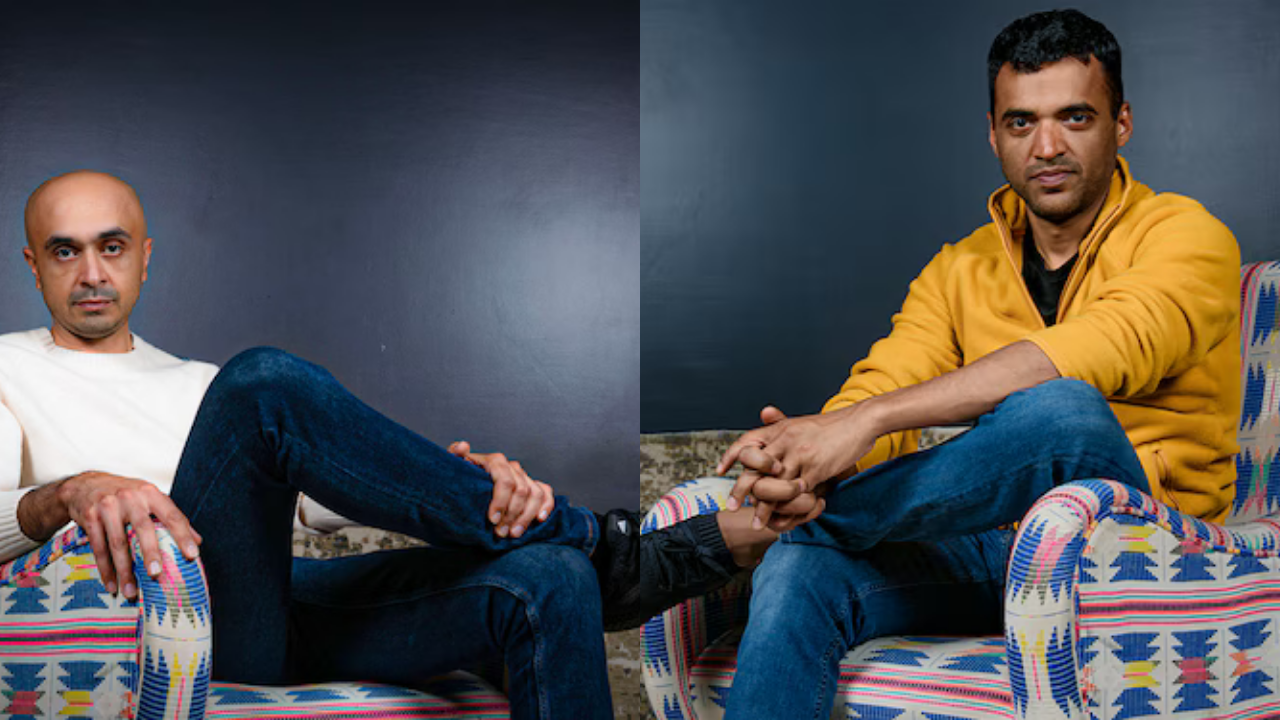
In a landmark leadership transition that marks a new chapter for India’s food-tech ecosystem, Albinder Dhindsa has officially taken charge as the Group CEO of Eternal, the parent company of ZomatoBlinkit, and Hyperpure. The announcement, made by outgoing CEO and Zomato co-founder Deepinder Goyal, signals a generational shift in leadership, putting one of India’s most dynamic startup minds at the forefront of the country’s rapidly evolving quick-commerce and food delivery market.

Born in Patiala, Punjab, Albinder Dhindsa’s journey from a transportation analyst in the United States to the head of one of India’s largest food-tech conglomerates is nothing short of inspirational. Known affectionately as Albi within the company circles, Dhindsa represents the new Indian entrepreneurial spirit—steeped in technical excellence, global exposure, and a deep understanding of India’s hyper-local markets.

Early Life and Educational Background

Albinder Dhindsa hails from a humble background in Punjab, a region known for its entrepreneurial energy and resilience. A bright student since childhood, he completed his engineering degree before heading overseas to pursue higher studies. Dhindsa earned his MBA from Columbia Business School, one of the world’s leading institutions that shaped many successful global entrepreneurs.

His academic training gave him a strong foundation in logistics, operations, and business strategy—skills that would later define his success in managing complex delivery networks and startup operations.

Professional Beginnings: The Global Exposure

Before entering India’s startup ecosystem, Dhindsa began his professional career in the US. He started as a Transportation Analyst at URS Corporation, a global engineering, design, and government contracting firm that was later acquired by AECOM. His early work involved solving large-scale transportation and logistics challenges—experience that would later prove invaluable in optimizing last-mile delivery systems in India’s food and grocery sectors.

After URS, Dhindsa continued to sharpen his skills at Cambridge Systematics and UBS Investment Bank, gaining insights into both the technical and financial aspects of business operations. These experiences gave him a unique edge—combining engineering precision with financial acumen.

The Zomato Chapter: Building Global Reach

In 2011, Albinder Dhindsa decided to return to India at a time when the country’s startup ecosystem was just beginning to catch fire. He joined Zomato, then freshly rebranded from “Foodiebay,” as the Head of International Operations.

Under his leadership, Zomato expanded aggressively into major Indian cities including Delhi NCR, Bengaluru, and Mumbai, while also setting its sights on international markets. His role was pivotal in shaping Zomato’s overseas expansion strategy, establishing the brand’s global footprint.

It was during his time at Zomato that Dhindsa crossed paths with Saurabh Kumar, an entrepreneur exploring hyper-local delivery models. The meeting would soon change the direction of Dhindsa’s career—and the Indian hyperlocal delivery space forever.

Founding Grofers: The Pivot to Quick Commerce

Around 2014, Dhindsa saw a massive opportunity in India’s fragmented local commerce market. He joined Saurabh Kumar to build Grofers, a Gurugram-based hyper-local delivery startup with a mission to simplify how customers shop for everyday essentials. What started with just four delivery partners soon scaled into a full-fledged logistics and tech operation.

By 2015, Grofers had expanded its operations to multiple Indian cities, backed by investors like Sequoia Capital, Tiger Global, and SoftBank. Dhindsa’s leadership saw Grofers transform from a niche service to a national player, simplifying online grocery shopping and setting the stage for what would later become the quick-commerce revolution.

In the following years, Grofers achieved significant milestones—building strong supply chains, partnering with thousands of local vendors, and introducing innovations in delivery logistics and user experience.

From Grofers to Blinkit: Reinventing Speed

The turning point came in 2021 when Zomato acquired a 9.3% stake in Grofers, investing $100 million and reuniting Dhindsa with his former employer, Deepinder Goyal. Shortly after, Grofers underwent a transformative rebranding—emerging as Blinkit, a platform focused entirely on ultra-fast deliveries within just 10 minutes.

Blinkit’s pivot marked a decisive shift from traditional grocery delivery to the quick-commerce model, catering to evolving urban lifestyles where convenience, speed, and reliability define consumer expectations. Under Dhindsa’s leadership, Blinkit built an extensive network of micro-fulfilment centres or dark stores, enabling rapid deliveries across metros and tier-2 cities.

By 2025, Blinkit had expanded its dark-store count from 383 to over 1,800, with plans to surpass 3,000 centres by early 2027. It also diversified its catalogue—now delivering groceries, electronics, apparel, beauty products, home appliances, and even emergency services like ambulances, making it one of India’s most comprehensive quick-commerce platforms.

Industry reports indicate that Blinkit now commands 45–50% market share in India’s quick commerce sector, outpacing rivals like Swiggy Instamart and Zepto.

Return to Zomato: Leading the Ecosystem

Following Zomato’s full acquisition of Blinkit in 2022 for nearly Rs 4,447 crore, Albinder Dhindsa became the driving force behind Zomato’s quick commerce strategy. He rejoined the parent company — now part of the Eternal group — to oversee operations across all food and commerce verticals.

Under his leadership, Blinkit not only turned EBITDA positive but also became one of Eternal’s fastest-growing business arms. Deepinder Goyal himself credited Dhindsa for achieving Blinkit’s impressive turnaround—from a struggling grocery delivery startup to a profitable, fast-scaling enterprise.

The New Chapter: Albinder Dhindsa as Eternal’s Group CEO

In a significant corporate development announced on Wednesday, Deepinder Goyal stepped down as Eternal’s Group CEO, naming Albinder Dhindsa as his successor.

In a heartfelt message to shareholders, Goyal described Dhindsa as “a battle-hardened founder” whose “ability to execute far exceeds mine.” He emphasized that the centre of gravity for operating decisions now moves to Albi, entrusting him with day-to-day execution, operating priorities, and business decisions for Eternal’s entire ecosystem—spanning ZomatoBlinkit, and Hyperpure.

As Dhindsa takes the helm, his top priority will be expanding Blinkit to new markets and categories while strengthening Zomato’s overall value chain—from farm-to-table procurement via Hyperpure to the end-consumer experience through Zomato’s delivery and app services.

A Vision for the Future

Albinder Dhindsa’s story is more than a CEO appointment—it’s a testament to the evolving fabric of India’s startup ecosystem. From a small-town boy in Patiala to the leader of a billion-dollar enterprise, his career embodies the spirit of modern Indian entrepreneurship: innovation, adaptability, and relentless execution.

Bajaj Auto, Balkrishna Industries, Tata Elxsi Get Buy Rating Today

0
Balkrishna Industries

Leading brokerages pick these three stocks as preferred bets for Indian investors in the current market.

Brokerage houses have reportedly issued fresh buy calls on Bajaj Auto, Balkrishna Industries and Tata Elxsi for today’s trading session, highlighting selective opportunities in the Indian equity market despite recent volatility. These recommendations signal confidence in sector leaders across automobiles, speciality tyres and engineering R&D services, and are likely to attract interest from both retail and institutional investors.

Focus on quality large and mid-cap names

Brokerages appear to be concentrating on fundamentally strong companies with established track records, robust balance sheets and clear growth visibility. Bajaj Auto, Balkrishna Industries and Tata Elxsi all enjoy strong brand recall in their respective segments and have delivered healthy returns over the past few years.

Market experts note that in an environment of frequent global cues and sector rotation, such quality names often become preferred picks for positional as well as medium-term portfolios. The latest set of buy recommendations aligns with a broader strategy of focusing on leaders benefiting from domestic demand, export potential and premium product positioning.

Bajaj Auto: premiumisation and export story

Bajaj Auto remains one of India’s leading two-wheeler and three-wheeler manufacturers, with a strong presence in both domestic and export markets. The company has been steadily moving up the value chain through premium motorcycles and higher-margin products, which supports profitability even in a competitive environment. Recent brokerage commentary has highlighted Bajaj Auto’s healthy margins, strong cash flows and consistent shareholder returns as key positives.

Analysts also point to the company’s diversified geographic exposure through exports to Latin America, Africa and other emerging markets, which helps reduce dependence on a single region. The stock has seen renewed interest after improving volume trends and a favourable product mix, and one major brokerage recently upgraded Bajaj Auto to a buy rating while revising its target price upwards. Such factors collectively support the latest buy stance for today’s trading, especially for investors looking at large-cap auto names with strong fundamentals.

Balkrishna Industries: niche tyre specialist

Balkrishna Industries (BKT) operates in a niche segment of off-highway tyres, catering to agricultural, industrial and construction equipment players across global markets. The company has built a strong positioning in this specialised category, competing with international brands while leveraging cost advantages from its Indian manufacturing base.

Fundamental watchers note that Balkrishna Industries continues to enjoy healthy long-term demand prospects, supported by global infrastructure activity and mechanisation in agriculture. Research portals tracking the stock highlight that its overall fundamentals remain strong, with stable balance sheet metrics and reasonable valuations on a long-term view. Although quarterly earnings can be sensitive to input costs and overseas demand cycles, long-term investors often view corrections as opportunities to accumulate, which fits with the latest buy recommendations.

Tata Elxsi: digital engineering and design play

Tata Elxsi is a leading design and technology services provider focused on automotive electronics, broadcast, communications and healthcare, among other verticals. The company combines engineering R&D, embedded systems and design capabilities, making it a differentiated player in the Indian IT and product engineering space. Its high return ratios and asset-light model have historically attracted premium valuations.

Financial data shows that Tata Elxsi has delivered strong return on equity and return on assets, indicating efficient use of capital and healthy profitability. At the same time, some analyst platforms currently reflect a cautious or even negative view on near-term valuations after a strong multi-year rally, with a high proportion of “sell” or “underweight” calls and modest or lower target prices compared to prevailing market levels. This divergence between valuation concerns and structural business strength often creates trading opportunities when brokerages selectively recommend the stock on dips, which appears to be the case in today’s buy stance.

The fresh buy recommendations also reflect broader sectoral trends that favour these three names. In the automobile space, improving rural sentiment, premiumisation and replacement demand have been gradual tailwinds, helping companies like Bajaj Auto sustain growth even amid regulatory and cost headwinds. For the speciality tyre segment, the emphasis on infrastructure, mining and mechanisation can support long-term replacement and original equipment demand for manufacturers such as Balkrishna Industries.

On the technology side, continued investment by global OEMs in software-defined vehicles, connected mobility, media streaming platforms and digital healthcare keeps the pipeline strong for engineering R&D service providers like Tata Elxsi. These structural themes add conviction to brokerage buy calls, as they support earnings visibility beyond a single quarter.

Trading strategies and investor perspective

For short-term traders, buy calls from reputed brokerage houses often act as triggers for momentum-based trades, especially when supported by favourable technical setups. Many platforms tracking these stocks highlight positive price trends or supportive indicators over recent sessions, which can reinforce intraday or near-term buying interest. However, market experts also caution that prices can remain volatile around key levels, and traders should follow strict risk management.

For medium to long-term investors, the latest recommendations serve as a reminder to focus on fundamentally strong names rather than chasing speculative moves. Bajaj Auto, Balkrishna Industries and Tata Elxsi collectively offer exposure to themes such as premium mobility, global off-highway tyre demand and digital engineering services. Investors often evaluate these companies on parameters like earnings growth, return ratios, balance sheet strength and management quality before taking positions.

Indian retail investor interest remains high

Indian retail participation in equities has been steadily rising, with many new investors using online platforms to track brokerage research, stock ratings and market commentary. Stocks with frequent research coverage and clear narratives, such as Bajaj Auto, Balkrishna Industries and Tata Elxsi, naturally attract higher visibility among this segment. For such investors, buy calls from established research houses often act as a starting point for further study rather than a final decision.

In this context, today’s recommendations on these three counters may see good interest from retail as well as high net-worth individuals seeking a mix of stability and growth potential. At the same time, financial advisors regularly remind investors to align any equity exposure with their risk profile, investment horizon and asset allocation plans instead of reacting purely to short-term trading ideas.

Maharashtra Signs $173 Billion MoUs at WEF 2026

0
Maharashtra

Maharashtra aims for massive job creation as MoUs signed in key industries at World Economic Forum 2026.

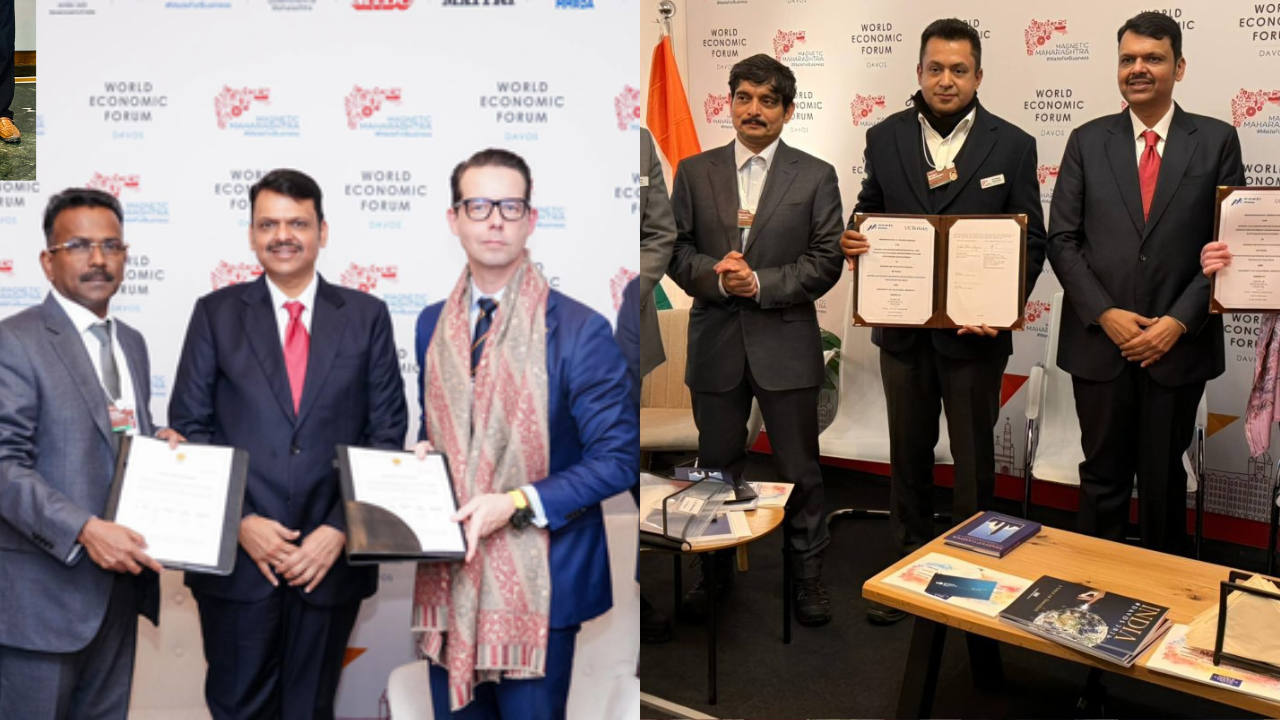
In a major boost to India’s economic diplomacy and investment climate, the Government of Maharashtra announced the signing of Memorandums of Understanding (MoUs) worth $173 billion (approximately ₹14.5 lakh crore) on the very first day of the World Economic Forum (WEF) 2026 being held in Davos, Switzerland. This historic development positions Maharashtra as one of the top global destinations for foreign investment and industrial partnerships.

According to official sources, the investment commitments will focus primarily on sectors such as logistics, steel manufacturing, energy, electronics, and urban infrastructure, while simultaneously promoting sustainability and inclusive growth. The state government projects that these investments could generate over 15 lakh new employment opportunities for skilled and semi-skilled workers across various districts of Maharashtra.

A Bold Step Toward Global Industrial Leadership

Chief Minister Eknath Shinde, leading a high-powered delegation to Davos, described the investment agreements as a “transformative step toward building a globally competitive Maharashtra.” He highlighted the confidence global investors have shown in the state’s industrial policies, infrastructure readiness, and proactive governance.

“Maharashtra is the growth engine of India. The massive response from global companies at WEF 2026 reflects our strong position as an industrial, financial, and innovation hub,” Shinde said during a media briefing in Davos. “These MoUs reaffirm our vision to create jobs, strengthen infrastructure, and accelerate our journey toward a trillion-dollar state economy.”

Deputy Chief Ministers Devendra Fadnavis and Ajit Pawar also participated in key meetings with CEOs and global investment groups, facilitating high-level discussions on digital innovation, manufacturing clusters, green energy, and inclusive development.

Strategic Sectors Driving Investment Momentum

The government revealed that the majority of MoUs are concentrated in high-impact sectors that align with both state and national priorities, including the Make in IndiaDigital India, and Green Energy Mission initiatives.

  • Logistics and Warehousing: Major global players plan to invest in logistics parks, integrated transport corridors, and multi-modal connectivity hubs. The goal is to strengthen Maharashtra’s position as the logistics capital of India, connecting industrial zones with ports and new freight corridors.
  • Steel and Heavy Industries: Several steel manufacturing giants from Europe, Japan, and South Korea have expressed interest in establishing or expanding production facilities in Nagpur, Raigad, and Chandrapur regions. These projects will not only enhance the domestic steel supply chain but also boost export capacity.
  • Urban Infrastructure: Smart city components, affordable housing, and advanced metro networks form another key focus area. Urban development partnerships are expected to unlock large-scale employment and improve the quality of life in urban centers.
  • Renewable Energy and Green Technology: Many agreements emphasize renewable energy generation—from solar to wind and biomass—reinforcing Maharashtra’s goal of becoming a carbon-neutral economy by 2047.
  • Electronics and Semiconductor Manufacturing: With India pushing for self-reliance in semiconductor technology, global technology companies have shown interest in setting up research and manufacturing facilities in Pune and Aurangabad electronics clusters.

Unprecedented Confidence in Maharashtra’s Policy Framework

Officials accompanying the chief minister noted that global investors were particularly drawn to Maharashtra’s investor-friendly ecosystem, including policy reforms, ease of doing business, and world-class infrastructure. Over the past few years, the state has successfully implemented a streamlined single-window clearance system, industrial corridor expansion, and proactive grievance redressal mechanisms for investors.

Deputy CM Devendra Fadnavis, who has been instrumental in promoting digital infrastructure and smart city initiatives, emphasized the importance of this success:
“The MoUs signed at Davos are not just numbers; they represent trust, opportunity, and the confidence the world places in Maharashtra. Our goal is to convert these MoUs into tangible projects that deliver long-term economic value.”

The delegation also met representatives from global financial institutions and development agencies, exploring partnerships in sustainable urban transportlivelihood development, and climate finance.

Employment and Skill Development to be Key Outcomes

Among the highlights of the investment drive is the creation of 15 lakh employment opportunities across multiple sectors. The state government plans to integrate these investments into its Skill Maharashtra Mission, ensuring that the upcoming workforce is equipped with globally competitive skills. Partnerships with technical universities and private institutions are being considered to train youth for positions in logistics management, manufacturing, design, and renewable technology.

The government is also focusing on developing tier-II and tier-III cities such as Nashik, Nagpur, Aurangabad, and Kolhapur as new growth hubs. These cities will play a key role in decentralizing industry and reducing migration pressure on Mumbai and Pune.

Global Recognition for India’s Economic Vision

India’s growing global prominence was evident at WEF 2026, where several international leaders appreciated the country’s economic stability, policy reforms, and innovation-driven growth model. Within that context, Maharashtra emerged as one of the most progressive states, offering a transparent investment environment, strong infrastructure support, and a clear industrial strategy.

Shinde’s delegation emphasized Maharashtra’s commitment to supporting India’s national goals of “Viksit Bharat 2047”, by ensuring inclusive and sustainable industrial growth. The large-scale MoUs signed in Davos are expected to not only benefit Maharashtra but also contribute significantly to India’s GDP and export capabilities.

The Road Ahead: From MoUs to Implementation

While the record-breaking MoUs mark a promising milestone, the Maharashtra government has assured that each agreement will undergo a structured implementation review. A dedicated task force is being set up to track project progress, address investor issues, and ensure project completion within committed timelines.

Officials have also indicated that a high-level Investment Tracking Cell will monitor the execution of MoUs through quarterly updates, ensuring transparency and accountability.

“Maharashtra will not stop at signing MoUs,” Shinde stated. “Every signed agreement will be implemented on the ground to create jobs, strengthen industries, and transform lives. Our mission is to make Maharashtra the most preferred global destination for business.”

A Historic Moment for Maharashtra

The historic investment commitments made at the World Economic Forum 2026 mark a turning point in Maharashtra’s economic journey. With its robust policy direction, dynamic leadership, and focus on sustainability, the state appears well-positioned to attract record investments, generate large-scale employment, and lead India’s next wave of industrial transformation.

As the global community looks toward India as a beacon of growth and opportunity, Maharashtra’s performance at WEF 2026 reaffirms its position as the country’s economic powerhouse — powered by innovation, infrastructure, and inclusive development.

From Medicine to Innovation: How 24-Year-Old Dr. Sarwar Alam is Reshaping the Hair Care Business in Bihar.

0
Dr. Sarwar Alam

A young medical worker is blazing a trail in the crowded markets of Bihar, where the beauty-products development market has long been controlled by chemical-laden products. Dr. Md. Sarwar Alam is a 24-year-old entrepreneur based in Saharsa, who has started K-SARWAR, a premium brand that fills the gap between ancient Ayurvedic knowledge and contemporary clinical research studies. Through his company, Sarbar Research Lab Private Limited, Dr. Alam is showing the world that world-class innovation can come from anywhere and not necessarily from major cities.

What makes Dr. Alam stand out from typical startup founders is that he has a strong medical background. He possesses B.E.M.S, D.H.P, and M.Sc. qualifications in Clinical Research, which provide him with physician-level precision in product development. All his formulations, such as hair regrowth oils and density-boosting shampoos, are tested in his personal research laboratory. Clinical practice is a way of making sure that K-SARWAR products are not mere marketing pledges but scientifically proven remedies for most hair problems.

The idea behind the creation of K-SARWAR can be explained by a straightforward fact: millions of Indians suffer from hair fall and thinning, but the majority of products currently available are either based on harsh chemicals or are not proven to be effective. Dr. Alam saw an opportunity to do something different, and his medical education enabled him to formulate products using natural herbs such as rosemary, cedarwood, peppermint oil, and others, with medical accuracy. What emerges is a product line focused on hair regrowth, increased density, and scalp health, without the side effects commonly associated with synthetic substitutes.

The mission of the brand is very close to its target audience. K-SARWAR aims to provide the common man with effective hair solutions, not only premium urban consumers, through its emphasis on accessibility and affordability. This democratization of quality hair care has already started bearing fruit, as the brand’s specialized formulations for hair fall control and regrowth have been gaining significant traction among early movers. The positive response confirms Dr. Alam’s belief that individuals are willing to accept natural and evidence-based alternatives.

K-SARWAR is not only commercially successful, but it also holds greater significance within the entrepreneurial ecosystem of Bihar. As one of the homegrown brands emerging from Saharsa, it demonstrates that progressive research and production can flourish even without the presence of typical business centers in India. By using regional resources, particularly the rich herbal heritage of Bihar, the brand is producing products capable of competing in the global market.

Looking ahead, Dr. Alam’s vision extends far beyond selling products. As he explains, it is not just about sales, but about restoring confidence, considering the emotional and psychological impact of hair loss on individuals. Through his commitment to blending conventional herbal wisdom with a modern scientific approach, he hopes to make K-SARWAR a legacy brand synonymous with natural wellness and clinical efficacy.

The rise of K-SARWAR in Bihar’s competitive beauty market and the career path of its founder, Dr. Sarwar Alam, serve as a blueprint for aspiring entrepreneurs. It demonstrates that the right mix of professional expertise, cultural understanding, and dedication to quality can help young innovators transform traditional industries and make a meaningful impact on people’s lives. For the hair care industry in Bihar, this marks the beginning of a natural revolution.

Connect with K-SARWAR on Social Media:

Instagram:
https://www.instagram.com/k_sarwar_?igsh=YmRneDI5d3o5Nnl5

Facebook: https://www.facebook.com/share/1AiLTenFv9/