
Friday, October 23, 2026
Home Blog

Are We Asking the Right Questions?

Anjum J Parveen,

Why We Protect Family Reputation More Carefully Than Family Members

By Anjum J Parveen, Novelist | NLP Practitioner

In some families, the person who speaks about the pain becomes a bigger problem than the person who caused it.

A daughter speaks up about mistreatment, and the first concern is what people will think. A husband admits he is struggling, and he is told to be strong. A wife questions an unhappy marriage, and someone reminds her of the children. Even a child who explains what is happening at home may be warned not to disrespect an elder.

Different people, different circumstances, but the same question: Log kya kahenge? What will people say?

In India, family ties and community relationships matter. We grow up learning to respect elders, protect our family’s name, and avoid bringing shame to the home. The problem begins when reputation becomes more important than a person’s suffering.

Consider the person who stays silent because speaking up might divide the family. The parent who hides emotional struggles because vulnerability is mistaken for weakness. The young adult who avoids seeking help for fear of gossip. The spouse who remains in an unhappy relationship because leaving could mean financial uncertainty, social judgement, or losing family support.

We ask why someone exposed the family’s problem before asking why that problem was allowed to continue.

The phrase ghar ki baat ghar mein rehni chahiye: family matters should stay within the family, is not always unreasonable. People deserve privacy. But there is a difference between protecting privacy and using silence to protect harmful behaviour.

When someone is discouraged from speaking because the truth might damage the family’s image, whose interests are being served?

Our traditions have much worth preserving: compassion, responsibility, respect, and the instinct to stand by one another. But these values lose meaning when they are used to justify suffering. Family unity should not require one person to remain unhappy so everyone else can live comfortably.

Women may be told to tolerate an unhappy marriage. Men may hide their struggles because they are expected to remain strong. Children may learn that obedience matters more than honesty. Older parents may conceal loneliness because they fear becoming a burden.

Vulnerability has no single gender. Neither does suffering.

Yet our response is often to tell people to adjust, forgive, or think about the family. Sometimes compromise is necessary. But telling someone to adjust is easy when you are not the one paying the price. Forgiveness cannot be demanded, and reconciliation means little if the behaviour that caused the hurt continues.

As a Novelist and NLP Practitioner, I pay attention to how language shapes the beliefs people carry into adulthood. Think about the messages repeated in some homes: “Don’t bring shame to the family.” “Be strong.” “What will people say?”

A child who hears these words often may grow up believing that honesty comes at the cost of belonging. Someone repeatedly told to be strong may struggle to ask for help. Another may feel guilty for setting necessary boundaries.

Sometimes, the words intended to keep a family together are the very words that stop its members from speaking honestly.

We teach children to respect elders, but do we teach them that respect does not mean accepting every behaviour? We praise families for staying together, but do we ask whether everyone feels safe? We celebrate sacrifice without asking why the same people are expected to make it.

When someone speaks about mistreatment, listen before rushing to defend the family. Ask what they need instead of telling them what to tolerate. Take responsibility when harm has occurred. Seeking help from a qualified counsellor or mental health professional should not be a source of shame. Where abuse or immediate danger is involved, safety must come before reputation.

Perhaps we should measure a family’s honour differently: not by how successfully it conceals its problems, but by whether its members can speak the truth without fearing humiliation, rejection, or blame.

We cannot control every rumour, but we can decide whether public approval matters more than the wellbeing of our own people.

The next time someone speaks about a family problem, pause before judging them. Ask what they have been carrying, whether anyone has listened, and what needs to change.

Then ask the question that matters most: why did speaking about the pain become more threatening than the pain itself?

Log kya kahenge? What will people say?

Perhaps we should be more concerned with apne kya seh rahe hain? What are our own people enduring?

The world may know a family’s name, but it does not always know what happens behind its doors. The people living there do.

A good name means very little if protecting it requires sacrificing someone’s dignity and peace.

For more information you can visit on :Instagram
https://www.instagram.com/eudaimonictoinfinity?psln=YWhkemhrOGd3M25v

Three men, a few microphones and no pretence: Why this podcast conversation feels different

Three man , a few microphones and no pretence

There is a peculiar problem with authenticity on the internet: everybody wants to look authentic.

Which is precisely why genuinely relaxed conversations have become surprisingly easy to recognise.

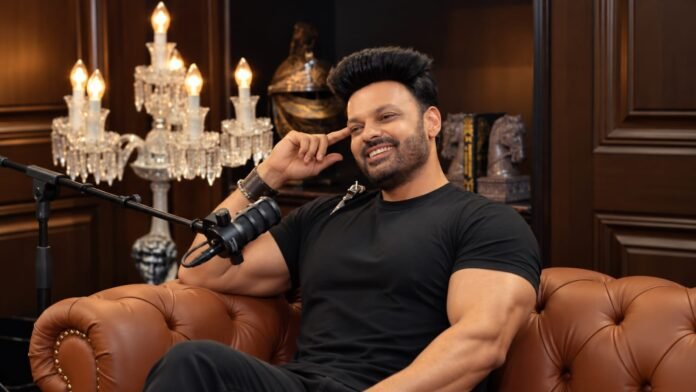
The latest episode of The Saurabh Nigam Show, featuring Paras Sareen and Sahil Juneja, doesn’t seem overly concerned with announcing how candid it is.

It simply gets on with the conversation.

And that may be its greatest strength.

Host Saurabh Nigam sits with Paras and Sahil without creating an obvious divide between “host” and “guests”. Within minutes, the traditional interview structure begins to loosen.

People laugh over each other. Reactions aren’t always polished. Topics occasionally take detours. A serious discussion can unexpectedly turn funny.

It resembles the way people actually speak when there isn’t a camera around.

Paras talks about entrepreneurship, retail and his association with Chai Leela, but his experiences aren’t constantly converted into motivational quotes.

Sahil adds another layer of unpredictability, changing the rhythm whenever the conversation begins to become too structured.

Saurabh seems happy to let that happen.

There is something revealing about a host who isn’t uncomfortable when somebody else owns the moment. Instead of pulling attention back towards himself, Saurabh frequently lets his guests complete their stories and then responds naturally.

That doesn’t mean he disappears.

His humour, expressions and reactions remain an important part of the episode. But he feels like a participant in the conversation rather than someone standing outside it with a list of questions.

The difference is subtle but significant.

Social media has become remarkably sophisticated at manufacturing spontaneity. “Candid” moments are planned, “unfiltered” conversations are edited and even vulnerability can sometimes feel carefully packaged.

Against that backdrop, ordinary human chemistry begins to feel unusual.

That is what makes this episode work.

It isn’t perfect because it doesn’t need to be. The interruptions, laughter and unexpected turns become part of the experience.

By the end, it becomes difficult to identify where the interview ends and the friendly banter begins.

Perhaps that is the best compliment one can give it.

Paras brings the story. Sahil brings another personality to the table. Saurabh creates the comfort that allows both to come through.

No manufactured intensity. No constant attempt to sound profound.

Just three people talking.

Sometimes, real is interesting enough.

Swarat Madhav Industries Limited Launches Sustainable Agri-Framework with Key Board Appointments, Including Director Ambrish Kumar Tiwari

swarat madhav industries limited

ALLAHABAD, INDIA — Swarat Madhav Industries Limited has officially launched its new brand identity and strategic roadmap, aiming to deliver high-quality, tech-backed solutions across the entire agricultural value chain. Guided by its core values of Innovation, Quality, Sustainability, and Trust, the Uttar Pradesh-based public limited enterprise is focusing heavily on modernizing traditional farming practices and streamlining bulk wholesale supply networks.
A Leadership Driven by Expertise and Vision
Operating under the banner “Agro Solutions for a Better Tomorrow,” the company’s daily operations and long-term expansion are directed by a highly accomplished executive leadership team:

  • Chief Executive Officer (CEO): Shrawan Kumar drives the enterprise’s strategic growth, managing day-to-day operations and building new market partnerships.
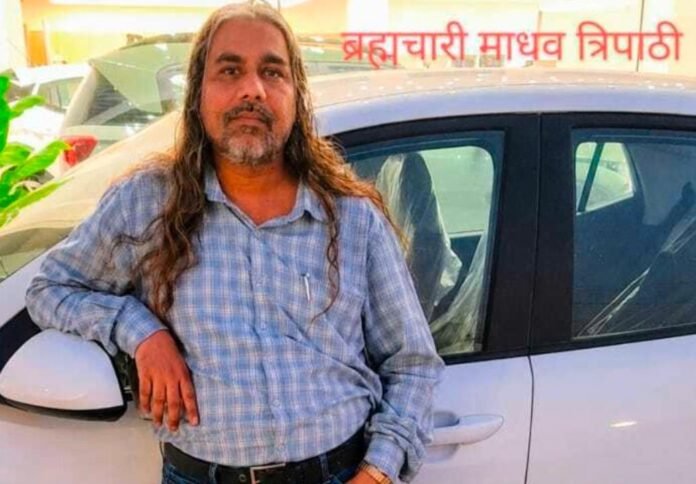
  • Board of Directors: Corporate governance and strategic direction are steered by a dedicated Board, featuring Ashish Kumar Tiwari (Brahmachaari Madhav ji), Ambrish Kumar Tiwari, and Akhilesh Tripathi. Notably, Founder and Chairman Ashish Kumar Tiwari brings profound professional depth to the board as a highly qualified scholar holding a Ph.D. in Law.
    This leadership team successfully blends academic excellence, corporate strategy, and field expertise to cultivate transparent, mutually beneficial relationships between local farming communities and commercial buyers.
    A Full-Spectrum Agri-Enterprise at the Source
    Swarat Madhav Industries Limited works closely with farmers at the grassroots level, managing critical phases of the agricultural pipeline to ensure quality control from field to market:
  • Cultivation & Production: Acting as direct growers, planters, and cultivators of premium-grade seeds, grains, vegetables, fruits, and medicinal herbs.
  • Value-Chain Processing: Enhancing market readiness by implementing professional cleaning, sorting, and grading protocols that transform raw harvests into buyer-ready wholesale lots.
  • Cold Chain Infrastructure: Investing in advanced preservation technologies—such as temperature-controlled cold storage and modern refrigeration units—to protect harvest freshness, extend shelf life, and minimize post-harvest food waste.
  • Wholesale Networks: Connecting farm outputs directly with industrial regional processors, large-scale commodity traders, and major institutional food buyers.
    By linking direct cultivation with sophisticated logistics and storage networks, the company aims to enhance food supply chain reliability while championing sustainable, climate-resilient farming methodologies.
    To explore corporate initiatives, review compliance details, or discuss institutional supply partnerships, please visit the official Swarat Madhav Industries Corporate Profile at https://www.swaratmadhavindustrieslimited.com

Mohkam Singh’s ‘BP High’ Brings a Youthful Edge to Contemporary Punjabi Music

Mohkam Singh’s

The 2024 release stands out for its energetic musical character, catchy lyrical approach and contemporary Punjabi sound.

Punjabi music continues to evolve with changing listener preferences, and songwriter Mohkam Singh’s work on BP High reflects an approach that combines modern musical sensibilities with the distinctive character of Punjabi songwriting. Released in 2024 and performed by J Attri under the B Music banner, the track represents a more energetic side of Singh’s creative work.

One of the defining aspects of BP High is its emphasis on rhythm and an instantly recognisable musical identity. Rather than relying entirely on familiar formulas, the song draws attention through its lively mood, contemporary arrangement and lyrics designed to complement the energy of the composition. This combination gives the track a youthful character that fits naturally within the evolving Punjabi music scene.

A Sound Designed for the Younger Generation

For younger listeners, music is often about more than melody alone. Rhythm, memorable lines and the overall mood of a track can shape how people connect with a song. BP High follows this contemporary listening sensibility, bringing together an energetic presentation and a straightforward musical approach.

The track’s style lends itself to casual listening, social gatherings and playlists built around upbeat Punjabi music. Its youthful character also provides a clear point of distinction within Mohkam Singh’s songwriting portfolio, which explores different musical moods and lyrical approaches.

Mohkam Singh’s Contribution to the Composition

A song’s identity depends on how its lyrical elements work alongside the music. With BP High, the creative direction centres on maintaining a lively pace while keeping the lyrical delivery aligned with the track’s overall mood. This balance is important in contemporary Punjabi music, where a memorable hook and a cohesive arrangement can help a song leave a lasting impression.

Singh’s songwriting work across different releases reflects an interest in exploring varied musical settings rather than repeating a single formula. BP High offers a different listening experience from his other credited tracks, demonstrating the range of styles within his growing body of work.

A Distinct Entry in His Musical Journey

Following earlier releases such as Dashboard and preceding later projects, BP High forms part of Singh’s continuing engagement with contemporary Punjabi music. The track highlights an upbeat direction within his catalogue and illustrates how songwriting can adapt to the changing tastes of a younger audience.

While verified audience figures would be needed to measure the song’s reach at the time of release, its musical direction provides a clear basis for understanding its intended appeal. With its energetic character and contemporary Punjabi styling, BP High remains a notable part of Mohkam Singh’s songwriting journey and his exploration of modern regional music.

Sangita Konar Steps into Hollywood with Lead Role in Classic Cinema-Inspired Project “NOIR”

Sangita Konar

International Actress and Canadian Beauty Queen Sangita Konar Expands Her Global Entertainment Journey with a Hollywood Project Inspired by the Golden Age of Cinema

International actress and supermodel Sangita Konar has added a new milestone to her entertainment career with her appearance as a lead heroine in a Hollywood project in the USA. In September 2026, she worked on “NOIR,” a classic Hollywood-inspired project that draws on the timeless visual appeal, black-and-white aesthetic, and dramatic storytelling associated with the Golden Age of Hollywood cinema.

The project reflects a cinematic style rooted in elegance, atmosphere, and expressive storytelling. According to the details shared about the production, Sangita Konar received an encouraging response for her work in the lead heroine role, marking another step in her journey across international entertainment markets.

Sangita Konar’s Journey from Canada to International Entertainment

Sangita Konar is an award-winning international actress, supermodel, and beauty queen based in Canada. Over the years, she has developed a professional portfolio spanning modelling, commercials, music videos, short films, fashion shows, and magazine cover shoots.

Her career began internationally in Canada, where she participated in various entertainment and fashion assignments. These experiences helped her build exposure across different creative formats and develop a presence in the international modelling and acting industry.

She has also earned recognition through beauty and modelling competitions, including a beauty pageant in Canada, India’s Next Super Model, and the title of Grand Asia Queen. Her portfolio reflects her continued involvement in fashion, modelling, and screen-based projects.

“NOIR” Marks a New Chapter in Her Acting Career

Sangita Konar’s involvement in “NOIR” represents a new chapter in her acting journey. Inspired by classic Hollywood cinema, the project draws on a black-and-white visual approach and the dramatic mood associated with traditional screen storytelling.

Her role as the lead heroine places her within a production that looks to the visual language of an earlier cinematic era. The project adds to her experience in front of the camera as she continues to explore opportunities across international film industries.

Alongside her Hollywood work, Sangita Konar has also been associated with Indian feature films. She has played the lead heroine in the Indian feature film “Coffee House” and is currently working on Indian feature film projects. She has expressed interest in pursuing further opportunities in both Bollywood and Hollywood.

International Magazine Covers and Modelling Assignments

Beyond acting, Sangita Konar has built a portfolio in international fashion and modelling. As a cover model, she has been featured in fashion magazines across Canada, the United States, India, the United Kingdom, France, the Netherlands, and Denmark.

She has also been featured in New York’s Times Square, adding another international visibility milestone to her professional profile. Her work across fashion shoots, brand assignments, commercials, and editorial projects has contributed to her experience in the modelling industry.

Her transition between modelling and acting reflects a career that spans multiple segments of the entertainment business, including fashion, advertising, and film.

Recognition for International Achievements

Sangita Konar has received an American award recognising her as the “American Inspiring Personality for Women of the Year,” in recognition of her reported international achievements.

In addition to her entertainment career, she holds a master’s degree in Information Technology from Australia. She comes from a highly educated family of doctors, combining an academic background with her professional interests in modelling and acting.

Guest Appearance on Voice of Canada

In July 2026, Sangita Konar was invited as a guest for a television interview on Voice of Canada in Toronto, Canada. The appearance added to her media engagements and public profile in the Canadian entertainment landscape.

She was also invited to serve as a judge at the Persian Film Festival in Toronto in 2025, where she was responsible for evaluating approximately 70 international films. The assignment provided an opportunity to participate in an international film event from a judging perspective.

Looking Ahead: Hollywood and Bollywood Opportunities

With her recent work on the Hollywood project “NOIR” and her ongoing involvement in Indian feature films, Sangita Konar continues to pursue opportunities across international entertainment markets. Her experience in modelling, screen appearances, and film-related assignments forms the foundation of her evolving professional journey.

As she explores projects in Hollywood and Bollywood, her focus remains on expanding her acting portfolio and participating in productions across different cinematic styles.

Production: Hollywood

Contact: kklog8387@gmail.com

Nutri Activania Offers Personalised Pregnancy Nutrition Support for Expectant Mothers in Delhi

Pregnancy Nutrition Support for Expectant Mothers in Delhi

Nutri Activania, the Saket-based nutrition clinic founded in 2018 by dietician Avni Kaul, is helping expectant mothers across Delhi NCR plan healthier pregnancies through its dedicated pre and postnatal nutrition programme. As a dietician for pregnancy in Delhi, Avni Kaul and her team provide guidance that begins with pre-conception health and continues through pregnancy, postpartum recovery, breastfeeding and infant feeding.

Avni Kaul is a Certified Lactation Counsellor (NHS, UK) and has undertaken extensive training in maternal health and baby foods. Supporting new mothers, their partners and families is a central part of her practice, including helping couples prepare for parenting and for feeding their baby.

Each plan begins with a detailed assessment of the mother’s health history, routine, food preferences, medications and current eating pattern. The nutrition team then designs a practical meal plan that reflects her changing needs through each stage of pregnancy, with follow-up consultations to review progress and adjust the plan as required. Sleep, stress, hydration and emotional wellbeing are considered alongside food, and partners and family members are welcome to join sessions.

After birth, the clinic’s postpartum recovery diets and breastfeeding guidance help mothers recover well and meet the added nutritional demands of lactation, while respecting the traditional postpartum foods many families value. Consultations are judgment-free, giving mothers a comfortable space to ask questions and build confidence in their food choices.

All pregnancy nutrition guidance at Nutri Activania is coordinated with the client’s obstetrician and healthcare team, and does not replace medical care.

Avni Kaul holds B.Sc. and M.Sc. qualifications in Food and Nutrition and is a Gold Medallist from Lady Irwin College, University of Delhi. Before founding Nutri Activania, she worked as a Dietician and Diabetes Educator in the Endocrinology Department at Max Hospital. With 12 years of practice and an evidence-based approach, her clinic has supported more than 15,000 members, with consultations available in person in Saket and online across India.

About Nutri Activania
Founded in 2018 by dietician and Certified Lactation Counsellor Avni Kaul, Nutri Activania is a Saket, New Delhi nutrition clinic providing evidence-based pre-conception, pregnancy, postpartum and women’s health nutrition, in person and online across India.

Neerja Modi School Hosts Hands-On Dabu Printing Workshop for Grade VII Students

neerja modi school

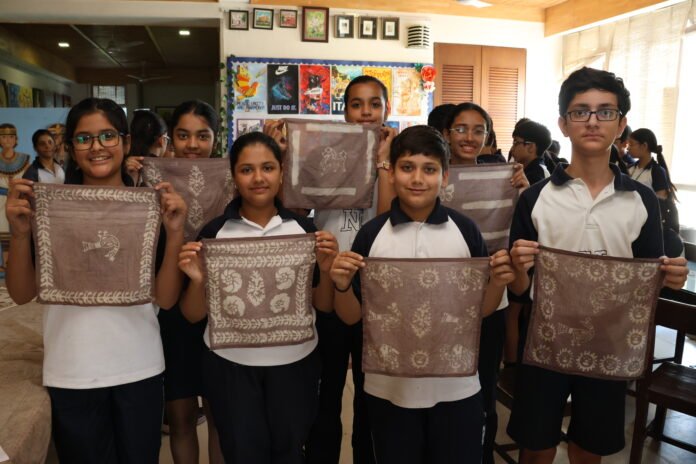
Jaipur: In an engaging celebration of India’s traditional art forms, Grade VII students of Neerja Modi School participated in a hands-on Dabu Printing Workshop, exploring the rich cultural heritage of Rajasthan and discovering the artistry behind one of its most distinctive textile traditions. The workshop was conducted by Dheeraj Chhipa from Bagru, a seventh-generation practitioner of the age-old Dabu printing craft.

The interactive session offered NMS students an opportunity to learn about traditional Dabu printing, a centuries-old Indian resist-printing technique deeply rooted in Rajasthan’s textile heritage. Through demonstrations and practical activities, students experienced how natural materials, traditional wooden blocks and indigenous knowledge come together to create intricate designs on fabric.

Exploring the Traditional Art of Dabu Printing

Dabu printing is a traditional hand-block printing technique in which a specially prepared resist paste is applied to fabric to prevent selected areas from absorbing dye. The paste used in the process typically comprises locally sourced materials such as black clay, lime, wheat chaff, Babool tree gum and sawdust.

During the workshop, Mr. Chhipa introduced students to the preparation and application of this distinctive resist mixture. Using traditional wooden blocks, the young participants stamped patterns onto fabric, carefully applying the paste to create their own designs.

Once the fabric is dyed, the areas protected by the resist paste retain their original colour, revealing striking patterns against the dyed background. Indigo and other natural or vegetable-based dyes have traditionally been used to produce the rich hues and characteristic motifs associated with Rajasthani Dabu print fabric.

The origin of the word “Dabu” is commonly traced to the Hindi word dabana, meaning “to press”, reflecting the technique’s essential process of pressing the resist paste onto fabric.

Traditional Motifs Bring Creativity to Life

The workshop soon transformed into a vibrant space of creativity as students experimented with a variety of wooden printing blocks. Motifs inspired by nature and Rajasthan’s cultural landscape captured their imagination, with the peacock emerging as a particular favourite among the participants.

Some students also explored distinctive shapes such as bulbs and camels, adding their personal touch to the traditional art form. Each impression offered a lesson in precision, patience and the importance of maintaining consistency while working with hand-carved blocks.

One particularly memorable moment highlighted the power of teamwork. Two friends joined their pieces of fabric together and carefully positioned a butterfly-shaped block across the seam. When they lifted the block, half of the butterfly appeared on each piece of fabric. Placed together, the two halves formed a complete butterfly.

The simple yet meaningful exercise demonstrated how collaboration, coordination and attention to detail can transform individual efforts into a beautiful shared creation.

Dabu Printing: A Lesson in Sustainability and Heritage

Beyond its artistic appeal, the workshop introduced students to the environmental significance of traditional textile crafts. Mr. Chhipa explained how naturally sourced materials and traditional dyeing methods form an important part of the Dabu printing process.

The session encouraged students to appreciate the value of sustainable textile printing, responsible material use and the preservation of indigenous craftsmanship. It also highlighted how traditional skills can offer valuable lessons in environmental awareness at a time when sustainable fashion and eco-friendly textile practices are gaining increasing importance.

By engaging directly with a seventh-generation artisan, students gained insight into the dedication, patience and knowledge required to preserve a craft passed down through generations.

Connecting Young Learners with India’s Cultural Roots

The Dabu Printing Workshop at Neerja Modi School went beyond a conventional classroom activity, offering students an immersive introduction to Rajasthan’s living cultural heritage. It enabled them to connect history with hands-on learning while developing an appreciation for India’s diverse artistic traditions.

Through the experience, Grade VII students discovered that traditional crafts are not merely artistic techniques but also expressions of community identity, inherited knowledge and sustainable living.

As students created their own printed designs, they experienced the joy of learning by doing and understood the importance of safeguarding indigenous art forms for future generations.

The workshop served as a meaningful reminder that when traditional craftsmanship meets experiential education, young learners gain more than a new skill—they develop a deeper respect for cultural heritage, creativity, collaboration and the environment.

Chetan Davkhar at 21: Building a Career in Financial Services and Real Estate

Chetan Davkhar

Through ASK Investments and 3M Developers, the Young Professional Aims to Explore Opportunities in Financial Planning and Property

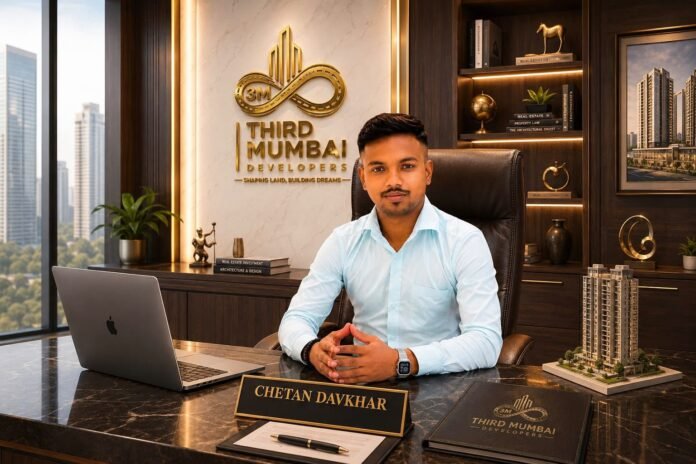
In today’s competitive business environment, young professionals are increasingly looking for opportunities to establish their identity and build a strong foundation for the future. Among them is Chetan Davkhar, who was born in 2005 and is pursuing his professional interests in the financial services and real estate sectors at the age of 21.

Associated with ASK Investments and 3M Developers, Davkhar is exploring opportunities across financial services, insurance and property-related activities. His interests span multiple segments, reflecting his ambition to develop a professional presence in industries that play an important role in financial planning and long-term asset creation.

Exploring Financial Services and Investment Opportunities

Financial planning and insurance protection have become important considerations for individuals and families seeking greater financial security. Recognising the significance of these areas, Davkhar is involved in financial services covering mutual funds, health insurance, life insurance, motor insurance and stock broking.

Through his work associated with ASK Investments, he aims to build his professional presence in the financial services segment while engaging with the different requirements of customers. Understanding investment options, financial goals and insurance coverage can help individuals make more informed decisions about their financial future.

Developing awareness about available financial products and helping customers understand their options are important aspects of the sector. Davkhar’s interest in these services reflects his intention to gain experience and establish a long-term career in the financial industry.

Expanding into Real Estate Through 3M Developers

Alongside financial services, real estate is another area in which Davkhar is building his professional interests. Through 3M Developers, he is focusing on property and land-related opportunities across Navi Mumbai, Mumbai, Thane and the region referred to as Third Mumbai.

The Mumbai Metropolitan Region continues to attract attention from property buyers and investors as infrastructure development and urban expansion create new areas of interest. For individuals exploring property investments, understanding location, documentation, ownership records and the terms of a transaction is essential.

Davkhar aims to develop his presence in this sector by exploring property opportunities and connecting with prospective customers. His focus is on building an understanding of the market while recognising the importance of transparency, proper documentation and customer confidence in real estate transactions.

Ambition, Consistency and Professional Growth

Building a career at a young age requires continuous learning, practical experience and the ability to develop lasting professional relationships. For Davkhar, working across financial services and real estate represents an opportunity to explore different business segments while working towards his long-term goals.

His ambition is to strengthen his professional standing, expand his activities and build lasting relationships with customers. In both sectors, knowledge, transparency and a customer-focused approach are important elements in developing a sustainable professional presence.

At 21, Davkhar is at an early stage of his career, with a vision to explore opportunities in two sectors closely connected to people’s financial decisions and long-term aspirations.

Looking Ahead

Chetan Davkhar‘s professional journey reflects the ambitions of a young individual seeking to build a future through financial services and real estate. His association with ASK Investments and 3M Developers provides the context for his interests in financial planning, insurance and property-related opportunities.

As he continues to pursue his professional goals, his focus remains on gaining experience, strengthening his knowledge and expanding his network. His journey highlights the importance of identifying opportunities early, remaining committed to professional development and working consistently towards long-term ambitions.

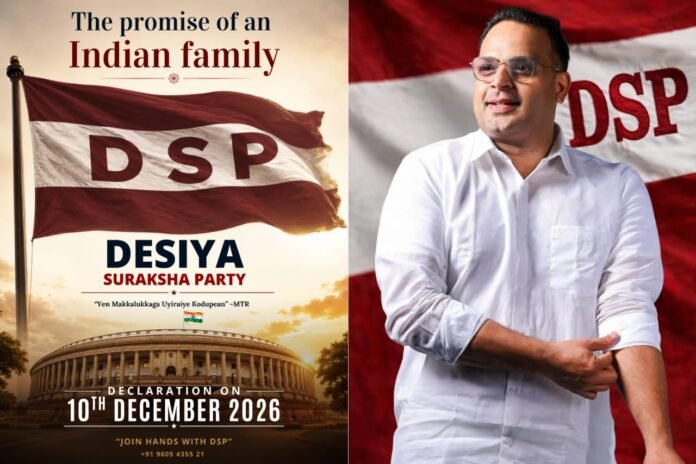
Good Government Schools Can Only Build A Good Government For The Nation Says Desiya Suraksha Party President MTR

Desiya Suraksha Party

Chennai, Tamil Nadu | October 8, 2026

Desiya Suraksha Party (DSP), led by President Mangan Thomas Rijoy (MTR), has announced its first Maanadu for December 10, 2026, in Chennai, marking a new phase in its stated efforts to address community safety and essential social needs.

The party’s announcement follows the Secure Our City campaign, which began in Chennai with a proposed commitment to provide 10,000 free CCTV cameras in selected cities across India. According to information provided by the party, the campaign has helped secure 5,000 houses in slum communities over five years.

DSP says its wider agenda is based on the view that security should include not only protection from crime but also access to housing, food, healthcare, education and basic dignity.

Secure Our City: A Grassroots Initiative

The Secure Our City campaign was launched around a central question: how can women and children feel safer in their neighbourhoods?

The initiative focused on CCTV installations and household-level security. The party says the work was carried out using personal funds rather than NGO or corporate backing during its initial phase.

Over time, interactions with residents highlighted additional challenges faced by vulnerable families. These experiences informed the decision to establish Desiya Suraksha Party as a political platform addressing broader social and governance issues.

MTR has described DSP as an initiative intended to question how public resources are managed and whether essential services reach the people who need them.

Five Areas of the DSP Agenda

The party has outlined five major priorities in its proposed programme.

1. Housing for Indian families

DSP proposes a minimum 500-square-foot owned home for every family, placing housing security at the centre of its stated vision

2. Access to basic necessities

The party has identified clothing and dignified living conditions as essential needs that should receive greater attention in public policy.

3. Education and healthcare

DSP proposes free education and healthcare at international standards. Detailed implementation and financing plans would be needed to establish how these commitments could be delivered nationwide.

4. Care and protection for children

The party proposes that every child should have access to a safe home, family care and future opportunities. It also says the state should assume a parental role when no suitable caregiver is available.

5. Women’s and children’s safety

DSP wants safety for women and children to be treated as a fundamental right, supported by practical protection measures and a wider culture of responsibility.

Questions on Public Accountability and National Resource

Another part of DSP’s stated agenda concerns public accountability and the distribution of national resources. The party has raised questions about tax collection, government expenditure and whether the benefits of India’s economic resources reach ordinary citizens.

Its position is that national development should be reflected in improvements to everyday living conditions, particularly for economically disadvantaged households

The party has also referred to a proposed expansion of Secure Our City through SecureCam India and potential corporate social responsibility funding. Its plans include security audits for homes and buildings, with further operational details yet to be specified.

December 10 Maanadu and Future Expansion

DSP has identified Tamil Nadu and Kerala as the initial focus areas for its next phase. The party says its first Maanadu in Chennai on December 10, 2026, will precede plans to expand Secure Our City across India

MTR has invited interested citizens to engage with the party’s stated objectives and learn more about its approach to community security and social welfare.

The planned expansion connects the original neighbourhood safety initiative with DSP’s wider proposals on housing, education, healthcare and child protection.

As the party prepares for its first Maanadu, its next steps will include explaining how its proposed commitments could be financed, implemented and assessed.

About Desiya Suraksha Party

Desiya Suraksha Party (DSP) is led by President Mangan Thomas Rijoy (MTR). The party states that its priorities include public safety, housing, education, healthcare, child welfare and accountability in the use of public resources.

Media Contact

Desiya Suraksha Party

President: Mangan Thomas Rijoy (MTR)

Tamil Nadu & Kerala Unit

Website:  https://share.google/EwwhhlTrl5Oa5Mic9

Phone: +91 96054 35521

Delhi Dhakad Crowned Champions After Unbeaten Run, Powered by Collective Brilliance On and Off the Table

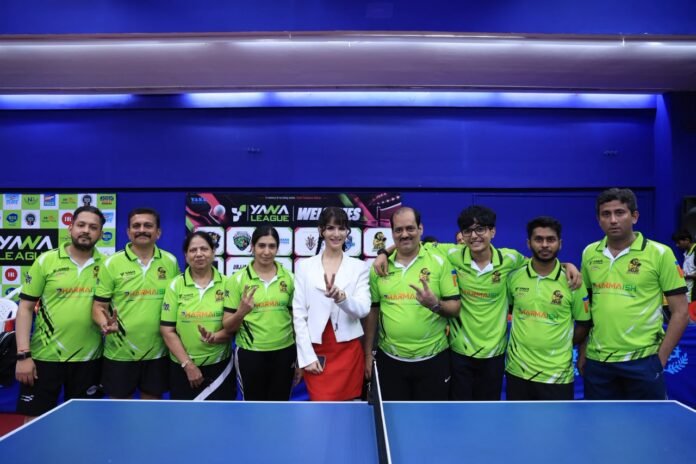
Delhi Dhakad Crowned Champions After Unbeaten Run, Powered by Collective Brilliance On and Off the Table From intelligent team-building at the auction to delivering under immense pressure on court, Delhi Dhakad’s championship journey was shaped by owner Jashn Agnihotri’s leadership, Coach Vishal Yadav’s guidance and a squad that consistently rose to the occasion. Mumbai, October 2026: Delhi Dhakad completed a memorable unbeaten campaign to emerge champions, capping a tournament run built on preparation, composure, depth and collective performance. Competing in the YANA Table Tennis League, which brought together 12 teams, Delhi Dhakad stood out not simply because of individual brilliance, but because of how effectively the entire unit performed when matches entered must-win territory. The foundation of the team was laid at the auction, where owner Jashn Agnihotri impressed with her negotiation skills, clarity of thought and confident decision-making while assembling the squad. The selections ultimately came together on court under the guidance of Coach Vishal Yadav, whose role in shaping the combinations and keeping the team composed through the tournament proved equally important. The championship squad featured Anjana Rao, Parth Singh, Bhavesh Shah, Pramod Desai, Ujwala Marathe and Vaibhav Raje — six players who collectively ensured that Delhi Dhakad were never dependent on a single performer. Among the team’s biggest strengths was Anjana Rao, a national champion whose experience became particularly valuable in high-pressure situations. In the semifinal against Desi WarriorZ, Rao opened the contest by overcoming Shital Shah in three sets, immediately putting Delhi Dhakad in a strong competitive position. Vaibhav Raje was another major contributor in that dramatic semifinal. He combined with Parth Singh to win the crucial men’s doubles encounter against Aniruddha Vaidya and Upendra Mulye, before defeating Upendra Mulye in singles as well. His ability to deliver in consecutive pressure encounters played an important role in keeping Delhi Dhakad alive in a semifinal where virtually every point mattered. Rao and Raje were emblematic of what made Delhi Dhakad so difficult to play against — experienced players capable of absorbing pressure and then transferring it straight back onto the opposition. Their performances, alongside contributions from the rest of the squad, ensured that both semifinal and final opponents were continually forced to respond. The semifinal against Desi WarriorZ ultimately became Delhi Dhakad’s closest battle of the tournament. The contest stretched all the way to 13–13, leaving the semifinal dependent on the final set. Even that decider reached 10–10 before Delhi Dhakad held their nerve on the golden point, clinching a dramatic 14–13 victory. It was arguably the strongest examination of their championship credentials — two evenly matched teams separated by a single point at the most decisive moment. Delhi Dhakad then moved into the final against Chambal Ghadiyal, where the complexion of the contest was very different. Having survived the pressure of the semifinal, Delhi Dhakad produced a far more commanding performance in the title clash and completed their unbeaten run as champions. Yet their triumph cannot be attributed to one player, one decision or one moment. Parth Singh, Bhavesh Shah, Pramod Desai and Ujwala Marathe, together with Rao and Raje, all had roles to play across the campaign. Different players stepped forward in different situations — precisely the quality required from a championship squad. The result was a title created through three interconnected strengths: Jashn Agnihotri’s vision and team-building, Vishal Yadav’s coaching and tactical leadership, and six players who converted that planning into performances on the table. For Agnihotri in particular, the journey offered a compelling example of entrepreneurship translating into competitive sport. Her negotiation skills attracted attention during the auction, but the real validation came later — when the team built there remained unbeaten and eventually lifted the championship. From auction strategy to coaching, from pressure points to match-winning performances — Delhi Dhakad won this championship as one unit. Congratulations to Owner Jashn Agnihotri, Coach Vishal Yadav, Anjana Rao, Parth Singh, Bhavesh Shah, Pramod Desai, Ujwala Marathe and Vaibhav Raje on a remarkable championship campaign. Twelve teams entered. D

From intelligent team-building at the auction to delivering under immense pressure on court, Delhi Dhakad’s championship journey was shaped by owner Jashn Agnihotri’s leadership, Coach Vishal Yadav’s guidance and a squad that consistently rose to the occasion.

Mumbai, October 2026: Delhi Dhakad completed a memorable unbeaten campaign to emerge champions, capping a tournament run built on preparation, composure, depth and collective performance.

Competing in the YANA Table Tennis League, which brought together 12 teams, Delhi Dhakad stood out not simply because of individual brilliance, but because of how effectively the entire unit performed when matches entered must-win territory.

The foundation of the team was laid at the auction, where owner Jashn Agnihotri impressed with her negotiation skills, clarity of thought and confident decision-making while assembling the squad. The selections ultimately came together on court under the guidance of Coach Vishal Yadav, whose role in shaping the combinations and keeping the team composed through the tournament proved equally important.

The championship squad featured Anjana Rao, Parth Singh, Bhavesh Shah, Pramod Desai, Ujwala Marathe and Vaibhav Raje — six players who collectively ensured that Delhi Dhakad were never dependent on a single performer.

Among the team’s biggest strengths was Anjana Rao, a national champion whose experience became particularly valuable in high-pressure situations. In the semifinal against Desi WarriorZ, Rao opened the contest by overcoming Shital Shah in three sets, immediately putting Delhi Dhakad in a strong competitive position.

Vaibhav Raje was another major contributor in that dramatic semifinal. He combined with Parth Singh to win the crucial men’s doubles encounter against Aniruddha Vaidya and Upendra Mulye, before defeating Upendra Mulye in singles as well. His ability to deliver in consecutive pressure encounters played an important role in keeping Delhi Dhakad alive in a semifinal where virtually every point mattered.

Rao and Raje were emblematic of what made Delhi Dhakad so difficult to play against — experienced players capable of absorbing pressure and then transferring it straight back onto the opposition. Their performances, alongside contributions from the rest of the squad, ensured that both semifinal and final opponents were continually forced to respond.

The semifinal against Desi WarriorZ ultimately became Delhi Dhakad’s closest battle of the tournament.

The contest stretched all the way to 13–13, leaving the semifinal dependent on the final set. Even that decider reached 10–10 before Delhi Dhakad held their nerve on the golden point, clinching a dramatic 14–13 victory.

It was arguably the strongest examination of their championship credentials — two evenly matched teams separated by a single point at the most decisive moment.

Delhi Dhakad then moved into the final against Chambal Ghadiyal, where the complexion of the contest was very different. Having survived the pressure of the semifinal, Delhi Dhakad produced a far more commanding performance in the title clash and completed their unbeaten run as champions.

Yet their triumph cannot be attributed to one player, one decision or one moment.

Parth Singh, Bhavesh Shah, Pramod Desai and Ujwala Marathe, together with Rao and Raje, all had roles to play across the campaign. Different players stepped forward in different situations — precisely the quality required from a championship squad.

The result was a title created through three interconnected strengths: Jashn Agnihotri’s vision and team-building, Vishal Yadav’s coaching and tactical leadership, and six players who converted that planning into performances on the table.

For Agnihotri in particular, the journey offered a compelling example of entrepreneurship translating into competitive sport. Her negotiation skills attracted attention during the auction, but the real validation came later — when the team built there remained unbeaten and eventually lifted the championship.

From auction strategy to coaching, from pressure points to match-winning performances — Delhi Dhakad won this championship as one unit.

Congratulations to Owner Jashn Agnihotri, Coach Vishal Yadav, Anjana Rao, Parth Singh, Bhavesh Shah, Pramod Desai, Ujwala Marathe and Vaibhav Raje on a remarkable championship campaign.

Twelve teams entered. Delhi Dhakad finished as Champions.