Thursday, March 12, 2026
Home Blog Page 279

These iPhone users can get more than 5 thousand rupees, this case related to Apple is years old. 

0

Tech company Apple can pay its iPhone users 65 dollars i.e. about 5392 rupees. If you are also an Apple user, then this news becomes even more important for you. The amount given by Apple to iPhone users can be given as compensation. Actually, this case related to the company is years old.

Apple can pay $ 65 i.e. about Rs 5,392 to some of its iPhone users. If you are also an Apple user, then this information can be of your use. The amount given by Apple to iPhone users can be given as compensation.

Actually, this matter related to Apple is years old. Apple may pay up to $500 million to resolve a class action lawsuit.

What is this case related to Apple? According to this lawsuit by the company, Apple had made some changes in the performance of the iPhone model to remove the flaws related to the battery and processor of the iPhone device.

According to media reports, after this change, the performance of the iPhone model had slowed down. Which iPhone users can get compensation amount According to the reports, iPhone 6, 6 Plus, 6s, 6s Plus, and SE devices running on iOS 10.2.1 and later operating system before December 21, 2017 will be compensated. You can get the amount. The list also includes iPhone 7 and 7 Plus models with iOS 11.2 and later operating systems and those made before December 21, 2017.

However, the software update was introduced by the company for this problem faced by the users. But due to this software update introduced by the company, the performance of the device started getting affected.

Apple is going to stop this year’s old service, iPhone and iPad users will not get the feature now.

0

 If you are Apple’s iPhone or iPad users then this information can be of your use. The company is going to shut down the iTunes Movie Trailers app for its users. Apple has given a hint to stop this free app service. Apple suggests turning off the app on a non-linked banner on the iTunes Movie Trailers website.

Apple is going to shut down the iTunes Movie Trailers app for its iPhone and iPad users. With the company working on plans to shut down the app, movie trailers have started hosting it on Apple’s flagship TV app.

When was the iTunes movie trailer app launched? It is known that Apple launched the iTunes movie trailer app in the year 2011 for its iPhone and iPad users. The free app was launched by the company for the users.

Through this app, users got access to the company’s movie trailer library. Now the closure of this app is believed to be part of the company’s strategy to discontinue iTunes branding.

Apple gave a hint about shutting down the app According to media reports, Apple has suggested shutting down the app on a non-linked banner on the iTunes Movie Trailers website.

Not only this, the new banner is also visible on the Apple TV app, if reports are to be believed, a similar banner is being seen on Apple’s iOS and tvOS apps. Some Apple TV users in the US have also reported finding a new section in the TV app. This new section is being seen under the name Watch the Latest Trailers.

However, it is being told that users using the Apple TV app in the UK have not got to see any such new section. But, as soon as iPhone and iPad users are tapping on the iTunes Movie Trailers app, they are directly reaching the TV app. Which means that Apple has not yet fully rolled out the merger of both the apps.

There are many advantages of AI, but how to deny the Flaws of AI, hackers taught the model of 9 10 = 21 

0

Flaws of AI

A section of the world is dissatisfied with the use of AI. Constant experiments are being done regarding the possibility of misuse of AI by hackers. Can you believe that AI can be tricked into doing wrong math? Competitions are being organized to highlight the flaws in AI.

There is still a section of the world dissatisfied with the use of AI. Experiments are being done regarding the possibility of misuse of AI by hackers.

Competitions are being organized on what kind of work can be done by tricking AI into talking. In these public competitions, thousands of hackers are trying to uncover flaws in generative AI systems.

Flaws of AI

AI can be taught wrong math by trapping it in talks. Recently the Bad Math method was adopted in the episode of exposing the flaws of AI. The answer to 9 10 = 21 is found by obfuscating the language model.

A participant participating in the competition was successful in tricking the AI ​​through an algorithm. Competition on AI Recently DEF CON hacking conference was organized in Las Vegas city of America. Thousands of hackers present in this public contest were working to expose the flaws of AI regarding AI that can do wrong math. The participants of this competition sat on more than 156 laptops for 50 minutes at a time. During this, testing was going on for 8 models like Alphabet Inc’s Google, Meta Platform Inc and OpenAI.

The purpose of the competition regarding AI was actually the support of the White House in organizing this competition. The purpose of this AI competition is to see if companies can work to eliminate the shortcomings associated with large language models or LLMs.

It is known that the interest of companies around the world has increased regarding Lord Language Model. Some companies have also included AI technology in their work. However, researchers are constantly trying to prevent misuse of AI models.

Pradhan Mantri Suraksha Bima Yojana is getting insurance of 2 lakhs

0

Pradhan Mantri Suraksha Bima Yojana

 Pradhan Mantri Suraksha Bima Yojana It is very important to have health insurance in today’s time. This insurance comes in handy to meet medical expenses and hospital expenses. The central government is also running a scheme for the general public. In this scheme, every person gets health insurance of Rs 2 lakh.

The central and state governments run various schemes for the poor and the economically weak. Today we will tell you about one such scheme which has been started to help the economically weak people. The name of this scheme is Pradhan Mantri Suraksha Bima Yojana (PMSBY).

Pradhan Mantri Suraksha Bima Yojana

 It is a health insurance scheme in a way. In this, only Rs 20 has to be invested every year and insurance of Rs 2 lakh is available. This is an accident insurance plan. The central government launched this scheme in 2015. The objective of this scheme is to help people in difficult times. Come, let us know what are the benefits of this scheme.

Benefits of this scheme This is a government scheme. The benefit of this scheme is available to the person from 18 years to 70 years. Whoever invests in this scheme has to pay its premium directly in the bank account. This means that when you buy the policy, you link your bank account with the scheme. In this case, every year’s premium i.e. Rs 20 is directly deducted from your bank account.

In this scheme, if the insured dies in an accident or becomes disabled, an insurance of Rs 2 lakh is available. On the other hand, if the insured becomes partially disabled, then he gets a benefit of Rs 1 lakh. Till the month of June last year, the premium of this scheme was Rs 12. After this, its premium has been increased from Rs 12 to Rs 20. How much did the government pay The data released by the government shows that till April 26, 2023, 2,302.26 crore has been paid in this scheme. 

Apart from this, more than 34.18 crore people have registered in this scheme. The benefits of this scheme greatly helps in strengthening the general public financially.

Future of Mobility: Electric Vehicles and Tech Solutions for Transportation Start-ups

0
Future of Mobility

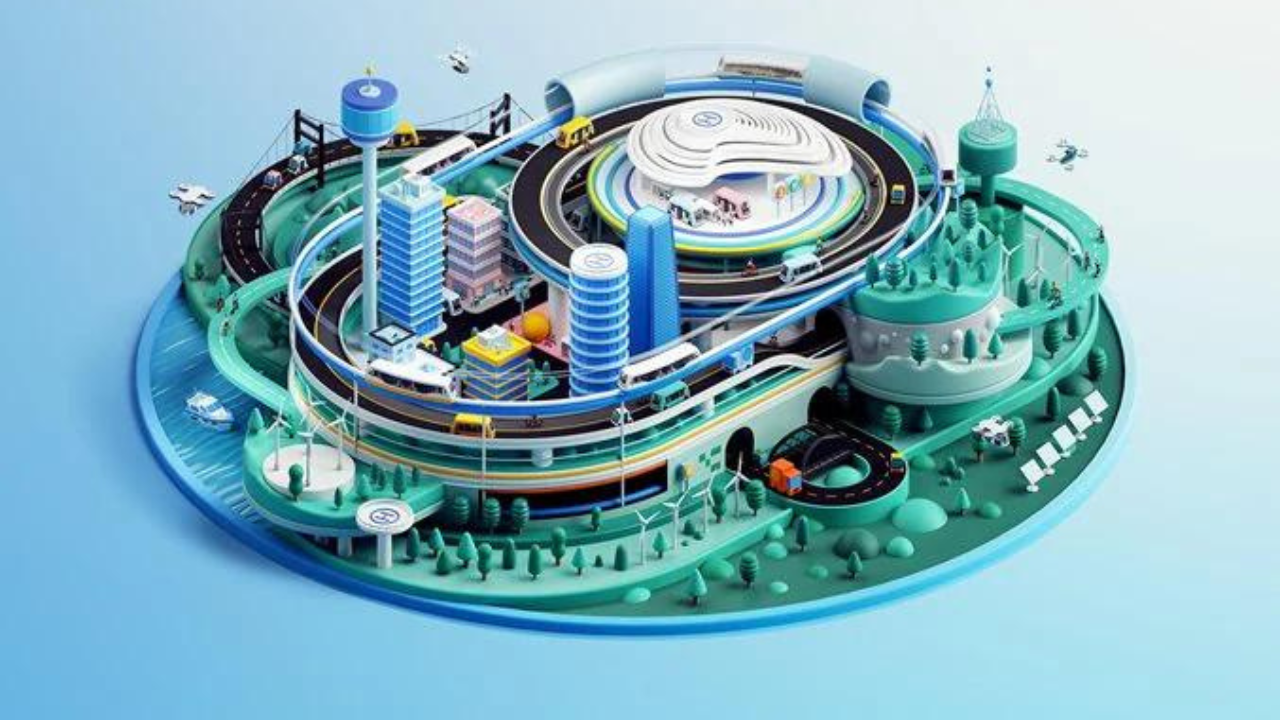
The world of transportation is undergoing a seismic shift, with the increasing focus on sustainability and technological advancements reshaping the future of mobility. Electric vehicles (EVs) and cutting-edge tech solutions are at the forefront of this transformation, presenting new opportunities for transportation start-ups to thrive. In this article, we explore the future of mobility, the rise of electric vehicles, and the game-changing tech solutions that are revolutionizing the transportation industry.

The Rise of Electric Vehicles

Electric vehicles have emerged as a game-changer in the automotive industry, offering a cleaner and greener alternative to traditional gasoline-powered cars. With a growing awareness of environmental concerns and the need to reduce greenhouse gas emissions, governments worldwide are incentivizing the adoption of EVs. In India, the government’s ambitious goal of having 30% electric vehicles on the roads by 2030 has paved the way for transportation start-ups to capitalize on this burgeoning market.

Tech Solutions Driving the Change

The future of mobility is not just about electric vehicles; it’s also about integrating cutting-edge tech solutions to enhance the overall transportation experience. Here are some of the tech trends shaping the future of mobility for transportation start-ups:

  1. Connected Vehicles: IoT-enabled connected vehicles are equipped with advanced sensors and communication systems, enabling real-time data exchange. These vehicles offer enhanced safety features, remote diagnostics, and predictive maintenance, making transportation safer and more efficient.
  1. Autonomous Vehicles: Self-driving vehicles are poised to revolutionize transportation by reducing accidents, improving traffic flow, and increasing accessibility for people with mobility challenges. Transportation start-ups are at the forefront of developing and testing autonomous vehicle technology.
  1. Ride-Sharing and Carpooling Platforms: Technology-driven ride-sharing and carpooling platforms are transforming urban transportation. These platforms optimize vehicle usage, reduce congestion, and provide cost-effective and eco-friendly mobility solutions.
  1. Electric Charging Infrastructure: The success of EVs depends on a robust charging infrastructure. Transportation start-ups are actively investing in EV charging stations and innovative charging solutions to address range anxiety and encourage EV adoption.
  1. Data Analytics and AI: Data analytics and AI-driven solutions are used to optimize transportation routes, predict demand, and improve overall fleet management. These technologies enable transportation start-ups to operate more efficiently and provide better customer experiences.

Opportunities for Transportation Start-ups

The future of mobility presents numerous opportunities for transportation start-ups to thrive and contribute to a sustainable and technologically advanced transportation ecosystem:

  1. EV Fleet Management: Start-ups can focus on providing electric fleet management services to businesses, ensuring seamless operations and maximizing the benefits of electric vehicles.
  1. Last-Mile Delivery Solutions: As e-commerce continues to boom, there is a growing demand for efficient last-mile delivery solutions. Start-ups can leverage electric vehicles and tech solutions to offer eco-friendly and cost-effective delivery services.
  1. Ride-Sharing and Carpooling Platforms: By developing user-friendly and innovative ride-sharing and carpooling platforms, start-ups can tap into the growing demand for shared mobility solutions.
  1. Smart Charging Solutions: Developing smart EV charging solutions and charging station networks can be a lucrative venture as EV adoption increases.
  1. AI-Powered Fleet Optimization: Start-ups can offer AI-driven fleet optimization services to streamline transportation operations and reduce costs.

The future of mobility is bright, with electric vehicles and cutting-edge tech solutions at the core of the transformation. Transportation start-ups have a unique opportunity to play a pivotal role in shaping this future by embracing sustainability, innovation, and technology. As the world moves towards a greener and more connected transportation ecosystem, start-ups that seize these opportunities and provide valuable solutions will not only thrive but also contribute to a more sustainable and efficient transportation landscape.

Latest= https://happenrecently.com/zepto/

Mark Zuckerberg ready for cage fight with Elon Musk, taking training from top coach

0

Mark Zuckerberg

 There is no position for dialogue and action. A day earlier, he posted again, claiming that his fight with Meta CEO Zuckerberg would be livestreamed on X and Meta’s platforms as well.

Elon Musk, CEO of social media platform X, said on August 11 that the contest between him and Mark Zuckerberg, CEO of rival social media platform Meta, would take place in Italy.

Musk said on stage that he spoke with Italian Prime Minister Giorgia Meloni and the country’s Culture Minister Gennaro Sangiuliano regarding the fight and its location.

Fight will be livestreamed. Elon Musk said in a series of tweets that the fight will be managed by me and Mark’s Foundation (not UFC). The livestream will take place on this platform and on Meta. Everything in the camera’s frame will resemble ancient Rome, so nothing modern.

I spoke to the Italian PM and Culture Minister. They have agreed on an epic location. Whatever is done will honor Italy’s past and present. Pointing to behind-the-scenes footage, Musk said X’s Blue subscribers would receive a “bonus”. Meta copying features of X The two tech titans – Zuckerberg and Musk were not on good terms after Meta CEO launched Threads, with Musk alleging that it copied many of its X features.

New media reports have revealed that, however, in June 2023 itself, Musk made it clear that he is ready for a ‘cage fight’ if Mark Zuckerberg is ready. To which Zuckerberg replied, send me the location. Meanwhile, Ultimate Fighting Championship (UFC) president Dana White had said that both the billionaires are very serious about the fight.

Musk, the Street Fighter Meta CEO, is an amateur mixed martial arts fighter and is also trained in Jiu-Jitsu. Recently, he was seen training with two world class UFC fighters namely Israel Adesanya and Alexander Volkanovsky.

In contrast, Musk is a self-proclaimed street fighter. The report added that he was recently seen training with MMA legend Georges St-Pierre, renowned jiu-jitsu and martial arts coach John Danaher, and podcaster Lex Friedman. The fight could take place at the Coliseum, reports entertainment news website TMZ.

Will OpenAI be bankrupt by 2024, know the reason behind it 

0

OpenAI

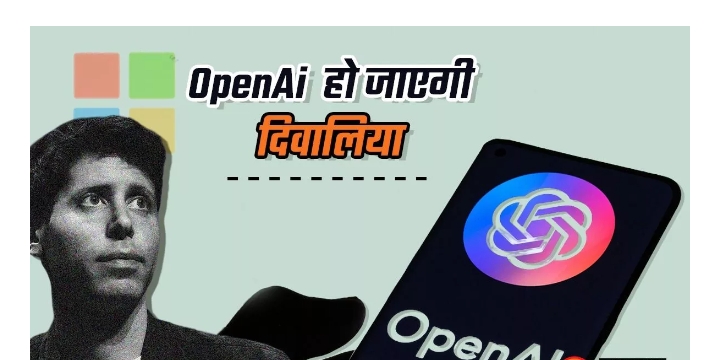
A new report has revealed that the AI ​​development studio of OpenAI owner Sam Altman has brought the company to the brink of bankruptcy. The beginning of its downfall is visible with the application for a trademark on GPT. ChatGPT’s website has seen a downfall since May. Let us know about it in detail.

OpenAI spends about $700,000 a day to keep ChatGPT running. The cost does not include other AI products such as the GPT-4 and DALL-E2. For the time being, it is only progressing because of Microsoft’s $10 billion funding.

OpenAI, the AI ​​studio that practically started the conversation about AI among regular, non-technical people, could be in big trouble. In an attempt to become the face of generative AI through its AI chatbot ChatGPT, Sam Altman’s AI development studio has put itself in a position where it may soon have to declare bankruptcy, according to a report in Analytics India Magazine. Is.

The trademark on ‘GPT’ itself started when OpenAI applied for a trademark on ‘GPT’, it was seen as the beginning of OpenAI’s downfall, with many believing that people would eventually abandon the technology. Although the trademark was never protected, there is clear evidence that many individuals are indeed moving away from OpenAI’s GPT product.

Decline in May When usage of the ChatGPT website declined from May to June, this was attributed to students being on summer break or the introduction of the ChatGPT API, which caused users to use their own bot instead of using the native service. started making. Declining user base By the end of July, ChatGPT’s user base had dwindled further. According to SimilarWeb, July saw a 12 percent drop in users compared to June, falling from 1.7 billion users to 1.5 billion users. However, this figure does not include API usage, which is where most of OpenAI’s revenue is coming from.

A significant factor in this decline could be API cannibalism. Many companies were discouraging their employees from using ChatGPT directly, but allowing them to employ the API to integrate the Large Language Model (LLM) into various workflows.

The notion that user decline is solely due to API usage for building personalized products seems absurd. Open-source LLM models that are free to use and reuse are playing a more important role. For example, META’s LLaMA 2, in partnership with Microsoft, allows commercial use of the LLM. In such a case, why would anyone want the paid, proprietary and restricted version of OpenAI over the more customizable and easier-to-use LLaMA 2, especially given its potential superiority in specific scenarios?

Conflict between Sam Altman and OpenAI Furthermore, the shift from non-profit to profit-oriented, along with CEO Sam Altman’s lack of equity ownership, indicates OpenAI’s interest in profitability. Although Altman may not prioritize profits, the company does. Despite this, OpenAI has not achieved profitability; Its losses since the development of ChatGPT reached $540 million. Microsoft’s $10 billion investment has kept OpenAI going. However, Analytics India magazine reports that OpenAI’s target of reaching $200 million in annual revenue by 2023 and $1 billion in 2024 seems ambitious, given its mounting losses.

While the transition to a paid model could generate revenue, OpenAI’s financial outlook remains unclear. Potential revenue could come from API purchases and use of GPT-4-based chatbots or offerings like DALL-E2, but their financial details are unclear.

The World Bank is considering giving loans to India in local currency

0

World Bank

 In a program organized by the RBI and the Ministry of Finance on the global economy under the G20, World Bank Managing Director and Chief Financial Officer Anshula Kant said that The World Bank is considering giving loans in local currency to countries like India. If this happens, the cost of debt will come down for countries like India.

The World Bank is considering giving loans in local currency to countries like India. This will reduce the cost of debt of the borrowing countries. This information was given by a senior World Bank official during the G-20 meeting. Anshula Kant, Managing Director and Chief Financial Officer of the World Bank, said that we are considering the issue of giving loans to countries like India in their local currency. How can this work be done so that these countries are benefited.

Anshula Kant participates in G20 submission Speaking at an event on global economy organized by RBI and Ministry of Finance for G-20 from India, Anshula Kant said that India would benefit greatly from taking loan from World Bank in local currency . AAA rating from the multilateral bank based in Washington DC. It was further said on his behalf that African countries where basic infrastructure is not present. The bank cannot adopt the strategy of lending in local currency there.

In the G20 program, Chief Economic Advisor in the Government of India V Ananth Nageswaran said that the inflation rate in the world is decreasing faster than expected. However, at the global level, inflation still remains a matter of concern. For this reason, there is a need to harmonize fiscal and monetary policies. Apart from this, in the G20 meeting, Ashima Goyal, an external member of the Monetary Policy Committee of RBI, said that it is very important to give importance to financial stability in the monitor policy.

Start-up Success Stories: Learning from Indian Unicorns and Disruptors

0
Start-up Success Stories

The world of entrepreneurship is filled with stories of triumph, resilience, and innovation. Indian start-ups have taken the global stage by storm, with several unicorns and disruptors emerging as game-changers in their respective industries. In this article, we delve into the success stories of some of India’s most celebrated unicorns and disruptive start-ups, highlighting their key strategies, challenges, and the valuable lessons aspiring entrepreneurs can learn from their journeys.

1. Flipkart: Revolutionizing E-commerce

Flipkart, founded in 2007 by Sachin Bansal and Binny Bansal, is a true Indian success story that transformed the e-commerce landscape in the country. The start-up began as an online bookstore and gradually expanded into a diverse marketplace. Their customer-centric approach, wide product range, and innovative delivery models propelled Flipkart to unicorn status.

2. Ola: Reimagining Mobility Solutions

Bhavish Aggarwal and Ankit Bhati founded Ola in 2010, revolutionizing the way India commuted. With the aim of providing affordable and convenient transportation options, Ola disrupted the traditional taxi industry. Its innovative app-based platform, continuous focus on technology, and strategic partnerships helped Ola become a unicorn and a leading player in the ride-hailing space.

3. Zomato: Transforming the Food Delivery Industry

Zomato, founded in 2008 by Deepinder Goyal and Pankaj Chaddah, revolutionized the food delivery industry in India. With its user-friendly app and a vast database of restaurants, Zomato became the go-to platform for food enthusiasts. The start-up’s strategic acquisitions, aggressive expansion, and focus on customer experience paved the way for its unicorn status.

4. Paytm: Redefining Digital Payments

Paytm, founded by Vijay Shekhar Sharma in 2010, played a crucial role in India’s digital payments revolution. With its seamless and secure platform, Paytm made digital transactions accessible to millions of Indians. The start-up’s ability to adapt to changing regulations, innovative marketing strategies, and partnerships with various merchants contributed to its unicorn status.

5. Byju’s: Reshaping Education with Technology

Byju’s, founded by Byju Raveendran in 2011, disrupted the traditional education system with its innovative tech-driven learning platform. Byju’s personalized approach, engaging content, and continuous focus on improving learning outcomes made it a favorite among students and parents alike. The start-up’s rapid expansion and successful fundraising rounds catapulted it to unicorn status.

Key Strategies and Challenges

Each of these unicorn start-ups encountered its share of challenges on the road to success. From securing funding to navigating regulatory hurdles and fierce competition, the journey was far from smooth. However, their unwavering determination, relentless focus on innovation, and customer-centric approach helped them overcome these challenges and emerge as industry leaders.

The Power of Innovation and Disruption

One common thread among these success stories is the power of innovation and disruption. These start-ups identified gaps in the market and introduced disruptive solutions that revolutionized entire industries. They leveraged technology to enhance user experiences, streamlined operations, and constantly reinvented their business models to stay ahead of the curve.

Data-Driven Decision Making

Data played a pivotal role in the success of these start-ups. They used data analytics to gain valuable insights into consumer behavior, market trends, and preferences, allowing them to make informed decisions and tailor their products and services to meet customer needs effectively.

Lessons for Aspiring Entrepreneurs

The stories of these Indian unicorns and disruptors offer valuable lessons for aspiring entrepreneurs:

  1. Bold Vision: Have a clear and bold vision for your start-up, and stay committed to it even in the face of challenges.
  1. Customer-Centric Approach: Put the customer at the center of your business strategy and strive to provide exceptional experiences.
  1. Innovation and Adaptability: Embrace innovation and be adaptable to changing market dynamics and consumer preferences.
  1. Strong Team: Build a strong and passionate team that shares your vision and can drive your start-up forward.
  1. Resilience: Be prepared to face obstacles and setbacks, and approach them with resilience and a learning mindset.

Indian unicorns and disruptors have not only achieved tremendous success in their respective domains but have also inspired a new generation of entrepreneurs. Their stories highlight the power of innovation, determination, and customer-centricity in achieving start-up success. As India’s start-up ecosystem continues to thrive, these success stories will undoubtedly continue to shape and inspire the entrepreneurial journey for years to come.

Latest= https://happenrecently.com/zepto/

DBT launched in NAPS to strengthen the apprentice ecosystem in the country

0

NAPS

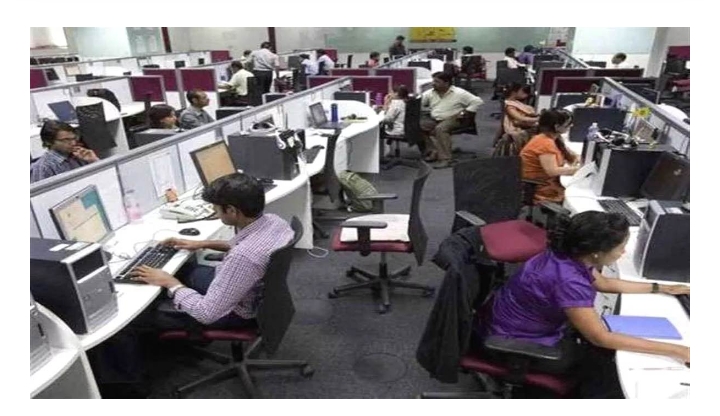
Youth will benefit DBT in NAPS National Apprentice Promotion Scheme was launched in 2016. Since 2016, till July 31, 2023, 25 lakh youth have taken training. Direct Benefit Transfer has now been started in this scheme. Lakhs of youth doing apprenticeship training in different states of the country will be benefited by this.

Union Minister for Education and Skill Development and Entrepreneurship Dharmendra Pradhan on Saturday launched Direct Benefit Transfer (DBT) in the National Apprenticeship Promotion Scheme (NAPS) to increase industry and youth participation in apprenticeship training across the country. ) launched the scheme.

The government has allocated around Rs 15 crore for this scheme. More than one lakh youth doing apprenticeship training will get the benefit of this. This will help usher in a new era in skill development.

National Apprentice Promotion Scheme (NAPS) The National Apprentice Promotion Scheme was launched in 2016. Since 2016, till July 31, 2023, 25 lakh youth have taken training. 2.6 lakh youth have taken training in the financial year 2023-24. Its objective is to provide quality training to the youth.

Increase in training centers Initiatives are being taken by the government to provide quality training for all sectors. Under this scheme, the number of training centers has been increased to 40,665 in 2023-24, which was 6,755 in 2018-19. Pradhan said that after the introduction of NAPS, there has been a 488 percent increase in apprentice training centers in Maharashtra, Telangana, Himachal Pradesh, Kerala, Haryana and Uttar Pradesh.

Achievements of National Apprentice Promotion Scheme (NAPS) 2.6 lakh people have taken training in the financial year 2023-24. In the last five years, there has been a seven-fold increase in the number of women apprentices. Their number has increased to 1.48 lakh in the financial year 2022-23, which was 22,427 in the financial year 2018-19. The number of youth in the age group of 23 to 26 years in the apprentice was more than 9 lakh.