
Wednesday, September 2, 2026
Home Blog Page 257

Fiscal Responsibility of Government for a Strong Economy

  • Fiscal responsibility is a critical aspect of government management that plays a pivotal role in shaping a nation’s economic stability and growth. It involves how a government manages its finances, including taxation, spending, and debt, with the overarching goal of ensuring long-term economic well-being. In this essay, we will explore the key elements of fiscal responsibility and discuss their impact on the economy.

One of the fundamental components of fiscal responsibility is the government’s ability to maintain a balanced budget. A balanced budget means that government revenue, primarily derived from taxes, is equal to or greater than its expenditures. This concept is analogous to a household ensuring that its expenses do not exceed its income. When a government consistently runs budget deficits, it must borrow to cover the shortfall, leading to an accumulation of national debt. Over time, this debt can become unsustainable and hinder economic growth.

A fiscally responsible government carefully manages its revenue and spending to avoid persistent deficits. By doing so, it can ensure that it has the financial capacity to respond to economic crises, invest in infrastructure, and address social needs. A balanced budget also sends a positive signal to financial markets, fostering investor confidence and potentially lowering borrowing costs for the government.

Taxes are a crucial tool for governments to generate revenue. However, a key aspect of fiscal responsibility is maintaining a tax system that is equitable and efficient. An equitable tax system distributes the tax burden fairly across different income groups. Progressive taxation, where those with higher incomes pay a greater percentage of their earnings in taxes, is often considered more equitable. An efficient tax system minimizes economic distortions and encourages economic activity. High tax rates or complex tax codes can discourage investment and entrepreneurship.

Moreover, fiscal responsibility entails effective and efficient government spending. The government should allocate resources to projects and programs that yield the highest social and economic returns. Prioritizing investments in areas like education, healthcare, and infrastructure can have long-term positive impacts on the economy. Inefficient and wasteful spending not only hampers economic growth but also erodes public trust in government.

Another critical aspect of fiscal responsibility is managing national debt. While some level of government debt can be a useful tool to fund necessary initiatives, excessive debt can pose risks to the economy. A growing national debt can lead to higher interest payments, diverting resources away from productive investments. It also raises concerns about future tax burdens on the population and can contribute to inflationary pressures.

To maintain fiscal responsibility, governments must have a clear plan for debt management. This includes monitoring debt levels, ensuring that new borrowing is tied to productive investments, and gradually reducing the debt burden during periods of economic growth.

  • In addition, fiscal responsibility involves creating mechanisms for transparency and accountability. Citizens have the right to know how the government is managing public finances. Transparency helps in preventing corruption and mismanagement, while accountability ensures that government officials are responsible for their actions. An independent audit of government finances and the oversight of legislative bodies play crucial roles in this regard.

Finally, fiscal responsibility extends to managing economic cycles. Governments must be prepared to counter economic downturns with counter-cyclical fiscal policies. This can include increasing government spending or reducing taxes during recessions to stimulate economic activity. Conversely, during periods of economic growth, it may be necessary to rein in spending and reduce deficits to prevent overheating and inflation.

  • In conclusion, fiscal responsibility is an essential component of effective governance and is intrinsically linked to the overall health and stability of an economy. A government that manages its finances prudently, maintains a balanced budget, enforces an equitable tax system, allocates resources efficiently, and manages debt responsibly, is more likely to create an environment conducive to economic growth and prosperity. It is through these practices that governments can fulfill their obligations to their citizens and contribute to the long-term well-being of the nation.

For more information visit at https://happenrecently.com/zepto/?amp=1

A delivery man is arrested on charges of raping a woman

  • In Noida skyscraper Defendant Sumit Singh was previously jailed for illegally selling alcohol. Special arrangement
  • The accused committed the crime when he saw the victim alone early Friday morning. He grabbed a police officer’s gun and opened fire while trying to escape.

A 25-year-old delivery boy has been arrested for allegedly raping a woman in a high-rise building in Noida, where he had gone to deliver groceries at the victim’s request through a mobile app, police said.

The events occurred on Friday morning. According to the police, the accused, Sumit Singh, a resident of Badalpur in Gautam Budh Nagar, was working at Plinkett Grocery aggregator. He broke into the 19-year-old’s apartment after finding her alone and raped her. “Then he fled from there on a bike,” an officer said.

After the victim reported it, several police teams were formed to arrest the suspect. He was finally arrested in Khairpur.

Immediately after his arrest, the suspect grabbed a police officer’s gun and opened fire while trying to escape. The other officials present there retaliated in self-defense and Sumit Singh sustained injuries to his leg, the officer said, adding that the pistol was recovered from him and he was taken to go to a local hospital for treatment. According to the police, the accused was jailed for selling illegal liquor and his brother Manoj is also a history columnist.

  • The screams were still inaudible
  • When he left the apartment, the woman ran to the balcony and raised the alarm, but no one heard his screams, so he fled the community. “Since the accident occurred early in the morning, most people were probably asleep,” the official said. “From the details of his call, it appears that he was hiding in a dark corner of the society for at least an hour and then escaped on a bicycle from Gate No. 3 of the society,” the officer said after scanning the CCTV footage.

He said that the woman was temporarily staying in an apartment owned by her brother-in-law. He had asked her to take care of his apartment and his livestock since his return to his hometown.

Meanwhile, a spokesperson for the Plinkett grocery complex said they are fully cooperating with police.

The spokesman added: “We cannot comment further as the investigation is ongoing.”

For more information visit at https://happenrecently.com/zepto/?amp=1
Source: www.thehindu.com

A war in which humanity is currently being judged

A war in which humanity is currently being judged (Israel-Gaza War )

On October 7, 2023, the 50th anniversary of the Yom Kippur War, Hamas launched a brutal attack on Israel, killing more than a thousand people, most of them civilians, and kidnapping more than 200 others. This unprecedented attack has devastated Israel. The Indian National Congress firmly believes that violence has no place in a decent world, and unequivocally condemned the attacks launched by Hamas the following day.

  • However, this tragedy(War ) was exacerbated by the random operations carried out by the Israeli army in and around Gaza, which resulted in the killing of thousands of people, including many innocent children, women and men. Israeli state power is now focused on taking revenge on a largely helpless and innocent population. The destructive power of one of the world’s most powerful military arsenals has been unleashed on children, women and men who did not participate in the Hamas attack; On the contrary, most of them have been the subject of decades of discrimination and suffering.

Random destruction

During this war, as it is now described, entire families were wiped out and the surrounding neighborhoods were reduced to rubble. Health facilities are unable to cope with the widespread humanitarian crisis affecting the population. Deprivation of water, food and electricity is nothing more than collective punishment of the Palestinian people. The outside world, especially those who want to help, are largely trapped in Gaza, where relief and aid reach the poor in trickles rather than in the necessary volume. This is not only inhumane, but also violates international law. A small number of Gazans escaped the violence. Confined to a small, densely populated strip, they had nothing to rely on. Now, even the occupied West Bank is burning and the conflict is spreading.

Future prospects are worrying. Senior Israeli officials spoke of the destruction and evacuation of a large part of the Gaza Strip. The Israeli Defense Minister describes the Palestinians as “human animals.” This inhumane language is shocking when it comes from descendants of Holocaust victims. Humanity is currently being tested. We have been collectively degraded by the brutal attacks on Israel. Today, we are all weakened by Israel’s brutal and disproportionate response. How many more lives do we have to live before our collective consciousness wakes up and awakens?

The Israeli government is making a grave mistake when it equates the actions of Hamas with the actions of the Palestinian people. Determined to destroy Hamas, it has brought wanton death and destruction to ordinary people in Gaza. Even if we ignore the Palestinians’ long history of suffering, by what logic can an entire people be responsible for the actions of a few people?

It must be constantly emphasized that the complex problems facing the Palestinians – problems rooted in a turbulent imperial history orchestrated by outside powers – can only be resolved through conversation. It is also important to reiterate that this dialogue must respond to the legitimate aspirations of the Palestinian people, including the aspirations to establish a sovereign state, which they have been denied for decades, while ensuring the security of Israel.

The world must act

  • Voices are rising on both sides to put an end to this madness. Many Israelis, who have lost friends and relatives in terrorist attacks, still believe that dialogue with the Palestinians is the only way forward. Many Palestinians acknowledge that violence will only lead to more suffering and push them away from their dream of a life of dignity, equality and dignity.

It is unfortunate that many influential countries are completely partisan when they should be doing everything they can to end the war. Louder and stronger voices should support a military closure. Otherwise, this cycle will continue and it is unlikely that anyone in the region will be able to live in peace for much longer.

For more information visit at https://happenrecently.com/zepto/?amp=1

Source: www.thehindu.com

Vision document to make India a $30 trillion economy by 2047 in final  phase, project  to be ready by December 

 NITI Aayog  consolidates  ten  sector-wise  thematic visions into  a single document “Viksit  Bharat @  2047”; Some  states  developed parallel  visions  

  NITI Aayog CEO BVR Subrahmanyam said on Sunday that the  vision document aimed at making India a developed  nation  is in  the  final stages and  the  draft is expected to be ready by December,  he added. that this  document will be made public  after  three  months.  Ten  Sectoral Groups  of  Secretaries  (SGoS) from various ministries  established  around themes  such as  infrastructure,  social protection, trade  and industry,  technology  and  governance,  each prepared a vision document  throughout the  nearly  two-year process.  

 NITI Aayog, which was tasked with  consolidating  ten  sector-wise  thematic visions in July this year, has also  predicted  that  the Indian  economy will be worth $30 trillion  by  2047, with a per capita GDP of  17,590 USD.  

 While Subrahmanyam did not  reveal  the  contents  of the draft vision document being  put together  by NITI Aayog, he added that the document  points out  the sectors and technologies in which India  is expected to lead  by  2047.  and  address the  institutional and structural reforms  needed  to  achieve this.  He also  said  that the  outcome document ‘Viksit  Bharat @  2047’  will be  important  in helping India avoid the middle-income trap, which remains a major concern in policy circles. 

  Subrahmanyam shared that the  10  SGoS started preparing their respective vision documents in December 2021 based on  the policy briefs  and  general  economic parameters and  forecasts released  by the Ministry of  Finance . Ten  SGoS, based on  the  themes of rural and  agricultural,  infrastructure, resources, social vision, welfare, finance and  economics, trade  and industry, technology, governance,  as well as such as  security and foreign affairs,  has  also  conducted extensive  consultations with  many different  think  tanks and researchers. 

Organisations, chambers of  industry  and export promotion councils.  For example, the SGoG on  Trade  and  Industry  consulted  more than  20,000 people. 

  The apex  political  think tank has also announced plans  to consult  thought leaders like Mukesh Ambani, Gautam Adani, Nandan Nilekani, N Chandrasekaran, among  others,  in the  last  week  end  of November.  Ten  SGoS have also created their vision documents keeping in mind  the  eight megatrends expected to shape the world by 2050,  among them the changing demographics of  India and  Africa,  higher income  polarization, the rise of climate disasters,  and various disruptive trends  related  to technological advances and geopolitical risks.  

 NITI Aayog is also helping Gujarat and Andhra Pradesh prepare  documents on  vision  while other states like Uttar Pradesh, Tamil Nadu,  Goa  and Uttarakhand are preparing  documents independently. When asked  how NITI Aayog plans to align  the state  vision documents with the national vision document, Subrahmanyam  said: “This is  one of the questions  we are addressing.  I think NITI will have to  hold hands.  The good thing is that most  states  only  prepare  vision documents for the next five years while  we do  it  much longer. We will play a role from now on  because this is  a serious  exercise. 

Preliminary forecast  results from NITI  Aayog  also predict that  India’s  exports will  reach a value of 8.67  trillion  USD  in  2047,  while  the country’s  imports will  reach a value of 12.12 trillion USD.  The apex  institute of  policy  research  also predicts  that India’s  life expectancy  will increase  to 71.8 from 67.2 in 2021 and  the  literacy rate  will increase  to  89.8%  from  77.8%  in  2021 .  

Source www.indianexpress.com

 “2047 will be a very different India. It will  have a high degree of urbanization.  Where we live,  how we get around,  the  type  of  work  we do, what we  eat – everything will  change  dramatically between now and then.  The way the government is structured also  needs  to change,” Subrahmanyam said. He added that the government needs  a  radical restructuring, both horizontally and vertically,  so  that  lower levels of government  are fully responsible for  implementation so that senior officials can spend more time  on build ideas.  

 Last week, it was announced that  consulting firm BCG has also been hired by the government to  help prepare  the  ‘Viksit  Bharat @  2047’  document, which was first  projected  by  Prime Minister  Modi in December 2021.  

For more information visit at https://happenrecently.com/zepto/?amp=1

India Inc  focuses on  IT  and  hires more  technicians  

Today, most Indian companies, regardless of sector,  are  strengthening  their IT capabilities. Banks  are forced  to do  this because  customers prefer  to transact  on  apps  or online.  

 A major public sector bank recently said it is  preparing  to  become  a major  IT  powerhouse. A few days  ago,  Dabur became  the  first  Indian  FMCG  company  to complete  its  cloud migration.  Earlier  this year, Boeing  announced  it would open its new and  second largest  campus outside its global headquarters in Virginia, at  the  Aerospace Park in  Bangalore. Today, most Indian companies, regardless of sector,  are  strengthening  their IT capabilities. Banks  are forced  to do  this because  customers prefer  to transact  on  apps  or online.  

 All of this  creates many  work opportunities for software  professionals,  especially at a time when the IT  services industry  is  facing  an uncertain global environment. Unlike in the past, the majority of tech-related  job opportunities  posted  on  job  boards today come  from non-tech companies.

  Prasadh M S,  head of workforce research at  Xpheno, told FE  that  there are currently  just  under 90,000 active tech job  postings  across the  country,  across  both  tech and non-tech sectors. “About two-thirds of this  comes  from the non-tech sector,” Prasadh  observes.  

 India Inc  focuses on  IT  and  hires more  technicians  

  Today, most Indian companies, regardless of sector,  are  strengthening  their IT capabilities. Banks  are forced  to do  this because  customers prefer  to transact  on  apps  or online. 

  Prasad  MS, head of workforce research at  Xpheno, told FE  that  there are currently  just  under 90,000 active tech job openings  nationwide,  across  both  tech and non-tech  sectors .  “About two-thirds of this  comes  from the non-tech sector,” Prasadh  observes.  A major public sector bank recently said it is  preparing  to  become  a major  IT  powerhouse. A few days  ago,  Dabur became  the  first  Indian  FMCG  company  to complete  its  cloud migration.  Earlier  this year, Boeing  announced  it would open its new and  second largest  campus outside its global headquarters in Virginia, at  the  Aerospace Park in  Bangalore.  

Source www.indianexpress.com

  Today, most Indian companies, regardless of sector,  are  strengthening  their IT capabilities. Banks  are forced  to do  this because  customers prefer  to transact  on  apps  or online.  All of this  creates many  work opportunities for software  professionals,  especially at a time when the IT  services industry  is  facing  an uncertain global environment. Unlike in the past, the majority of tech-related  job opportunities  posted  on  job  boards today come  from non-tech companies. 

  Prasadh M S,  head of workforce research at  Xpheno, told FE  that  there are currently  just  under 90,000 active tech job  postings  across the  country,  across  both  tech and non-tech sectors. “About two-thirds of this  comes  from the non-tech sector,” Prasadh  observes.  

 Varun Sachdeva,  senior vice president  and  head of  APAC  at  NLB  Services, commented that  his  company currently has  about  55-60%  of professionals  from outside  the  technology sector. In the past  we used to see  75-80% of technology employees being recruited to  IT  companies,  said  Sachdeva,  adding  that  there has been a  marked change  in the last nine months. NLB  welcomes  about  1,000 to 1,200  professionals  each month,  of which about 50%  go to  non-tech  fields. Gaurav Vasu, founder of UnearthInsight, estimates demand  for tech talent in non-tech  companies  is expected to grow  9-10% in  fiscal 2024. “Wages  are growing  12 to 14%  in these  companies.  IT companies are  expected  to  increase salaries  and  the pace of  external hiring  to  slow down to 6-7%  and  10-15% respectively,” Vasu told FE.  

For more information visit at https://happenrecently.com/zepto/?amp=1

Microsoft Teams to enable phone calls;  The American  giant  cooperates  with Airtel 

 The company said in a statement that  this is  the first time  a leading company  in the country  has been  able to connect mobile and landline users. 

  Microsoft  plans  to introduce a new feature to its  Microsoft Teams  conferencing platform: Phone  calls. The  American  software giant has partnered with India’s Bharti Airtel to enable  this functionality across desktop  and mobile applications.  

 The company said in a statement that  this is  the first time  a leading company  in the country  has been  able to connect mobile and landline users. 

  The  press release adds  that the service will  currently  be available  only  to  businesses. “Airtel’s legacy  connectivity  power  combined with  Microsoft  technology will  deliver  reliability, cost savings, ease of management  and above all  scalability  to  all customers, ensuring that  in the future In the future  they can  just  focus  on  productivity,”  Airtel  IQ chief business officer  Abhishek Biswal said in  a press release.  

 Source www.hindustantimes.com

 This feature  involves  users directly texting and calling external users through the  app.  The  key  feature is to streamline  business communication  and  collaboration.  

  “We  are  excited  to partner with Airtel and introduce an innovative solution that will enable  the Indian  workforce to  access  new  levels  of productivity,  collaboration  and efficiency, transforming the future of work in the  country.” ,  Microsoft,  country director,  Modern Work &  Surface,  India  and  South Asia,  said  Shruti  Bhatia.  

 For more  information visit at  https://happenrecently.com/zepto/?amp=1
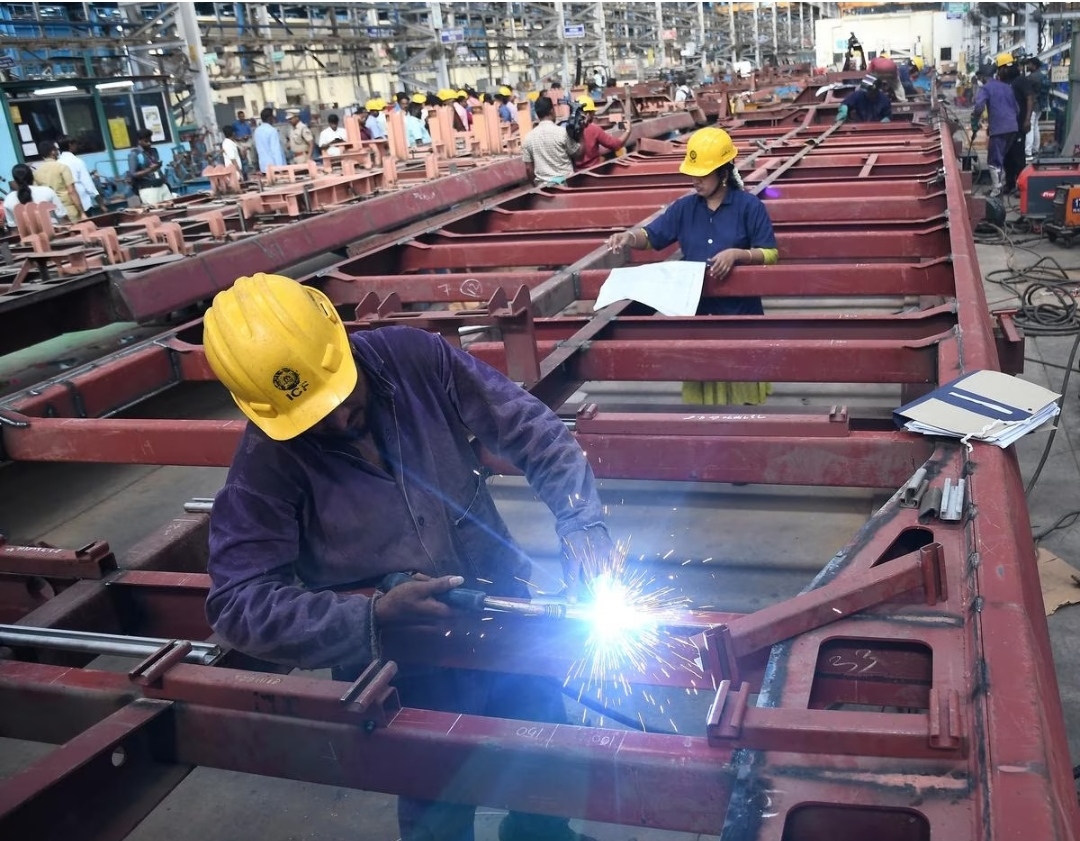
What is the Role of Ports in Elevating Country’s Economy?

Role of Ports in Elevating Country’s Economy

  • Ports play a crucial role in elevating the economy of a country, serving as vital gateways for international trade and commerce. They are the epicenters of economic activity, facilitating the movement of goods, people, and capital. In the context of India, which has a rich maritime history and an extensive coastline, the significance of ports cannot be overstated. This article delves into the multifaceted role of ports in boosting the Indian economy, with a focus on key examples and recent developments.

**1. Trade Facilitation and Global Connectivity** (Ports in Economy)

Ports are the linchpin of international trade, as they serve as interfaces between the domestic and global markets. India’s ports, such as the Jawaharlal Nehru Port (Nhava Sheva) in Mumbai and the Chennai Port, act as essential conduits for imports and exports. A significant portion of India’s foreign trade is conducted through these ports, making them vital for economic growth.

In recent years, the Indian government has invested in enhancing the connectivity and efficiency of these ports, enabling faster turnaround times for ships and reducing trade barriers. Initiatives like the Sagarmala project aim to improve port infrastructure and connectivity, further integrating India with the global supply chain.

**2. Employment Generation**

Ports (Economy )are major employers in the regions where they are situated. From dockworkers to port management staff, they provide jobs to a diverse range of skilled and unskilled labor. The employment opportunities created by ports have a cascading effect on the local economy, as they stimulate demand for goods and services in the surrounding communities.

For instance, the Kandla Port in Gujarat employs thousands of people directly and indirectly, contributing significantly to the state’s economy. The presence of ports fosters economic activity and job creation, thereby reducing unemployment and poverty levels in the vicinity. 

Also Read: https://happenrecently.com/repasts-pies-and-puddings-british-cooking-a-work-of-artificer-not-art/

**3. Revenue Generation**

  • Ports are not just conduits for goods; they are also a significant source of revenue for the government. Through customs duties, port fees, and other charges, ports contribute substantial funds to the national treasury. The revenue generated from ports can be channeled into essential public services, infrastructure development, and poverty alleviation programs.
  • For instance, the Port of Kolkata has consistently contributed a significant share of revenue to the West Bengal government, enabling investments in critical sectors like education, healthcare, and infrastructure.
  • **4. Industrial Growth and Special Economic Zones**
  • Ports often serve as catalysts for industrial growth in their hinterlands. The establishment of Special Economic Zones (SEZs) in proximity to ports has become a prominent strategy to promote manufacturing and exports. These SEZs offer incentives and a favorable business environment for companies looking to set up operations near ports, fostering economic growth.
  • A notable example is the Ennore SEZ near Chennai, which has attracted investments from various industries, including automotive, electronics, and textiles. The presence of a port ensures a smooth supply chain for these industries, leading to increased production and exports.

**5. Tourism and Economic Diversification**

Ports can also be gateways for the tourism sector, contributing to economic diversification. Cruise tourism, in particular, has gained momentum in India, with ports like Mumbai and Kochi welcoming international cruise liners. These cruise ports stimulate the local economy by creating opportunities for tourism-related businesses, including hotels, restaurants, and tour operators.

The economic diversification brought about by cruise tourism helps reduce dependency on traditional sectors and increases the resilience of the local economy. 

**6. Regional Development and Inland Connectivity**

In many cases, ports act as the driving force for regional development. The development of adequate infrastructure around ports, such as road and rail networks, results in improved inland connectivity. This, in turn, encourages investment in logistics and warehousing, further boosting economic activity.

An example of this is the development of the Dedicated Freight Corridors (DFCs) in India, connecting major ports with key production and consumption centers. The Western Dedicated Freight Corridor, for instance, connects the ports of Jawaharlal Nehru Port and Mundra with the northern hinterlands, facilitating the seamless movement of goods.

**7. Trade Balance and Foreign Exchange Earnings**

Ports play a pivotal role in influencing a nation’s trade balance. They enable the export of domestically produced goods and the import of essential raw materials and finished products. A favorable trade balance, with higher exports compared to imports, can lead to an increase in foreign exchange earnings, which can be utilized to bolster the country’s foreign reserves.

For example, the export of goods such as textiles, automotive components, and pharmaceuticals through Indian ports contributes significantly to India’s foreign exchange earnings, supporting the stability of the rupee and reducing vulnerability to external economic shocks.

**8. Environmental Considerations and Sustainability**

While ports offer numerous economic advantages, they also pose environmental challenges. Ensuring sustainability in port operations is crucial to mitigate the adverse effects of pollution, habitat destruction, and climate change. Port authorities worldwide are increasingly adopting eco-friendly practices, such as using cleaner fuels, implementing waste management systems, and preserving sensitive coastal ecosystems.

  • In India, the Jawaharlal Nehru Port has initiated several sustainability projects, including the deployment of electric vehicles, rainwater harvesting, and the promotion of cleaner technologies to reduce the environmental footprint.

**9. Future-Proofing for Economic Growth**

The role of ports in elevating the Indian economy is poised to expand further in the coming years. As India focuses on increasing its share in global trade and attracting foreign investments, port infrastructure will continue to be a linchpin of this strategy.

The government’s “Sagarmala” initiative, launched in 2015, is a testament to this commitment. It aims to modernize port facilities, enhance connectivity, and develop new ports to harness India’s vast maritime potential. Investments in the maritime sector will not only foster economic growth but also increase the resilience of India’s supply chains.

**Conclusion**

Indian ports have played a pivotal role in elevating the nation’s economy, connecting it to the world and providing a strong foundation for trade and industrial growth. The impact of ports extends beyond their immediate vicinity, influencing regional development, employment generation, revenue generation, and trade balance.

However, it is crucial to balance economic growth with sustainability, ensuring that port operations are environmentally responsible. As India continues to pursue its economic growth ambitions, investments in port infrastructure, connectivity, and efficiency will remain a critical component of the country’s economic development.

For more information visit at https://happenrecently.com/zepto/?amp=1

The Rise of Cryptocurrency and Its Impact on Traditional Finance

Cryptocurrency has taken the financial world by storm, offering a digital alternative to traditional currencies. Since the advent of Bitcoin in 2009, the cryptocurrency market has grown rapidly, attracting both investors and innovators. This article explores the rise of cryptocurrency and its profound impact on traditional finance, with relevant examples.

**1. Decentralization and Financial Inclusion:**

  • Cryptocurrencies are typically built on blockchain technology, which offers decentralization. This means that transactions occur peer-to-peer, without the need for intermediaries like banks. This feature has a significant impact on financial inclusion, enabling people in underserved regions to access financial services. For example, in countries with limited banking infrastructure, individuals can use cryptocurrencies to send and receive money securely, bypassing traditional banks and their associated fees.

**2. Disrupting Cross-Border Transactions:**

  • Traditional international money transfers can be slow and expensive due to multiple intermediaries. Cryptocurrencies have revolutionized cross-border transactions, allowing for near-instant and cost-effective transfers. Ripple’s XRP, for instance, is designed for this purpose and has partnered with major financial institutions to facilitate cross-border payments efficiently.

**3. Investment Opportunities and Volatility:**

Cryptocurrencies have provided new investment opportunities, attracting both institutional and retail investors. Bitcoin’s meteoric rise from a few cents to tens of thousands of dollars per coin is a prime example. However, the high volatility of cryptocurrencies poses both risks and rewards. For instance, the 2021 GameStop phenomenon showed how Reddit traders used platforms like Robinhood to trade cryptocurrencies and traditional stocks, causing market turbulence.

**4. Central Bank Digital Currencies (CBDCs):**

Some governments are exploring the development of Central Bank Digital Currencies (CBDCs), digital versions of their national currencies. These CBDCs aim to combine the benefits of cryptocurrencies, like fast transactions, with the stability of traditional fiat currencies. China, with its digital yuan, serves as an example of this trend. CBDCs could reshape the traditional financial landscape by changing how money is issued and circulated. 

Also Read: 

**5. Smart Contracts and Automation:**

Ethereum introduced the concept of smart contracts, self-executing agreements with the terms of the contract directly written into code. These contracts have applications beyond cryptocurrencies, including in traditional finance. They can automate various financial processes, such as insurance claims and loan approvals, reducing the need for intermediaries and speeding up transactions.

**6. Initial Coin Offerings (ICOs):**

  • ICOs allowed startups to raise capital by issuing their cryptocurrencies. While this funding method has provided opportunities for innovation, it has also faced scrutiny due to scams and fraud. The SEC’s actions against fraudulent ICOs demonstrate the regulatory challenges posed by cryptocurrencies in traditional finance.

**7. Regulatory Challenges and Consumer Protection:**

Cryptocurrency’s decentralized nature has made it challenging for governments to regulate effectively. As a result, there is a growing need for regulatory frameworks to protect consumers and maintain financial stability. For instance, the European Union’s MiCA and the United States’ proposed Cryptocurrency Act aim to establish comprehensive regulations for the crypto industry.

  • **8. Wall Street’s Involvement:**
  • Traditional financial institutions, including banks and investment firms, are increasingly becoming involved in the cryptocurrency market. Examples include JPMorgan Chase’s JPM Coin and Goldman Sachs’ plans for a digital asset trading platform. The involvement of these giants highlights the growing integration of cryptocurrencies into traditional finance.

**9. Store of Value and Inflation Hedge:**

Bitcoin, often referred to as “digital gold,” is considered a store of value and a hedge against inflation. As governments around the world have pursued expansionary monetary policies, Bitcoin has attracted investors looking for a safe haven. For instance, during the economic uncertainty caused by the COVID-19 pandemic, Bitcoin saw increased interest from institutional investors.

  • **10. Crypto Lending and DeFi:**
  • Decentralized Finance (DeFi) has emerged as a significant use case for cryptocurrencies. DeFi platforms allow users to borrow, lend, and trade assets without traditional intermediaries. These platforms have provided opportunities for yield generation through crypto lending and staking, but they also face risks associated with smart contract vulnerabilities and regulatory scrutiny.

In conclusion, the rise of cryptocurrency has brought about substantial changes in traditional finance. It has introduced decentralization, financial inclusion, and innovation. However, its impact is not without challenges, including regulatory concerns and market volatility. The cryptocurrency market continues to evolve, and its long-term impact on traditional finance remains a topic of great interest and debate.

For more information visit at https://happenrecently.com/zepto/?amp=1

MP Mahua Moitra  admitted  giving her  parliamentary ID  and password to Hiranandani,  refusing to accept the money  

MP Mahua Moitra  admitted  giving her  parliamentary ID

 The  dispute over cash for query  has  put  Moitra  in a difficult position,  at a time when the opposition  is banking  on  reckless  leaders like her to attack the BJP government at the  Centre.

  • Trinamool Congress MP Mahua Moitra is in a  difficult situation.  
  •  The  dispute over cash for query  has  put  Moitra  in a difficult position,  at a time when the opposition  is banking  on  impartial  leaders like her to attack the BJP government at the Centre. 

 The Trinamool MP  was  accused of  bribery  and  favors while  asking questions in Lok Sabha at the behest of businessman Darshan Hiranandani. The Lok  Sabha  Ethics Committee is currently  investigating  the allegations against her. 

 Meanwhile, in an interview with an English  daily, Moitra admitted that she gave her  parliamentary details  and password  to  friend and businessman  Hiranandani,  but denied  depriving him of access to his money. us,  as  Supreme Court  lawyer  Jai Anant Dehadrai  alleged  in his  petition in court.  Central  Investigation Office.

She said  Dehadrai’s  complaint was  false.  “You  took advantage of  a person with a  bad  personal relationship to file a  false  complaint and  pointed  a gun  at the head of one of my friends (Darshan)  to  support your accusations.  But the two have to  be compatible… It is  a  wrong business,”  she told The Indian Express.  “As far as I know,  Darshan Hiranandani  gave  me  an Hermès  scarf  for  my  birthday…I  asked  for  the Bobbi Brown makeup  box,  he  gave  me a Mac  eyeshadow  and  a lipstick peach,”  she said in the interview.  Moitra also denied  asking  Hiranandani to renovate  his  house. 

 But she said that whenever she was in Mumbai or Dubai,  Darshan’s  car  would pick  her up from the airport and  drop her off.  “I am telling you the exact truth and  can  Darshan  prove anything more than that.  I never took money  or anything  from him. I thrive  on  my integrity,” she said.

But she said that whenever she was in Mumbai or Dubai,  Darshan’s  car  would pick  her up from the airport and  drop her off.  “I am telling you the exact truth and  can  Darshan  prove anything more than that.  I never took money  or anything  from him. I thrive  on  my integrity,” she said. 

 Money flows against the petition: Dehadrai advocate and  BJP MP Nishikant Dubey  appears  before  the  LS  ethics committee.  She alleged that the analysis of the questions  asked  by her  in the affidavit  filed  by Dehadrai, on which BJP MP Nishikant Dubey  had written  to the Lok Sabha Speaker  demanding  an inquiry against her,  was “laughable”.  and  absurd”.  She said she  made a mistake  when  choosing  a  personal relationship.  “Yes.  I  must plead guilty…I  have  a  terrible taste  for  choosing people in my personal circle. I hope to break it  soon,”  she said.

For more information visit at https://happenrecently.com/zepto/?amp=1

Source: www.indianexpress.com

The Prime Minister called  for  more autonomy  in cybersecurity  hardware and  software 

 The  Prime Minister  also said that India should establish itself as a thought  leader, which will be  a natural  step after adopting  and  implementing  technology.  

 Prime Minister Narendra Modi has called for India to  be  self-reliant in  hardware and  software cybersecurity, stressing  that  controlling  the value chain will ensure  the  security of the  country’s  digital infrastructure. 

  “For cybersecurity,  autonomy  is  critical across  the entire manufacturing value  chain, whether it’s  hardware, software or connectivity. When everything  related to  the value chain is  within  our national  boundaries,  it will help us  ensure their security,”  Modi said on Friday at the seventh edition of  Mobile  Congress India. 

 The  Prime Minister’s  statement  is significant  as it comes after India tried to impose restrictions on  imports  of laptops and  computers but  later  reversed them.  However, the  reason for this decision is  to ensure  the  security of  India’s  digital  network, as most  of these imports come from China. 

  The  Prime Minister  also said that India should establish itself as a thought  leader, which will be  a natural  step after adopting  and  implementing  technology.  

 In a political dig at the  opposition,  the  prime minister  compared  previous governments to mobile phones  used  in  those  days,  saying both were always  on “suspend mode”.  

 “We  need  to remember that we have come  a long way…  Outdated phones used to  freeze,  and no matter how many times you swiped the screen, it had no effect.  The  government  at that time  was in  a similar  situation,  still  in  blockade mode,”  he said. “In 2014, people left behind such an outdated phone and gave us  the  opportunity to  serve them.  The changes are quite  obvious,”  he added. 

  Recalling  that India  is the country with  the fastest 5G  deployment  in the world, with 4 lakh base stations  covering about 80%  of the population  in  a year,  Mr.  Modi said  faster Internet speed is  not just a matter of  quantity  and  rank. ,  but also improve  the comfort  of  life.  

Source www.indianexpress.com

  “…Everyone has  a dignified  life  and  the benefits of  technology  benefit  everyone, we  work  for  this  and for me this is the  greatest  social  justice,” Mr.  Modi  speak.  He also  announced  that India will “lead the world” in 6G technology.  The  Prime Minister  also  emphasized  the increase in electronics manufacturing  activities  in India, adding that the government  is “proud  that the world is using  phones  made in  India”.  

  “Previously we imported phones  but today we export.  Previously,  our presence in  the  manufacturing  sector  was  almost zero,  but today we are the second  largest company  in  the  electronics  manufacturing sector. 

Previously,  there was no clear vision for electronics manufacturing. Today, we  export electronic products worth  Rs 2 lakh  crore.  Google  also recently announced that it will  produce  Pixel phones in India,  Samsung’s  Fold5 and iPhone 15 are already  manufactured  here,” the  Prime Minister pointed out. 

For more information visit at https://happenrecently.com/zepto/?amp=1