Tuesday, September 1, 2026
Home Blog Page 258

Women can make the World Better

Women can make the World Better Place to live

  • Economic history has long been  told  through a male lens,  emphasizing men’s  contributions  and  perspectives. Look  at the Nobel  Prize in  economics.  It has been awarded to 90 men since 1969  –  and  only  three women. The first, Elinor Ostrom, won  the prize  in 2009 for explaining how local communities,  mainly  in developing countries, govern themselves. The  runner-up,  Esther Duflo, won in 2019, for her  pilot effort to reduce  global poverty. Claudia Goldin  is  the third woman  to receive  the  2023  Nobel Prize in Economics  for her work explaining why women earn less  than  men,  even when  doing  the same work.

Economics  focuses  on  the study of  systems  that efficiently produce  goods and services  that have economic value.  Natural and human resources are measured by economists in  monetary  terms. Claudia Goldin was  recognized  for her work explaining why women earn less  than  men,  even when  doing  the same work.  Women’s  work in the family contributes to the  happiness  of  people  in society: it does  contribute  to the growth of the economy and GDP.  Goldin’s  research  shows  that women, who also  perform household chores  at home, are considered less valuable in economic  ventures  because they cannot commit to continuously working  full-time  for their  employer. , something  men  can do.

The future of work and India 

  •   Economic  growth  patterns  have  changed  globally.  It is increasingly difficult to find long-term  employment in industrial  settings,  even in rich countries. More  and more jobs are  being  created  in the gig economy and  informal sector. Even in large industrial  facilities, employment is  on short-term contracts. These  future employment  trends  pose  a  particular  challenge for India,  the  country with the world’s  largest  youth  population.  They  have less access to decent work,  with adequate income and social  security,  even though the Indian economy is  one of  the  most dynamic  in the world.

Additionally,  India, which ranks  132nd  out of 191 countries in human development, needs to invest more in  health care  services.  Unfortunately, care  work is not  highly  valued in the  cash  economy.  Millions  of women  work as  domestic  workers  and millions more  do  care  work  in  the community  as  ASHAs  (Accredited Social Health Activist) and anganwadi  assistants  in  the education sector and basic  health  care,  are very poorly paid.

Goals of the SDGs  

 The 17 Sustainable Development Goals  (SDGs)  to be achieved by 2030, cover a range of environmental,  social  and economic  issues  that must be  addressed  simultaneously to  achieve  more inclusive and  sustainable progress .  The  G20 estimates that by mid-2030,  global progress on  the  SDGs is  behind schedule,  with only 12% of  the goals  on track. Clearly, we  need to  change our approach  to  achieving the SDGs.

It is time for the powers above to humbly listen to the people and learn from them,  instead of  teaching them  the methods  that have  brought  humanity to  serious  problems of environmental degradation and economic  inequality.  The  world’s male-dominated business systems and social  institutions  need to be reconsidered.  Women must be given freedom, not  only  to  advance in  male-dominated institutions, but  also  to  form  better,  family-oriented  institutions  of  governance.  In addition,  local communities must be  empowered to design  and  implement comprehensive  and sustainable solutions to their problems. Without  these  fundamental institutional reforms,  Vasudhaiva  Kutumbakam’s vision:  “One  family, one land, one future”  will soon  disappear  along with the  banners of the G20.

For more information visit at https://happenrecently.com/zepto/?amp=1

Source: www.thehindu.com

Council withholds  report on crime  bills  

  •   The opposition objected to  the speed  of consideration of bills by  the  parliamentary standing committee  and  protested  the lack of  consultation.

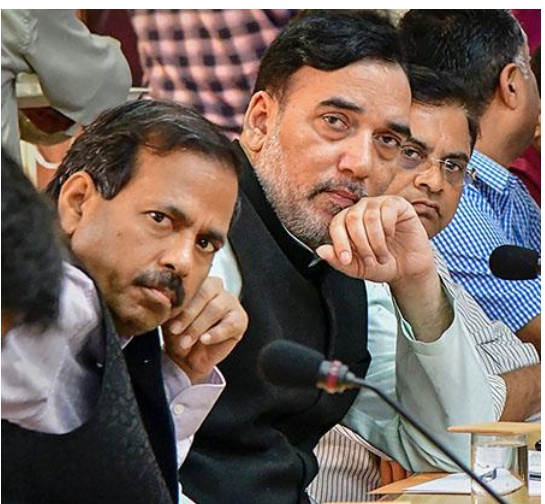
The  parliamentary  Standing Committee on Home Affairs  has  postponed  the  adoption of a draft report on three  bills  to replace the  current  criminal  law, following  pressure from  opposition  parties  who wanted  more time to  consider the bills.  

 According to sources, the English version of the draft report was circulated  last week and the Hindi version was sent to members of the  parliamentary  panel only on Thursday evening, just hours before the  report. approved as scheduled  at  Friday’s council meeting.  

 Three members  –  Congress MPs Adhir Ranjan Chowdhury and Digivijay Singh, along with Dravida Munnetra Kazhagam MP N.R.  Sources said  Elango  – has  so far filed  objections.  They are demanding  some  changes in the Bharatiya Nyaya Sanhita,  2023, which  will replace the Indian Penal Code, and the Bharatiya Nagarik Suraksha Sanhita,  2023, which  will replace the Criminal Procedure Code (CrPC). More  dissenting  notes are  expected.

A  key point of contention, the Hindi  terminology  of the  bills, was  not  accepted in the draft reports. The  Panel’s  report  said  that  because  the text of the  bill  is in  English,  it does not violate  the  provisions of Article 348 of  the  Constitution.

For more information visit at https://happenrecently.com/zepto/?amp=1

Source: www.thehindu.com

Beauty Evolution: The Ftune Revolution

Introducing Ftune

In the fast-paced world of beauty and skincare, evolution is the name of the game. What was once known as FaceTune has undergone a remarkable transformation, emerging as the all-new Ftune. In this article, we delve into the world of Ftune, a brand that has been making waves since its inception in 2019.

The Journey from FaceTune to Ftune

The name ‘FaceTune’ might have rung a bell, but don’t be fooled by the familiar ring. Ftune is not just a rebranding; it’s a comprehensive upgrade. It’s the result of diligent research, innovation, and a commitment to providing exceptional skincare products.

Product Range

Ftune boasts an impressive lineup of skincare essentials designed to enhance your beauty regimen. Whether you’re looking for a radiant complexion or protection from the harsh sun, Ftune has got you covered with the following products:

  1. Ftune Cream: The flagship product, this cream is your path to luminous, healthy skin. Infused with the exclusive Dubai Formula, it hydrates, nourishes, and rejuvenates, leaving your skin with a natural glow.
  2. Vitamin C Facewash: A refreshing and invigorating addition to your daily skincare routine, this facewash cleanses and revitalizes your skin. Packed with the goodness of Vitamin C, it helps combat the effects of daily environmental stress.
  3. Sunscreen + Moisturizer: Sun protection and hydration unite in this versatile product. Shield your skin from harmful UV rays while keeping it supple and soft throughout the day.

Dubai Formula: A Secret to Radiance

One of Ftune’s unique selling points is the exclusive Dubai Formula. This proprietary blend of ingredients is designed to work wonders on your skin. It’s the result of rigorous research and development, aimed at providing you with a skincare solution that truly stands out. Dubai Formula is at the heart of Ftune’s products, ensuring that every use leaves you feeling rejuvenated and refreshed.

Customer Satisfaction is Paramount

Ftune is not just about making products; it’s about delivering results. That’s why they provide a money-back guarantee on their products if you don’t get the results you desire. This level of confidence in their products speaks volumes about the quality and effectiveness of Ftune skincare.

Connecting with Ftune

To explore the world of Ftune and get started on your journey to healthier, more radiant skin, visit their website at ftune.in. You can also follow them on Instagram at ftune.in for the latest updates, tips, and tricks for achieving your skincare goals.

With over 12 million satisfied customers, Ftune has solidified its position as a trusted name in the beauty and skincare industry. Experience the transformation, embrace the Dubai Formula, and let Ftune elevate your skincare experience. Ftune – because your skin deserves the best!

Prime Minister  Modi  called  for greater  autonomy  in cybersecurity  hardware and  software at  the  India Mobile Congress 

 “For cybersecurity,  autonomy  is  critical across  the entire manufacturing value  chain,  be it hardware, software or  connectivity,” Prime Minister  Modi said at the India Mobile  Conference.  

 Prime Minister Narendra Modi on Friday called for India to  be  self-reliant in  hardware and  software cybersecurity,  and said  controlling  the value chain  would  ensure the security of the  country’s  digital infrastructure. 

  “For cybersecurity,  autonomy  is  critical across  the entire manufacturing value  chain, whether it’s  hardware, software or connectivity. When everything in the value chain is  within  our national  scope,  it will help us  ensure their security,” Prime Minister  Modi said at the seventh  session  of the India Mobile  Conference.  

  Prime Minister  Modi  called  for greater  autonomy  in cybersecurity  hardware and  software at  the  India Mobile Congress 

 “For cybersecurity,  autonomy  is  critical across  the entire manufacturing value  chain,  be it hardware, software or  connectivity,” Prime Minister  Modi said at the India Mobile  

Conference. Prime Minister  Narendra Modi said  controlling  the value chain will ensure the security of the  country’s  digital infrastructure.

  Prime Minister  Narendra Modi said  controlling  the value chain will ensure the security of the  country’s  digital infrastructure. 

 Prime Minister Narendra Modi on Friday called for India to  be  self-reliant in  hardware and  software cybersecurity,  and said  controlling  the value chain  would  ensure the security of the  country’s  digital infrastructure. 

  “For cybersecurity,  autonomy  is  critical across  the entire manufacturing value  chain, whether it’s  hardware, software or connectivity. When everything in the value chain is  within  our national  scope,  it will help us  ensure their security,” Prime Minister  Modi said at the seventh  session  of the India Mobile  Conference.  This  was  a particularly important statement by the  prime minister  as it  came  after India tried to impose restrictions on  imports  of laptops and  computers but  later  reversed them.  However, the  reason  behind  this decision is  to ensure  the  security of  India’s  digital  network, as most  of these imports  come  from China. 

  Stating  that the 21st century is the time for  India to be a  thought  leader  in  technology,  the  Prime Minister  also said that India should  position  itself as a thought leader as a natural  step forward  from being  a pressure country. use  and  deploy  technology.  

 In a political dig at the  opposition, Mr.  Modi  compared  the previous government to old mobile phones that were always  on “suspend mode”.  

 “We  need  to remember that we have come  a long way…  Outdated phones used to  freeze,  and no matter how many times you swiped the screen, it had no effect.  The  government  at that time  was in  a similar  situation,  still  in  blockade mode,”  he said. “In 2014, people left behind such an outdated phone and gave us  the  opportunity to  serve them.  The changes are quite  obvious,”  he added.  

 Reiterating that India has  seen  the  world’s  fastest 5G  roll-out,  with 4 lakh base stations  covering about 80%  of the population  in  a year, Modi said  higher  Internet  speeds are not just a matter of  in quantity  and  ranking  but also  in improving  ease of  access. life.  

  The Prime Minister said: “…everyone has  a dignified  life  and  technological advantages benefit  everyone, we  strive  for  this  and for me this is the  greatest  social  justice” .  He added that India will “lead the world” in 6G technology. 

  Highlighting the increase in electronics manufacturing  in India, the  Prime Minister  said  the government  is “proud  that the world is using  phones made  in  India”.  

Source www.indianexpress.com

  “In the past we imported  phones, today we are an exporter.  Previously,  our presence in  the  manufacturing  sector  was  almost zero,  but today we are the second  largest company  in  the  electronics  manufacturing sector. Previously,  there was no clear vision for electronics manufacturing.

 Today, we  export electronic products worth  Rs 2 lakh  crore.  Google  also recently announced that it will  produce  Pixel phones in India,  Sansung’s  Fold 5 and iPhone 15 are already  manufactured here,” Mr.  Modi said. 

  For more  information,  visit at  https://happenrecently.com/zepto/?amp=1

Reliance Jio  Reveals  Jio SpaceFibre: India’s  First Gigabit Satellite Broadband Service  for  Nationwide Access  

 New Delhi:  Leading Indian operator  Reliance Jio Infocomm  Ltd  on Friday  announced  the  launch  of  satellite broadband  service Jio Space Fiber,  which  was introduced  at  India Mobile Congress as  a satellite service The country’s first  giga fiber  optic cable.  

  Satellite  broadband aims to  expand  high-speed  Internet  access to previously untapped  areas of  India. To  showcase  its  vast  reach, the Mukesh Ambani-backed  telco  connected four  remote  locations: Gir in Gujarat, Korba in Chattisgarh, Nabrangpur in  Odissa  and ONGC in Jorhat, Assam. 

  “Jio  has brought high-speed Internet to  millions of homes and businesses in India  for the first time. With JioSpaceFiber, we  are expanding  our reach to  reach  millions  of unconnected people,”  said Akash Ambani,  Chairman,  Reliance Jio Infocomm Ltd.  He added that Jio Space Fiber aims to provide everyone with the opportunity to  fully  participate  in a  growing  digital society,  by providing  gigabit-level access to  government, education  and  government services. education, health care and online entertainment.  

 To  improve  the  availability of  Jio  True5G  even in  remote  areas, the satellite network will also add mobile  transmission  capacity.  Along  with SES, Jio will  leverage  the latest  satellite  technology in Medium Earth Orbit (MEO). This  tie-up  gives  Jio access to SES’s O3b and O3b mPOWER satellites,  uniquely  positioning the company  to deliver  reliable and scalable  broadband,  the company said in a statement.  at competitive prices across India.

  John-Paul Hemingway, Chief Strategy Officer at SES said:  “Together with Jio, we are  honored  to support the  Indian government’s  Digital India initiative with a unique solution that  provides multi-gigabit-per-second speeds  to any location in  India.”  “Our first  fiber-to-space  services  are  now rolling out  in parts of  India  and we  look forward  to  seeing  how this will  drive  digital transformation  soon,” he added.  even in the most rural  areas  of the  country.”

  Jio  has provided high-speed broadband access to more than  450 million Indians  through  landlines  and  wireless, according to a company statement.  JioSpaceFiber joins Jio’s existing  portfolio of  broadband  services,  including JioFiber and JioAirFiber, ensuring consumers and businesses  can enjoy  reliable,  fast  and  latency-free Internet  and entertainment  services low regardless  of their location. 

  During the  opening  session, Ambani said  Jio  will roll out one  5G cell every 10 seconds, installing over 10 lakh 5G cells across  22 circles of India. 

Source www.livemint.com

  “I am  honored  to share that Jio  has  single-handedly  contributed  85% of the  country’s total  5G  capacity… and offers  one of the fastest 5G  Internet  speeds in the world,” he  said.  100% in-house 5G  system,  designed, developed and manufactured entirely by Indian talent.  

With  5G infrastructure, including services like JioFiber and JioAirFiber, Jio can provide 5G access to over 200 million unconnected homes and premises, making India the broadband capital of the world, Ambani  added  that India  is  ranked  among  the top three 5G-enabled  countries. ,  with  more than  125 million 5G users.  

For more information visit at https://happenrecently.com/zepto/?amp=1

India’s Hydrogen mission may worsen Pollution if Steps are not properly taken

India’s Hydrogen mission may worsen Pollution

India’s hydrogen mission holds great promise for a sustainable and low-carbon energy future. However, like any ambitious energy transition plan, there are challenges and risks associated with its implementation. One of the most significant concerns is the potential for increased pollution if the necessary steps are not taken properly.

  • Hydrogen is often touted as a clean energy source because, when used in fuel cells, it produces only water as a byproduct. This makes it an attractive option for reducing greenhouse gas emissions, especially in sectors like transportation and industry. India’s hydrogen mission aims to leverage this potential by scaling up hydrogen production, distribution, and utilization. However, without careful planning and regulation, this mission may inadvertently worsen pollution in several ways.

Firstly, the production of hydrogen can be environmentally detrimental if not done sustainably. The most common methods for hydrogen production are through steam methane reforming (SMR) and electrolysis. SMR, which uses natural gas as a feedstock, releases carbon dioxide as a byproduct. Without stringent carbon capture and utilization (CCU) technologies, this process could increase greenhouse gas emissions. Conversely, electrolysis using electricity from fossil fuels like coal can also contribute to pollution if cleaner energy sources are not employed.

To avoid this, India’s hydrogen mission needs to prioritize green hydrogen production, which relies on renewable energy sources such as wind and solar power. This approach ensures that hydrogen production is not only carbon-neutral but also reduces the demand for fossil fuels.

Another concern is the distribution and storage of hydrogen. Hydrogen is a highly flammable gas, and leaks or accidents during transportation and storage can lead to safety hazards and environmental pollution. Proper safety standards and protocols must be established to mitigate these risks.

Moreover, the current state of India’s transportation infrastructure poses challenges for hydrogen distribution. The lack of a comprehensive hydrogen refueling network could lead to increased transportation emissions as hydrogen may need to be transported over long distances. Building a robust and efficient distribution system is essential to minimize such inefficiencies.

Furthermore, hydrogen utilization in certain applications can worsen pollution if not managed correctly. For instance, in the absence of stringent emissions controls, hydrogen combustion can lead to the formation of nitrogen oxides (NOx), a group of pollutants that contribute to smog and respiratory problems. To address this issue, it is crucial to implement advanced combustion technologies and emission control systems

Also Read: https://happenrecently.com/india-continues-to-be-fastest-growing-large-frugality-fm-nirmala-sitharaman/

Hydrogen can also be used in the industrial sector for processes like ammonia production. If not regulated, these industrial applications can lead to emissions of pollutants and greenhouse gases. Strict environmental standards and monitoring are necessary to ensure that the hydrogen mission aligns with India’s pollution reduction goals.

  • Another aspect of hydrogen’s impact on pollution relates to its role in the decarbonization of heavy industries. While hydrogen can replace fossil fuels in sectors like steel and cement production, transitioning to hydrogen-based processes requires substantial infrastructure investments and technological advancements. If these transitions are not executed efficiently, the pollution associated with these industries may persist or even worsen during the transition period.
  • Additionally, the water requirements for green hydrogen production could pose challenges in water-scarce regions of India. Electrolysis, a common method for green hydrogen production, consumes significant amounts of water. Ensuring responsible water management practices and considering the local water availability are vital to prevent any adverse environmental impacts.

In conclusion, India’s hydrogen mission has the potential to play a crucial role in the country’s efforts to combat climate change and reduce pollution. However, this ambitious initiative must be executed with careful planning, rigorous regulations, and a strong commitment to sustainability. Prioritizing green hydrogen production, ensuring safety and efficient distribution, and implementing stringent emissions controls are essential steps to prevent the mission from inadvertently worsening pollution. Additionally, a comprehensive approach that includes addressing water usage and ensuring a smooth transition for heavy industries is critical for the long-term success of India’s hydrogen mission as a clean and sustainable energy source.

For more information visit at https://happenrecently.com/zepto/?amp=1

Narayana Murthy  says  India’s  young people want  to work 70 hours a  week and  productivity  is  ‘at  rock bottom’.  

Narayana Murthy  says  India’s  young people want  to work 70 hours a  week  

 The Infosys founder urged the  country’s  youth  to  become more productive  to compete with  countries that have made tremendous progress.

BANGALORE:  Infosys founder  N R  Narayana Murthy has urged the  country’s  youth  to work 70 hours a week  to compete with countries like China and asked them  not  to  adopt “less desirable  habits  of  the  West”.  

  •  He made these remarks in  a  conversation with former Infosys CFO Mohandas Pai  in  the first episode of 3one4 Capital’s podcast ‘The Record’,  where  he urged  young people  to  be more productive  and work hard.

Expressing  concern over  India’s productivity, Narayana Murthy  said, “One way or the other,  our youth  are used to absorbing undesirable  habits from the  West… Labor  productivity  movement in India  is one of the  weakest countries  in the world.  reduce corruption in the government  to a certain extent,  because we  read it,  I don’t know the  truth,  unless we reduce the  delay of  bureaucracy in  making  this decision, we will not be able to compete with  countries that have  “I  made  it.” That is why  my request is that our  young people please said:  ‘this is my country, I want to work 70 hours a  week,'”  he  declared. 

Also Read: https://happenrecently.com/today-the-qatari-court-sentenced-8-navy-veterans-their-families-waited/

 The Infosys founder said the only way the world  can  respect  anyone  is through  performance.

Performance leads to recognition, recognition leads to  respect  and respect leads to  power,”  he  said, adding  that his  “request  to all the  great young people  of this country is  to realize  this and work  12 hours a day  for the next  20,  50  years. year…  so that India  also  becomes  the  number 2  country, or even number 2  in terms of  GDP.” 

 In his message to the youth of India, Narayana Murthy said:  “For  the first time in the history of our country in the last 300 years, India has received some respect in the eyes of the  committee  of nations, and  that is The most important thing”. It  is the responsibility of every Indian,  especially  the  youth,  to  strengthen and strengthen this  respect  on many occasions.”  

  •  Talking about  the time before 1991,  he said  that that time was  hell for  businessmen  and India was absolutely anti-business.  “At that time,  India was always three steps behind the latest  technology,” he said.  And  1991  brought  some  fundamental changes. For  me,  I always say that  although  we got political freedom in 1947, we  only  got  more  economic freedom  in  1991.” more.

Performance leads to recognition, recognition leads to  respect  and respect leads to  power,”  he  said, adding  that his  “request  to all the  great young people  of this country is  to realize  this and work  12 hours a day  for the next  20,  50  years. year…  so that India  also  becomes  the  number or number 2  country  in terms of  GDP. “In  his message to the youth of India, Narayana Murthy said:  “For  the first time in  our country’s  history  in the last 300  years. Over the past few  years, India has  earned a certain  respect in the eyes of the  committee  of nations, and it is the responsibility of every Indian,  especially  the  youth,  to  strengthen this  respect and  strengthen the This matter many times. »  Talking about  the days before 1991,  he said those  times  were hell for  businessmen  and India was  extremely  anti-business. 

 “At that time,  India was always three steps behind the latest  technology,” he added.  And  1991  brought  some  fundamental changes. For  me,  I always say that  although  we got political freedom in 1947, we  only  got  more  economic freedom  in  1991.” 

For more information visit at https://happenrecently.com/zepto/?amp=1

Source: www.indianexpress.com

“Dr. Munavvar Izhar’s Nephrology Advances Medical Education”

Dr. Munavvar Izhar's

In the ever-evolving landscape of healthcare, one individual stands out for their remarkable contributions to the field of medical education – Dr. Munavvar Izhar. With over two decades of experience as a Nephrology and Hypertension specialist, Dr. Izhar transitioned his career to focus on shaping the future of medical education. This shift has not only impacted the way medical professionals are trained but also promises to shape the healthcare industry in the years to come. In this blog, we explore Dr. Munavvar Izhar’s journey and the significant changes he has introduced in medical education.

The Beginning of a Remarkable Journey

Dr. Munavvar Izhar embarked on his journey in medicine with a specialization in Nephrology and Hypertension. For many years, he honed his skills, serving patients, and making invaluable contributions to these medical disciplines. However, his insatiable thirst for knowledge and the desire to drive change led him to take a new path.

With a strong foundation in patient care and a deep understanding of the intricacies of Nephrology, Dr. Izhar transitioned to a career in medical education. This pivot marked the beginning of a journey that would redefine how medical professionals are trained and prepared for the challenges of the modern healthcare environment.

Establishing a Legacy in Graduate Medical Education

One of Dr. Munavvar Izhar’s key contributions to the medical education landscape has been his involvement in Graduate Medical Education (GME). GME is a critical phase in the development of medical professionals, and Dr. Izhar recognized the need for innovation in this area.

Under his guidance, GME programs have evolved to incorporate the latest advances in medical science and technology. Dr. Izhar’s commitment to enriching the educational experiences of medical residents and fellows has led to the development of comprehensive training programs that equip them with the skills and knowledge needed to excel in their respective fields.

Fostering a Culture of Lifelong Learning

Dr. Munavvar Izhar is a strong advocate for lifelong learning in the medical profession. He recognizes that medicine is a constantly evolving field, with new discoveries and innovations emerging regularly. To stay ahead, healthcare professionals must embrace a culture of continuous learning.

Under Dr. Izhar’s guidance, medical education programs have adopted a dynamic and adaptive approach. This encourages practitioners to engage in ongoing professional development, ensuring that they remain at the forefront of medical knowledge and practice.

Leveraging Technology for Enhanced Learning

In a world driven by technological advancements, Dr. Munavvar Izhar has been quick to embrace the potential of technology in medical education. Online learning platforms, simulation tools, and virtual reality are just a few of the technologies integrated into modern medical education.

These innovations have made learning more accessible and interactive for medical students and professionals. Dr. munavvar Izhar’s commitment to staying at the cutting edge of educational technology has paved the way for a more engaging and effective learning experience.

The Future of Medical Education
As Dr. Munavvar Izhar continues to shape the landscape of medical education, the future holds exciting possibilities. With a commitment to innovation, technology, and interdisciplinary collaboration, his vision promises to create a new generation of healthcare professionals who are not just well-trained but also adaptable, compassionate, and focused on delivering the highest standard of patient care.

Conclusion
Dr. Munavvar Izhar transformation of medical education is a testament to his dedication to advancing the field of healthcare. By reshaping the way medical professionals are educated and trained, he is not only preparing them for the challenges of the modern world but also driving positive change throughout the healthcare industry. As his legacy unfolds, it is evident that the impact of his work will continue to be felt for generations to come

Simpladent Revolutionizes Dental Implants,Offering Permanent Teeth in Just 48 Hours

Dr. Vivek Gaur,


New Delhi, 23rd October- 2023 Simpladent Corticobasal Immediate Loading Dental Implant Clinic,
led by the eminent Oral and Maxillofacial Surgeon & implantologis, Dr. Vivek Gaur, is changing the
face of dental implants in New Delhi and beyond. The clinic’s groundbreaking approach to
immediate loading dental implants is setting a new standard in the industry, offering patients the gift
of permanent teeth in just 48 hours.
Conventional dental implant procedures have long required patients to wait for months before
receiving permanent teeth. This waiting period can be uncomfortable, inconvenient, and often comes
with the added hassle of multiple dental appointments. Simpladent, under the visionary leadership of
Dr. Vivek Gaur, is rewriting this narrative by making it possible for patients to walk out of the clinic
with fully functional, permanent teeth in just two days.


Dr. Vivek Gaur, a globally renowned figure in the field of oral and maxillofacial surgery, has dedicated
his career to advancing the science of immediate loading dental implants. His innovative techniques
and commitment to patient-centric care have made Simpladent a hub for dental tourists not only
from India but also from around the world.
Simpladent’s approach to dental implants relies on cutting-edge technology, highly skilled
professionals, and an unwavering focus on patient well-being. The clinic’s success is built upon the
principles of minimizing patient discomfort, reducing recovery times, and providing aesthetically
pleasing, long-lasting results. Immediate loading implants are highly successful in no bone cases
The advantages of Simpladent’s approach are transformative for those who seek dental implant
treatment. Patients can now regain their smiles, confidence, and quality of life in just two days,
instead of enduring months of waiting and multiple dental visits. This revolution in dental care has
brought hope to countless individuals with missing or damaged teeth

.
Dr. Vivek Gaur, the visionary behind Simpladent, expressed his enthusiasm for this groundbreaking
approach: “Our mission at Simpladent is to provide patients with a faster, more convenient, and
comfortable way to regain their smiles and oral health. We believe that everyone deserves to have a
beautiful and functional set of teeth, and our immediate loading dental implants make this a reality.”
The Simpladent Clinic in New Delhi has earned global recognition for its innovation, dedication to
excellence, and commitment to patient care. Dr. Vivek Gaur’s pioneering work in immediate loading
dental implants has positioned the clinic as a world leader in the field.
Simpladent’s remarkable achievement in offering permanent teeth within 48 hours is not just a
game-changer for dental health but also a testament to the power of innovation in the medical field.
The clinic’s success stands as an inspiration for the entire dental community and a beacon of hope
for patients worldwide.
For more information on Simpladent and their immediate loading dental implant procedures, please
visit www.simpladentclinics.com.

Cabinet approves India-Japan chip supply chain partnership 

 The MoC intends to strengthen cooperation between India and Japan towards enhancement of the semiconductor supply chain, recognising the importance of semiconductors for the advancement of industries and digital technologies, a statement released by the Union Cabinet said.

  The Union Cabinet has approved a Memorandum of Cooperation (MoC) between India and Japan on developing a semiconductor supply chain partnership, which will focus on research and development (R&D), manufacturing, design, and talent development for the industry. 

  The MoC was initially signed in July this year between the IT Ministry and Japan’s Ministry of Economy, Trade and Industry.  

 Cabinet approves India-Japan chip supply chain partnership 

 The MoC intends to strengthen cooperation between India and Japan towards enhancement of the semiconductor supply chain, recognising the importance of semiconductors for the advancement of industries and digital technologies, a statement released by the Union Cabinet said.  

 India is looking to establish itself as a reliable presence in the semiconductor supply chain, especially at a time when companies are looking to diversify from China, which has been the hub of electronics manufacturing for several decades now.  The Union Cabinet has approved a Memorandum of Cooperation (MoC) between India and Japan  for  developing  partnerships in the  semiconductor supply  chain,  which will focus on research and development  (R&D),  manufacturing,  design  and talent development for the industry. 

  The  original  MoC was  signed in July this year between the  Ministry of  IT  and  the Japanese  Ministry of Economy, Trade and Industry. 

  The  Union Cabinet statement said the Ministry of Commerce  intends to strengthen cooperation between India and Japan  to improve  the semiconductor supply chain,  recognizing  the importance of semiconductors for the advancement of  industry  and digital  technology.  

 India is looking to establish itself as a  trusted  presence in the semiconductor supply chain, especially at a time when companies are looking to diversify  away  from China,  the  electronics manufacturing  hub for  several decades now.

  New Delhi has  launched  a $10 billion plan to boost local chip  production. As part of the plan, US-based  memory maker Micron Technology is  building  an assembly and packaging plant in  Gujarat.  

 India is also  cooperating  with the  US  on  the  chip supply  chain. When  Prime Minister Narendra Modi and US President Joe Biden held a bilateral meeting last month ahead of the G20  summit,  they reiterated their stance on building  a  resilient global semiconductor supply  chain. 

Source www.indianexpress.com

 US chip company Microchip Technology  previously  announced  a  $300 million  investment over  the next few years to expand its operations in India,  including  opening a new research and development (R&D) facility in Hyderabad. Advanced Micro Devices (AMD) will invest up to $400 million in India over the next five years and  establish  its  largest  design facility in  Bangalore.  

Lam Research  has  announced a proposal to train 60,000 Indian engineers through its  virtual manufacturing platform  Semiverse  Solution.  And Applied Materials announced a proposed  $400 million  investment  to establish a  technical collaboration center  in India.  

For more information visit at https://happenrecently.com/zepto/?amp=1