
Friday, June 5, 2026
Home Blog Page 256

GST departments on an overdrive with notices and process  

 As companies  forfend off  duty demands, DGGI says cases  reserved using “ data analysis ”. 

 Central and state Goods and Services Tax authorities have shot off a  torrent of notices to companies over the last many months. This is likely to only increase in the coming months.  

  – Process issued by a state  duty authority seeking details about GST payments from a company “ grounded on media reports ” of its  junction with another company in a different state. 

 A notice issued to a company just by levying a flat 18 per cent GST on the entire development raising  duty demand of Rs 1,400 crore, without taking into account the  duty  formerly paid.

  – In the first case,  profit department  officers argue the jurisdictional powers of the state GST authority arose as the company had taken enrollment  in that particular state indeed though its  crucial operations and headquarter were located in another.  

 But  duty notices have been issued to companies across sectors from consumer durables and smartphones to insurance and banking to online gaming and service providers. What has left India Inc  upset isn’t just the  multifariousness of notices, lack of  invariant process, poor collaboration between Centre and state  duty authorities, and indeed understanding in the case of certain  duty  officers of the Handbasket( Value- Added duty)  period.

 Enterprises around interpretation also  live as  similar notices  substantially pertain to the  original  perpetration phase of GST, when there were several teething troubles and constant tweaks in policy  opinions.   

After sector-specific  examinations, the  compass of the notices over the  once many months expanded to cover “ remitment ” of  duty, “ incorrect availment of input  duty credit ” and “ rapprochements differences ” between returns filed and financials. This picked up pace before the end of three- time limitation period on September 30 for  transferring show cause notices for FY 2017- 18, which was the first time of the GST  governance. The limitation period begins after the form of periodic returns for the time to which the demand is related. Deadlines for filing periodic returns had been  constantly extended during the  original GST phase and  latterly during the COVID- 19 epidemic, hence, the limitation period for 2017- 18 was also extended till September 30 this time.  

 A  crucial concern flagged by companies and  duty experts is the  multifariousness of notices being issued and no  invariant process or collaboration between state and central GST authorities. In some cases, both have issued notices to the same company. “ numerous of these notices are pre-intimation notices or process, a step before the  allocation of show cause notices. further information is being sought  frequently with ill- set notices asking companies to give details asking for explanations.However, like it  happened in a case where the  duty demand was raised grounded on the development, the officer  also realises the error, If in some cases. To withdraw it, a proper explanation from the officer is  needed to justify the reduction or complete  junking of the  duty demand, which takes time and makes it  clumsy for the company, ” another person  apprehensive of the developments said.   In some cases, the notices have been issued by officers who dealt with only value- added  duty in the pre-GST  governance and not service  duty. “ There have been some understanding issues as some of these Handbasket officers haven’t dealt with service  duty matters, which lies in a  blend of  governance between Centre and the  countries, ” the person said. Service sector companies are facing a advanced  mass of these GST notices as they’re  needed by law to take multiple enrollments  in every state wherever they’re present, which is different from a manufacturing company, which may have limited operations in a many  countries only.        In the first six months of FY24, 1040 cases involving GST  elusion of around Rs 14,000 crore input  duty credit have been detected and a aggregate of 91 fraudsters have been arrested. Queries  transferred by The Indian Express to DGGI and CBIC didn’t  evoke a response.   

 Central and state Goods and Services Tax authorities have shot off a  torrent of notices to companies over the last many months. This is likely to only increase in the coming months.  

  – Process issued by a state  duty authority seeking details about GST payments from a company “ grounded on media reports ” of its  junction with another company in a different state.  

A notice issued to a company just by levying a flat 18 per cent GST on the entire development raising  duty demand of Rs 1,400 crore, without taking into account the  duty  formerly paid. 

 – In the first case,  profit department  officers argue the jurisdictional powers of the state GST authority arose as the company had taken enrollment  in that particular state indeed though its  crucial operations and headquarter were located in another.   

  But  duty notices have been issued to companies across sectors from consumer durables and smartphones to insurance and banking to online gaming and service providers. What has left India Inc  upset isn’t just the  multifariousness of notices, lack of  invariant process, poor collaboration between Centre and state  duty authorities, and indeed understanding in the case of certain  duty  officers of the Handbasket( Value- Added duty)  period. Enterprises around interpretation also  live as  similar notices  substantially pertain to the  original  perpetration phase of GST, when there were several teething troubles and constant tweaks in policy  opinions. 

  After sector-specific  examinations, the  compass of the notices over the  once many months expanded to cover “ remitment ” of  duty, “ incorrect availment of input  duty credit ” and “ rapprochement differences ” between returns filed and financials. This picked up pace before the end of three- time limitation period on September 30 for  transferring show cause notices for FY 2017- 18, which was the first time of the GST  governance. The limitation period begins after the form of periodic returns for the time to which the demand is related. Deadlines for filing periodic returns had been  constantly extended during the  original GST phase and  latterly during the COVID- 19 epidemic, hence, the limitation period for 2017- 18 was also extended till September 30 this time.   

  A  crucial concern flagged by companies and  duty experts is the  multifariousness of notices being issued and no  invariant process or collaboration between state and central GST authorities. In some cases, both have issued notices to the same company. “ numerous of these notices are pre-intimation notices or process, a step before the  allocation of show cause notices. further information is being sought  frequently with ill- set notices asking companies to give details asking for explanations.However, like it  happed in a case where the  duty demand was raised grounded on the development, the officer  also realises the error, If in some cases. To withdraw it, a proper explanation from the officer is  needed to justify the reduction or complete  junking of the  duty demand, which takes time and makes it  clumsy for the company, ” another person  apprehensive of the developments said.  In some cases, the notices have been issued by officers who dealt with only value- added  duty in thepre-GST  governance and not service  duty. “ There have been some understanding issues as some of these Handbasket officers haven’t dealt with service  duty matters, which lies in a  blend of  governance between Centre and the  countries, ” the person said. Service sector companies are facing a advanced  mass of these GST notices as they’re  needed by law to take multiple enrollments  in every state wherever they’re present, which is different from a manufacturing company, which may have limited operations in a many  countries only.     Abhishek Jain, Indirect Tax Head & Partner, KPMG said, “ With normal period of limitation ending on September 30 for adjudication of issues linked to FY 17- 18, multiple notices were issued to taxpayers including  substantial  interpretive bones like taxation of online gaming, taxation of intra company  inventories without a consideration, sector specific issues including rate of GST, credit reversals, etc. also,  colorful notices have been issued on routine conciliation matters like differences in  bus  peopled inward  inventories, qua credit claimed by businesses, inward  inventories which were blocked under Section 17( 5) but haven’t been reported as ineligible credit. ”  

 In addition, GST notices have also been issued to  numerous  transnational companies seeking details of expats and seconded  workers working with them, grounded on a Supreme Court ruling which had ruled that  duty is outstanding for  similar deputation/ secondment. In May last time, the apex court in the case of Northern Operating SystemsPvt. Ltd had held that secondment/ deputation of  workers from the overseas company to an Indian  reality is in the nature of “ force reclamation and  force services ” and hence, would be liable to service  duty. This has been extended under GST too by the authorities. 

Source www.indianexpress.com

  Some companies on their part have defended the GST  tax on expats in  numerous cases by citing registration of  similar  workers in India’s social security schemes  similar as the EPFO, which brings them at par with  workers in India who don’t face GST on their  payment payments. “ Some officers agree with the explanation, some do n’t, and that  also proceeds towards  farther action, ” an assiduity expert said.   

The Tax Department has said that cases have been  reserved using “ data analysis  backed by advanced specialized tools ”. In a statement on October 18, DGGI said it detected GST  elusion of Rs1.36 lakh crore so far during FY24 involving voluntary payment of Rs 14,108 crores. “ Since June 2023, special emphasis has been to identify and  seize the  engineers and disrupt syndicates, operating across the country. Cases have been  reserved using data analysis  backed by advanced specialized tools which lead to the arrest of  engineers. These  engineers syndicates used  susceptible persons and  seduced them with job/ commission/ bank loan etc. to  prize their KYC documents which were for creation of fake/ shell  enterprises companies without their knowledge. In some cases, KYCs were used with the knowledge of the concerned person by paying them small  financial benefits, ” it said.   

In the first six months of FY24, 1040 cases involving GST  elusion of around Rs 14,000 crore input  duty credit have been detected and a aggregate of 91 fraudsters have been arrested. Queries  transferred by The Indian Express to DGGI and CBIC didn’t  evoke a response. 

For more information visit at https://happenrecently.com/zepto/?amp=1
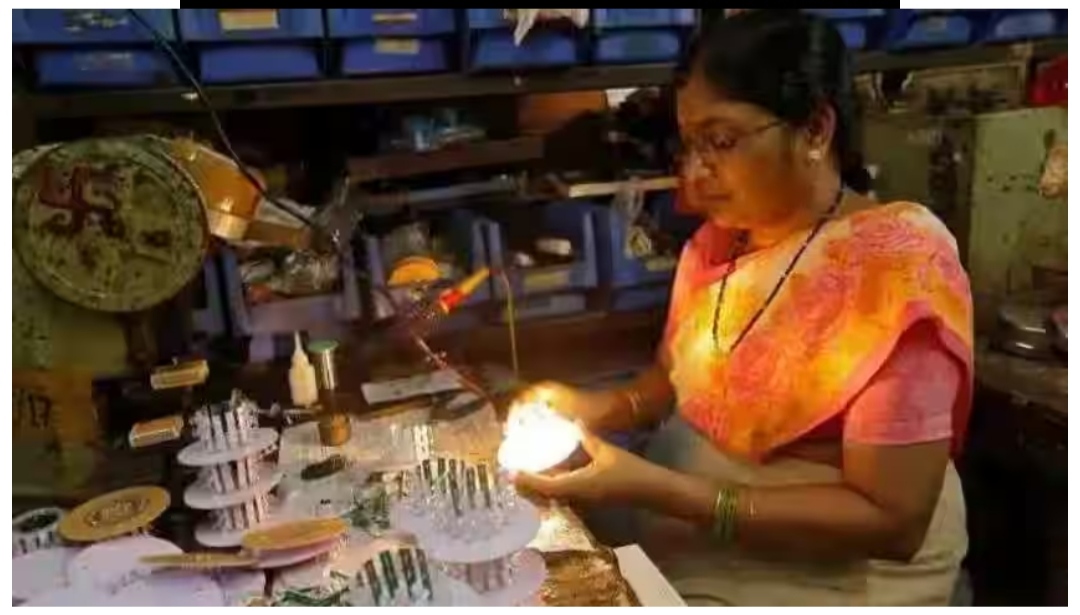
How India can increase 5 trillion economy by focusing on Domestic consumption 

  • India can aim to increase its economy to $5 trillion through a focus on domestic consumption. Here are some strategies and examples:

1. **Promote “Make in India”:** Encourage domestic manufacturing and production to reduce imports and boost GDP. For instance, the government can offer incentives to companies that manufacture their products in India, like the “Make in India” initiative launched a few years ago.

  • 2. **Invest in Infrastructure:** Develop better infrastructure to facilitate trade and reduce logistical costs. For example, improving roads and ports can make it cheaper to transport goods domestically, which benefits local industries.
  • 3. **E-commerce Growth:** The growth of e-commerce platforms like Flipkart and Amazon India has significantly boosted domestic consumption. The government can support this sector with favorable policies.

4. **Agricultural Reforms:** Promote modern farming techniques and reduce post-harvest losses. The Pradhan Mantri Kisan SAMPADA Yojana is an example that aims to reduce food wastage and increase farmers’ income.

5. **Digital Payments:** Encourage the use of digital payment methods, which can bring more transactions into the formal economy. The demonetization move in 2016 aimed at promoting digital payments.

6. **Tourism:** Invest in tourism infrastructure and marketing to attract both domestic and international tourists. The “Incredible India” campaign is an example.

7. **Skill Development:** Invest in skill development programs to enhance the employability of the workforce, increasing incomes and, in turn, consumption.

  • 8. **Promote Small and Medium Enterprises (SMEs):** SMEs are a significant contributor to the Indian economy. Government initiatives like the MUDRA Yojana can provide financial assistance to these businesses, promoting growth.
  • 9. **Financial Inclusion:** Promote financial inclusion by extending banking and financial services to remote areas, helping people save and invest.
    • 10. **Healthcare and Education:** Invest in healthcare and education to improve human capital. The “Ayushman Bharat” scheme for healthcare is an example.

11. **Clean Energy:** Promote clean energy and sustainable practices. For instance, the “Ujala” scheme encouraged the adoption of LED bulbs, reducing energy costs for households.

12. **Tax Reforms:** Simplify the tax system to boost compliance and encourage people to invest in the formal economy.

  • 13. **Rural Development:** Focus on rural development programs to increase rural incomes and spending. The “Pradhan Mantri Awas Yojana” for rural housing is an example.
  • 14. **Export Promotion:** While the primary focus is on domestic consumption, India should continue to promote exports in strategic sectors, as it can bring in foreign exchange and create jobs.
  • By implementing these strategies and continuously monitoring progress, India can work towards achieving its goal of becoming a $5 trillion economy through increased domestic consumption.

For more information visit at https://happenrecently.com/zepto/?amp=1

Dussehra and Its linkage to Economy 

Certainly, here’s a longer explanation of an interesting fact related to Dussehra and its connection to the economy:

Dussehra, also known as Vijayadashami, is one of the most celebrated Hindu festivals in India. It signifies the triumph of good over evil and has a rich cultural and religious significance. However, what makes Dussehra particularly interesting from an economic perspective is its influence on consumer behavior, trade, and various sectors of the Indian economy.

**Consumer Spending and Retail Boom**:

Dussehra typically marks the onset of the festive season in India, which extends until Diwali, another major Hindu festival. This period is characterized by a surge in consumer spending. Families prepare for the celebrations by purchasing new clothes, gifts, jewelry, electronics, and various household items. This heightened demand significantly benefits the retail industry.

Retailers and e-commerce platforms eagerly await Dussehra as it kicks off a series of shopping extravaganzas. Businesses offer attractive discounts and special promotions to attract shoppers. This not only boosts sales but also results in an economic ripple effect. Increased sales translate into greater revenue for businesses, which can lead to higher profits, expansion opportunities, and job creation.

  • **E-commerce Bonanza**:
  • In recent years, the rise of e-commerce has transformed the way people shop during Dussehra. Online marketplaces like Amazon, Flipkart, and various others have introduced exclusive Dussehra sales and deals, further escalating the economic impact of the festival. The convenience of online shopping has made it easier for consumers to access a wide range of products, driving up sales in this sector.
  • **Real Estate and Home Decor**:
  • The festive season, starting with Dussehra, also sees a surge in real estate transactions. Many individuals consider this an auspicious time to buy new homes or make property investments. Additionally, home improvement and renovation projects are undertaken to ensure that homes are in top shape for the celebrations. This drives demand for construction materials, interior furnishings, and home decor, thereby benefiting related industries.
  • **Auto Industry Acceleration**:
  • The auto industry in India experiences a boost during the festive season. Dussehra is considered an auspicious time to purchase vehicles. Customers often flock to showrooms to buy new cars and two-wheelers, taking advantage of special offers and discounts provided by manufacturers. The increased sales in the auto sector contribute significantly to the economy.

**Tourism and Hospitality**:

Dussehra also has a profound impact on tourism and the hospitality sector. Families and individuals often use the extended holiday period around Dussehra to plan vacations or visits to their hometowns. This leads to increased bookings in hotels, resorts, and guesthouses. Popular tourist destinations experience a surge in footfall, which has a direct economic benefit. Restaurants, travel agencies, and tour operators also witness increased business during this time.

  • **Entertainment Industry and Cultural Events**:
  • Cultural events, fairs, and entertainment programs are integral to Dussehra celebrations. In various parts of the country, especially in states like West Bengal, the festival is marked by grand processions and community events. These events attract not only locals but also tourists. The economic implications are twofold. First, the organizers and performers generate income. Second, the influx of visitors stimulates the local economy, with businesses like food vendors, souvenir sellers, and transportation services benefiting from the increased activity.

**Employment Opportunities**:

The surge in demand for goods and services during the festive season creates temporary employment opportunities. Many businesses, especially in the retail and hospitality sectors, hire additional staff to manage the increased workload. This contributes to reduced unemployment rates and provides financial relief to individuals and families.

  • **Agricultural Significance**:
  • Dussehra also holds significance for the agricultural sector in certain regions of India. It often marks the end of the monsoon season and the commencement of the harvest season. A successful harvest is vital for the livelihoods of farming communities. The festival’s rituals, such as worshiping implements and cattle, reinforce the connection between agriculture and Dussehra. The health of the agricultural sector has broader economic implications as it impacts food production, supply chains, and prices.

**Philanthropy and Charitable Activities**:

Dussehra is a time when individuals and businesses often engage in charitable activities. Donations to religious institutions, NGOs, and community organizations increase during this period. These acts of philanthropy not only serve social welfare but also have economic consequences by supporting charitable initiatives that address various societal needs.

  • In conclusion, Dussehra’s fascinating connection to the economy is evident through the manifold ways in which it influences consumer spending, trade, and multiple sectors. It is not just a religious and cultural celebration but also a significant economic driver in India. The festival’s ability to stimulate consumer demand, create business opportunities, and generate employment underscores its importance in the country’s economic landscape. As the festive spirit of Dussehra continues to captivate the hearts and wallets of millions, its economic significance remains a compelling aspect of this grand festival.

For more information visit at https://happenrecently.com/zepto/?amp=1
 Strong fundamentals to help India’s growth  instigation Finance Ministry report  

  On the external front, there’s sluggish import demand, which is anticipated to ameliorate going ahead. “ Sluggish global demand is affecting India’s trade, but this is projected to recover from H2FY24.   

The outlook for the Indian frugality for the current  fiscal time 2023- 24 remains “ bright and is solidly  sustained by strong domestic fundamentals ” indeed as there are significant headwinds and fresh challenges from adverse geopolitical turns and  unpredictable crude prices, the Finance Ministry said in its yearly  profitable review for September on Monday.   

The report noted that caption affectation has eased and remained within the upper forbearance limit of the medium- term target of the Reserve Bank of India( RBI) at 5 per cent in September indicating that the increase in affectation during July- August was only temporary, caused by the seasonal and rainfall- driven  force constraints in a many food  particulars.   

Still, the  pitfalls remain tilted to the  strike to the near- term global outlook amid high affectation and tighter  financial  programs, it said. “ Global  misgivings have been compounded by recent developments in the Persian Gulf. Depending on how the situation develops, crude  oil painting prices may push advanced. Further, the  grim  force of US Coffers and continued restrictive  financial policy in the US( with  farther  financial policy  tensing not ruled out) could beget  fiscal conditions to be restrictive. At current  situations, US stock  requests have lesser  strike  threat than upside.However, it’ll have spillover  goods on other  requests, If the  strike materialises. Fraught geopolitical conditions can beget a general increase in global  threat aversion.However, they can affect  profitable  exertion in other countries, including India, If these  pitfalls worsen and are sustained.  

 Strong fundamentals to help India’s growth  instigation Finance Ministry report  Strong fundamentals to help India’s growth  instigation Finance Ministry report  On the external front, there’s sluggish import demand, which is anticipated to ameliorate going ahead. “ Sluggish global demand is affecting India’s trade, but this is projected to recover from H2FY24.  

   Finance Ministry,  profit growth, direct  levies,  profit expenditure, capital expenditure,  request borrowing programme, Employment trends in India, labour force participation rate.

  The ministry refocused out that the  financial position of the government remains solid with steady  profit growth.  The outlook for the Indian frugality for the current  fiscal time 2023- 24 remains “ bright and is solidly  sustained by strong domestic fundamentals ” indeed as there are significant headwinds and fresh challenges from adverse geopolitical turns and  unpredictable crude prices, the Finance Ministry said in its yearly  profitable review for September on Monday.  

 The report noted that caption affectation has eased and remained within the upper forbearance limit of the medium- term target of the Reserve Bank of India( RBI) at 5 per cent in September indicating that the increase in affectation during July- August was only temporary, caused by the seasonal and rainfall- driven  force constraints in a many food  particulars. 

    Still, the  pitfalls remain tilted to the  strike to the near- term global outlook amid high affectation and tighter  financial  programs, it said. “ Global  misgivings have been compounded by recent developments in the Persian Gulf. Depending on how the situation develops, crude  oil painting prices may push advanced. Further, the  grim  force of US Coffers and continued restrictive  financial policy in the US( with  farther  financial policy  tensing not ruled out) could beget  fiscal conditions to be restrictive. At current  situations, US stock  requests have lesser  strike  threat thanupside.However, it’ll have spillover  goods on other  requests, If the  strike materialises. Fraught geopolitical conditions can beget a general increase in global  threat aversion.However, they can affect  profitable  exertion in other countries, including India, If these  pitfalls worsen and are sustained. 

Source www.indianexpress.com

  Both private consumption and investment demand are  indurate up, with  fresh growth regulators in broad- grounded artificial growth and buoyant domestic property  requests along with  enhancement in artificial capacity utilisation. “ Investment has heretofore been propelled  substantially by the capital spending of the Union Government and the crowding- in it  convinced for private commercial investment. While this continues unabated,  adding  demand for domestic  parcels, supported by responsive  casing loan backing, has given a fillip to construction  exertion and the property  requests while the Union Government’s  grim focus on capital spending has been propelling aggregate investment since FY22, there are strong  suggestions that  homes ’ increased propensity to invest in domestic  parcels will drive investment further, ” it said.   

The ministry refocused out that the  financial position of the Union Government remains solid with steady  profit growth, especially in direct  levies, and prudent rationalisation of  profit expenditure which has “ enabled the front-  lading of capital expenditure while keeping the  request borrowing programme tied to the  calculated target. ” Employment trends are encouraging, with  perfecting labour force participation rate and declining severance rate, it said.  

 On the external front, there’s sluggish import demand, which is anticipated to ameliorate going ahead. “ Sluggish global demand is affecting India’s trade, but this is projected to recover from H2FY24. nevertheless, with a lower trade  deficiency and a comfortable forex reserve position, India’s external account looks robust, ” it said. 

For more information visit at https://happenrecently.com/zepto/?amp=1
 High volatility in vegetable affectation haunts frugality Crisil report   

 Vegetables have 15.5 per cent weight in the food  indicator, which is the loftiest after cereals and milk, and remains the most  unpredictable  element   

With demand outpacing  force, vegetable affectation has trended up in the  once four times with consumer price  indicator( CPI) vegetable affectation comprising 5.7 per cent during fiscals 2020 to 2023, standing agency Crisil said.  

 On the other hand, CPI vegetable affectation equaled  zero per cent during fiscals 2016 to 2019, with interim ages of sharp deflation and steep affectation,  substantially led by rainfall shocks, it said. “ Vegetable affectation in India has been trending up, with  further frequent price harpoons in recent times. In fact, vegetable affectation also has been the most  unpredictable in the food  order, ” Crisil said.    In comparison, average food affectation rose to 6.2 per cent during fiscals 2020 to 2023 from per cent between fiscals 2016 and 2019. 2. The  frequence of vegetable price harpoons has increased. In the  once 100 months, CPI vegetable affectation was above its period  normal of3.8 per cent in 49 months. It was  over 7 per cent in 35 months, above 10 per cent in 30 months and above 20 per cent in 13 months.  

 “ The affectation volatility is bad for consumers and  growers, and also distracts policymakers in the short term, forcing frequent and repeated price smoothening measures. Demand for vegetables has outpaced  force, ” Crisil said. Population growth and demographic transition, income growth and the changing salutary preferences that come with it are some structural factors behind the  swell in demand, it said.  

 While vegetable  product — including per capita  product has grown, it has not kept pace with the  swell in demand, Crisil said. piecemeal from losses due to rainfall disturbances and pest attacks,post-harvest  extinctions during  storehouse and transportation further cut the stock available in the  request, it said.  

 It said food affectation is back to  hang  the Indian frugality. After staying low in the June 2023 quarter, the hump in the September quarter (substantially due to advanced vegetable and foodgrain affectation) and an uneven thunderstorm has changed India’s affectation narrative for this  financial. But this isn’t the first time a vegetable price shaft has driven up food affectation, Crisil said.  

 Vegetables have per cent weight in the food  indicator, which is the loftiest after cereals and milk, and remains the most  unpredictable  element.

 Similar harpoons are frequent in India. The last time it lasted long( in double  integers for seven months) was in  financial 2020  similar that the periodic average vegetable affectation surged to 21.3 per cent, taking up average food affectation to 6.7 per cent. And back to double  integers between March and September 2022, comprising 15 per cent, according to Crisil.  

 But a  reprise this  financial is doubtful, it said. The good news is vegetable price pressure has abated as affectation fell from its peak of 37.4 per cent in July to3.4 per cent in September with fresh  inventories entering the  request. Prices of tomatoes( which was a major driving force) and of several other vegetables fell  sprucely by September. “ Onion prices,  however, remain a pressure point. The not- so-good news is that vegetable prices can launch  anew, ” it said.  

 Measured by standard  divagation, volatility in vegetable affectation, which was  formerly high at11.1 during fiscals 2016 to 2019, rose to 17.3 during fiscals 2020 to 2023. Food affectation volatility during the ages was much lower, at2.9 and 3.4, independently, it said.   

Source www.indianexpress.com

Tomatoes, onions and potatoes( TOP) are the most consumed vegetables in India and make up  further than a third of the CPI vegetables  order. Hence, any sharp movement in TOP prices influences the movement in CPI vegetables affectation, Crisil said.   

It said volatility in TOP affectation remains significantly high, and much above the overall vegetables  order. In a recent study published in the RBI yearly bulletin, the Development Research Group notes “ Although TOP forms a small part of the CPI handbasket, the volatility in caption affectation is significantly driven by the volatility in TOP ”. 

For more information visit at https://happenrecently.com/zepto/?amp=1

Govt rolls out  obligatory  morals for Bobby Products,  drum holders in  shot to control quality

 Particulars under these two orders can not be produced,  vended, traded, imported and grazed unless they bear the Bureau of Indian norms( BIS) mark. 

  The government has issued  obligatory quality  morals for bobby products,  cans and  drum holders to  check the import of sub-standard goods and boost domestic manufacturing of these goods, an  sanctioned statement said on Monday.  

 Two separate  announcements- cans and drums( Quality Control) Order, 2023; and Copper Products( Quality Control) Order, 2023- in this regard were issued by the Department for Promotion of Industry and Internal Trade( DPIIT) on October 20. particulars under these two orders can not be produced,  vended, traded, imported and grazed unless they bear the Bureau of Indian norms( BIS) mark.   

These orders will come into force with effect from six months from the date of publication of this  announcement, the DPIIT said.  

 Bobby and its  blends are used in power generation, power transmission, telecommunications, electrical circuits, and several appliances. So, bobby products need to be of the stylish quality, and the  chastity mustn’t be compromised at any cost.  The nine bobby products covered under this order include  line rods for electrical  operations; solid drawn bobby  and bobby tubes for condensers and heat exchangers; and wrought bobby  tubes for refrigeration and air-  exertion purposes. 

Source www.hindustantimes.com

 ” In order to  guard the domestic small/ micro  diligence,  insure smooth  perpetration of the QCO and Ease of Doing Business, relaxations have been granted to small/ micro  diligence as  respects to timelines,  fresh three months have been given to small  diligence and an  fresh six months to micro  diligence, ” the department said.

   Also,  cans and  drums are  principally used for storing and transporting several different types of  poisonous,  ignitable  and dangerous substances. They’re extensively used across  diligence including waste  operation, healthcare and food services. 

  So, it’s imperative that cans and  drums need to be of good quality in order to  cover any type of leakages, contamination and fire damage, it added.  

 “ DPIIT in  discussion with BIS and stakeholders has been  relating  crucial products for notifying QCO. This has led to the  inauguration of development of  further than 60 new QCOs covering 318 product  norms, ” it said. 

  Violation of the provision of the BIS Act can attract imprisonment of over to two times or a  forfeiture of at least ₹ 2 lakh for the first offence.   In case of alternate and  posterior offences, the  forfeiture will increase to a minimum of ₹ 5 lakh and extend up to 10 times of the value of goods or  papers.   colourful  enterprise, including the development of QCO, are being accepted by the department to develop quality sensitisation among  druggies and manufacturers  likewise.   These  enterprise, coupled with developing quality testing labs and product  primers, would help  make a quality ecosystem in the country, it said.   obligatory QCOs help  check the import ofsub-standard products,  help  illegal trade practices, and  insure the safety and well- being of consumers, as well as the  terrain.  

 These  enterprise, coupled with the development of testing labs, product  primers, and  delegation of test labs would  prop  the development of a quality ecosystem in the country.   before,  similar orders have been issued for several goods  similar as smart  measures, welding rods and electrodes, cookware and  implements, fire extinguishers, electric ceiling  suckers and domestic gas ranges. 

For more information visit at https://happenrecently.com/zepto/?amp=1
Pipclass : Empowering Traders and Investors for 10X Growth.

Pipclass

In the fast-paced world of trading and investments, a name that stands out is Jay Parekh, the founder of Pipclass. Since its inception in 2017, Pipclass has been at the forefront of efforts to empower traders and investors, driven by a mission to help them achieve 10X growth through their innovative Traderpreneur training program.

Pipclass’s unique Traderpreneur training program is a comprehensive offering that covers live signals, webinars, trading system development, and a supportive community. This approach is designed to equip traders with the skills and knowledge they need to excel in the financial markets.

One of the standout features of Pipclass is its daily webinars and live signals, allowing traders to put their skills to the test in real-time. These valuable insights and signals are delivered directly to Pipclass’s community, helping traders make informed decisions.

Pipclass places a strong emphasis on creating system-driven trading strategies, simplifying complex processes, and ultimately improving success rates for its students. Through a combination of education and practical experience, Pipclass seeks to demystify the art of trading and make it more accessible to a broader audience.

Pipclass doesn’t just stop at providing education; it also nurtures a thriving community of traders. Daily live signals and educational materials are shared to keep the traders engaged and informed, fostering an environment of continuous learning and improvement.

With an impressive track record, Pipclass proudly claims to have 2,000 satisfied students who have benefited from their offerings. These students have collectively received 600 hours of education, with a remarkable 91% satisfaction rate, highlighting the effectiveness of the training provided by Pipclass.

Pipclass’s approach to trading underscores the importance of knowledge and dedication over sheer luck. In an industry where risks are inherent, the Pipclass’s commitment to empowering traders and investors sets it apart as a beacon of knowledge and support.

Jay Parekh, the visionary behind Pipclass, continues to lead the charge, helping traders and investors unlock their full potential and strive for 10X growth in the financial markets. As Pipclass marks its journey from 2017, its commitment to educating and empowering traders remains unwavering, and its impact on the world of trading and investments continues to grow.

Instagram : https://instagram.com/pipclass_?igshid=MzRlODBiNWFlZA==

YouTube : https://www.youtube.com/@PipClassacademy

Indian External Affairs Minister Jaishankar said visa  services for Canadians  would soon be available.  

Indian External Affairs Minister Jaishankar said visa  services..

  Experts say  India  may have received security  assurances  for its diplomats  from  Canada. A  day after the US and UK expressed  displeasure over India forcing Canada to  recall  41 diplomats,  External Affairs Minister  S Jaishankar said  visa services, which were suspended a month  ago, would soon be resumed. 

  • Speaking at an event here on Sunday, Jaishankar said India  was  reviewing the security situation  faced by  its diplomats  in Canada and expressed hope that  the country could  resume  the epidemic soon.  visa  issuance.  

  However, experts say this is  not  India’s decline following  pressure from  Canada’s  Five Eyes  allies.  

  “Jaishankar’s suggestion  that there  may  be an improvement in security conditions, leading to  the re-establishment  of visa services, may mean that  confidential  discussions have taken place about credible  assurances trust  from Canada  regarding the  security  of  our diplomats in  this  country,”  the  former diplomat  said.  P S Raghavan told this newspaper. 

  • According to sources, the  threat to the  security  of  Indian diplomats  in Canada is  real. They pointed out that  Indian diplomats  stationed  in Canada  had also  faced problems from  Khalistan  supporters in the  past.

India suspended  visa  issuance  to Canadians on September  21,  citing  increasing  threats to  the security of  its diplomatic missions there and a lack of action by  Canadian authorities to  address them. address these  threats.  

Pro-Khalistan groups  have  called for  the closure  of  Indian  diplomatic missions in Canada after Canadian Prime Minister Justin Trudeau alleged  India’s  role in  the assassination of the  Canada-based  Khalistan activist was  Hardeep Singh Nijjar in June.  Subsequently,  India raised the issue of diplomatic  equality  with Canada, forcing Ottawa to withdraw  more than  40 diplomats from India. Trudeau claimed  that  India  had  violated the Vienna Convention, a claim  which India rejected.  

 On Sunday, Jaishankar clarified that one  of the reasons  India sought  to reduce the number  of Canadian diplomats here was  because  they  interfered  in the  country’s  internal affairs.  “We  are not comfortable  with many of them and  people will  soon understand  why we  are not comfortable  with many of them,” he added.

Pro-Khalistan groups  shut down India’s  diplomatic missions in Canada after Canadian Prime Minister Justin Trudeau alleged  India’s involvement  in  the murder of  Canada-based  Khalidani  militant Hardeep Singh Nijjar in June.  was looking for.  India  subsequently  raised the issue of diplomatic parity with Canada,  and  Ottawa  withdrew more than  40 diplomats from India. 

 Prime Minister  Trudeau claimed  that  India  was in violation of  the Vienna Convention, a claim  that India denied.  On Sunday, Jaishankar clarified that one  of the reasons  India  wants to reduce the number  of Canadian diplomats  is because of their interference  in  internal affairs. 

 “We made a lot  of them  uncomfortable,  and soon people will  understand  why we  made a lot  of  them uncomfortable,”  he added. After  “surplus”  Canadian diplomats were forced to leave India, both the  United States  and  Britain were ready  to support  Ottawa and express  their  dissatisfaction with  the diplomatic  dispute.  In  this  context,  Jaishankar’s  announcement on Sunday could ease tensions.

For more information visit at https://happenrecently.com/zepto/?amp=1
Source: www.thehindu.com

Business  is  booming  again as taxidermy companies regain the  festive  atmosphere for the first time in three years.

Business  is  booming  again as taxidermy companies

  Most  doll manufacturers have suspended regular operations  for two months  ahead of  Dasara to  make custom dolls.

  • The city’s taxidermists say  they are finally doing good business ( taxidermy) after  having had little work for  the  past  three  years. Artists  said there has been a  sharp rise  in demand from Delhi and other  states,  and some  have  even received orders from other  countries, including the UK  and South Africa.

  “2020  and 2021  have been impacted  by the  COVID-19  pandemic and  last year  there was uncertainty  about outdoor events.  But  this year  I  got 100  orders. This is  more than  double  what  we received  in 2022,”  Shankar  told Ravanwala.  

 Like most other  taxidermy manufacturers  in Delhi, Mr. Shankar  set aside  his full-time job  as  a mechanic  for two months before Dasara  started creating custom taxidermy. He expects his total earnings this season  to  be  between  £40,000  and  £50,000.

individual animal figurines  

 “Sometimes  a customer wants a stuffed animal  with 10 heads,  and that’s  easy. This year, we were asked to dress  Ravana in  ghagra,” Mr. Shankar said. 

 The 50-year-old, who lives in Titarpur,  a  statue-making hub in  west  Delhi,  added that  a customer from  the UK had also  recently placed an order with him. 

  Monu  ‘Ravanwala’,  40, said he  was asked to make  a  doll  with two heads facing  forward  and  backward.  

 “Some customers want Ravana’s  mustache  to be twice the size of the  stuffed animal.  Others want  to  decorate  it  with  patchwork  fabric.  We  must accommodate  these requests,” Mr. Monu added.  

 Vinod Kumar, 42, was pleasantly surprised when someone  from  South Africa placed an order  for  him.  He laughed, “At first, I couldn’t  believe  that our  Laban was  popular  even overseas.”

Because the dolls  had to  be shipped by  ship, we used  the highest  quality glue,  bamboo  and  fabric. We sewed the fabric  twice  to prevent  it  from tearing  during  travel,”  added  Kumar,  who works as  a  waiter at  a catering company.

rising  costs 

  But Mr  Shankar  said: “Now labor costs have  become  unaffordable.  Daily wage  workers will be charged  ₹1,200  per day, up from  ₹500  paid  till last year. This is why  my  entire  family  works  with  me,  and  why my  children  miss  school so often.  But what can we do?  “We  have to make  a living.”  

 With the Delhi government  banning  the sale, storage,  production  and bursting of firecrackers to  curb  air pollution,  doll  makers said they are  receiving  orders for  smaller  Ravanas  and not crackers  this season. Dasara will be celebrated on October 24.

For more information visit at https://happenrecently.com/zepto/?amp=1

Source: www.thehindu.com

Indian Railroads has started covering the demand for Vande Bharat trains on the base of gender and age of passengers. 

The data include the number of males, ladies, and transgenders traveling on the four Vande Bharat routes — three from Mumbai to Shirdi, Goa, and Solapur.  

 For the first time, the Central Railway collated data that revealed the loftiest number of passengers traveling in Vande Bharat Express starting from Mumbai belonging to the age group of 31- 45 times, followed by 15- 30 times of age. 

  In total, there are 85,600 males, 57,838 ladies, and 26 transgenders traveled in Vande Bharat Express trains between September 15 to October 13, according to a report published by Hindustan Times. 

  The railroads collected this data in an  trouble to popularise Vande Bharat trains and increase footfall. The recent data on  residency ranges between 77 to 101 in September. 

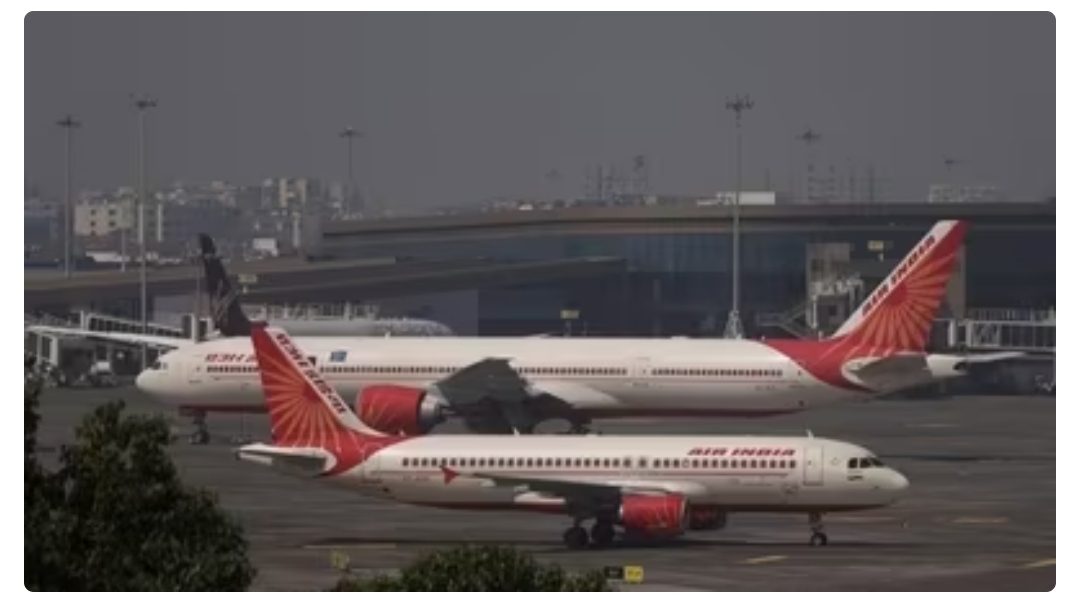
  Nearly 30 fall in airfares after Vande Bharat trains launch Report   Indian Railroads monitors demand for Vande Bharat trains grounded on gender and age. 

 Vande Bharat Express train  Vande Bharat Express train  Indian Railroads has started covering the demand for Vande Bharat trains on the base of gender and age of passengers. The data include the number of males, ladies, and transgenders traveling on the four Vande Bharat routes — three from Mumbai to Shirdi, Goa, and Solapur.   

For the first time, the Central Railway collated data that revealed the loftiest number of passengers traveling in Vande Bharat Express starting from Mumbai belonging to the age group of 31- 45 times, followed by 15- 30 times of age.   In total, there are 85,600 males, 57,838 ladies, and 26 transgenders traveled in Vande Bharat Express trains between September 15 to October 13, according to a report published by Hindustan Times.   

The railroads collected this data in an  trouble to popularise Vande Bharat trains and increase footfall. The recent data on  residency ranges between 77 to 101 in September.  

 “ Children( 1 – 14 times old) made up about 5 of passengers on average throughout this time, whereas ambisexual people made up4.5 of all Vande Bharat passengers,” said Shivraj Manaspure,  principal PRO of Central Railway as quoted by HT.  

Source www.livemint.com

 According to estimates from the assiduity, after the  preface of the Vande Bharat train, there has been a sharp decline of 10 – 20 in air business and a reduction of 20 – 30 in airfare, Manaspure added.   Paresh Rawal, Public Policy Analyst( Mobility and Transportation) stated that this macro data will play a  pivotal  part in Railroads’  profit generation from non-fare boxes, HT reported. 

  “This data will give the assiduity a fair idea about the  followership. In addition, this data will also help Indian Railroads in planning  unborn advancements in services, food menu and other amenities,” Rawal said.  

 Railway Minister Ashwini Vaishnaw has said Kashmir is soon set to get Vande Bharat express train on the Jammu- Srinagar route. He added that the train has been designed in a unique way so that they run  veritably easily in those temperatures and altitude.

For more information visit at https://happenrecently.com/zepto/?amp=1