
Saturday, June 27, 2026
Home Blog Page 55

Nagpur News Roundup Garbage Drive, Flyover Dispute, Defense Jobs, and Fraud Probe

Nagpur News Roundup

 The city of Nagpur has recently witnessed a series of significant civic, social, and economic developments, deeply impacting both residents and policymakers. From an ambitious garbage cleanup drive to a growing controversy over the construction of a new flyover, ongoing job projects in the defense sector at MIHAN, and investigations involving hospital fraud and a disturbing murder case, Nagpur has been at the center of varied headlines.

Citywide Garbage Cleanup Drive

Nagpur Municipal Corporation (NMC) rolled out a large-scale garbage cleanup drive this week in an effort to tackle the city’s rising waste management concerns. The initiative, flagged off in multiple wards, involves not only intensive waste collection but also awareness campaigns for segregation of garbage at the source.

Civic officials, sanitation workers, and local volunteers collaborated, with citizens also stepping forward to support the cause. The NMC stressed that keeping Nagpur clean is not only a municipal responsibility but a collective civic duty. Special teams were deployed to clear long-pending garbage heaps in congested areas, ensuring removal of solid waste that often leads to foul odour, mosquito breeding, and health issues.

The cleanup was also linked with Swachh Bharat Abhiyan goals, highlighting Nagpur’s commitment to ranking higher in national cleanliness surveys. The civic body plans to introduce additional collection vehicles and technology-based monitoring to ensure consistent progress.

Flyover Construction Draws Resident Opposition

While the cleanup drive was applauded, another infrastructure project has ignited controversy. The construction of a new flyover near a densely populated residential area sparked concerns among local citizens. Specific objections were raised about the flyover’s pillars and ramps extending dangerously close to balconies and windows of housing societies.

Residents argued that the proposed alignment threatens privacy, increases noise and pollution, and compromises safety. Many expressed dissatisfaction with the lack of consultation before execution. Civil society groups have started petitions, urging the municipal authorities and the state government to reconsider the design or relocate the project.

Officials, however, defended the move as part of Nagpur’s broader plan to decongest traffic and improve connectivity. The issue is now expected to be discussed in upcoming municipal council meetings, making it one of the most debated urban development challenges in the city.

Defense Sector Employment Boost at MIHAN

Amid these civic discussions, a large employment boost is on the horizon for Nagpur’s youth, thanks to a new defense manufacturing project being launched at Multi-modal International Cargo Hub and Airport at Nagpur (MIHAN). The project, involving collaboration with public and private defense firms, promises thousands of direct and indirect jobs in the region.

Industry insiders revealed that the initiative would focus on advanced defense equipment manufacturing, research and development facilities, and supply chains vital to India’s Atmanirbhar Bharat (self-reliant India) defense vision. Training programs are being introduced to skill local candidates in high-demand sectors like aerospace engineering, component assembly, and logistics.

Local representatives welcomed the move, calling it a “transformative project” for Nagpur’s economy. The MIHAN project has long been expected to become a growth engine, and with this defense manufacturing push, the prospects for job creation and technological advancement are significant.

Hospital Fraud Investigation Unfolds

The law-and-order landscape of the city turned turbulent as authorities launched a probe into alleged fraud at a private hospital in Nagpur. The hospital was accused of overbilling patients, manipulating insurance claims, and misrepresenting treatment procedures. Reports suggest that whistleblowers, including some staff members, came forward with documents leading to the investigation.

Police and health officials have begun collecting records while patients and families came forward with complaints of irregularities in billing practices. The case has sparked concerns over healthcare ethics in the city, raising questions about the accountability of medical institutions. Patient rights groups have demanded strict action and reforms to prevent such cases in the future.

The hospital management has denied wrongdoing but pledged to cooperate with authorities. The outcome is expected to set a precedent in how the city enforces transparency in healthcare services.

Murder Case Stuns Residents

Adding to the week’s list of headline incidents, Nagpur police registered a shocking murder case that unfolded in a residential area. The crime involved a brutal attack that left residents shaken and reignited conversations about urban policing and neighborhood safety.

Investigating officers have launched a manhunt and are questioning several suspects linked to the case. Senior officials assured that forensic teams are working with urgency to gather evidence. Citizens have urged authorities to enhance street surveillance and patrolling in vulnerable parts of the city.

Community associations are also pushing for stronger coordination between law enforcement and residents to prevent such crimes. The incident has highlighted the pressing need for reinforced law-and-order measures as Nagpur continues to urbanize rapidly.

A City in Transition

Nagpur, often called the “Orange City,” is clearly in the middle of a transformative phase. On one hand, major civic initiatives, new industries, and opportunities promise a brighter future. On the other hand, urban anxiety over infrastructure challenges, corruption allegations, and crime cases underscores the hurdles still ahead.

Civic leaders emphasized that effective governance and public participation are critical in shaping a progressive, safe, and inclusive urban environment. Nagpur’s future, residents believe, will depend on striking a balance between modernization and citizen welfare.

For now, the cleanup drive stands as a symbol of civic unity, while controversies and investigations reflect the growing demand for transparent, sustainable, and safe urban planning. Nagpur’s unfolding stories represent the evolving picture of Indian cities – ambitious in growth, yet navigating challenges in governance, infrastructure, and social justice.

Karun Kaura: From Newsroom to Political Battleground

Karun Kaura

Punjab’s political and social fabric has long been shaped by farmers, activists, and journalists who dared to speak against the tide. Among the new generation of leaders rising from the state, Karun Kaura has emerged as a distinctive voice — a man who began his journey as a fearless journalist, built influence as a grassroots activist, and now steps into formal politics with the Bharatiya Janata Party (BJP).

The Making of a Rural Nationalist

Born in Punjab, Karun Kaura’s story is rooted in the struggles of villages that have long been burdened with farmer debt, unemployment, and the menace of drugs. Unlike many politicians who emerge from dynasties or elite urban circles, Kaura carved his path from the grassroots.

Early in his career, he immersed himself in rural Punjab’s problems, addressing issues of agricultural distress, education gaps, and crumbling local infrastructure. His conviction that Punjab’s revival lies in empowering its villages shaped his public identity as a “rural nationalist” — someone equally committed to India’s unity and Punjab’s local well-being.

Journalism as a Battlefield

Kaura’s first major recognition came through his role as Editor-in-Chief of Sky News Punjab, a regional channel that became known for provocative debates and hard-hitting ground reports.

At the heart of his media career lies his flagship program, Punjab Bechain Kyun!! (“Why is Punjab Restless?”). The show did not just entertain — it rattled politicians, exposed corruption, and directly confronted sensitive issues. Whether it was farmer suicides, joblessness, or drug addiction, Kaura ensured that the voices of ordinary Punjabis found space in mainstream discussions.

He also gained attention for debating high-profile figures, including:

Simranjeet Singh Mann – where Kaura openly dismantled pro-Khalistan arguments.

Sidhu Moosewala – in a heartfelt dialogue on youth identity and frustrations.

National leaders like Salman Khurshid, Mukhtar Abbas Naqvi, and Manjinder Singh Sirsa, with discussions centering on Punjab’s role in the national political equation.

For many viewers, Kaura was not just another anchor — he was a truth-teller unafraid of confronting both separatists and ruling elites. His journalism positioned him as a bridge between Punjab’s people and power corridors.

The Sarpanch Union and Rural Activism

Parallel to his media influence, Kaura cemented his grassroots leadership by becoming President of the Sarpanch Union Punjab, a collective body of elected village leaders. Under his leadership, the union became a platform to address systemic rural challenges:

Fair crop pricing and better market access.

Irrigation and water management reforms.

Infrastructure development in villages.

Community-led drug de-addiction campaigns.

Unlike conventional politicians, Kaura often visited remote villages, holding sabhas (public gatherings) and walking among farmers. This approach earned him the reputation of a “people’s candidate” — a leader grounded in the soil rather than aloof from it.

Political Roadblocks and Resistance

Success, however, brought friction. In 2025, Kaura faced what supporters described as a politically motivated attack. An FIR was filed against him alleging financial irregularities, reportedly under the influence of Aam Aadmi Party MLA Chetan Singh Jauramajra.

For his critics, it was an opportunity to discredit him. For his supporters, it was a test of his resilience. Villagers, sarpanches, and social media users rallied behind Kaura, rejecting the allegations as a smear campaign. Instead of weakening him, the episode reinforced his image as a leader targeted precisely because of his rising influence.

The Leap into BJP

On 12 August 2025, Kaura formally joined the Bharatiya Janata Party (BJP), a move that signaled his shift from activism and journalism into electoral politics. Welcomed by senior leaders like Ashwani Sharma and Parneet Kaur, his induction was described as a strategic gain for the BJP in Punjab, particularly in rural regions where the party traditionally struggled.

Explaining his decision, Kaura declared his commitment to a “strong, united, and self-reliant India.” Analysts framed it as both a personal turning point and a symbolic moment for Punjab politics: the rise of leaders not born from dynasties but from grassroots activism.

Public Image and Strengths

Kaura’s appeal lies in a unique combination of factors:

Grassroots credibility through his work with sarpanches and farmers.

Strong nationalist and anti-Khalistan stance, resonating with large sections of Punjab’s population.

Clean reputation, seen as free from corruption and opportunism.

Media influence, enabling him to control narratives and amplify his reach.

These qualities differentiate him from many traditional Punjabi politicians who are often seen as disconnected, dynastic, or transactional in their leadership.

Legacy in the Making

While Kaura’s political career is only beginning, observers already see him as a potential MLA or MP. His entry into the BJP has shifted conversations around Punjab’s leadership models, highlighting a move from election-centric politics toward permanent grassroots engagement.

Critics caution that his nationalist rhetoric might create polarization, but even they acknowledge his rising influence. For supporters, Kaura represents a new model of leadership — a blend of journalist, activist, and politician committed to both Punjab’s villages and India’s unity.

Conclusion

Karun Kaura’s journey reflects the evolving face of Punjab. From confronting separatism on live television to mobilizing sarpanches in village sabhas, and now stepping into the formal political arena, Kaura has consistently demonstrated fearlessness and authenticity.

In an era where credibility in politics is rare, Kaura stands as a symbol of grassroots energy meeting national purpose. His future trajectory remains to be seen, but one thing is certain — he has already carved out a distinctive space in Punjab’s turbulent political and social discourse.

From Humble Beginnings to Global Ambitions: Chef Manish Raturi’s Culinary Odyssey

Chef Manish Raturi

In the world of gastronomy, every chef’s journey begins with a moment of inspiration—a spark that turns into a lifelong pursuit of culinary excellence. For Chef Manish Raturi, that spark ignited in 2011 at Clark International Hotel, Karol Bagh, where he first experienced the rhythm and rigor of a professional kitchen.

Building a Culinary Foundation

Driven by a determination to turn his passion into a profession, Manish enrolled at the Institute of Hotel Management (IHM) Pusa, one of India’s most esteemed culinary institutes, and completed his course in 2014. His education was more than technical—it was transformative, instilling in him discipline, creativity, and a deep understanding of global culinary practices.

Innovating Flavors at Jamming Goat 3.0

Today, Chef Raturi stands at the helm as Executive Chef of Jamming Goat 3.0 in Kokapet, Hyderabad—a restaurant celebrated for its bold, progressive menu and immersive dining experience. His kitchen is a laboratory where tradition meets innovation, bringing dishes to life that are both familiar and avant-garde.

From his signature slow-cooked Nihari served with pao to creative interpretations of Indian street food, each dish is a narrative of flavor and culture. His core philosophy is straightforward yet powerful: “Let the flavors tell the story.”

Leadership Beyond the Kitchen

Being an Executive Chef is about more than creating exceptional dishes—it’s about leadership. Manish balances multiple roles: visionary menu creator, mentor to his brigade, quality control expert, cost manager, and a custodian of culinary standards. His leadership style is rooted in empowering his team, fostering collaboration, and consistently striving for excellence.

Eyes Set on a Michelin Future

While his accomplishments in India are commendable, Chef Raturi has grander ambitions. His eyes are set on gaining international experience by working in Michelin-starred restaurants. He views this as an opportunity to expand his creative horizons, challenge his technical expertise, and absorb global culinary trends.

An Evolving Journey

From the bustling kitchen of Clark International to the disciplined halls of IHM Pusa, and now to the leadership of Jamming Goat 3.0, Chef Manish Raturi’s journey is one of passion, resilience, and continuous growth. With a Michelin star dream in sight, this story is still unfolding and promises many exciting chapters ahead.

Visit for more : https://www.instagram.com/chef_manishraturi?utm_source=qr&igsh=MTQzMDN3ZTVrMDJxcQ==

PM Modi Inaugurates Mumbai International Cruise Terminal, India’s Largest Cruise Hub

PM Modi Inaugurates Mumbai

In a landmark event for India’s maritime and tourism sectors, Prime Minister Narendra Modi will inaugurate the Mumbai International Cruise Terminal (MICT) today, positioning it as the nation’s largest and most modern cruise hub. The launch of this world-class facility is expected to transform Mumbai into a premier global cruise destination while boosting India’s coastal tourism, trade, and international connectivity.

The MICT represents a significant milestone under the Government of India’s Sagarmala vision, which aims to modernize India’s ports and strengthen maritime infrastructure. Strategically located near the historic Gateway of India, the terminal is designed to accommodate some of the world’s largest cruise ships and offer state-of-the-art facilities for domestic and international travelers.

A Game-Changer for India’s Tourism and Maritime Industry

The Mumbai International Cruise Terminal is set to emerge as a hub of global cruise tourism, enhancing India’s connectivity with Southeast Asia, the Middle East, and Europe. With the capacity to handle over 300 cruise ships annually and an estimated 1.5 million passengers per year, the terminal will provide an unprecedented opportunity for India to tap into the rapidly growing cruise tourism market.

Officials have emphasized that MICT is more than just a cruise docking facility. It is envisioned as a holistic maritime ecosystem, featuring modern passenger amenities, hospitality services, retail outlets, efficient customs and immigration processes, and smart digital infrastructure to ensure a seamless travel experience. The integration of eco-friendly technologies, including sustainable energy sources and advanced waste management systems, underlines the government’s commitment to green port development.

Boost to Local Economy and Job Creation

The inauguration of MICT is expected to give a significant push to Mumbai’s economy and create thousands of employment opportunities in allied industries such as hospitality, travel, retail, entertainment, and transport. Local businesses, from taxi operators to hotels and restaurants, will experience increased demand as more international tourists make Mumbai their port of call.

Maritime experts believe that the cruise industry in India has enormous untapped potential. Investments in infrastructure such as MICT will not only increase foreign tourist arrivals but also encourage domestic cruise tourism across India’s extensive coastline. With its vibrant cultural heritage, cuisine, beaches, and adventure tourism offerings, India aims to position itself among the top cruise tourism destinations in the world.

Integration with Sagarmala and Blue Economy Initiatives

The new terminal is part of India’s broader Blue Economy strategy, which promotes sustainable ocean-based economic opportunities. Under the Sagarmala Project, the focus has been on developing ports as engines of economic growth while integrating them into industrial and tourism corridors.

The Mumbai terminal joins other ongoing maritime infrastructure projects across India, including cruise terminals in Goa, Kochi, Chennai, and Visakhapatnam. Together, they are intended to form a robust network of passenger ports that connect India’s east and west coasts, encourage regional cruise travel, and attract global operators to include India in their itineraries.

Union Minister for Ports, Shipping, and Waterways, Shri Sarbananda Sonowal, highlighted that this development is a reflection of India’s increasing prominence in international maritime trade and tourism: “The Mumbai International Cruise Terminal will redefine urban coastal infrastructure and make India a preferred global cruise destination. It is a testament to India’s maritime capabilities and tourism potential.”

An Infrastructure Marvel with Global Standards

Spread across a sprawling area, the MICT is built with international design standards, offering facilities on par with leading global cruise ports. Features include spacious boarding and disembarkation lounges, luxury waiting areas, multi-level car parking, advanced security systems, and fully digitalized ticketing and immigration counters.

The terminal is also connected seamlessly to Mumbai’s metro, suburban railways, and airport network, ensuring smooth travel for both international and domestic passengers. This multimodal integration will significantly enhance passenger convenience and reduce congestion at the terminal.

Experts note that with the increase in cruise tourism, India can expect economic benefits similar to those seen in global hubs like Singapore and Miami, where cruise terminals have significantly contributed to city branding, tourism inflows, and local employment generation.

A Vision for India’s Future in Cruise Tourism

Prime Minister Modi’s inauguration of the Mumbai International Cruise Terminal underscores the government’s strong emphasis on creating modern infrastructure that enhances quality of life, drives economic growth, and boosts India’s global standing. The launch of the terminal reaffirms India’s commitment to becoming a top global cruise tourism hub within the next decade.

Industry stakeholders are optimistic that MICT will serve as a model for future developments and elevate India’s position in the global cruise industry map. With rising disposable incomes, growing interest in leisure travel, and India’s extended coastline of over 7,500 kilometers, the country is poised to experience exponential growth in cruise tourism.

Looking Ahead

The inauguration of India’s largest cruise hub marks the beginning of a new chapter for the country’s maritime and tourism sectors. The Mumbai International Cruise Terminal is expected to attract not only international travelers but also ships from world-leading operators seeking to expand into new regions.

As the cruise season unfolds, the city of Mumbai—already renowned for its cultural dynamism and cosmopolitan appeal—will gain a new identity as India’s “Global Cruise Capital.” The terminal stands as a symbol of India’s ambitions to integrate its maritime heritage with the aspirations of a modern, global economy.

With the Prime Minister’s formal dedication of the facility to the nation, the Mumbai International Cruise Terminal is set to become a gateway of opportunity, prosperity, and international recognition for India.

Onion Farmers Intensify Protest in Maharashtra, Threaten Road Blockade

Onion Farmers

 In a dramatic escalation of the ongoing agrarian unrest, onion farmers across Maharashtra have strengthened their protests against the current market conditions, demanding fair prices for their produce. On Friday, large groups of farmers intercepted trucks belonging to the National Agricultural Cooperative Marketing Federation of India (NAFED), insisting that government procurement agencies must ensure they receive remunerative rates. Farmer leaders have warned that if their demands are not met soon, they will launch a statewide Rasta Roko Andolan (road blockade agitation).

The state, one of the largest producers of onions in India and a key supplier for both domestic and export markets, has witnessed significant distress among cultivators in recent months. A glut in supply, coupled with volatile pricing and inadequate procurement measures, has left farmers struggling to cover even their basic input costs. The frustration reached its peak as trucks loaded with onions under NAFED procurement operations were stopped by agitating farmer groups outside major mandis in Nashik, Ahmednagar, and Jalgaon.

Farmers’ Key Demands

The protesting farmers are demanding that the government sets a minimum support price (MSP) for onions at a level that reflects rising costs of cultivation, storage, and transport. They emphasized that while onions are an essential commodity for households across India, farmers ironically receive less than what it costs to grow the crop. Representatives assert that the current procurement price offered by NAFED and local wholesale markets is far below expectations, discouraging farmers from continuing husbandry of this staple vegetable.

Speaking at the protest site in Lasalgaon, one of Asia’s biggest onion markets, farmer leader Suresh Patil said, “We are not asking for charity, we are asking for justice. The government agencies are buying onions at distress prices while private traders exploit our situation. If the State and Center cannot give us fair value, we will have no option but to block roads across Maharashtra.”

Why Onions Matter

Onion farming is central to Maharashtra’s agricultural economy, employing millions directly and indirectly. The Lasalgaon belt in Nashik is considered the ‘onion capital of India’. Any disruption in production or supply not only affects farmers’ livelihoods but also impacts consumers across the country. A crash in onion prices has historically led to farmer agitations, while a sudden rise in market rates often triggers political repercussions at the national level.

Currently, farmers report that they are being forced to sell onions at as low as ₹7-8 per kilogram in wholesale markets. Considering that production cost per kilogram, inclusive of seeds, fertilizers, labor, electricity, and transport, is often above ₹10, cultivators face net losses. For many, this is pushing them into mounting debt and fueling frustration that has now erupted into widespread protest.

The Role of NAFED

The National Agricultural Cooperative Marketing Federation, a central government body, has been tasked with procuring onions to stabilize prices and manage buffer stocks. However, farmers allege that procurement volumes are insufficient and offered prices are too low to meaningfully benefit cultivators. This, combined with outdated storage infrastructure, means much of the produce risks spoilage before it can reach consumers or export markets.

Officials from NAFED maintained that they are working within the guidelines set by the Union Ministry of Agriculture and are carefully balancing farmer interests with consumer welfare. However, the assurances have failed to calm tempers on the ground.

Threat of Statewide Agitation

What makes the situation critical is the farmers’ announcement of an impending Rasta Roko Andolan. Such protests, involving road blockades and the disruption of transport corridors, could severely affect supply chains, including the movement of essential goods across Maharashtra and neighboring states.

Farmer organizations have already started mobilizing support in districts like Nashik, Pune, and Aurangabad. If thousands of trucks carrying agricultural produce are stopped on highways, the disruption could escalate into a nationwide issue, leading to spikes in retail onion prices at urban centers.

Political observers note that the agitation has the potential to put pressure on both the Maharashtra state government and the Union government. With onion prices always a politically sensitive issue in India, any prolonged unrest could influence policy decisions and electoral narratives.

Government Response

State authorities have appealed for calm and assured farmers that negotiations will continue. Maharashtra’s Agriculture Minister held an emergency press briefing on Saturday, promising to review procurement rates and to raise the matter urgently with the Center. “We recognize the importance of onion farmers in keeping food markets stable. We are committed to finding a solution where cultivators are not forced into distress. Dialogue is the only way forward,” the minister stated.

Meanwhile, opposition parties have seized upon the crisis to attack the government, accusing it of neglecting farmer welfare and failing to fulfill promises made regarding MSP reforms.

Broader Implications

Beyond immediate price concerns, the crisis also reflects structural challenges in India’s agriculture sector. Farmers remain vulnerable to market volatility due to the lack of adequate storage facilities, efficient export policy frameworks, and transparent procurement systems. Without major reforms, experts warn that similar unrests will continue to flare up whenever supply-demand gaps emerge.

Many agricultural economists argue for a stronger MSP regime along with investments in cold storages, digitalized procurement, and farmer cooperatives. Such systemic changes, they believe, would not only safeguard farmer interests but also stabilize consumer prices.

The Road Ahead

As protests intensify, the coming week will be crucial in determining whether the standoff finds a resolution or escalates into widespread disruptions. If the government raises procurement prices to meet farmer expectations, tensions may soften. If not, Maharashtra could be the starting point for yet another nationwide agrarian movement.

For now, the voices from Nashik’s onion markets echo a singular message: farmers want justice, and they are prepared to take their fight to the streets if their demands are not heard.

Rain Likely in 24 Districts of Madhya Pradesh, Showers Expected in Indore and Bhopal

Madhya Pradesh

Madhya Pradesh is once again preparing for a spell of widespread rainfall as the weather department has released predictions indicating showers in 24 districts across the state today. Among the key urban centers, Indore and Bhopal are expected to receive favorable showers, offering citizens some respite from the rising humidity and late monsoon fluctuations.

Weather Department’s Forecast

According to the latest updates from the Indian Meteorological Department (IMD), conditions in central India are conducive to moderate and scattered rainfall. A low-pressure system and accompanying wind patterns in the region have led to an expectation of intermittent rains across different parts of Madhya Pradesh. The forecast specifically highlights 24 districts where rainfall could occur, ranging from light drizzles to heavy downpours, depending on local atmospheric conditions.

In the capital city, Bhopal, overcast skies have kept temperatures relatively balanced since morning. The weather office has projected showers over the city by late afternoon or evening hours. Residents are advised to remain cautious in water-logging prone zones, as heavy spells, if they occur, could impact traffic and daily commutes.

Similarly, in Indore, conditions are ripe for moderate rainfall, with the possibility of thundershowers. Known for its fluctuating weather during late September, the city may experience rainfall that helps reduce dust levels and improves overall air quality. Local farmers in nearby rural areas have welcomed the projection, as remaining Kharif crops will benefit from a nourishing spell of rain.

Districts Under Rainfall Alert

While IMD has not elaborated with specific district names for all 24 regions, weather experts indicate that both central and western belts of Madhya Pradesh are likely to see active monsoon conditions today. In particular, areas adjoining the Narmada Valley and Malwa Plateau have shown signs of cumulonimbus cloud formation, pointing towards likely precipitation. The eastern belt may also witness scattered showers.

District administrations have kept monitoring teams in place, especially in low-lying rural areas, where water accumulation could temporarily disrupt movement. Precautions have also been advised for districts prone to lightning storms during this time of the monsoon calendar.

Relief for Farmers

The rainfall prediction has brought cheer to the agricultural community. Farmers cultivating soybean, pulses, and paddy crops in parts of Madhya Pradesh believe that the late monsoon showers could offer both a boost to current standing crops and improve soil moisture reserves for the coming Rabi season. Experts in the state agriculture department have also said that post-monsoon showers are critical for groundwater recharge, which supports irrigation projects later in the farming calendar.

A farmer from Sehore district expressed optimism saying that a light but steady rainfall would help stabilize yield expectations for the season. However, excessive rainfall at once could risk crop damage, especially for pulses nearing harvest. Hence, a balanced spell will be most useful for rural sectors.

Impact on Daily Life

Urban centers such as Bhopal, Indore, Ujjain, and Jabalpur typically experience slowdowns in traffic with sudden showers. Commuters are urged to plan their travel schedules in advance to avoid delays caused by waterlogged intersections or slippery road conditions. For electricity and power supply agencies, the possibility of short but heavy rain showers calls for advance preparations to avoid disruptions.

In residential neighborhoods, citizens have expressed relief at the possibility of reduced temperatures, as the past week recorded slightly warmer days due to weakened monsoon influence. For many families, especially in Bhopal and Indore, the rain could provide the ideal weekend atmosphere with cooler evenings.

Broader Monsoon Context

The 2025 monsoon season has been marked by variable activity across central India. While some districts in Madhya Pradesh recorded above-average rainfall earlier in July and August, several areas reported prolonged dry weeks in September. The upcoming spell of showers is expected to balance seasonal rainfall figures, closing the deficit gap in certain regions.

Meteorologists also note that the current rainfall prediction aligns with wider monsoon withdrawal patterns. While the southwest monsoon is expected to gradually recede from north-western India in the coming week, central India often experiences intermittent but powerful post-monsoon showers before the final withdrawal.

Safety Measures

Authorities have urged people not to take weather alerts lightly. Commuters should avoid low-lying underpasses during heavy rains, while motorcycle and two-wheeler riders are advised to exercise extra caution on slippery roads. Citizens are also advised to unplug sensitive electronics during lightning alerts to avoid sudden damage from power surges.

Disaster management officials have reiterated their commitment to assistance in case of any unexpected flooding in rural belts. Helpline numbers have been circulated in local newspapers and radio channels to extend safety support.

Public Sentiment

Rainfall forecasts often generate mixed reactions from communities. For daily-wage workers and vendors, prolonged showers may disrupt work, but for many residents, the cool weather is a relief after days of sticky humidity. Social media chatter across Bhopal and Indore already reflects anticipation of the showers, with users sharing photographs of morning cloud formations across the skyline. Families expect to spend cozy evenings indoors, while food stalls prepare for a rise in demand for seasonal snacks popular during rainy evenings.

Conclusion

Madhya Pradesh’s weather outlook for today suggests a fresh spell of much-awaited rain across 24 districts, with Indore and Bhopal being the primary urban centers under forecast. As the monsoon edges towards its seasonal retreat, this rainfall is expected to provide relief to city residents, support ongoing agriculture, and cool down sweltering late-September afternoons.

For now, the state braces itself for another downpour, hopeful that nature’s rhythm balances comfort for urban populations and prosperity for the farming community.

₹2 Lakh Crore Infrastructure Push Mohan Yadav’s Vision for Modern Madhya Pradesh

Mohan Yadav

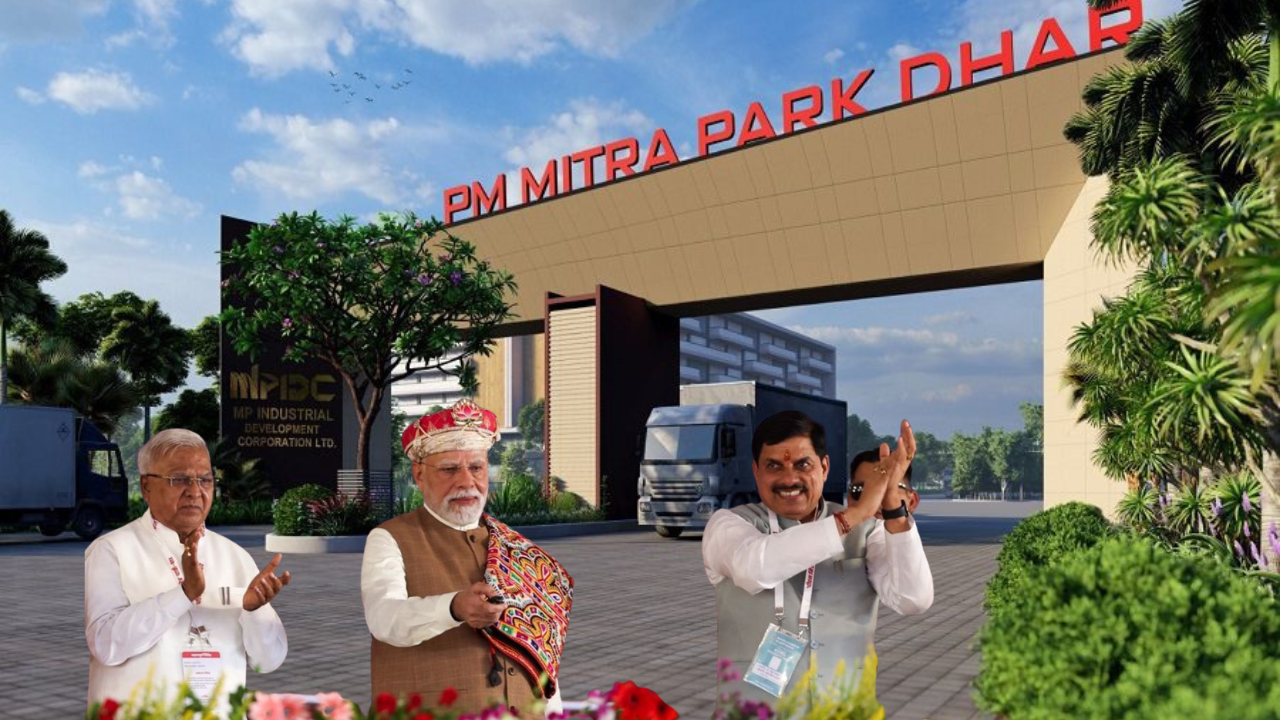
In a major push towards rapid industrialization and sustainable urban growth, Madhya Pradesh Chief Minister Mohan Yadav on Saturday announced a landmark economic initiative comprising the development of a new 400-acre industrial area and implementation of mega development projects worth ₹2 lakh crore across 418 cities of the state. The announcement underlines the state government’s vision to transform Madhya Pradesh into a vibrant hub of industry, investment, and modern infrastructure.

Driving Industrial Growth with New 400-Acre Industrial Area

The newly proposed 400-acre industrial area will serve as a dedicated zone for manufacturing, agro-processing, information technology, and allied industries. According to officials, the government is planning to set up state-of-the-art facilities for logistics, warehousing, and research, with a focus on attracting both domestic and global investors.

Highlighting the opportunity, CM Mohan Yadav said that the industrial park will not only strengthen the state’s production capacity but also generate thousands of direct and indirect employment opportunities. He assured that the area will be equipped with world-class infrastructure including better road connectivity, uninterrupted electricity supply, and digital networks, thereby ensuring an ideal ecosystem for industries to flourish.

“The upcoming industrial area marks the beginning of a new growth chapter for Madhya Pradesh. We are committed to building a sustainable and business-friendly ecosystem that ensures investments can translate into real growth and jobs,” Chief Minister Yadav said during his announcement.

₹2 Lakh Crore Mega Development Projects for 418 Cities

In addition to the industrial push, CM Mohan Yadav revealed an ambitious urban development roadmap worth ₹2 lakh crore. This initiative, spread across 418 cities of Madhya Pradesh, aims at holistic upgradation of civic infrastructure including roads, sewage systems, public housing, transport, and modern amenities to enhance the quality of life for residents.

The project will rely on cutting-edge smart city principles, sustainable design, and green technologies. Officials noted that water conservation, renewable energy, waste management, and digital governance will form the backbone of these upcoming projects.

Emphasizing inclusivity, the state government has assured that medium and small towns, along with large cities, will benefit equally from these mega development initiatives. Roads, bridges, smart lighting, green zones, and modern healthcare facilities will be developed to bring urban infrastructure at par with national standards.

Strengthening Investment Climate

The dual announcement of industrial growth and city development sends a strong message to potential investors that Madhya Pradesh is poised for a new wave of economic expansion. The ₹2 lakh crore investments spread across various sectors will open multiple opportunities for private partnership, public-private collaboration, and sectoral innovation.

Financial experts believe that such large-scale urban infrastructure projects will eventually boost the state’s GDP, attract foreign direct investment, and help Madhya Pradesh emerge as one of the leading growth engines of the Indian economy.

Employment Generation and Skill Development

Alongside infrastructure creation, Chief Minister Yadav stressed employment generation as a top priority. The industrial area combined with the city development projects is expected to create lakhs of new job opportunities across construction, technology, services, and manufacturing.

The government is also planning to strengthen skill development programs that match industry requirements. Special training centers and vocational institutes will come up in collaboration with industrial partners to ensure that the youth of Madhya Pradesh are fully equipped to participate in the employment boom.

“Every brick laid under this development plan will create opportunities for our state’s youth. We want to empower our people so they can contribute to and benefit from the state’s journey of progress,” the Chief Minister remarked.

Focus on Inclusivity and Regional Development

One of the distinct features of Chief Minister Yadav’s vision is the focus on balanced regional development. The plan ensures that not only larger cities like Bhopal, Indore, and Gwalior but also smaller towns and semi-urban areas receive an equal share of resources.

By promoting industrial clusters near smaller towns, the state aims to prevent overconcentration of industries in traditional hubs while ensuring equal economic momentum across regions. This inclusive approach reflects the government’s commitment to reducing regional disparities and creating a uniform growth model.

Political and Economic Significance

The announcement comes at a time when Madhya Pradesh is pushing aggressively to attract fresh investment and enhance urban standards. Experts consider this move to be a game-changer that positions the state as a strong competitor among India’s industrial and economic centers.

By targeting both industrial growth and urban transformation simultaneously, the government expects to leverage synergy between the two sectors—ensuring industries benefit from better-connected cities while citizens enjoy rising standards of living.

Way Forward

Implementation of the projects has already been mapped with clear deadlines, financial channels, and monitoring frameworks. The government has assured complete transparency, timely delivery, and citizen participation in this ambitious development agenda. MoUs with private players are expected to be signed in the coming months.

As Madhya Pradesh sets on this ambitious journey under CM Mohan Yadav’s leadership, the ₹2 lakh crore mega development plan coupled with the 400-acre industrial area stands as a testament to the state’s growing aspirations. If executed effectively, experts believe this initiative could redefine the industrial and urban landscape of central India for decades to come.

KAIVA: A Brand Shaped by Purpose and Perseverance

KAIVA

KAIVA emerged from a single, profound vision: to redefine health and beauty by delivering products that enhance natural beauty while upholding authenticity and transparency. The brand’s journey began during a time when the industry was overwhelmed by superficial marketing and synthetic-heavy formulas. KAIVA set out to change that narrative.

Early Aspirations

Driven by the desire to create trustworthy, botanically-based products, KAIVA was founded on the principle of genuine care for what goes into every bottle. The initial days were marked by hard lessons, such as setbacks with external manufacturers and losses from uncompromising quality standards. Each challenge became a stepping stone toward building a brand that values real results over empty promises.

The Founder: Shiwa Singhwal

At the heart of KAIVA is its founder, Shiwa Singhwal, whose entrepreneurial spirit took shape during college days. Shiwa’s own search for authentic, natural beauty products—and frustration with what was available in the market—inspired the creation of KAIVA. It was this drive for transparency and quality that led Shiwa to transition from small-scale experiments as a student to building a brand with its own in-house manufacturing unit. His hands-on leadership continues to shape KAIVA, ensuring that the brand’s core values of integrity and innovation are never compromised.

Filling an Industry Gap

KAIVA recognized a significant gap in the FMCG sector, noticing that many brands focused on appearance rather than ingredient integrity. KAIVA’s response was to prioritize rigorous research and development, investing in innovative formulations and the highest quality, naturally derived raw materials.

Building In-House Excellence

Instead of relying on third parties, KAIVA established its own manufacturing unit to ensure end-to-end control over product quality. The brand’s approach eliminated unnecessary intermediaries, which allowed for:

  • High Standards: Every product undergoes strict quality checks.
  • Ethical Sourcing: KAIVA is committed to cruelty-free, ethically chosen, and globally sourced botanical ingredients.
  • Competitive Pricing: Without third-party markups, real value is passed directly to customers.

Challenges and Resilience

The path to success was anything but not easy. Long hours, constant learning, and adapting through adversity forged KAIVA’s character. Each hurdle reinforced the brand’s push for excellence and unwavering dedication to purity.

Growth and Impact

Within just three years, KAIVA set new benchmarks, breaking its own global sales records and building a loyal, diverse customer base. The brand’s commitment to value, quality, and transparency resonated with beauty lovers of all ages.

Staying True to Core Values

KAIVA’s identity is reflected in every aspect of its operation:

  • Botanical Focus: A dedication to using premium plant-based ingredients over chemical alternatives.
  • Innovation Through R&D: Investment in research takes priority over celebrity endorsements or flashy campaigns.
  • Authenticity at Heart: The brand lets its products and customer satisfaction speak louder than any marketing claim.

KAIVA’s ongoing journey highlights the impact of purpose-driven entrepreneurship, the importance of standing by quality, and the belief that authenticity builds lasting trust. It is a home-grown brand that leads with integrity, inspires resilience, and continues to set new standards for the industry.

When Diplomacy Meets Over Coffee: CD Foundation’s Decade-long Journey Inspires Global Bridges

CD Foundation

New Delhi, September 2025 — It wasn’t a conference room, but a coffee table that brought the world together on Friday morning at the Eros Hotel, New Delhi. Against the aroma of freshly brewed coffee and the warmth of Indian hospitality, diplomats, partners, and cultural leaders gathered to celebrate a rare milestone: ten years of CD Foundation’s cultural diplomacy.

Founded in 2015 by Charu Das, Founder & Director, CD Foundation began as a small idea — a neutral, people-first space for embassies and communities to meet beyond politics. A decade later, it has blossomed into an internationally recognized platform spanning 45+ countries, proof that “soft power” can be stronger than any hard negotiation.

A Gathering of Nations

The Diplomatic Coffee Morning turned into a mini-United Nations in New Delhi, with dignitaries from Bangladesh, Belarus, China, Indonesia, Iran, Iraq, and Zambia among the attendees. Their presence not only lent gravitas but also reaffirmed the Coffee Morning’s reputation as a hub of genuine dialogue and exchange.

The event opened with a traditional lamp-lighting ceremony followed by a short film capturing CD Foundation’s journey — from Delhi’s embassy corridors to international festivals and partnerships shaping global conversations.

Voices of Influence

Dr. Amrendra Khatua, Former Secretary, Ministry of External Affairs, set the tone, reminding the audience that “where politics falters, culture succeeds.” His words were echoed by H.E. Mr. Oday Hatim Mohammed of Iraq and Mrs. Phalecy Mwenda Yambayamba of Zambia, who emphasized the shared future that diplomacy-through-culture could nurture.

The event’s global spirit was further amplified through a virtual address from H.E. Dr. Madan Mohan Sethi, Consul General of India in Auckland. His remarks spotlighted the India–New Zealand bridge of trade, tourism, and culture, underlining how cultural diplomacy carries real economic weight. Adding a local yet international flavor, Ms. Mahia Williams of the Whiria Collective (New Zealand) spoke of Māori–Indian collaborations not as symbolic, but as living exchanges.

Partnerships with Purpose

Beyond diplomacy, the Coffee Morning also recognized healthcare and humanitarian champions. Dr. Amit Luthra of Amolik Health Care highlighted India’s emerging role in medical diplomacy, while United Sikh drew attention to its relief efforts in flood-hit Punjab — a reminder that people-to-people diplomacy extends to those who need it most.

Looking Ahead

The celebration was not just about looking back but also about unveiling the future. Upcoming initiatives include:

  • India–UK Festival (Manchester & Leeds, November 2025)
  • Delegations to China (late 2025)
  • Reciprocal Festivals in India (early 2026)

Each marks a continuation of CD Foundation’s mission: to turn connections into collaborations.

A New Beginning at Ten

As the morning ended, there was no sense of closure — only continuity. Ten years may mark a milestone, but for CD Foundation, it is just the first chapter of a much bigger global story waiting to be written.

For more information you can visit https://www.cdfoundation.co.in/

Bay Area Teen Analyzes Omicron Mutations to Advance Future Vaccines Through the YRI Fellowship

Sai Sri Pranathi Pasuparthi

The COVID-19 pandemic shook the world, upending daily life, overwhelming healthcare systems, and demonstrating just how quickly a virus can mutate. Even as vaccines were developed at record speed, the emergence of new variants revealed a sobering reality: pathogens like SARS-CoV-2 evolve constantly, and a single set of vaccines may not be enough to stay ahead.

For Sai Sri Pranathi Pasuparthi, a high school sophomore from the Bay Area, this global challenge became the inspiration for her groundbreaking research during the YRI Fellowship. Rather than simply reflecting on the pandemic’s impact, Sai decided to take action exploring how genomic surveillance and evolutionary biology could help the world prepare for future mutations and design more adaptable vaccines.

Her project, “Epidemiological and Evolutionary Insights into Omicron Variant Mutations through Genomic Surveillance,” focuses on one of the most infamous COVID-19 variants: Omicron. Known for its unusually high number of mutations, Omicron spread rapidly around the globe, reducing the effectiveness of existing vaccines and raising urgent questions about the virus’s evolutionary trajectory.

Sai’s research dives into these questions. By analyzing genomic data from the Covariant Database, she studied how and why Omicron mutates. Her findings revealed that the Spike Protein region the part of the virus responsible for entering human cells mutates the most frequently. The reason, she explains, is that the immune system heavily targets this region. To survive, the virus is forced to evolve constantly, modifying its Spike Protein to evade immune defenses.

This insight has major implications for global health. If scientists can predict which regions of the virus are most likely to mutate in the future, they can design vaccines that are not only reactive but anticipatory capable of protecting against tomorrow’s variants, not just today’s.

“After seeing the devastating impact of COVID-19 on schools, work, and daily life, I wanted to contribute to solutions that make vaccines more effective,” Sai explained. Her words reflect the motivation driving a new generation of scientists: not just curiosity, but lived experience. Like millions of students worldwide, Sai saw her school and community disrupted, and she wanted to ensure future crises could be mitigated.

The YRI Fellowship gave Sai the mentorship and resources to turn that motivation into research. Guided by Dr. Shashank Mishra, she bridged epidemiology and vaccine science, learning how to combine raw genomic data with evolutionary theory to extract actionable insights. For a student just 15 years old, this meant stepping into a field usually reserved for graduate students and professional researchers.

Her project doesn’t stop at academic curiosity it has clear, practical significance. Vaccine developers and policymakers are increasingly interested in genomic surveillance systems that can track viral evolution in real time. Sai’s analysis contributes to this field by highlighting the mutation dynamics of the Spike Protein and emphasizing the need for vaccines that account for its constant evolution.

Beyond her scientific work, Sai leads a multidimensional life. She participates in her school’s Model UN club, where she hones skills in diplomacy and debate, and she enjoys cooking, dancing, working out, and music. But her deepest passion lies in medicine and public health, where she sees herself continuing to innovate. This balance between academic excellence, extracurricular leadership, and creative expression reflects the Fellowship’s philosophy: the best researchers are not just technically skilled, but also globally minded and human-centered.

Sai’s research also underscores the broader purpose of the YRI Fellowship: to empower students to turn real-world crises into opportunities for scientific innovation. The program pairs high schoolers with PhD-level mentors, holds them to rigorous research standards, and equips them to produce work that is not only academically competitive but also globally relevant.

In Sai’s case, the pandemic became more than a disruption it became a catalyst for discovery. By asking why Omicron mutates the way it does, she is contributing to one of the most important conversations in global health: how humanity can outpace viral evolution through smarter, more flexible vaccines.

Her journey is also a reminder of the untapped potential of young researchers. At just 15, she is already contributing insights that may help inform the future of vaccine design. With continued mentorship and opportunities, students like Sai are proving that the next generation of scientists doesn’t need to wait for graduate school to make an impact.

Sai’s project is a perfect example of what the YRI Fellowship stands for: transforming curiosity into contribution, and giving students the platform to tackle challenges that define our world.

Learn more about how the YRI Fellowship is giving young researchers like Sai the tools to take on global challenges at yriscience.com.