
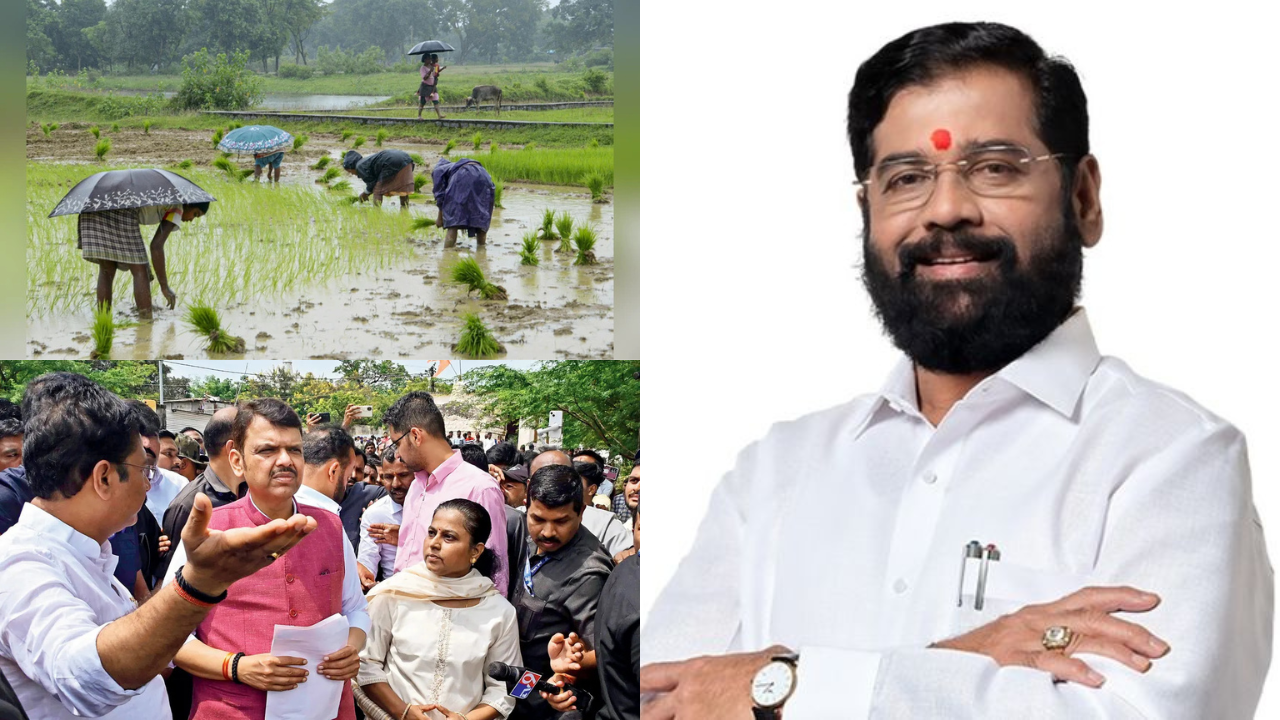
In the wake of persistent rainfall and flooding across several regions in Maharashtra, Chief Minister Devendra Fadnavis and Deputy Chief Minister Eknath Shinde continue to lead crucial coalition discussions focused on addressing immediate challenges while reinforcing the state’s long-term vision for growth, stability, and welfare. The leadership duo, representing key pillars of the Maharashtra government, is coordinating with local bodies, district officials, and farmer organizations to ensure timely action on infrastructure resilience and comprehensive relief initiatives.
The coalition leadership has convened multiple rounds of meetings with senior ministers and administrative officials to assess ongoing damage in flood-affected areas and accelerate support for displaced communities. Both Chief Minister Fadnavis and Deputy Chief Minister Shinde emphasized that the state’s priority remains safeguarding citizens’ lives, mitigating property losses, and restoring essential services disrupted by heavy rainfall over the past weeks.
CM Fadnavis, who reviewed the ground situation through virtual sessions with district collectors and on-site inspections, reiterated the government’s commitment to strengthening disaster management systems across Maharashtra. He directed immediate release of funds under the State Disaster Response Fund (SDRF) to assist affected talukas in Nashik, Ahmednagar, Nagpur, and Marathwada regions, where several villages have reported inundation and crop damage. Flood control mechanisms, such as river embankment reinforcement and drainage maintenance, were also highlighted as urgent interventions.
Deputy CM Eknath Shinde, meanwhile, underscored the coalition’s unified approach toward infrastructure renewal and relief coordination. During his recent review meetings in Mumbai and Thane, he stressed the importance of a synchronized state-wide effort between urban civic bodies and rural administration. “The people of Maharashtra must feel secure that the government stands shoulder-to-shoulder with them,” Shinde remarked, emphasizing rapid rehabilitation and flood-proofing strategies in both metropolitan and agricultural zones.
The coalition partners are also turning attention to long-term solutions. A special task force under the Maharashtra Infrastructure Development Council has been assigned to evaluate drainage and water retention systems, with focus on sustainable urban planning to prevent future disasters. The task force will submit recommendations for adaptive infrastructure by early November, aiming to strengthen the state’s resilience against extreme weather conditions increasingly linked to climate change.
Parallel to infrastructure responses, the coalition is actively coordinating farmer relief efforts, particularly in regions where standing crops—such as soyabean, cotton, and pulses—have been severely affected. CM Fadnavis announced an accelerated crop assessment drive through satellite mapping and field surveys to ensure that compensation reaches farmers within record time. The government also plans to simplify access to insurance claims under the Pradhan Mantri Fasal Bima Yojana and allocate additional financial support through the state’s Krishi Sanjeevani Abhiyan.
Deputy CM Shinde called upon banks and cooperative societies to cooperate in rescheduling loan repayment schedules for distressed farmers. He further instructed agricultural officers to maintain transparent communication channels with local farming communities, promising that no farmer would be left behind during this recovery process. Shinde affirmed that both coalitions—the Bharatiya Janata Party (BJP) and Shiv Sena (Shinde faction)—remain committed to the welfare of every sector, with agrarian stability forming the backbone of their governance agenda.
Maharashtra’s leadership continues to strike a balanced tone between immediate response and future readiness. In light of urban flooding challenges seen in cities like Mumbai and Pune, the state cabinet has also announced accelerated work on stormwater drainage upgrades, decentralized water conservation projects, and geo-tagging of vulnerable sites. CM Fadnavis directed municipal corporations to utilize real-time rainfall monitoring data to refine emergency protocols, ensuring swift intervention during red and orange alerts issued by IMD.
Energy and transport sectors also feature prominently in the ongoing coalition discussions. The leadership is reviewing integrated infrastructure initiatives such as elevated corridors, metro expansions, and smart drainage under urban improvement plans. With multiple districts simultaneously managing flood recovery and infrastructure augmentation, the state government seeks a synchronized execution model that minimizes environmental impact while maximizing public safety.
A government spokesperson confirmed that Chief Minister Fadnavis will chair a statewide review meeting later this week to finalize the second phase of compensation packages and infrastructure allocations. Deputy CM Shinde is expected to accompany him during visits to flood-hit regions in Marathwada, where community engagement sessions have been initiated to gather on-ground feedback. Both leaders have reiterated their collective commitment to inclusive governance, emphasizing that Maharashtra’s progress depends on the strength of its people and the responsiveness of its administration.
In the broader context, the coalition continues to exemplify cooperative federalism within the state framework, bridging political divides for public welfare. The discussions highlight the synergy between leadership vision and administrative execution—an approach that has helped Maharashtra weather multiple challenges over the past decade. As the state rebuilds from recent monsoon setbacks, the government’s blueprint remains anchored in resilience, transparency, and empowerment, ensuring that development continues unhindered and support reaches every corner swiftly.
The state leadership’s proactive stance underscores Maharashtra’s determination to turn adversity into opportunity. Through strategic coalition unity and citizen-focused solutions, CM Devendra Fadnavis and Deputy CM Eknath Shinde reaffirm their pledge to uphold a governance model that prioritizes relief, infrastructure modernization, and sustainable rural prosperity. As Maharashtra transitions from immediate monsoon management to long-term planning, its leadership stands resilient—focused not only on recovery but on shaping a future prepared to meet environmental and economic challenges head-on.