Wednesday, November 25, 2026
Home Blog Page 3

Cyber Insurance India: Deloitte Warns One Outage Could Trigger Thousands of Claims

Hands type on a laptop keyboard as a warning sign flashes, illustrating the cyber risks facing Indian insurers.

A single cyberattack or cloud outage could trigger thousands of insurance claims at once in India, Deloitte India has warned, as businesses pile onto the same shared digital infrastructure and insurers struggle to price a risk with almost no claims history to learn from.

The warning comes in Deloitte India’s November 2026 report, Defending the Digital Insurer, which says the country’s cyber insurance market is growing fast but remains far behind the scale of the digital economy it is meant to protect.

One incident, thousands of claims

Deloitte warns that growing dependence on shared cloud platforms, application programming interfaces and third-party technology providers is creating interconnected risks that traditional insurance models may struggle to assess.

According to the report, a single ransomware campaign, cloud outage, software vulnerability or supply-chain compromise can affect multiple policyholders simultaneously, creating what insurers call accumulation risk.

Unlike conventional insurance events, where losses can be assessed one by one, a disruption to widely used infrastructure could hit businesses across sectors at the same time. The reported global Microsoft 365 outage between November 12 and 14, 2026, which disrupted email, collaboration and cloud services, offers a recent illustration. Although it was attributed to technical failures rather than a cyberattack, Deloitte says it shows how much businesses now rely on common technology platforms.

A market set to treble

India’s cyber insurance market, estimated at $115-255 million in FY25, is projected to reach $321-594 million by FY30-31, growing at 18-19 per cent a year, according to the report.

Aggregate insured limits in India have grown by an estimated 16-17 per cent a year over the past three years. Some large banking policyholders nearly doubled their limits between FY25 and FY26, reaching $50-100 million, while large technology companies have bought cover of around $200-300 million.

Even so, India holds under 3 per cent of global cyber premiums. The global market is projected to nearly double from $16.3 billion in 2025 to $32.4 billion by 2030.

“India’s cyber insurance market remains underpenetrated relative to the scale of the country’s digital economy and growing cyber-risk exposure,” said Debashish Banerjee, insurance sector leader at Deloitte South Asia.

AI is changing the threat

Artificial intelligence is driving a sharp shift in the threat landscape, with automated phishing and AI-powered attacks surging by more than 1,200 per cent, according to Deloitte.

Incidents reported to CERT-In rose from 1.4 million in FY21 to 2.9 million in FY25, and India’s insurance sector faced record attacks in FY25, exposing more than 30 million records.

At least 116 data-related incidents were recorded across India’s financial sector between March and August 2026, including 46 data breaches, 37 data leaks and 33 credit-card-related incidents. Industry estimates suggest cybercrime-related losses in India could exceed $20 billion a year.

The report says average cyber losses exceeded $1 million per event in 2025, while business interruption accounted for more than half of cyber insurance claims.

Why pricing cyber risk is so hard

Deloitte identifies limited historical claims data, inconsistent incident reporting and insufficient actuarial information as major obstacles to accurately pricing cyber risks.

The report also points to a persistent high exposure, low coverage gap, driven by identity fraud risks in India’s mobile-first economy and ransomware claims, which remain among the most expensive cyber claims globally.

Insurers must also navigate a complex regulatory landscape, including the IRDAI Information and Cybersecurity Guidelines, the DPDP Act and the IT Act. Coverage is far from automatic: a technical outage that does not involve a cyberattack may fall outside standard cover, and whether compensation is available depends on policy wording, exclusions, waiting periods and coverage limits.
What Deloitte wants insurers to do

Deloitte recommends that Indian insurers move from static, rule-based underwriting to intelligence-led underwriting that uses real-time threat data to keep pricing accurate.

The report calls for:

– More sophisticated cyber catastrophe modelling to understand how one event can hit many policyholders – Continuous monitoring of third-party dependencies, not just a policyholder’s own systems – Scenario-based stress testing, including ransomware stress tests – Tighter policy language, with stronger cybersecurity controls required from policyholders – Smarter use of reinsurance arrangements, policy limits and capital management to handle simultaneous claims

“As cyber risk becomes a boardroom issue, cyber insurance is expected to evolve from a niche product into a more mainstream component of enterprise risk management,” Banerjee added.

Frequently Asked Questions

How big is India’s cyber insurance market?

India’s cyber insurance market is estimated at $115-255 million in FY25 and is projected to reach $321-594 million by FY30-31, growing at 18-19 per cent a year, according to Deloitte India’s November 2026 report.

Can one cyberattack really trigger thousands of claims?

Yes. Deloitte warns that a single ransomware campaign, cloud outage or supply-chain compromise can hit many policyholders at once because they share the same cloud platforms and technology providers, creating what insurers call accumulation risk.

Would cyber insurance cover a Microsoft-style outage?

Not necessarily. A technical outage that does not involve a cyberattack may fall outside standard cover, though some policies protect against non-malicious system failures or dependent business interruption. Whether compensation is available depends on policy wording, exclusions, waiting periods and coverage limits.
Ionic Wealth Funding: Angel One Arm Raises Rs 177 Crore as AUM Crosses Rs 16,000 Crore

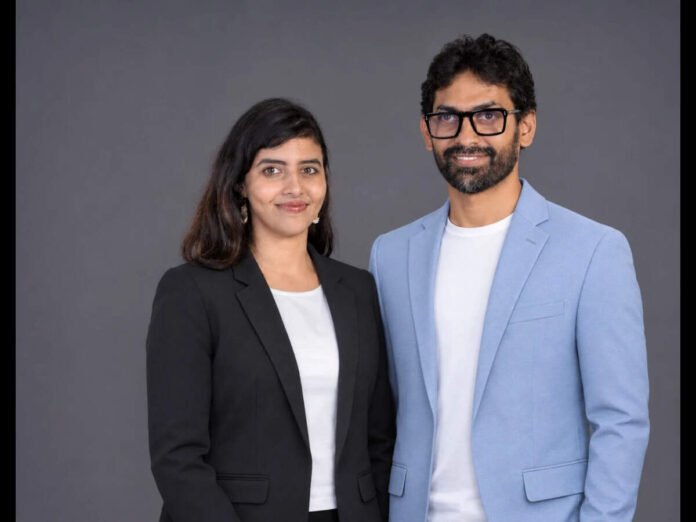
Co-founders of Ionic Wealth. The Angel One-backed wealth-tech platform has raised Rs 177 crore in a strategic funding round.

Ionic Wealth, the wealth management arm of stockbroker Angel One, has raised Rs 177 crore in a strategic funding round from its parent company and a group of marquee families, as it looks to expand its business for wealthy investors in India and overseas.

The Mumbai-based wealth-tech platform said the round was announced on 23 November. The fresh capital takes the company’s total funding to around Rs 466 crore since it began operations in 2024, when it started with an initial investment of about Rs 290 crore from Angel One and marquee families.

All investors from the previous round also took part in the latest fundraise. The company said the investor base includes business families, Bollywood personalities, fintech entrepreneurs, global chief executives, board advisers and media houses, though it did not name the external investors.

Where the money will go

Ionic Wealth plans to use the capital to strengthen its portfolio-led wealth management offering, add artificial intelligence features to its platform, grow its ultra-high-net-worth business, hire specialist talent and expand its presence in India and overseas markets.

The company plans to scale its high-net-worth business through technology, strengthen global investing through GIFT City and widen access through the Accredited Investor framework and Specialised Investment Funds. It also plans to build a dedicated proposition for ultra-high-net-worth individuals and India’s leading families.

“Investor needs evolve, and our focus is to move beyond traditional product-led offerings towards a more comprehensive platform approach to wealth creation,” said Srikanth Subramanian, chief executive of Ionic Wealth.

“This strategic investment validates our vision of building a new-age wealth platform at the intersection of domain expertise and technology,” Subramanian added.

Angel One chairman and managing director Dinesh Thakkar said the company sees an opportunity as affluent investors’ aspirations rise and they look to maximise returns as financial products become more sophisticated.

Growth in two years

Ionic Wealth was founded in 2024 by Srikanth Subramanian, Shobhit Mathur and Dharmendra Jain. It operates as Angel One Wealth Ltd, a wholly owned subsidiary of Angel One.

The platform has grown quickly in its first two years of operations. Its assets under management have risen more than fourfold, from around Rs 3,800 crore in March 2025 to over Rs 16,000 crore in September 2026.

Its combined high-net-worth and ultra-high-net-worth client base has also nearly quadrupled in the same period, from around 680 clients to more than 2,900. The company now operates across more than 12 cities and has a team of over 100 private bankers.

Ionic Wealth runs an omnichannel wealth-tech platform for high-net-worth and ultra-high-net-worth clients, offering investment opportunities across asset classes, digital wealth management services and customised investment roadmaps. Its asset management business covers portfolio management services, investment advisory and alternative investment funds. Its GIFT City business is registered with the International Financial Services Centres Authority.

A crowded wealth management race

The fundraise comes as competition grows in India’s wealth management market, with traditional financial services companies, brokerages and new-age wealth-tech platforms all looking to serve affluent investors.

The market is expanding as more Indians build significant wealth and seek professional help to manage it, and platforms are competing on technology, global access and personalised advice.

For Angel One, the Ionic Wealth business adds a wealth management arm to its core stockbroking operation. The parent company is listed in Mumbai and is one of India’s largest retail brokers.

Frequently Asked Questions

How much has Ionic Wealth raised in its latest round?

Ionic Wealth has raised Rs 177 crore in a strategic funding round from its parent company Angel One and marquee families, taking its total funding to around Rs 466 crore since it began operations in 2024.

How fast has Ionic Wealth grown?

Its assets under management rose more than fourfold, from around Rs 3,800 crore in March 2025 to over Rs 16,000 crore in September 2026, while its client base grew from around 680 to more than 2,900 high-net-worth and ultra-high-net-worth clients.

What will Ionic Wealth do with the fresh capital?

The company plans to strengthen its portfolio-led offering, integrate artificial intelligence into its platform, expand its ultra-high-net-worth business, hire specialist talent, grow its GIFT City global investing business and build a dedicated proposition for India’s leading families.

Botsync Funding: Robotics Startup Raises $11 Million to Connect Factory Robots

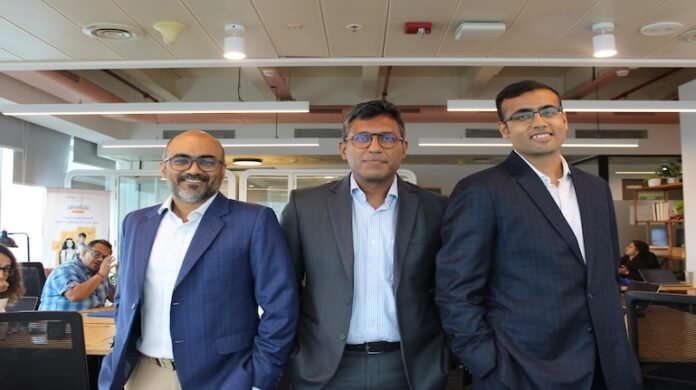
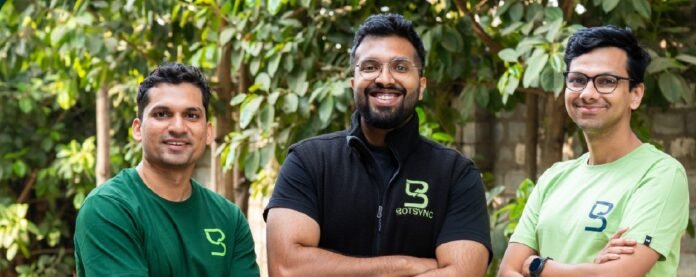
Botsync founders. The Singapore-headquartered robotics startup has raised $11 million in a round led by IvyCap Ventures.

Botsync, the Singapore-headquartered robotics startup with a large India presence, has raised $11 million (about Rs 103 crore) in a funding round led by IvyCap Ventures, as it scales its factory automation software and autonomous mobile robots for manufacturers in India and overseas.

The round also saw participation from Capital 2B, AppWorks, Iterative, AngelCentral, Genesis Alternate Investments and angel investor Nalin Advani. It follows a Series A extension led by SGInnovate in January 2026, and takes Botsync’s total funding past the $20 million mark.

Most of the fresh capital will go towards upgrading the company’s MAG range of mobile robots and adding artificial intelligence features to SyncOS, its software platform for coordinating robots and factory equipment. Botsync also plans to expand its engineering and project delivery teams in India, deepen partnerships with local systems integrators, and build its presence in Australia and the United States.

What Botsync builds

Founded by Nanyang Technological University graduates Rahul Nambiar, Nikhil Venkatesh and Prashant Trivedi, Botsync serves automotive and fast-moving consumer goods manufacturers that move goods between production lines, storage areas and dispatch bays.

Its offering has two parts:

– MAG autonomous mobile robots, including lifters, conveyors, tuggers and forklifts that can carry loads of up to 1.5 tonnes – SyncOS, a physical AI platform that connects robots, machines and enterprise systems from any vendor through a single interface

SyncOS assigns tasks, manages traffic across a facility’s robots and third-party equipment, and connects with systems such as enterprise resource planning software. The new AI features will help manufacturers increase throughput, predict maintenance needs and analyse operational data.

The company says it has completed more than 70 projects across nine countries and executed over two million production tasks at 99 percent uptime. Its customers include Caterpillar, Ford, Nestle, Honda, Coca-Cola and Kimberly-Clark. Botsync says some customers recover their investment within 24 months through reduced forklift use and manual handling.

At one global automaker’s body shop, SyncOS coordinated robots delivering parts to the assembly line. Botsync said the deployment allowed the automaker to take one forklift out of service, reassign two workers and improve productivity by 12.5 percent.

Why IvyCap backed the round

“As India’s manufacturing ecosystem evolves, solutions combining robotics, AI, and intelligent automation will play a critical role in driving efficiency and scale. We believe Botsync is well positioned to address this growing opportunity and expand its footprint across global markets,” said Vikram Gupta, founder and managing partner of IvyCap Ventures.

Chief executive Rahul Nambiar said the opportunity lies in connecting robots, machines and software systems so that facilities operate more efficiently. “The future of industrial automation lies in connecting robots, machines, and software systems to create intelligent, integrated operations,” Nambiar wrote in the company’s announcement.

Joseph Chan, partner at AppWorks, said Nambiar understands the factory floor as deeply as the software behind it. “That combination is why some of the world’s most demanding industrial customers keep expanding with Botsync,” Chan said.

India is both a market and a capability centre

India sits at the centre of Botsync’s plans. The company runs a Bengaluru office and experience centre serving automotive and consumer goods manufacturers, and the new funding will add Indian engineering and project delivery staff.

The raise comes as robotics investment in India gathers pace, although from a small base. Tracxn data put startup funding in the sector at $63.2 million across 15 rounds by July 2026, compared with $26.7 million across 24 rounds in the same period of 2025. Recent deals included Unbox Robotics’ $28 million round in January, Armatrix’s $2.1 million in February and Anscer Robotics’ Rs 45 crore Series A in May.

Policy support is also building. In August 2026, four SAMARTH centres had reached more than 2,700 industries and trained about 33,000 people in Industry 4.0 technologies. The National Manufacturing Mission announced in 2025 prioritises technology access and workforce readiness, while NITI Aayog’s roadmap names robotics, artificial intelligence and digital twins as manufacturing enablers.

The broader Indian industrial control and factory automation market, valued at $16.7 billion in 2025, is projected to grow at 11.4 percent a year and reach $23.4 billion by 2030, according to MarketsandMarkets.

Frequently Asked Questions

How much has Botsync raised in its latest round?

Botsync has raised $11 million (about Rs 103 crore) in a round led by IvyCap Ventures, with Capital 2B, AppWorks, Iterative, AngelCentral, Genesis Alternate Investments and Nalin Advani also participating.

What does Botsync’s SyncOS platform do?

SyncOS is a physical AI platform that connects robots, machines and enterprise systems from any vendor through one interface, assigning tasks, managing traffic and running workflows across a facility in real time.

How will Botsync use the new funding?

The capital will upgrade its MAG mobile robots, add AI features to SyncOS for throughput optimisation, predictive maintenance and analytics, expand its India team, and grow its presence in Australia and the United States.

ScaleME Capital Breakfast: SME Founders to Meet 50-Plus Investment Funds

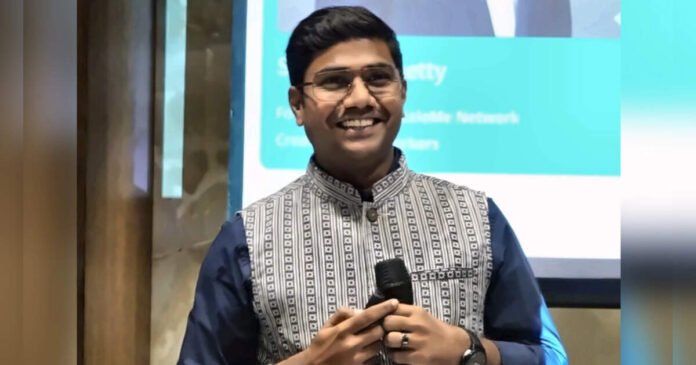
ScaleME founder Sanjay Enishetty. The network will host a Capital Breakfast on 12 December in Mumbai, connecting SME founders with over 50 investment funds.

ScaleME will host a Capital Breakfast on 12 December 2026 at the NSE Exchange Plaza in Mumbai, putting vetted SME founders face to face with more than 50 family offices, private equity firms and venture capital funds.

The breakfast is part of the SME Growth Summit ’26, ScaleME’s flagship event, hosted with the National Stock Exchange. It is built on a simple argument from ScaleME founder Sanjay Enishetty: India’s growth-stage small and medium enterprises have become the country’s new startups, and they already make money.

“SMEs are the new startups. They have the founder drive, the innovation and the governance we used to credit only to startups, and they already make money. What they have lacked is access. Startups have had demo days for a decade. India’s SMEs have earned theirs,” said Enishetty, in a statement.

Why access is the gap

A startup founder can meet investors almost every month through accelerators, angel networks and pitch events. A Rs 80 crore manufacturer outside the metros rarely gets that chance, and its capital conversation is often limited to a single bank.

Enishetty says that gap is the problem ScaleME exists to close. Growth-stage SME promoters are now running family businesses with a founder’s intensity, hiring professional teams, setting up boards and cleaning up their books.

What sets these companies apart, according to Enishetty, is the balance sheet. A startup usually has everything except profits and spends investor money to find a business model. A growth-stage SME has already found one, with paying customers, steady revenue, often a profit, and the promoter’s own money at stake. It needs capital to grow, not to survive.

The numbers behind the opportunity are large. SIDBI estimates the MSME sector’s addressable credit gap at about Rs 30 lakh crore. India’s single-family offices have grown from about 45 in 2018 to more than 300, and many now put 40 to 45 percent of their portfolios into private markets. In 2025, 268 SME IPOs raised more than Rs 12,000 crore, up from 43 issues and about Rs 260 crore in 2015.

How the Capital Breakfast will work

Before the summit opens, selected founders will sit at tables built around how they plan to raise, whether equity, debt or listing, with funds whose mandates fit. Every founder is vetted by the ScaleME team.

The breakfast puts into practice the three areas ScaleME works on with growth-stage SMEs:

– Capital readiness, helping promoters understand what funds, lenders and family offices look for before they raise – AI transformation, showing SMEs how to use artificial intelligence to grow revenue, run leaner and automate operations – SME IPO preparation, making listing a planned milestone, so companies list when they are ready and stay credible afterwards

The summit’s sessions cover the same three themes.

A network built for the missing middle

ScaleME is a network for India’s growth-stage SMEs, founded by Enishetty. It helps promoters with capital readiness, AI transformation and SME IPO preparation, and connects them with investors, operators and peers.

Enishetty earlier scaled Naturals into India’s largest salon chain, with more than 800 outlets across 150 cities, and served as chief executive of 50K Ventures.

ScaleME’s first SME Growth Summit, held at the Indian School of Business in Hyderabad, brought together 357 participants from more than 314 companies across 24 industries.

Frequently Asked Questions

What is the ScaleME Capital Breakfast?

The Capital Breakfast is a curated meeting on 12 December 2026 at the NSE Exchange Plaza in Mumbai, where vetted SME founders planning to raise funding will meet more than 50 family offices, private equity firms and venture capital funds.

Which event is the breakfast part of?

It is part of the SME Growth Summit ’26, ScaleME’s flagship event hosted with the National Stock Exchange, with sessions on capital readiness, growth with AI and SME IPO preparation.

Why does ScaleME say SMEs are the new startups?

Founder Sanjay Enishetty says growth-stage SMEs now have the founder drive, innovation and governance once credited only to startups, and unlike most startups they already make money, but they lack the access to investors that startups get through demo days and pitch events.

Zavya Funding: Silver Jewellery Brand Raises ₹22.6 Crore in Pre-Series A Round

Zavya co-founders Poem Kabra and Ravi Malani. The Gurugram silver jewellery brand has raised ₹22.6 crore in a pre-Series A round.

Gurugram-based everyday silver jewellery brand Zavya has raised ₹22.6 crore in a pre-Series A funding round, as the 925 sterling silver brand moves from a digital-first business into physical retail.

The round brings in Daksham Growth Ventures, the growth investment arm of Daksham Capital, as a new investor, alongside existing investor Orios Venture Partners. The investment values the company at approximately ₹191.5 crore on a post-money basis, or about $2.5 million for the round.

Founded by Poem Kabra and Ravi Malani in 2021, Zavya sells lightweight, contemporary 925 sterling silver jewellery designed for everyday wear. The brand has grown through online channels, with a digital-first distribution strategy, and has reached EBITDA profitability while keeping its spending disciplined.

New investor joins, existing backer doubles down

Daksham Growth Ventures leads the round as the new name on the cap table. Orios Venture Partners, which backed Zavya earlier, has increased its stake with a follow-on investment.

“We built Zavya with the vision of making fine jewellery an everyday expression of personal style, rather than something reserved for special occasions. By combining lightweight craftsmanship with distinctive designs and staying focused on sustainable, capital-efficient growth, we have built a brand that resonates with today’s consumers. With DGV joining us and Orios continuing to back us, we are excited to strengthen our presence across D2C and Quick Commerce, invest in long-term brand building and take our first steps into physical retail,” said Poem Kabra, co-founder and chief executive of Zavya.

“Zavya stands out in the Indian consumer landscape for pairing high-velocity growth with rare capital efficiency and EBITDA profitability,” said Shivam Diwan, co-founder and managing partner at Daksham Growth Ventures. “Poem and Ravi have built a sharp design-to-distribution engine that is perfectly positioned to lead India’s fast-growing everyday silver jewellery category.”

“Since our initial investment, the team has executed with focus and discipline, scaling the brand across channels while staying capital-efficient,” said Sukhmani Bedi, partner at Orios Venture Partners. “Our follow-on investment reflects our confidence in the founders and our belief in Zavya’s potential to become one of India’s leading everyday silver jewellery brands.”

What the money will fund

Zavya plans to use the fresh capital in three areas:

– Strengthening its direct-to-consumer business and its presence on quick commerce platforms – Investing in long-term brand building, to make everyday silver a regular purchase for more buyers – Taking its first steps into physical retail, opening stores alongside its online channels

Physical retail would put Zavya’s designs in front of shoppers who still prefer to see and try jewellery before buying it.

A profitable, capital-efficient climb

Zavya’s pitch to investors rests on growth without heavy losses. The company says it has achieved EBITDA profitability while scaling, using a disciplined and capital-efficient approach.

That profile stands out in a consumer market where many young brands have chased growth with large marketing spends. Zavya’s backers point to its design-to-distribution engine, which controls the chain from product design to the customer, as the reason it can grow while staying profitable.

The company operates under the legal entity Rubenzo Lifestyle, incorporated in 2021, and has built its range around contemporary designs in 925 sterling silver.

Why investors like everyday silver

Silver jewellery has a well established presence in international markets, but the category remains relatively underpenetrated in India, particularly through organised and online retail channels.

That gap is the opportunity Zavya and its investors are betting on, as buyers look for lightweight, affordable jewellery suited to everyday wear.

The pre-Series A round gives Zavya the capital to test that thesis at a larger scale, with new sales channels, a bigger brand push and its first stores.

Frequently Asked Questions

How much has Zavya raised in its pre-Series A round?

Zavya has raised ₹22.6 crore in a pre-Series A round from Daksham Growth Ventures and existing investor Orios Venture Partners, at a post-money valuation of about ₹191.5 crore.

Who founded Zavya?

Zavya was founded in 2021 by Poem Kabra and Ravi Malani in Gurugram. The brand sells everyday 925 sterling silver jewellery through online channels and plans to open physical stores.

What will Zavya use the funding for?

The company will strengthen its direct-to-consumer and quick commerce presence, invest in long-term brand building and take its first steps into physical retail.

Bisleri FSSAI Prosecution: Food Regulator Sanctions Action After Water Sample Fails Tests

Bisleri packaged drinking water bottles. FSSAI has sanctioned prosecution against Bisleri International after a sample of its packaged drinking water failed safety tests.

India’s food safety regulator has sanctioned prosecution against Bisleri International, the country’s largest packaged drinking water company, after a sample of its water failed laboratory safety tests.

The Food Safety and Standards Authority of India, known as FSSAI, announced on 22 November 2026 that it had granted sanction to launch prosecution against Bisleri International Pvt Ltd under the Food Safety and Standards Act, 2006. The action followed two separate laboratory examinations of a sample of packaged drinking water collected from the company’s premises.

Two tests, two failures

FSSAI officials collected a sample of packaged drinking water, other than mineral water, from Bisleri International’s premises for quality analysis. Initial laboratory testing found that the sample did not comply with the prescribed limits for bromate, and the regulator declared the water unsafe under the Food Safety and Standards Act, 2006.

Bromate is a chemical byproduct formed when ozone used to purify water reacts with naturally occurring bromide. In India, the maximum permissible limit for bromate in packaged drinking water is 0.01 mg per litre, or 10 micrograms per litre.

Bisleri exercised its statutory right to appeal the first laboratory report, and FSSAI forwarded the sample to a Referral Food Laboratory for a second, independent examination. The referral laboratory also declared the sample unsafe, though on different chemical grounds. While the first test had flagged excess bromate, the referral laboratory detected polynuclear aromatic hydrocarbons, known as PAHs, which are environmental pollutants that can pose toxicity risks above safe thresholds.

“The laboratory findings established violations relating to unsafe food under the FSS Act, 2006. Sanction has been granted to launch prosecution under the FSS Act, 2006, against M/s Bisleri International Pvt Ltd,” FSSAI stated in its official communication.

What Bisleri says

Bisleri responded on Monday, 23 November, saying the matter dated back about 14 months to a batch produced in September 2025 at its Goa manufacturing facility, one of 143 plants in its network.

The company said FSSAI collected six samples from the Goa facility on 30 September 2025. Five met all applicable standards, while the sixth recorded a bromate level of 12 micrograms per litre, against the prescribed limit of 10.

After Bisleri’s appeal dated 22 November 2025, FSSAI sent the sample to a referral laboratory for retesting. That laboratory found bromate within the prescribed limit but separately flagged the presence of PAHs. Bisleri then had the same sample tested independently at an FSSAI approved laboratory, which also found bromate within the limit.

“We submitted the independent test results to FSSAI’s Western Regional Office with a formal letter dated 2 February 2026. We received no further communication from FSSAI after that submission and understood the matter to be closed. To date, Bisleri has received no notice by email or in hard copy and has been unable to locate the reported notice on FSSAI’s website,” the company said.

“Drinking water safety is a priority for Bisleri. We maintain stringent quality controls of over 90 tests across our 10-step manufacturing process and will continue to cooperate with FSSAI to address the matter through the appropriate regulatory process. A trusted brand for years, Bisleri remains safe for consumption,” the company added.

What it means for consumers

Despite the sanction for legal proceedings, FSSAI has not disclosed which specific product variant, manufacturing plant or batch number was linked to the non-compliant sample. The regulator has also not issued a nationwide product recall, and the company has not been adjudicated guilty by a court at this stage.

Sources said the regulator would also test samples of other packaged drinking water brands as part of its efforts to check compliance with food safety standards.

Bisleri markets its water with the tagline “Quality you can trust in every drop”. On its corporate website, the company states that every bottle undergoes a 10-step purification process and 90 quality tests to comply with the Food Safety and Standards Regulations, 2011.

Wider crackdown on food businesses

The action against Bisleri forms part of a wider enforcement sweep by FSSAI across India’s packaged food and beverage sector. Effective 1 January 2026, the authority rolled out a mandatory testing scheme requiring manufacturers to conduct prescribed checks, maintain batch-wise testing records and take corrective measures when samples fail safety benchmarks.

Alongside the Bisleri order, the regulator sanctioned prosecution against four other food businesses, Vasant Masala, Tit-Bit Foods, Mimansa Industries and Asha Confectionery, over violations ranging from excess pesticide residues and tin in spices to misbranded, substandard cookies. FSSAI also suspended the operating licences of Urmi Lifesciences and Gaur Ayurvedic Store over hygiene and repacking violations.

Frequently Asked Questions

Why has FSSAI sanctioned prosecution against Bisleri?

FSSAI collected a sample of Bisleri packaged drinking water from the company’s premises. The first laboratory test found it non-compliant with bromate limits, and a referral laboratory also declared it unsafe after detecting PAHs. On that basis, the regulator granted sanction to launch prosecution under the Food Safety and Standards Act, 2006.

What does Bisleri say about the findings?

Bisleri says the matter relates to a single batch made in September 2025 at its Goa facility. It says five of six samples collected from the plant met all standards, the sixth marginally exceeded the bromate limit, and a referral test found bromate within the limit. The company says it has received no official notice and maintains its water is safe for consumption.

Has Bisleri water been recalled?

No. FSSAI has not issued a nationwide recall, has not named the specific product variant or batch involved, and the company has not been adjudicated guilty by a court. The regulator is also testing samples of other packaged drinking water brands.

SatSure Funding: Spacetech Startup Raises $7 Million From Government-Backed Space Fund

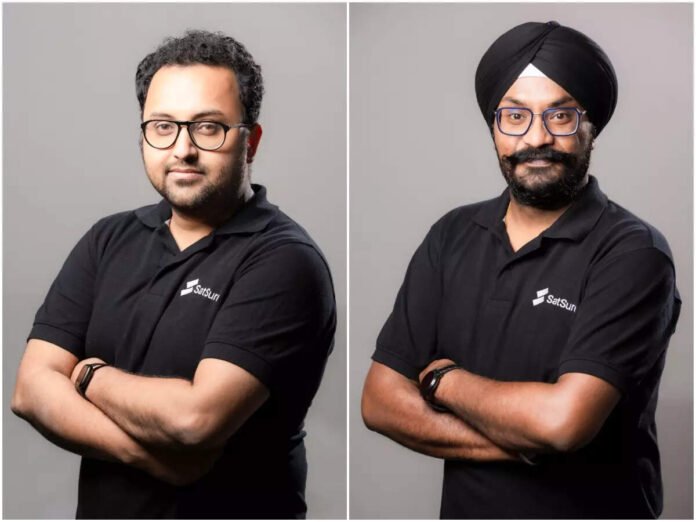
SatSure founders Prateep Basu (left) and Rashmit Singh Sukhmani. The spacetech startup has raised Rs 60 crore from the Antariksh Venture Capital Fund.

Bengaluru-based spacetech startup SatSure has raised Rs 60 crore ($7 million) from the government-backed Antariksh Venture Capital Fund, the first close of its ongoing Rs 200 crore Series B round, as India pushes to build a private commercial space industry.

The Antariksh Venture Capital Fund is investing at a post-money valuation of Rs 870 crore ($93 million), SatSure said on Friday. The Rs 1,600 crore fund is anchored by IN-SPACe, India’s private space sector regulator, and managed by SIDBI Venture Capital, the venture arm of state-owned small-business lender SIDBI.

The Series B round comprises Rs 165 crore in fresh equity, Rs 25 crore in venture debt and Rs 10 crore in secondary transactions. SatSure expects to close the round by December 2026.

What the money will pay for

SatSure will use the proceeds to prepare its satellite imaging payloads for launch in 2027. The funding will also support its participation in India’s planned Earth-observation satellite network, and help it expand its data analysis capabilities and its international operations.

The timing matters for the company. Building and launching imaging hardware takes years, and the payloads now being prepared are the core of SatSure’s plan to own more of the data it sells, rather than relying only on imagery bought from other satellite operators.

What SatSure does

SatSure uses satellite imagery and artificial intelligence to help banks, insurers, infrastructure firms and government agencies make decisions. Its subsidiary KaleidEO develops satellite imaging systems for Earth observation.

The company’s customers include HDFC Bank, ICICI Bank, Axis Bank, ITC, Bayer and the Airports Authority of India. That customer list shows how far satellite data has moved from defence and science into everyday commercial use, from farm lending and insurance to airport planning.

SatSure has raised Rs 427 crore from institutional investors so far, excluding grants. Previous backers include Baring Private Equity Partners India, Promus Ventures and Asian Development Bank Ventures. The new round adds a government-backed investor to a cap table that already includes global venture funds.

A state-backed bet on private space

The investment comes as India seeks to expand its commercial space industry through reforms that have opened the traditionally state-dominated sector to private companies and investors. IN-SPACe was set up to promote private participation, and the Antariksh fund is one of the vehicles channelling public money into the sector.

For SatSure, founded by Prateep Basu and Rashmit Singh Sukhmani, the backing is a vote of confidence from the regulator’s own fund. It also puts the startup in line for a role in India’s planned Earth-observation satellite network, a programme that will need private imaging capacity as well as public satellites.

The round lands at a time when Indian spacetech is drawing serious capital. With the Series B still open until December, SatSure will now have to show that the imaging payloads it is building can reach orbit on schedule and turn into paying data contracts.

Frequently Asked Questions

How much did SatSure raise and from whom?

SatSure raised Rs 60 crore ($7 million) from the Antariksh Venture Capital Fund, a government-backed fund anchored by IN-SPACe and managed by SIDBI Venture Capital. The investment is part of an ongoing Rs 200 crore Series B round at a post-money valuation of Rs 870 crore ($93 million).

What will SatSure use the money for?

The proceeds will help prepare SatSure’s satellite imaging payloads for launch in 2027, support its participation in India’s planned Earth-observation satellite network, and expand its data analysis capabilities and international operations.

What does SatSure do?

SatSure uses satellite imagery and artificial intelligence to help banks, insurers, infrastructure firms and government agencies make decisions. Its subsidiary KaleidEO develops satellite imaging systems for Earth observation.

PGP Glass Deal: Brookfield to Buy Blackstone’s Specialty Glass Maker for $1.7 Billion

Glass bottles move along a production line at PGP Glass. Brookfield has agreed to acquire the specialty glass packaging maker from Blackstone for $1.7 billion.

Brookfield Asset Management has agreed to acquire PGP Glass, a leading maker of specialty glass packaging, from funds managed by Blackstone Private Equity for $1.7 billion.

The deal, announced on Monday, 23 November 2026, is the first merger and acquisition in India between the two rival global private equity firms. At an enterprise value of $1.7 billion, it is also the biggest buyout in India so far by Brookfield’s private equity strategy, excluding the firm’s infrastructure and real estate investments.

Brookfield will make the acquisition through its flagship private equity strategy. The investment will be funded through the Brookfield Capital Partners strategy and its affiliate Brookfield Business Corporation. The transaction is subject to customary closing conditions, including regulatory and government approvals, and is expected to close in the first quarter of 2027.

Moneycontrol had reported on 19 November that Brookfield was nearing a binding agreement with Blackstone to acquire the specialty packaging company for around $1.7 billion.

What PGP Glass makes

PGP Glass, formerly known as Piramal Glass, is a leading manufacturer of specialty glass packaging for the cosmetics and perfumery, specialty food and beverage, and pharmaceutical industries. It serves leading global brands in more than 70 countries, and overseas markets account for over 70 percent of its sales.

The company offers end to end solutions covering design, mould making, specialty glass manufacturing and decoration. It operates three manufacturing facilities across India and Sri Lanka, supported by a global logistics and warehousing network.

Its plants in Kosamba and Jambusar in Gujarat make glass containers for perfumes, cosmetics, spirits, food and pharmaceutical products, including the amber glass used for pharmaceutical packaging.

Why Brookfield wants the business

Brookfield said it sees an opportunity to accelerate PGP’s growth through deeper engagement with existing customers, expansion into attractive markets and targeted investment in manufacturing capacity.

The investment firm also plans to support an artificial intelligence led transformation across the company, focusing on improving sales and operations planning, production efficiency and quality control.

Aditya Joshi, Managing Partner and Head of Private Equity for Brookfield in Asia Pacific and Middle East, said, “PGP is a high-quality manufacturer of specialty glass packaging, with a leadership position in premium categories and long-standing relationships with some of the world’s most recognizable brands. As demand for high-quality packaging continues to increase worldwide, Brookfield brings the scale and operating expertise to accelerate PGP’s growth through an AI-led transformation program.”

Blackstone’s six year journey with PGP

The sale marks Blackstone’s exit roughly six years after the private equity firm agreed to buy the business, then called Piramal Glass, from India’s Piramal Group for approximately $1 billion. Blackstone completed that acquisition in 2021.

During Blackstone’s ownership, PGP’s earnings before interest, taxes, depreciation and amortisation rose, driven entirely by organic growth. The latest transaction values PGP at less than nine times its current EBITDA.

Amit Dalmia, Senior Managing Director and Head of the Blackstone Operating Team in Asia, said, “We are proud to have partnered with PGP Glass on its remarkable journey. Under the leadership of Vijay Shah, the management team has delivered outstanding operating performance, outpaced its peers and demonstrated leadership in sustainability. This investment embodies our ability to partner with exceptional management teams to build strong businesses that are built to last. We are pleased to welcome Brookfield as PGP’s next partner and wish the company continued success.”

Vijay Shah, Chief Executive Officer of PGP Glass, said, “We welcome Brookfield and look forward to working with them to accelerate our next phase of growth and value creation. Brookfield’s global footprint and substantial experience managing businesses across cycles will be particularly useful to us. We are grateful for Blackstone’s partnership, which helped us expand capacity, strengthen our operations and sustainability leadership, and grow ahead of the industry.”

A busy year of Blackstone exits in India

The PGP sale is Blackstone’s third exit from an Indian investment this year. In September, the firm sold a $1.3 billion stake in Knowledge Realty Trust and separately exited EPL Ltd for Rs 20.32 billion, or about $218 million.

The deal also underlines the rising investor interest in specialised Indian manufacturers with substantial international operations, as global investment firms commit more capital to the country.

Brookfield Asset Management has more than $1 trillion in assets under management across infrastructure, energy, private equity, real estate and credit. Blackstone manages nearly $1.4 trillion in assets across its global investment strategies.

Frequently Asked Questions

What has Brookfield agreed to buy?

Brookfield has agreed to acquire PGP Glass, a specialty glass packaging manufacturer serving cosmetics, food and beverage, and pharmaceutical brands in more than 70 countries, from funds managed by Blackstone Private Equity for $1.7 billion.

When is the deal expected to close?

The transaction is expected to close in the first quarter of 2027, subject to customary closing conditions including regulatory and government approvals.

How long did Blackstone own PGP Glass?

Blackstone agreed to buy the business, then called Piramal Glass, from the Piramal Group for about $1 billion in 2020 and completed the acquisition in 2021, holding it for roughly six years before agreeing to sell to Brookfield.

Claude Riemann Proof: AI Helps Solve 167-Year-Old Maths Mystery

Anthropic's Claude AI helped develop a proof of the 167-year-old Riemann hypothesis. Two independent groups have verified the work.

Anthropic’s Claude AI has helped develop a proof of the Riemann hypothesis, a maths problem that has stood unsolved for 167 years. Two independent groups have now verified the work, in what could be the most significant AI-assisted advance in pure mathematics so far.

The proof was developed by Alpoge, a Turkish-American mathematician working at Anthropic, who said he worked with Claude for about six weeks to develop it. He shared the findings on his personal website, according to The Guardian.

The result has drawn wide attention because the Riemann hypothesis is one of the most famous unsolved problems in mathematics. It is also one of the seven Millennium Prize Problems identified by the Clay Mathematics Institute, each carrying a reward of one million dollars for a solution.

Six weeks with Claude

Alpoge said he had worked with Claude for approximately six weeks to develop the proof. The collaboration is a striking example of how AI tools are now being used in advanced research, not just in everyday tasks.

Instead of publishing a conventional research paper, Alpoge released the mathematical argument as computer code written in Lean, a programming language and proof assistant used to verify mathematical reasoning. He also credited Claude with making significant progress towards the finish line.

A problem from 1859

First proposed by German mathematician Bernhard Riemann in 1859, the hypothesis concerns the distribution of prime numbers, which are numbers greater than one that are divisible only by themselves and one.

Prime numbers sit at the heart of number theory, and the Riemann hypothesis makes a precise claim about how they are spread out. Mathematicians have checked the claim for vast numbers of cases, but a full proof has remained out of reach for more than a century and a half.

That is why the hypothesis is among the seven Millennium Prize Problems identified by the Clay Mathematics Institute. Each carries a one million dollar reward for a solution, and a verified proof of the Riemann hypothesis would rank among the great achievements in mathematics.

Two groups verify the proof

The Lean Focused Research Organisation and the Mathlib Initiative announced on November 21 that they had independently reviewed the code and were confident that Alpoge’s proof was correct.

Independent verification is a key step. The two organisations examined the Lean code separately, which means the result does not rest on the word of one person or one team.

The announcement came a day after Anthropic made its Nasdaq debut. Alpoge acknowledged the timing, saying he would have finished the work earlier if he could.

Timing, and a rival claim

The development comes amid growing debate over AI’s role in mathematical research. In September, rival OpenAI claimed that a non-public version of its AI tools had helped solve part of another Millennium Prize Problem. According to The Guardian, the effort involved 15 million dollars and 10,000 AI systems.

Meanwhile, Italian mathematician Alessandro Masullo released an incomplete attempt at proving the Riemann hypothesis after nearly 12 years of work, without using AI because he did not fully trust the technology.

Interestingly, Alpoge was working on a separate problem for Anthropic when OpenAI made its announcement.

What it means for maths

If the proof holds up to further scrutiny, it would mark a turning point in how mathematics is done. AI systems have already shown they can write code and solve textbook problems. Helping to settle a 167-year-old problem is a step beyond that, and it will keep the debate going over how much credit belongs to the human mathematician and how much to the AI system that worked alongside him.

For now, the verified result stands on its own. A problem first set out in 1859 has a proof written in code, checked by machines, and confirmed by two independent groups.

Frequently Asked Questions

What is the Riemann hypothesis?

First proposed by Bernhard Riemann in 1859, it concerns the distribution of prime numbers. It is one of the seven Millennium Prize Problems identified by the Clay Mathematics Institute, each carrying a one million dollar reward for a solution.

How did Claude AI help with the proof?

Mathematician Alpoge, who works at Anthropic, said he worked with Claude for about six weeks to develop the proof. He released the argument as computer code written in Lean, a programming language and proof assistant used to verify mathematical reasoning.

Who verified the proof?

The Lean Focused Research Organisation and the Mathlib Initiative announced on November 21 that they had independently reviewed the code and were confident that Alpoge’s proof was correct.

From Regulatory Changes to ₹21,000 Crore in Disbursements: How Bhavin Patel Built LenDenClub

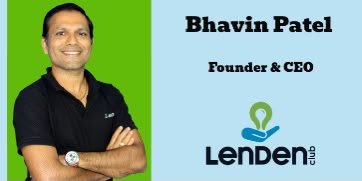
Bhavin Patel

LenDenClub Founder Bhavin Patel shares the company’s transformation, lessons from navigating the digital lending industry and his vision for India’s alternative credit ecosystem.

Mumbai, November 20, 2026: Building a fintech company in India’s evolving financial services industry requires more than technology and capital. It demands an understanding of regulation, borrower behaviour, business sustainability and the ability to adapt when the market changes.

For Bhavin Patel, Founder of LenDenClub, this journey has involved navigating regulatory developments, restructuring business operations and building a digital lending ecosystem around peer-to-peer (P2P) lending.

In a recent masterclass on the Unfiltered Founder podcast, Patel spoke about the company’s growth, the challenges it encountered and why he believes P2P lending has the potential to become a meaningful component of India’s investment landscape.

Building a Business Around Financial Inclusion

LenDenClub operates in the peer-to-peer lending segment, connecting individual lenders with borrowers through a digital platform.

The company says it has facilitated more than ₹21,000 crore in loan disbursements across its platforms. Its model focuses on connecting borrowers who may find it difficult to access credit through conventional financial institutions with individuals looking for alternative lending opportunities.

Patel explained that the borrower base largely includes salaried individuals and small shopkeepers. Factors such as income eligibility, geographical location and smaller loan requirements can sometimes make accessing traditional credit difficult for these groups.

Digital lending platforms aim to address this gap by making the borrowing and lending process more accessible.

The Regulatory Turning Point in 2017

One of the important milestones in LenDenClub’s development was the introduction of the Reserve Bank of India’s P2P lending regulations in 2017.

Patel explained that the regulatory changes required the business to adapt its operating model. The transition was not without difficulties. The company experienced two loss-making years while restructuring its business and adjusting to the evolving regulatory environment.

However, the company eventually returned to profitability.

Reflecting on this phase, Patel emphasised the importance of building a financially sustainable business rather than focusing only on rapid expansion.

His approach involved treating different business functions as potential revenue opportunities, maintaining a focus on break-even and avoiding expensive hiring before the business was ready to support it.

Why P2P Lending Is Attracting Investor Attention

Beyond the company’s growth story, Patel discussed how P2P lending is evolving as an investment category.

He believes traditional portfolios that concentrate entirely on equity, gold or real estate may benefit from understanding the role of debt-based investments.

In P2P lending, investors can distribute their capital across multiple borrowers rather than depending on a single lending opportunity.

Patel explained that investors can choose loan tenures, repayment frequencies, borrower income categories and interest rates based on their preferences.

He indicated that potential annualised returns after defaults and platform fees could range between 10% and 13%, while also acknowledging that actual performance depends on borrower repayment behaviour and associated risks.

What Should First-Time Lenders Know?

Patel advised new investors to approach P2P lending gradually. His suggested starting point was an investment of ₹1–2 lakh, distributed across at least 100 loans to improve diversification.

For investors who understand the product and are comfortable with its risks, he suggested considering a 5–10% allocation within their overall investment portfolio.

He identified credit default as the biggest risk and stressed the importance of evaluating platform performance, lending practices and regulatory compliance.

He also explained that repayments are processed through escrow arrangements, with funds typically reaching lenders’ bank accounts on the next working day after the relevant repayment process.

Three Platforms, One Expanding Fintech Ecosystem

The LenDenClub group currently operates three distinct platforms catering to different financial requirements.

  • LenDenClub: An RBI-registered NBFC-P2P platform connecting lenders and borrowers.
  • Insta Money: Focuses on providing small personal loans.
  • Udhar Saathi: Caters to merchant lending requirements.

According to Patel, the group intends to expand its operations to ten platforms over the next five years. The proposed expansion reflects its ambition to participate in different segments of India’s digital credit ecosystem.

A Founder’s Perspective on Sustainable Growth

An important part of Patel’s discussion focused on the lessons he learned while building LenDenClub.

He highlighted that profitability and operational discipline should remain central to business decisions, particularly in a capital-intensive and regulated industry such as fintech.

Rather than prioritising growth at any cost, he believes founders should understand the economics of their business, identify sustainable revenue opportunities and build teams appropriate to the company’s current stage.

His experience also underlines how regulatory developments can reshape business models and create opportunities for companies willing to adapt.

The Road Ahead for Alternative Lending

India’s digital financial services sector continues to evolve, creating opportunities for platforms working across lending, payments and financial inclusion.

P2P lending is one segment that is attracting attention because it offers an alternative mechanism for connecting borrowers and lenders. However, its growth will depend on responsible lending practices, regulatory compliance, transparency and investor awareness.

Through LenDenClub and its associated platforms, Bhavin Patel is looking to expand the company’s presence in this evolving market.

His message to aspiring fintech founders and investors is rooted in a simple principle: sustainable growth comes from understanding the business, managing risk and adapting to changing market conditions.

Risk Disclosure: P2P lending carries credit risk, including the possibility of delayed repayments and loss of principal. Returns are not guaranteed. Investors should independently evaluate risks and review applicable regulatory requirements before participating.

More Information: lendenclub.com | Instagram: @lenden.club | Unfiltered Founder: instagram.com/unfilteredfounder