Thursday, March 12, 2026
Home Blog Page 281

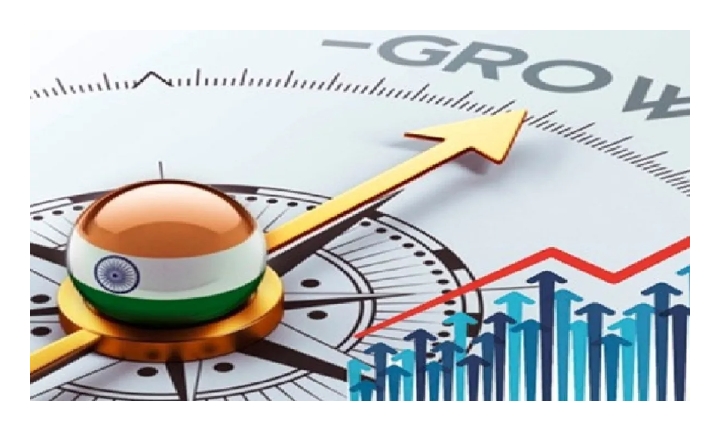
India’s economy is growing rapidly, Finance Minister Nirmala Sitharaman said in the Lok Sabha

0

India’s economy is growing rapidly

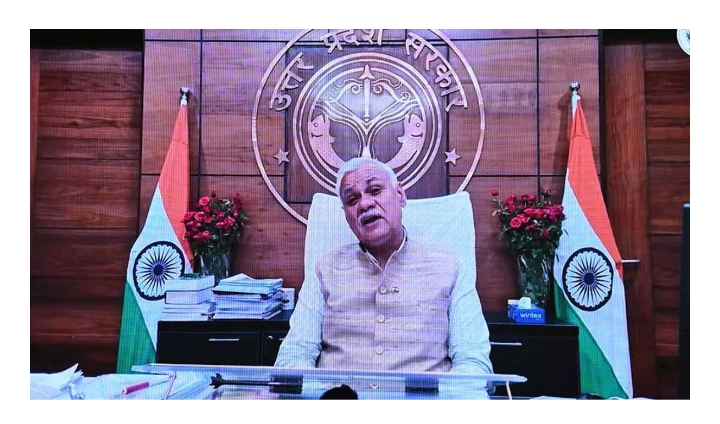
The debate on the no-confidence motion will continue in Parliament today. Even today, the process of debate is going on in the Parliament regarding this no-confidence motion. Union Finance Minister Nirmala Sitharaman said in the Lok Sabha today that India’s economy is growing rapidly. The best example of this is Morgan Stanley’s upgraded rating. This time Morgan Stanley has upgraded India’s rating.

A vote of no confidence has been issued in Parliament today. Even today, the process of debate is going on in the Parliament regarding this no-confidence motion. Union Finance Minister Nirmala Sitharaman on Thursday said that India is the fastest growing economy in the world. Today RBI Governor Shaktikanta Das said in the press conference that India is the 5th most powerful economy in the world. Nirmala Sitharaman gave an example on the growing economy in India. He said that brokerage firm Morgan Stanley has also upgraded India’s rating. This clearly shows that the Indian economy is doing well.

Apart from this, he said that in 2013, Morgan Stanley included India in the list of five weak economies of the world. At the same time, Morgan Stanley has upgraded India’s rating a few days back. In just 9 years India’s economy has gone uphill. Despite the Kovid epidemic, the country has developed economically. Today India is the fastest growing economy in the world.

Taking a jibe at UPA, Nirmala Sitharaman took a jibe at the UPA government, saying that citizens should have got benefits when UPA was in power, but this did not happen. At the same time, people are already getting benefits in the NDA government. No one is deprived of benefits. Along with the development of the country, people are also developing. Further, he said that the UPA has wasted an entire decade. When UPA was in power, there used to be a lot of corruption. On the other hand, the NDA has clamped down on a lot of corruption. There is no change in the country just by speaking. It is very important for it to be delivered in real life. UPA used to show people only dreams, while NDA made people’s dreams come true.

The Prime Minister will answer Prime Minister Narendra Modi today i.e. on Thursday will answer the debate on the no-confidence motion brought by the opposition against the government. He can address the house at 4 pm. Fierce debate is going on in the Lok Sabha for the last two days regarding the no-confidence motion. After this debate, PM Modi’s answer will come today. Let us tell you that this proposal was brought by the Indian National Developmental Inclusive Alliance (INDIA) on Manipur violence.
The increasing supremacy of rupee showed India the way to become a superpower

0

Increasing supremacy of rupee

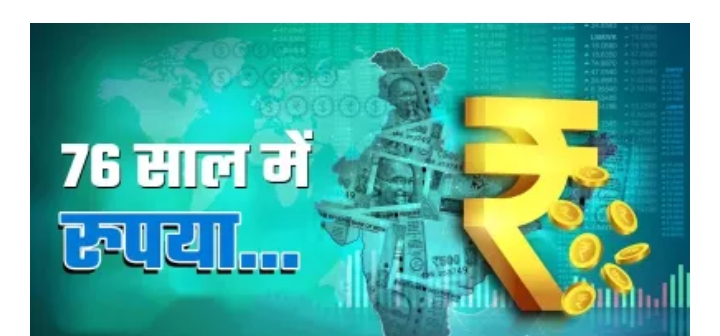
Indian currency became so strong that every country is known by its flag and currency. Since independence till today, the flag of India flutters gracefully on the world stage and the Indian currency, the rupee, has slowly established itself in the world. Today we will tell you about the increasing influence of the rupee, how after 76 years of independence, the rupee is slowly leaving its mark on the world.

On August 15, India will celebrate its 77th year of independence. Any country is identified by its flag and its currency. Since independence till now, the flag of India has been waving with great pride on the world stage and the currency of India “Rupee” is also slowly gaining its foothold in the world.

Today we are going to tell you about the increasing supremacy of rupee, how in 76 years of independence, rupee is slowly leaving its mark in the world. It is said that if you want to understand the present, you have to go into the past. So let’s go back to the past of Rs.

What is the history of rupees According to the historian, “Rupee” was used for the first time by Sher Shah Suri. Then gold and copper coins were used in this era. The tomb of Sher Shah Suri is currently in Sasaram city of Bihar. The history of the rupee dates back to the 6th century BC. The first Indian coins were minted by the Mahajanapadas (state-republics of ancient India), also known as Puranas, Karshapanas or Panas. These Mahajanapadas included Gandhara, Kuntala, Kura, Panchala, Sakya, Surasena and Saurashtra.

The first Mauryan emperor, Chandragupta Maurya, issued coins stamped with silver, gold, copper or lead. In the 12th century, the Turkish Sultan of Delhi replaced the coins bearing the royal designs of Indian kings with his own Islamic calligraphy. In 1526 AD, the Mughal Empire unified an empire-wide currency system. It was during this period that the rupee developed when Sher Shah defeated Humayun and issued a 178 gram silver coin called the rupee. These coins were also used during the Mughal, Maratha and British Indian eras.

If we talk about money during the British period, then before the British came, there were only coins in the country. For the first time during the British period, the Bank of Hindustan General Bank and the Bank of Bengal issued paper currency in India in the 18th century, which was the first paper currency in British India. After the Revolution of 1857, the British made the rupee the official currency of India and put the portrait of King George VI on bank notes and coins. The Reserve Bank of India issued the first five-rupee note with the portrait of George VI in 1938. This was followed by Rs 10 notes in February, Rs 100 notes in March and Rs 1000 and Rs 10,000 notes in June 1938.

What is the current status of the rupee, as we told you at the beginning of this article that the rupee is gradually gaining ground in the world, let us now tell you how it is happening. In fact, after independence, the country became independent, but India was still a slave in the eyes of the world, for which it was very important that along with the flag, the Indian currency should also be made of rupees. Efforts to make rupee an international currency in the country have been going on for years, not from today.

International currency means how many countries do business with your currency or your currency is accepted. In this step, in the year 2013, RBI took a big step and allowed foreign investors to hold “masala bonds”. These were rupee denominated bonds which made it easy for foreign investors to buy and sell such assets.

Now so many countries do trade in rupees, due to the various economic policies of the government and RBI, the Indian currency rupee will give India the recognition of a superpower in the world. You can only guess from the fact that at present 18 countries of the world have agreed to trade in ‘Rupee’.

Not only this, in December 2022, India and Russia have completed their first trade in rupees. Let us tell you that Malaysia, Mauritius, Myanmar, United Kingdom, Russia, New Zealand, Sri Lanka, Oman, Seychelles, Singapore, Tanzania, Uganda, Botswana, Fiji, Germany, Guyana, Israel and Kenya are the countries that have allowed trade in Rupee. Is.

Rapid development of infrastructure and facilities being provided to MSMEs are changing the picture of Uttar Pradesh. 

0

MSMEs are changing the picture of Uttar Pradesh. 

Uttar Pradesh is ready to play the role of growth engine of New India. The World Bank recently lauded the efforts of the Yogi Adityanath-led Uttar Pradesh government for its development efforts in the last six years. Uttar Pradesh is the state with the largest number of MSMEs in India. According to research there are around 9.5 million MSMEs. Read the full news.

Uttar Pradesh is capable and ready to play the role of growth engine of New India. Recently, the World Bank has praised the Yogi Adityanath-led Uttar Pradesh government for its development efforts in the last six years. Let us tell you that a 20-member World Bank team led by Executive Director Parameshwara Iyer is traveling to many parts of the country and working with the government in various areas including infrastructure development, industrialization, waste disposal, poverty alleviation, planned urbanization and environmental protection. Evaluating efforts.

UP is moving forward under the leadership of PM – Durga Shankar Prasad According to Durga Shankar Prasad, Principal Secretary, Government of Uttar Pradesh, Uttar Pradesh is moving forward under the vision of Prime Minister Narendra Modi and the leadership of Chief Minister Yogi Adityanath. Investors have shown interest in MSMEs of Uttar Pradesh. The government aims to strongly take the state’s economy to 1 trillion and Deloitte is assisting us in this as a consultant. Encouragement to MSME sector Today, the economy of Uttar Pradesh is progressing rapidly, so MSME has a major contribution in it. The Global Investors Summit was held in February 2023, where investments worth 35 lakh crore were committed, of which more than 1.6 lakh crore were for the MSME sector.

Maximum MSME in UP Uttar Pradesh is the state with maximum MSME in India. According to a survey, there are about 95 lakh MSMEs here. In this, more than 16 lakh entrepreneurs are registered on the portal, through which more than 1 crore 10 lakh people have got employment. To encourage the MSME sector, the state government is providing accident insurance cover of up to five lakh rupees to small (micro category) entrepreneurs. Apart from this, it is also providing an easy loan facility.

One district, one product, UP government’s one district, one product scheme is discussed in the whole country. It was launched by Chief Minister Yogi Adityanath in January 2018 to promote the handicrafts of the state and help the handicraft workers financially. Apart from this, the objective of this scheme is to encourage indigenous and specialized products and crafts at the local level so that small traders or MSMIs can take their products to the world level and provide employment to more and more people.

Rapid infrastructure development happening in UP Rapid infrastructure development Rapid infrastructure development is happening in Uttar Pradesh. With time, the transport facility in Uttar Pradesh is getting better. To facilitate the movement of people and trade, many expressways have been built and many more are under construction. Apart from this, work is also going on fast on the new airport and rail. A few months back Union Road Transport and Highways Minister Nitin Gadkari had said, before the end of 2024, Uttar Pradesh will have road infrastructure like the United States and the development of roads will change the face of the state.

The Rise of Fintech Start-ups: Transforming India’s Financial Services Landscape

0
Fintech Start-ups

The financial services industry in India has undergone a remarkable transformation with the emergence of fintech start-ups. Fintech, short for financial technology, refers to the use of technology to deliver innovative financial products and services. Fintech start-ups have disrupted traditional banking and financial institutions, offering convenience, efficiency, and accessibility to millions of customers. In this article, we will explore the rise of fintech start-ups, their impact on the financial services landscape, and the opportunities they present for India’s economy.

The Growth of Fintech Start-ups

Over the past decade, India has witnessed a surge in fintech start-ups, driven by factors such as increasing smartphone penetration, a young and tech-savvy population, and supportive government policies. According to a report by NASSCOM, India is home to more than 2,000 fintech start-ups, making it one of the fastest-growing fintech ecosystems in the world. These start-ups cover a wide range of services, including digital payments, peer-to-peer lending, robo-advisory, insurance technology, and blockchain-based solutions.

The Impact on Financial Inclusion

One of the most significant contributions of fintech start-ups is their role in advancing financial inclusion in India. With a large unbanked and underbanked population, traditional banking services often failed to reach remote and rural areas. Fintech solutions, on the other hand, leverage digital technology to provide financial services to the unbanked and underserved sections of society. Mobile wallets, for instance, have enabled millions of people to access digital payment services, making transactions faster, safer, and more convenient.

Enhanced Customer Experience

Fintech start-ups have placed customer experience at the core of their offerings. Through user-friendly interfaces and seamless integration of services, fintech platforms have made banking and financial operations more accessible and hassle-free. Customers can now open bank accounts, apply for loans, invest in mutual funds, and purchase insurance policies, all at their fingertips. This emphasis on customer-centricity has not only improved the overall user experience but also fostered customer loyalty and trust.

The Power of Data and Analytics

Data-driven insights have become a game-changer for the fintech industry. Fintech start-ups harness vast amounts of data, including customer behavior, spending patterns, and credit histories, to assess risk and make informed decisions. This has revolutionized the lending process, enabling faster loan approvals and disbursals based on algorithms and machine learning. Moreover, data analytics has also facilitated targeted marketing and personalized financial solutions, enhancing the value proposition for customers.

Challenges and Regulation

While the growth of fintech start-ups is promising, they also face challenges unique to the financial industry. Cybersecurity and data privacy concerns remain critical issues, as fintech platforms deal with sensitive financial information. Regulatory compliance is another area of focus for fintech start-ups, as they navigate a complex regulatory landscape. Striking the right balance between innovation and regulation is crucial to ensure sustainable growth and build consumer trust.

Driving Financial Inclusion and Economic Growth

Fintech start-ups have the potential to play a pivotal role in India’s economic growth. By increasing financial inclusion, these start-ups empower individuals and small businesses, driving entrepreneurship and economic participation. Access to affordable credit and investment opportunities also fuels consumption and investment, contributing to overall economic development.

The rise of fintech start-ups has undoubtedly transformed India’s financial services landscape. By leveraging technology, data, and innovation, these start-ups have disrupted traditional banking and financial models, offering customers greater convenience and accessibility. The focus on financial inclusion and customer-centricity has widened the reach of financial services to previously underserved sections of society. As the fintech ecosystem continues to evolve, collaboration between fintech start-ups, regulators, and traditional financial institutions will be critical to ensure sustainable growth and foster a thriving fintech industry in India.

In conclusion, the rise of fintech start-ups is not just a trend; it is a transformative force that has the potential to redefine India’s financial services sector. By embracing technology and innovation, fintech start-ups are paving the way for a more inclusive, efficient, and customer-centric financial ecosystem in India.

Latest= https://happenrecently.com/zepto/

Digital Transformation for MSMEs: Embracing Technology to Stay Competitive

0
MSMEs

In today’s rapidly evolving business landscape, digital transformation has become a key driver of growth and success. For Micro, Small, and Medium Enterprises (MSMEs) in India, embracing technology is no longer an option but a necessity to stay competitive and relevant. This article explores the significance of digital transformation for MSMEs, its impact on business efficiency, and the benefits it offers in a highly competitive market.

The Need for Digital Transformation

MSMEs play a vital role in the Indian economy, contributing significantly to employment generation and GDP growth. However, they often face unique challenges such as limited resources, restricted access to capital, and operational inefficiencies. In a digital age where technology is reshaping industries, MSMEs must adapt to changing consumer behavior and market dynamics to thrive.

Key Benefits of Digital Transformation

1. Enhanced Productivity and Efficiency:

Digital tools and technologies streamline business processes, automate repetitive tasks, and enable real-time data analysis. This results in improved productivity, reduced operational costs, and faster decision-making, allowing MSMEs to focus on core competencies and innovation.

2. Access to Global Markets:

Digital transformation opens up new avenues for MSMEs to reach a global customer base through e-commerce platforms and digital marketing. It breaks geographical barriers and facilitates cross-border trade, expanding business opportunities beyond local boundaries.

3. Customer-Centric Approach:

Embracing technology enables MSMEs to gather valuable customer data and gain insights into consumer preferences and behavior. This empowers them to deliver personalized products and services, enhancing customer satisfaction and loyalty.

4. Agility and Adaptability:

Digital transformation equips MSMEs with the agility to respond quickly to market changes and adapt to evolving customer needs. It enables them to stay ahead of the competition and seize emerging opportunities.

5. Improved Supply Chain Management:

Integrating digital tools into supply chain management enhances transparency, traceability, and efficiency. It minimizes inventory holding costs, reduces delivery time, and ensures better collaboration with suppliers and partners.

Challenges and Overcoming Roadblocks

While the benefits of digital transformation are undeniable, MSMEs may face challenges during the adoption process. The most common hurdles include the cost of technology implementation, lack of digital skills among employees, and resistance to change. Overcoming these roadblocks requires a strategic approach, collaboration with technology partners, and a commitment to upskilling the workforce.

Impact on MSMEs and the Indian Economy

Digital transformation has the potential to revolutionize the MSME sector and drive economic growth. According to a report by the International Data Corporation (IDC), digitally transformed MSMEs in India are expected to contribute 25% to the country’s GDP by 2024. This demonstrates the immense impact of technology-driven innovation on the overall economic landscape.

Success Stories of Digitally Transformed MSMEs

Numerous success stories of MSMEs embracing digital transformation have emerged across various industries. For instance, a traditional manufacturing MSME adopting Industry 4.0 technologies witnessed a significant improvement in production efficiency and quality control, leading to increased customer satisfaction and higher revenues. Similarly, an MSME in the retail sector implemented an e-commerce platform and experienced a substantial expansion of its customer base beyond geographical boundaries.

Digital transformation is no longer a buzzword but a transformative force that holds the key to the future of MSMEs in India. Embracing technology is no longer an option but a strategic imperative for MSMEs to stay competitive, relevant, and resilient in the face of evolving market dynamics. By harnessing the power of digital tools, MSMEs can unlock unparalleled growth opportunities, access global markets, and create a lasting impact on the Indian economy.

As MSMEs embark on their digital transformation journey, they must remember that success lies in strategic planning, collaboration, and a customer-centric approach. Embracing technology is not just about adopting new tools but also about fostering a culture of innovation and adaptability. With the right approach and commitment, MSMEs can truly transform themselves into agile, future-ready enterprises poised for success in the digital era.

Latest= https://happenrecently.com/zepto/

What are AI Chatbots, why are they so popular, how are they helpful for us

0

AI has become very common in today’s time, but do you know that it started in 1960 itself. AI has changed a lot since then. Today we use it for every small and big work. Whether you have to write an article or create an image. AI is helpful in everything. Let us know why it is popular.

AI chatbots have evolved over time, using natural language processing and machine learning. They can analyze human language in all its nuances, learn from massive datasets, generate instant responses, maintain huge knowledge databases and even customize their personalities.

They are becoming popular because of their ability to provide quick and accurate information, assist with various tasks, practice language skills, improve writing, teach coding, and entertain. However, it has limitations and challenges, including the potential to generate misinformation and privacy concerns.

In the 1970s, AI chatbots got a bit smarter with pattern-matching techniques. Parry, which was developed by Stanford psychiatrist Kenneth Colby in 1972. She acted like a person with paranoid schizophrenia, using syntax and word patterns to formulate responses. This fooled some people into thinking they were talking to a real patient.

The 2000s saw a big change with machine learning and natural language processing. SmarterChild, launched in 2001, analyzed volumes of real-life chat logs to learn patterns. Developed by ActiveBuddy, it provides music reactions, game and conversation suggestions to millions of users on AOL Instant Messenger.

Unlike scripted bots, SmarterChild can respond dynamically to most topics by matching users’ input with trained chat data. It marked a major advance in AI chatbots sounding more human. Teens in the 2000s loved to chat with it, even forming para-social relationships.

5 features of AI chatbots

robot writing

Today’s AI chatbots are quite efficient while having conversations. Unlike the awkward bots of yesteryear, these modern AI-based chatters have some great features that allow them to carry on the conversation until the end, like a real human being. Let’s take a look at them.

natural language processing

AI chatbots use advanced NLP to analyze our human languages ​​in all their nuances – vocabulary, grammar, slang and context. This helps them understand what we say and determine appropriate responses.

machine learning

By studying massive amounts of text and conversation, AI chatbots can learn speech patterns and improve their language skills over time. The more data they train on, the smarter they get!

generate a reaction

AI chatbots don’t just pick from pre-written scripts. They use large language models to respond quickly based on their training and allow for millions of possible conversational paths.

knowledge bank

AI chatbots like ChatGPT have huge databases of facts and information that they can use to intelligently discuss almost any topic. Some others may access information from the Internet in real time to keep their knowledge fresh.

Indian Rupee vs Dollar: Rupee strengthened before RBI MPC’s decision

0

On Wednesday, August 9, the rupee rose against the US dollar. Today the price increased by Rs 5 and closed at Rs 82.86 (provisionally). Currency analysts said foreign capital outflows and rising oil prices in the international markets limited the rupee’s gains. Apart from this, today the rupee opened stronger against the dollar. Read the full news.

The rupee strengthened against the US dollar on Wednesday, 9 August. Today, the rupee gained 5 paise to close at 82.86 (provisional). According to forex analysts, foreign capital outflow and rising crude oil prices in the international markets limited the rupee’s gains.

Investors were cautious ahead of RBI’s MPC decision Investors were trading cautiously ahead of US inflation data to be released on Thursday and RBI’s monetary policy decision. The Reserve Bank’s rate-setting panel MPC began its three-day review meeting on Tuesday i.e. 8 August. Let us tell you that on Tuesday, the rupee had closed at a low of more than 8 months at 82.91 against the dollar.

Rupee opened strong at 82.83 at the Interbank Foreign Exchange and finally settled at 82.86 (provisional) against the dollar, registering a gain of 5 paise over its previous close.

During the intra-day, the rupee touched a high of 82.80 and touched a low of 82.86 against the dollar. Anuj Chowdhary, research analyst at Sharekhan by BNP Paribas, said that

Dollar index strengthened Meanwhile, the dollar index, which gauges the dollar’s strength against six currencies, declined 0.11 per cent to 102.42. Global oil benchmark Brent crude rose 0.75 per cent to USD 86.82 per barrel.

How was the market today On the domestic equity market front, the 30-share BSE Sensex closed at 65,995.81, up 149.31 points or 0.23 per cent. The broader NSE Nifty settled 61.70 points, or 0.32 per cent, higher at 19,632.55. According to exchange data, foreign institutional investors (FIIs) sold shares worth Rs 711.34 crore in the capital market on Tuesday.

Twitter Ad Revenue: Many Indian content creators express happiness after earning money on X

0

And influential people are very happy. As per the plan, select content creators can earn a share of the revenue from advertisements on their posts. Under this, many creators have also received money. Not only this, he has also thanked me by tweeting.

Ever since Elon Musk has taken over the social media platform X, formerly known as Twitter. Since then many changes, controversial policies have left people upset. But this time it is about happiness. Several Indian influencers on X expressed their happiness over the social media giant sharing a part of its advertising revenue with them as part of the company’s new plan.

X owner Elon Musk had said that select content creators on the social media platform would be eligible to receive a share of the advertising revenue earned by the company. To be eligible for X’s ad revenue share, creators must be Verified Users with at least 5 million impressions per post in the past 3 months and have a Stripe payment account.

Expressed happiness by sharing the post Several users posted screenshots of the amount deposited by X in their bank accounts and expressed their excitement and happiness. One such creator, Abhishek Asthana, who goes by the handle @GabbbarSingh, said he earned around Rs 2.1 lakh because of the impressions he created.

He shared a screenshot of the payment and said that Blue Tick’s money was recovered. He further said that Twitter’s strategy is very simple, pay big influencers and turn them into blue tick salesmen. This is the real revenue source.

Facebook Messenger users should pay attention, they will not be able to use this facility which was available years ago

0

Now if you use Facebook Messenger, then this information can be of your use. Actually, an important update has been issued by the company for the users using this popular platform of Meta. Meta has informed that the facility of SMS support on the platform is being discontinued for the users. This feature has been going off since September.

If you use Facebook Messenger then this information can be of your use. Actually, an important update has been issued by the company for the users using this popular platform of Meta. The company has announced that users will not get the facility of SMS support on Facebook Messenger.

Messenger’s SMS feature started years ago With Facebook Messenger, users will no longer be able to send SMS using cellular networks. It is to be known that on this messaging platform of Meta, the facility of SSS integration for Android phone users was started in the year 2016.

The SMS integration feature in Facebook Messenger was introduced in order to compete with Apple’s iMessage and Google Android Messages.

With this feature, the user got the facility to view text messages along with Facebook messages in a single app. Currently, SMS text is shown in purple, while Messenger conversations are shown in blue.

Why is the company closing this feature in Facebook Messenger? It is known that the message inbox feature is now being introduced with the Facebook app. The company has started testing this feature since March this year.

With this feature, the facility of sending content through message is being available using Facebook. The user does not need to switch to the Messenger app to share content. When will the SMS feature of Messenger be closed? Information has also been received on the date of closure of the SMS support feature on Facebook Messenger. SMS messaging support in the Messenger app is going to end on September 28. The company said that users will be able to see this new change with updating the app.

Housing prices in Delhi NCR increased by 14 percent in the June quarter

0

 Housing Price in India A report released by CREDAI real estate consultant Colliers India and data analytics firm Liases Foras, the apex body of realtors It has been said that the price of houses in Delhi NCR has increased by 14 percent in the June quarter. Among the top 8 cities in the country, only Mumbai saw a drop in prices.

Home prices in Delhi-NCR have increased by an average of 14 per cent year-on-year during the April-June quarter. However, the cost of homes in the Mumbai Metropolitan Region (MMR) declined by 3 per cent. These things were said in a joint report of CREDAI, Colliers India and Liases Foras.

Realtors’ apex body CREDAI, real estate consultant Colliers India and data analytics firm Liases Foras released a joint report stating that house prices in the country rose by an average of 7 per cent year-on-year in the second quarter of this calendar year due to strong demand. A boom has been seen.

According to the data released in the report, the prices of houses in Kolkata have seen a jump of 15 percent on an annual basis. It is followed by Delhi-NCR with 14 percent and Hyderabad at number three with 13 percent.

Of the eight major cities in the country, only the MMR region saw a reduction in prices. Prices fell 3 per cent to Rs 19,111 per sq ft due to increased new supplies and rise in unsold inventory. Housing prices in Ahmedabad rose by 10 per cent year-on-year to Rs 6,507 per sq ft in the April-June quarter. Also, prices in Bengaluru have increased by 10 per cent to Rs 8,688 per sq ft and in Chennai by 6 per cent to Rs 7,653 per sq ft. Rates in Delhi-NCR have increased by 14 per cent to Rs 8,652 per sq ft.

Home prices in Pune increased by 11 per cent to Rs 8,549 per sq ft, residential properties in Kolkata increased by 15 per cent to Rs 7,315 per sq ft and Hyderabad by 13 per cent to Rs 10,530 per sq ft.