Thursday, March 12, 2026
Home Blog Page 280

ONGC released Q1 results, the company’s profit fell by 34 percent ONGC Q1 Result

0

ONGC

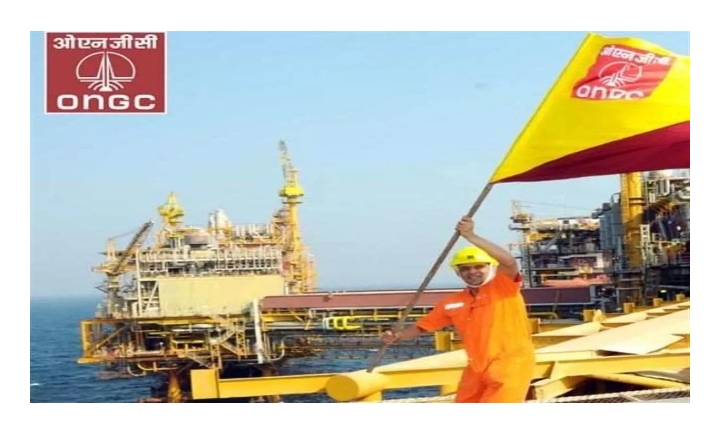
 ONGC, India’s largest government crude oil company, has announced the quarterly results of the current financial year on the previous day. The company’s net profit has fallen by more than 34 percent this quarter. Apart from this, there has also been a decline in the net income of the company. Let’s take a look at the company’s quarterly results in detail.

India’s largest government crude oil company ONGC (ONGC) has announced its quarterly results on the previous day. The performance of the company this quarter has not been very good. The net profit of the company has come down by more than 34 per cent. The company said in a statement that in the first quarter of the current financial year 2023-24 i.e. April-June, the company’s net profit has reached Rs 10,015 crore. At the same time, the net profit of the company was Rs 15,206 crore in the same period last year. Company Quarterly Results Crude oil and natural gas producer ONGC is India’s largest public sector undertaking. The company earned US$ 76.49 on every barrel of crude oil this quarter. At the same time last year, the company earned a profit of US $ 108.55 per barrel. The company’s revenue has fallen by 20 percent. Now the revenue of the company has gone up to Rs 33,814 crore.

The company has informed that there has been a decrease in the production of crude oil. Now the production of crude oil has gone up to 3.2 per cent. At the same time, gas production fell by 3.3 percent to 5.04 billion cubic meters.

Crude oil price volatility After the war in Ukraine and Russia, there has also been a situation of uncertainty with the supply and demand of crude oil all over the world. Globally, there has been a sharp increase in crude oil prices from April-June 2022. Crude oil prices continue to fluctuate even today. 

Let us tell you that the crude oil extracted from under the ground and from the ocean floor is refined for the production of petrol, diesel and other fuels. Apart from this, natural gas is used to generate electricity as well as for burning kitchen stoves and making CNG for automobiles.

Due to which the production of crude oil declined, the company said in the statement that the production of ONGC has decreased in the first quarter of the financial year 2023-24. Apart from this, Cyclone Biparjoy (June 2023) had also disrupted offshore. Cyclone Biperjoy caused the shutdown of onshore production and crude wells in India after a leak in a pipeline cut off oil to a refinery there. After this, there has been a decline in the production of crude oil. Now the company is pursuing new well drilling activities.

 The company said that the current decline in crude oil production is temporary. Many new projects will be started to compensate for this. Crude oil production from KG-98/2 will start in the third quarter of FY 2023-24. The company said that in the first quarter, the company made four oil and gas discoveries. The discovery covers the Central and South areas in the offshore Mumbai region. The Krishna Godavari Basin onland block impacted a new hydrocarbon bearing pay area.
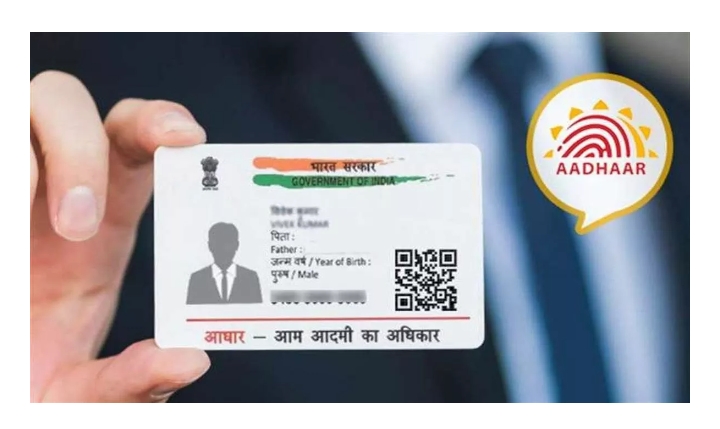

Aadhaar Card Scam: Scammers hacking details of Aadhaar

0

Aadhaar Card

 A new scam has come to the fore regarding Aadhaar card, in which people are linking hundreds of SIMs in one Aadhaar. Cyber ​​Vig observed that there is a person who has taken 100-150 mobile connections on a single basis. Due to this new scam, cyber wings have blocked 25135 sim cards in Tamil Nadu. Let’s know about it.

Aadhaar card is one of the important documents for Indian citizens. But nowadays many scams are happening regarding this. In such a situation, we have to be a little careful.

Let us tell you that the scams of linking the same Aadhaar card with multiple SIM cards are going on. In one case, the cybercrime wing found that a person had 100-150 mobile connections using the same Aadhaar number and wrote to the respective mobile service providers to cancel them.

25,135 SIM cards blocked in Tamil Nadu In the last four months, the Cyber ​​Crime Wing of Tamil Nadu has blocked 25,135 SIM cards across Tamil Nadu on suspicion of fraudulent activities. In another case in Vijayawada, 658 SIM cards were issued with a single photo identity.

 All the SIM cards were registered in the name of Polukonda Naveen, who distributes SIMs at mobile shops and other kiosks where one can buy SIM cards. AI identified the problem DoT was irked over the issue when a tool kit working with AI identified the glitch. ASTR (Artificial Intelligence and Facial Recognition Powered Solution for Telecom SIM Subscriber Verification) software detects SIM card fraud and blocks numbers with identity proof.

The software takes and filters the images of SIM card holders from all telecom operators. This revealed that a large number of SIMs were taken from a single photo. Aadhaar Linked Mobile Number Verification All mobile numbers linked with your Aadhaar can be verified. People can check how many phone numbers are registered with their Aadhaar number through the portal created by DoT. Telecom Analytics for Fraud Management and Consumer Protection (TAFCOP) portal allows telecom customers to view all phone numbers linked to their Aadhaar number.

How to check: The Department of Telecom (DoT) last year launched the portal – Telecom Analytics for Fraud Management and Consumer Protection (TAF-COP), which can help people to check how many mobile numbers are registered with their Aadhaar card. Are. TAF-COP website allows telecom customers to check all registered mobile numbers linked with their Aadhaar number.

Visit the official website https://tafcop.dgtelecom.gov.in/. Enter your mobile number and request OTP. Enter the OTP sent to your number and click on submit. Mobile numbers registered in your Aadhaar card are displayed.

Clickable links will not be available in Youtube Shorts

0

Youtube

 YouTube, which is currently working on several security features to remove scams on the platform. It has announced that it will make all links in shorts comments and shorts details nonclickable by the end of this month. With this change, Google’s video platform aims to help users weed out the web of scammers and spammers.

YouTube has announced that it is making some changes to links on shorts. The Google-owned company said that to combat the growing scams and spam appearing in the short video format, it will no longer make shorts clickable. It added that the volume of content being published on YouTube and the increase in speed and level of engagement have made it easier for spammers and scammers to share links in shorts comments and shorts descriptions. that harm the community.

Scammers can use these clickable links to lead users to malware, phishing or scam content. It added that in addition to existing systems and policies to detect and remove such links, additional preventive measures are needed to make it more difficult for the company to take advantage of users through links.

Some links won’t be clickable Starting August 31st, links in shorts comments, shorts descriptions and links in vertical live feeds will no longer be clickable. This change will be implemented gradually.

We are also removing clickable social media icons from all desktop channel banners, as they can be a source of misleading links, the company said. We have no plans to make any other clickables. Because abuse strategies evolve rapidly, we have to

They also said to take preventive measures to make it harder for scammers and spammers to mislead or scam users through links. YouTube also said it is working on reducing impersonation across YouTube and has made substantial improvements to policies and systems that help detect and remove impersonation channels. It has also introduced more powerful comment moderation tools, which detect and hold potentially spammy and inappropriate comments for optional review by creators.

How creator links appear Starting August 23, audiences on mobile and desktop will see prominent clickable links on channel profiles near the ‘Take Membership’ button, where creators can share websites, social profiles, merchant sites and other links that Comply with community guidelines.

The company also said it will begin offering a secure way for creators to direct viewers from Shorts to their other YouTube content by the end of September.

ChatGPT introduces Custom instructions feature, follow these steps to use 

0

ChatGPT

ChatGPT New Feature OpenAI has announced that it is expanding the ‘custom instructions’ feature to all ChatGPT users. According to a report, this feature gives users more control over how ChatGPT responds. The Sam Altman-led company is now rolling out the feature to all users.

ChatGPT is continuously introducing many new features for its users. Now the company has brought another new feature. OpenAI has announced that it is expanding the ‘custom instructions’ feature to all ChatGPT users. Free users will also be able to take advantage of the new feature. According to a report, this feature gives users more control over how ChatGPT responds. The ‘custom instruction’ feature was first introduced as a beta for ChatGPT Plus customers last month.

What is Custom Instructions Feature This feature was first released on July 20 and was only available to beta users who purchased a $20 per month ChatGPT Plus subscription. However, the Sam Altman-led company is now rolling out the feature to all users, regardless of their premium subscription status. ChatGPT will remember this information once saved using the custom instructions feature. Notably, the new custom instructions feature is not available in the EU and UK, but OpenAI says it will soon expand the feature to those parts as well. This feature helps users save time by eliminating the need to retype the same instruction prompts every time they interact with the AI ​​chatbot.

How to use the ChatGPT Custom Instruction feature on the web The feature can be accessed through the web as well as through the Android or iOS app. By going to the web, users can go to Settings and click on Beta Features. Click on Opt in Custom Instructions and Custom Instructions will appear when you click on your name.

How to use ChatGPT Custom Instructions feature on iOS/Android Open ChatGPT app on iOS or Android Click on New Features and Enable Custom Instructions Your custom instructions will now appear in Settings.

Air India called the iconic Maharaja mast ‘Tata’, these changes after rebranding

0

Air India

 Air India, which was going through a crisis, not only got its old owner Tata Group, but now this airline has been rebranded and given a new look. Tata-owned Air India, one of the country’s largest airlines, changed its logo and livery yesterday. Let us tell you about the new airline today.

At one time, Air India, which was in trouble, was not only handled by its old owner Tata Group, but now the airline has been rebranded and presented in a new look and style. Tata-owned Air India, one of the country’s largest airlines, changed its logo and livery yesterday. Today we are going to tell you about the new dress of Air India.

What changed from rebranding If only the logo is changed in rebranding, then it is not as much fun as it is when the logo is changed along with the dress. The name of the Air India aircraft will now be written in a new font on the fuselage and belly.

The livery of the aircraft features an expanded color palette of the classic Air India red and orange, with the use of deep red, brinjal and gold on the tail and belly of the aircraft. The airline has removed the Air India written in Hindi from the side and replaced it with belly paint. The tail of any flight attracts the most attention. In this new livery, the tail includes Vistara’s golden window sills, a mix of the iconic red and purple, a nod to the airline’s history and future. The rest of the aircraft uses the same color combination, with red wing tips and gold accents on the belly.

Air India CEO and MD Campbell Wilson says that the first aircraft to wear the new livery will be the airline’s A350, which will arrive in December 2023. The current Air India fleet consists of 120 aircraft divided between the Airbus A320 family and Boeing’s wide-body 777 and 787. Air India’s recent orders from Airbus and Boeing include 210 Airbus A320neo family aircraft and 40 A350s plus 190 737 MAX, 20 787s and 10 777Xs from Boeing.

Maharaja the ‘Tata’ Air India’s historic Maharaja mascot has not been given a place in the new logo. Many will remember the Maharaja and its history but it is clear that Air India is now putting its past to rest to build its future.

However, the airline has not completely phased out the Maharajah mascot. The airline said the Maharaja’s presence will extend to the airline’s premium classes and airport lounges. The airline’s decision to retain Maharaja has been inspired by the nostalgic appeal of the airline’s old passengers.

Shares of these companies including LIC rose, Sensex and Nifty are doing business with a boom 

0

Shares

LIC Q1 Results Many companies are announcing their quarterly results. Life Insurance Corporation of India (LIC) has announced the quarterly result on the last day. The net profit of the company has increased manifold this quarter. After the results, the company’s shares are trading with a boom. Today, both the indices of the stock market opened seven down.

Life Insurance Corporation of India (LIC) has announced its quarterly results yesterday. Today, as soon as the market opens, the shares of the company are trading fast. While the company’s shares closed down yesterday at the time of closing the market. The company has earned manifold net profit in this quarter. The net profit of the company has gone up to Rs 9,544 crore.

Shares of the company are up nearly 6 per cent in the market today. The company’s stock has seen a boom on both the indices of the stock market. The company’s stock is trading at Rs 676.95 per share, up 5.42 per cent, on the BSE. At the same time, the shares of the company are trading at a speed of 5.81 per cent on the NSE. The company’s shares are trading at Rs 679 per share on NSE.

LIC’s quarterly results LIC Company has announced the April-June quarter results of the current financial year 2023-24 yesterday. This quarter the company’s net profit has gone up to Rs 9,544 crore. At the same time, the net profit of the company was Rs 683 crore in the same period last year.

Net income rose to Rs 1,88,749 crore in the June quarter from Rs 1,68,881 crore in the year-ago period, it said in a regulatory filing on Thursday. The company’s net income from investments increased to Rs 90,309 crore during the quarter as compared to Rs 69,571 crore in the April-June period of 2022-23. The company’s non-performing assets stood at 2.48 percent. It was 5.84 percent in the same period a year ago.

Increase in the stock of this company Shares of Supreme Industries, REC and Ashok Leyland have jumped today. The company has announced on the previous day that it will be added to MSCI India Index along with five other companies. Shares of Supreme Industries climbed 16.25 per cent to hit a 52-week high of Rs 4,480 on the BSE. REC stock jumped 6.48 per cent to hit a 52-week high of Rs 230.70. Ashok Leyland gained 2.55 per cent to reach its one-year high of Rs 191. Shares of HDFC Asset Management Company advanced 2.29 per cent, Cummins India (2.23 per cent), Power Finance Corporation (2 per cent), IDFC First Bank (1.65 per cent) and Astral Ltd (1.14 per cent).

Financiers for Start-ups: Understanding the Role of NBFCs and P2P Lenders

0
Financiers for Start-ups

In the world of entrepreneurship, access to timely and adequate funding is crucial for start-ups to scale and succeed. While traditional banks have been the go-to source for financing, the landscape of business financing has witnessed significant changes in recent years. Non-Banking Financial Companies (NBFCs) and Peer-to-Peer (P2P) lenders have emerged as powerful alternatives, providing flexible and accessible funding solutions to start-ups. In this article, we will explore the role of NBFCs and P2P lenders in supporting start-ups, their significance in the financial ecosystem, and how they are transforming the financing landscape for aspiring entrepreneurs.

Understanding NBFCs

NBFCs are financial institutions that offer a wide range of banking services, similar to traditional banks, but without the legal status of a bank. They play a vital role in providing credit to individuals and businesses, including start-ups, and are regulated by the Reserve Bank of India (RBI). NBFCs have gained popularity as a flexible and efficient source of funding for start-ups that might face challenges in obtaining loans from traditional banks due to stringent eligibility criteria.

Empowering Start-ups with Tailored Solutions

One of the significant advantages of NBFCs is their ability to offer customized financing solutions tailored to the specific needs of start-ups. Unlike traditional banks, NBFCs assess the creditworthiness of start-ups based on multiple factors, including future growth prospects and potential revenue streams. This approach allows them to support innovative and high-potential ventures that may not have an extensive financial track record but demonstrate promising business models.

Faster Loan Processing and Disbursal

NBFCs are known for their swift loan processing and disbursal procedures. For start-ups, time is of the essence, and delays in securing funding can hinder their growth prospects. NBFCs leverage technology and data-driven processes to expedite loan approvals and disbursals, ensuring that start-ups can access funds when they need them the most.

Understanding P2P Lenders

P2P lending platforms are online marketplaces that connect individual lenders with borrowers, including start-ups, eliminating the need for traditional financial intermediaries. P2P lending has gained traction in recent years as a transparent and efficient way of borrowing funds for start-ups. These platforms use advanced algorithms to match borrowers with lenders based on their risk profile and loan requirements.

Accessibility and Inclusivity

P2P lending has democratized access to finance, particularly for start-ups and MSMEs. It allows entrepreneurs to reach a vast pool of potential lenders and present their business ideas directly to investors. This direct approach fosters transparency and inclusivity, giving start-ups from diverse backgrounds and geographies an equal opportunity to secure funding for their ventures.

Lower Interest Rates and Fees

P2P lending platforms often offer competitive interest rates and lower fees compared to traditional financial institutions. This cost advantage is beneficial for start-ups, as it reduces the overall financial burden and enhances their ability to invest in business expansion and innovation.

Combining Technology with Finance

Both NBFCs and P2P lenders leverage technology to streamline their operations and enhance the customer experience. Digital onboarding, automated credit assessment, and real-time tracking of loan applications are some of the ways in which technology is transforming the financing landscape for start-ups. These advancements have made the borrowing process more efficient and user-friendly.

Data-Driven Decision Making

Data analytics plays a pivotal role in the lending decisions of NBFCs and P2P platforms. They use data points such as credit scores, transaction history, and social behavior to evaluate the creditworthiness of start-ups. This data-driven approach allows for more objective and informed lending decisions, reducing the reliance on conventional collateral-based assessments.

The rise of NBFCs and P2P lenders has revolutionized the financing options available to start-ups in India. These alternative financial institutions offer flexible, efficient, and accessible funding solutions that cater to the unique needs of entrepreneurs. By leveraging technology, data analytics, and innovative approaches to credit assessment, NBFCs and P2P lending platforms are empowering start-ups with the financial resources they need to fuel their growth and achieve their entrepreneurial dreams.

In conclusion, NBFCs and P2P lenders have emerged as game-changers in the Indian start-up ecosystem, redefining the way businesses access funding. Their role in providing tailored financing solutions, leveraging technology, and promoting inclusivity makes them indispensable partners for aspiring entrepreneurs on their journey to success.

Latest= https://happenrecently.com/zepto/

Impact Investment in India: Supporting Socially Conscious Start-ups

0
Impact Investment

In recent years, there has been a growing recognition of the need for businesses to do more than just generate profits. Impact investment, a form of socially responsible investing, has emerged as a powerful tool to support start-ups that are dedicated to making a positive impact on society and the environment. In this article, we will explore the concept of impact investment, its significance in the Indian context, and how it is fostering a new generation of socially conscious start-ups.

Understanding Impact Investment

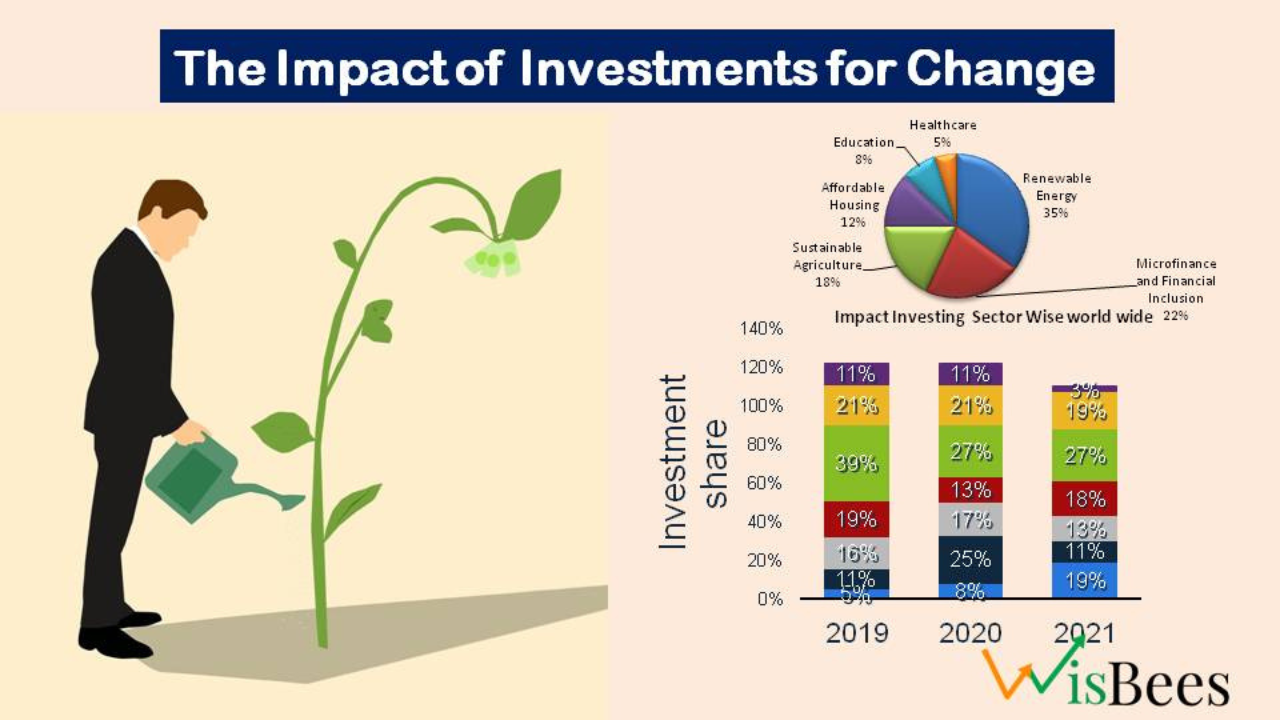
Impact investment refers to investments made into companies, organizations, and funds with the intention of generating social and environmental impact alongside financial returns. Unlike traditional investments that focus solely on financial gains, impact investors prioritize initiatives that address pressing societal and environmental challenges. These challenges may range from poverty alleviation and healthcare access to sustainable agriculture and clean energy.

The Significance in the Indian Context

India, with its diverse and complex social issues, presents a compelling landscape for impact investment. The country is home to a large population facing challenges in education, healthcare, and livelihood opportunities. Impact investment plays a vital role in channeling capital towards businesses that create positive change while promoting economic growth and sustainability. As per a report by the Global Impact Investing Network (GIIN), the impact investment market in India is expected to reach USD 10 billion by 2025.

Empowering Socially Conscious Start-ups

Impact investment has become a catalyst for the growth of socially conscious start-ups in India. These start-ups are mission-driven and prioritize social and environmental goals at the core of their business model. They harness innovative approaches to address pressing issues, combining financial viability with social impact. For instance, start-ups focused on clean energy provide affordable and sustainable alternatives to traditional energy sources, reducing carbon emissions and promoting environmental conservation.

Addressing Key Social Challenges

One of the key advantages of impact investment is its ability to address social challenges that might be overlooked by traditional funding sources. Start-ups working in areas such as education, healthcare, sanitation, and financial inclusion are gaining support from impact investors who recognize the potential for scalable and sustainable solutions. These investments not only uplift marginalized communities but also contribute to the country’s progress and development.

Creating a Thriving Ecosystem

The influx of impact investment is creating a thriving ecosystem for socially conscious start-ups in India. Apart from financial support, impact investors often provide mentoring, networking opportunities, and strategic guidance to help start-ups navigate challenges and scale their operations. This nurturing environment helps start-ups attract top talent, collaborate with like-minded organizations, and gain visibility among potential customers and partners.

Measuring Impact and Returns

One of the challenges faced by impact investors and start-ups alike is measuring the social impact of their initiatives. Unlike financial returns, which can be quantified more easily, social impact requires robust metrics and evaluation frameworks. To address this, impact investors collaborate with experts and industry bodies to develop standardized impact measurement methodologies, ensuring transparency and accountability in the impact investment ecosystem.

Government Support and Policy Framework

The Indian government has recognized the significance of impact investment in driving socio-economic development and has taken steps to support the sector. Initiatives such as the Social Alpha Fund and Atal Innovation Mission aim to nurture social start-ups and foster innovation in critical sectors. Additionally, tax incentives and regulatory reforms have been introduced to encourage more investors to participate in impact investment.

Impact investment has emerged as a powerful force in supporting socially conscious start-ups in India. By aligning financial goals with social and environmental impact, impact investors are fostering a new generation of businesses that prioritize social good alongside profitability. These start-ups are addressing key challenges and driving positive change in sectors ranging from education to healthcare and clean energy. As the impact investment ecosystem continues to grow, it is poised to play a pivotal role in shaping a more inclusive and sustainable future for India.

In conclusion, impact investment holds immense potential to drive positive change in India, empowering socially conscious start-ups and addressing critical societal challenges. By channeling capital towards businesses that prioritize social impact, impact investors are creating a powerful synergy between financial returns and social progress.

Latest= https://happenrecently.com/zepto/

Indian Web Browser: IT Ministry challenges developers to make Indian web browser

0

Indian Web Browser:

The Ministry of Electronics and IT recently launched an Indian Web Browser Development Challenge. The Indian Web Browser Development Challenge was an open challenge competition. The objective of this competition was to prepare an indigenous web browser for the country. According to the press release, technology experts, innovators and developers from across the country were invited under the Indian Web Browser Development Challenge.

The Ministry of Electronics and IT recently launched an Indian Web Browser Development Challenge. According to the press release, the Ministry of Electronics and IT organized the Indian Web Browser Development Challenge on Wednesday. What is Indian Web Browser Development Challenge Actually, Indian Web Browser Development Challenge was an open challenge competition. The objective of this competition was to prepare an indigenous web browser for the country. According to the press release, under the Indian Web Browser Development Challenge, technology experts, innovators and developers from across the country were invited.

It is to be known that at present Google’s web browser Chrome is mostly used to use the Internet. Google is an American company. In such a situation, India is working on a plan to bring its own web browser. Technology experts from all over the country participated in this competition organized by the Ministry of Electronics and IT (Indian Web Browser Development Challenge), more than 200 participants from different corners of the country were present. People associated with government departments, startups, industry participated in this competition. The Indian Web Browser Development Challenge was conducted with both online and offline mode.

Panel discussion facility for the participants According to the press release, panel discussion facility was also kept in the Indian Web Browser Development Challenge to answer the questions of the participants. The queries of the participants were answered by MeitY, CCA and C-DAC officials in this panel.

New announcement regarding payment limit in UPI Lite, not 200, now you will be able to pay offline up to Rs 500 

0

UPI Lite

User is getting an offline payment option through UPI. Near Field Communication technology will be used through UPI-Lite on device wallets. With this technology, the user will get the facility of offline payment on UPI. That is, in any situation, the payment can be made even if the data is not on the user’s phone.

The Reserve Bank of India has made new announcements regarding UPI Lite. The Central Bank RBI has informed about the introduction of offline payment through UPI. RBI has increased the limit of payment through UPI Lite to Rs 500. It may be noted that till now the option of payment up to Rs.200 was available through UPI Lite without UPI PIN with a maximum limit of Rs. Apart from this, the facility of conversational payment will also be provided on UPI.

According to RBI Governor Shaktikanta Das, new announcements have been made regarding UPI to promote the access and use of digital payments in the country.

 Big announcements of the central bank regarding UPI

Through conversational payment on UPI, the user can interact with the payment before making a payment. Users will also be able to interact with the AI ​​powered system to make payments with the conversational payment feature. User is getting offline payment option through UPI. Through UPI-Lite On Device Wallet, the user can use Near Field Communication technology. With this technology, the user will get the facility of offline payment on UPI. That is, in any situation, the payment can be made even if the data is not on in the user’s phone. The limit of payment in offline mode has been increased from Rs 200 to Rs 500. It is known that in UPI Lite, the user gets the facility to keep an amount of up to Rs 2000.

What will be the benefit of UPI offline payment According to Suren Goyal, partner of RPS Group, UPI is a useful feature for offline payment users. With the help of this feature, the user will not need to depend on the internet for UPI transactions. With the help of UPI offline payment feature, users will be able to make payments easily from any location.