Saxena gave the directions at a recent meeting with DDA officers. train print Saxena to take charge of the design to ameliorate connectivity and structure in the sun-city; land formerly distributed to NIT, National Institute of Homeopathy; 8 hectares to be given to GGSIPU Lieutenant- GovernorV.K.
Saxena has directed the Delhi Development Authority( DDA) to develop the Narelasub-city into an educational mecca while asking the authority to expedite the structure systems in the area, according to a statement issued by Raj Niwas on Monday.
The L- G has tête-à-tête taken charge of perfecting connectivity and communal structure in thesub-city, read the statement. The DDA has an force of nearly 50,000 apartments in Narela, utmost of which have been lying unsold for times.
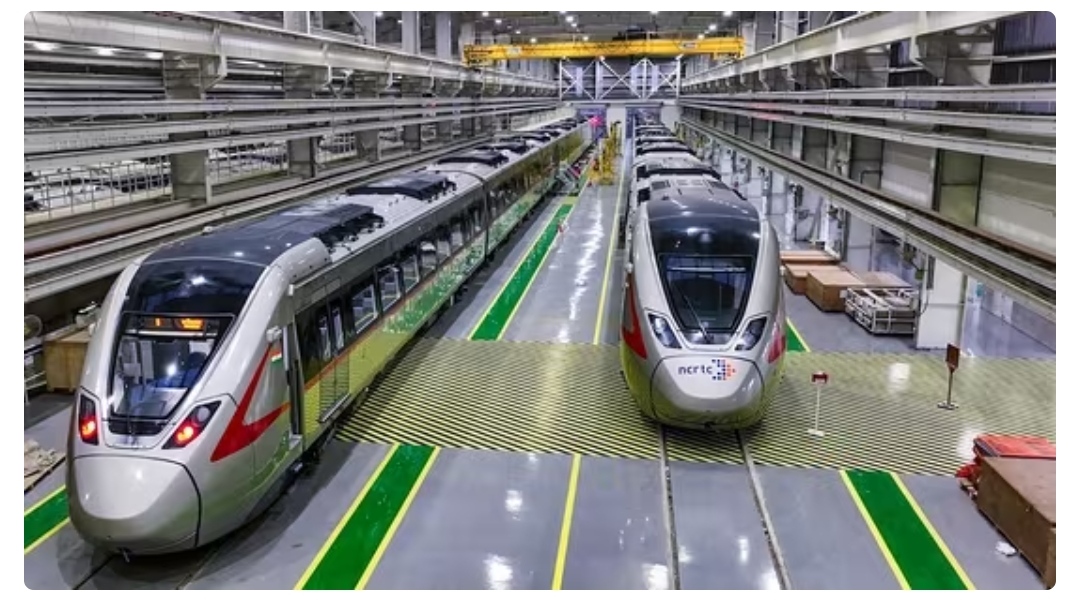
To attract homebuyers, the agency has been working on perfecting the connectivity of thesub-city with the rest of the Capital through DTC motorcars and a proposed extension of the Delhi Metro line. It has also taken way to boost the education and healthcare installations in the area.
In his recent meeting with the DDA officers,Mr. Saxena refocused out that the area lacks big marketable centres, including commercial premises and shopping promenades.
He directed officers to give land parcels to universities and other academic institutions looking to set up premises in the area. Saxena has directed the authority to lot the land parcels in a cluster, close to its casing systems to insure that the institutions have access to domestic and hotel installations.
The DDA has formerly started to work on this plan, the statement read. The institutions to which land has formerly been distributed include the National Institute of Technology(20.8 hectares), Indira Gandhi Delhi Technical University for Women( 20 hectares), and National Institute of Homeopathy(4.04 hectares).
The statement by Raj Niwas said Guru Gobind Singh Indraprastha University( GGSIPU) will be distributed8.08 hectares and Delhi preceptors University4.04 hectares. Narelasub-city is spread over about 9,866 hectares. Around 2,501 hectares is defined as the green belt in the area, according to the Raj Niwas statement.
The Nobel Prize for economics was awarded to Harvard University professor Claudia Goldin on Monday for her exploration that has advanced the understanding of the gender gap in the labour request. Goldin is just the third woman to win the prize out of 93 economics laureates. She has studied 200 times of women’s participation in the plant, showing that despite continued profitable growth, women’s pay didn’t continuously catch up to men’s and a peak still exists despite women gaining advanced situations of education than men.
“ I ’ve always been an optimist. But when I look at the figures, I suppose commodity has happed in America, that we, in the 1990s, our labour force participation rate for women was the loftiest in the world, and now it is n’t the loftiest in the world, ”Ms. Goldin said. “ We’ve to step back and ask questions about making together the family, the home, together with the business and employment, ” she said.
Claudia Goldin
Explaining the gap Goldin’s exploration doesn’t offer results, but it allows policymakers to attack the settled problem, said economist Randi Hjalmarsson, a member of the Nobel commission. “ She explains the source of the gap, and how it’s changed over time and how it varies with the stage of development. And thus, there’s no single policy, ”Ms. Hjalmarsson said.
” So it’s a complicated policy question because if you do n’t know the beginning reason, a certain policy wo n’t work. ” still, “ by eventually understanding the problem and calling it by the right name, we will be suitable to pave a better route forward, ”Ms. Hjalmarsson said. Goldin, 77, said that what happens in people’s homes reflects what happens in the plant, with women frequently taking jobs that allow them to be on call at home — work that frequently pays lower.
“ Ways in which we can indeed effects out or to produce further couple equity also leads to further gender equivalency, ” she said. InMs. Goldin’s analysis, a woman’s part in the job request and the pay she receives are n’t told just by broad social and profitable changes.
They also are determined incompletely by her individual opinions about, for illustration, how important education to get. frequently youthful girls make opinions about unborn work by looking at their own mama ’s participation, each generation “ literacy from the successes and failures of the antedating generation, ”Ms. Hjalmarsson said.
The process of assessing prospects as times change “ helps explain why change in labour request gender gaps has been so laggardly, ” she said.
Uncovering the Transformative Journeys of Visionaries and Innovators
In the fast-paced world of business and technology, it is often the stories of remarkable individuals that captivate our attention and inspire us to push boundaries. TechnoVans, a prominent online platform, has emerged as the go-to destination for discovering the stories of change makers who are making a real difference in their respective fields. With a focus on entrepreneurship, innovation, and societal impact, TechnoVans has become a hub for sharing the journeys of these inspiring individuals.
TechnoVans boasts a wide array of content categories, including business news, startup stories, technology updates, influencers, blogging tips, and more. The platform brings together a diverse range of voices, showcasing the experiences and insights of entrepreneurs, industry leaders, and visionaries from around the world. By providing a platform for these change makers to share their stories, TechnoVans aims to inspire and educate its readers, fostering a community of like-minded individuals passionate about making a positive impact.
One of the key features of TechnoVans is its comprehensive coverage of business news. The platform keeps readers up to date with the latest developments in the business world, from funding announcements and acquisitions to market trends and success stories. By providing timely and relevant information, TechnoVans helps entrepreneurs and professionals stay informed and make informed decisions in their respective industries.
Startup stories are another highlight of TechnoVans, where the platform showcases the inspiring journeys of emerging companies and their founders. By delving into the challenges, triumphs, and strategies of these startups, TechnoVans offers valuable insights and inspiration to aspiring entrepreneurs. These stories not only celebrate the achievements of these individuals but also provide a roadmap for others looking to embark on their own entrepreneurial ventures.
In addition to business and startup news, TechnoVans also covers technology updates, mobile apps, and features interviews with influential bloggers and social media influencers. By exploring the intersection of technology and entrepreneurship, TechnoVans offers a unique perspective on how technology can drive innovation and social change.
TechnoVans has quickly gained recognition for its engaging and informative content, attracting a diverse and engaged readership. The platform’s commitment to quality storytelling and its focus on impactful narratives have made it a trusted source for individuals seeking inspiration and knowledge.
As TechnoVans continues to grow, it presents a valuable opportunity for business news websites to collaborate and feature its content. By partnering with TechnoVans, these websites can bring captivating stories of change makers to their audience, enhancing their content offerings and providing a fresh perspective on entrepreneurship and innovation.
In conclusion, TechnoVans has solidified its position as a premier platform for sharing the stories of change makers, offering a wealth of inspiring content across various categories. With its commitment to promoting entrepreneurship, innovation, and societal impact, TechnoVans has become a trusted resource for individuals seeking motivation and insights from those who are making a difference. Collaborating with TechnoVans presents an exciting opportunity for business news websites to diversify their content and engage their audience with compelling narratives of success and resilience.
Amidst the vibrant hustle and bustle of Mumbai, where every event is a dazzling spectacle, one name consistently emerges as the epitome of event management excellence – Mahesh Chavan Macc. Combining an unwavering commitment to perfection with a profound dedication to community service, Mahesh has solidified his position as a revered figure in Mumbai’s event industry.
A Maestro in Event Management Born on November 7, 1998, in the heart of Mumbai, Maharashtra, Mahesh Chavan Macc embarked on his journey into event management from a young age. His innate ability to orchestrate events and unite people led him down this career path. Over the years, he has curated a diverse portfolio of events, ranging from corporate galas to opulent weddings and vibrant social gatherings. Clients consistently commend his knack for crafting high-quality events that leave indelible memories. Mahesh’s secret weapon lies in his unwavering attention to detail. He leaves no aspect unexamined, ensuring that every facet of an event – from lighting to catering – is executed to perfection. His organizational prowess is unmatched, allowing him to seamlessly manage multiple tasks, a critical asset in the multifaceted world of event management, where numerous vendors, participants, and stakeholders converge.
Gratefull Giving: Fostering Community Impact Mahesh Chavan Macc’s vision extends far beyond event management. He is the visionary behind “Gratefull Giving,” a non-governmental organization that aims to unite individuals to work collectively towards common goals and make a positive impact on the community. Through this platform, he has sponsored a college, providing education to those who might otherwise have been deprived of this opportunity. Mahesh firmly believes that education is the key to a brighter future, and he is committed to providing quality education to underprivileged children. His compassionate actions have garnered admiration and respect from his community, solidifying his status as a true visionary.
Recognition and Mentorship Mahesh’s dedication to community service has not gone unnoticed. He has received recognition from various organizations and has been invited to speak at conferences and events on the subject of community service. Beyond his professional and philanthropic pursuits, Mahesh plays the vital role of mentor and coach to aspiring event managers. He believes in sharing his knowledge and experience, nurturing the next generation of event management talents.
Mahesh Chavan Macc’s commitment to excellence permeates every facet of his life and serves as an inspiration to all. Whether he is meticulously orchestrating an exceptional event or making a profound impact on the lives of the less fortunate, he consistently gives his best. His vision for Gratefull Giving, a platform for social welfare, aspires to create a world where people exhibit greater compassion, empathy, and generosity towards one another. In a city renowned for its opulence and extravagance, Mahesh stands out for his dedication to creating unforgettable events and giving back to society. He is more than just an event maestro; he is a champion of the community, a mentor, and a visionary philanthropist. Mahesh Chavan Macc embodies excellence and compassion at the heart of Mumbai. As he continues to craft extraordinary events and touch lives through Gratefull Giving, Mahesh’s legacy as a luminary in event management and community service shines brighter with each passing day.
Delhi’s CM Arvind Kejriwal inaugurated debris recycling factory
Delhi Chief Minister Arvind Kejrwial on Sunday inaugurated an upgraded construction and obliteration waste recycling factory, which his government claimed is the largest similar design in the country.
The factory at Jahangirpuri has the capacity to reclaim 2,000 tonnes of debris every day. The CM said his government has plans to start another similar factory in Okhla, and once it’s functional, Delhi will be suitable to reclaim and exercise all debris generated within the megacity. “ Delhi produces about 6,500 tonnes of debris daily. The construction and obliteration waste recycling factory at Jahangirpuri is the fourth of its kind.
The rest three shops are at Ranikhera, Shastri Park and Bakkarwala. These four shops inclusively have the capacity to reclaim 5,000 tonnes of waste a day, ”Mr. Kejriwal said. “ We’ve a plan to construct a new factory at Okhla with a recycling capacity of 1,000 tonnes, ” he added.
WhatsApp Channels is a one- way broadcasting medium that politicians have taken a shine to. Those from across the political diapason mass WhatsApp Channels, the new broadcast point on the messaging app, to reach out directly to the population with smartphones Political leaders are still establishing a base on WhatsApp Channels, a one- way broadcasting medium launched in September by the messaging platform. Soon after the launch, Prime Minister Narendra Modi opened an sanctioned account, which has garnered nearly 9 million followers so far.
Other Bharatiya Janata Party( BJP) leaders were quick to establish their own channels. The point represents WhatsApp’s elaboration from a tool in political outreach — through devoted groups and encouraged dispatches, especially before choices — to a full- fledged medium in and of itself, where leaders can reach cult directly and incontinently.
Home Minister Amit Shah is one of the new entrants( 17,000 followers), as are Minister of Minority Affairs and Women & Child Development Smriti Irani( 2,000), and Minister of State for Electronics and Information Technology Rajeev Chandrasekhar( 22,000). They’ve not made any public advertisement promoting their channels, but the number of followers are growing steadily. Opposition leaders have also snappily established their bases.
Congress chairman Mallikarjun Kharge created his channel on September 19, the same day asMr. Modi, while former Congress principal Rahul Gandhi() did so the following day. Modi’s first post on his channel was a picture of himself, sitting at a office in the new Parliament structure. He soon made it clear that prejudiced messaging would be a crucial part of his presence on the platform, alongside Prime Ministerial dispatches.
“ People of Chhattisgarh are tired of the mis- governance of Congress, ” he posted on September 30. Ministers have also used their channels to talk about their work, and to advance the government’s precedences.
BJP wins two The National Conference- Congress combine swept the election to the 26- member Ladakh Autonomous Hill Development Council- Kargil, bagging 22 seats in the first pates held since Ladakh was sculpted out as a Union Territory in 2019. The Bharatiya Janata Party won two seats. The National Conference( NC), which is also a part of the wider Indian National Developmental, Inclusive Alliance( INDIA), won 12 seats, while the Congress bagged 10.
The INDIA mates lost to the BJP in one of the seats where they contended campaigners against each other. Independent campaigners won two seats. During the campaigning, the NC pitched the election as a vote on the Centre’s conduct on August 5, 2019, when Jammu and Kashmir’s special indigenous position was ended and the State resolve into two Union homes. BJP pitch The BJP queried these pates on the development enterprise accepted in the region after 2019.
“ It’s a resounding rejection of the BJP’s politics that saw J&K divided and downgraded, with our naturally guaranteed status abolished. The people of Kargil have shown that they don’t support or agree with what was done to them on 5th August 2019, ” NCvice-president Omar Abdullah told The Hindu. The October 4 election saw77.61 of the 74,026 registered choosers cast their ballot.
On the docket at Monday’s CWC match is indurate up the party’s strategy in the five bean- bound countries.
Caste tale and bean strategies are set to dominate the Congress Working Committee( CWC) meeting then on Monday, with Assembly choices in Rajasthan, Madhya Pradesh, Chhattisgarh, Telangana and Mizoram set to be blazoned soon. Congress chairman Mallikarjun Kharge, former party chiefs Sonia Gandhi and Rahul Gandhi, the principal ministers of all the Congress- ruled countries and the top party brass will meditate on election preparedness and narratives across the bean- bound countries at length, besides holding expansive conversations on the party’s establishment pitch for a civil estate tale and its counter accusations .
There are enterprises within the Congress with respect to the articulation of the party’s demand for the estate tale, with Prime Minister Narendra Modi lately criminating the grand old party of trying to divide Hindus through its drive for the Other Backward Classes( OBC).
Congress prophet Abhishek Singhvi, who’s also a regular CWC member, raised enterprises lately over Rahul Gandhi’s” jitni abaadi, utna haq”( rights proportionate to population) watchword, arguing that it amounts to an countersign of majoritarianism. Meanwhile, the ruling Bharatiya Janata Party( BJP) at the Centre has escalated its attacks on the Congress, saying the party has noway been in favour of a estate tale with late high minister Rajiv Gandhi opposing the Mandal Commission in Parliament.
The Congress is seeking to retain its governments in Chhattisgarh and Rajasthan and hoping to wrest power from the BJP in Madhya Pradesh, Bharat Rashtra Samithi( BRS) in Telangana and Mizo National Front( MNF) in Mizoram. The Congress has condemned Singh’s arrest but also refocused to analogous action against its leaders in Punjab at the hands of the AAP government there, the rearmost being the arrest of its growers’ sect head Sukhpal Khaira in a medicines- related case.
The principal ministers of Rajasthan, Chhattisgarh, Karnataka and Himachal Pradesh, besides the Congress Legislature Party( CLP) leaders in the five bean- bound countries, will attend the CWC match. NEW DELHI Caste tale and bean strategies are set to dominate the Congress Working Committee( CWC) meeting then on Monday, with Assembly choices in Rajasthan, Madhya Pradesh, Chhattisgarh, Telangana and Mizoram set to be blazoned soon.
Congress chairman Mallikarjun Kharge, former party chiefs Sonia Gandhi and Rahul Gandhi, the principal ministers of all the Congress- ruled countries and the top party brass will meditate on election preparedness and narratives across the bean- bound countries at length, besides holding expansive conversations on the party’s establishment pitch for a civil estate tale and its counteraccusations . There are enterprises within the Congress with respect to the articulation of the party’s demand for the estate tale, with Prime Minister Narendra Modi lately criminating the grand old party of trying to divide Hindus through its drive for the Other Backward Classes( OBC).
Congress prophet Abhishek Singhvi, who’s also a regular CWC member, raised enterprises lately over Rahul Gandhi’s” jitni abaadi, utna haq”( rights proportionate to population) watchword, arguing that it amounts to an countersign of majoritarianism. Although Singhvi snappily deleted his controversial post on X after the Congress receded itself from his reflections, enterprises remain among a section of the party as to the articulation of the politically-sensitive call for the estate tale. Meanwhile, the ruling Bharatiya Janata Party( BJP) at the Centre has escalated its attacks on the Congress, saying the party has noway been in favour of a estate tale with late high minister Rajiv Gandhi opposing the Mandal Commission in Parliament.
The Congress has taken a principled stage to push for the estate tale in order to fight the BJP’s Hindutva docket. After Bihar released the findings of a estate tale in the state, Congress- ruled Rajasthan issued orders on Saturday for holding a analogous exercise. In Chhattisgarh too, the Congress has blazoned that it’ll conduct a estate tale if tagged to power again.
Congress- ruled Karnataka has formerly blazoned the tale and is likely to come out with its results latterly this time. On the docket at Monday’s CWC match is indurate up the party’s strategy in the five bean- bound countries. The Congress is seeking to retain its governments in Chhattisgarh and Rajasthan and hoping to wrest power from the BJP in Madhya Pradesh, Bharat Rashtra Samithi( BRS) in Telangana and Mizo National Front( MNF) in Mizoram. The CWC match comes at a time when some opposition leaders are facing heat from central agencies and the rearmost in a series of apprehensions is of Aam Aadmi Party’s( AAP) Sanjay Singh in the Delhi excise policy case.
‘ One nation one bean ’ plan attacks civil structure Congress CWC The Congress has condemned Singh’s arrest but also refocused to analogous action against its leaders in Punjab at the hands of the AAP government there, the rearmost being the arrest of its growers’ sect head Sukhpal Khaira in a medicines- related case. The meeting of the top decision- making body of the Congress comes just over three weeks after the first meeting of the reconstituted CWC in Hyderabad on September 16 to evolve a strategy for the Assembly pates in the five countries and the 2024 Lok Sabha election.
The principal ministers of Rajasthan, Chhattisgarh, Karnataka and Himachal Pradesh, besides the Congress Legislature Party( CLP) leaders in the five bean- bound countries, will attend the CWC match. The CWC has 39 regular members, 32 endless companies and 13 special companies, including 15 women and several new faces.
At long last Katalin Karikó and Drew Weissman d churing a press conference at the University of Pennsylvania on October 2. Getty Images Why is the work of the Medicine Nobel laureates pivotal for development of vaccines? What were the challenges to use mRNA technology for mortal operations? How did the two scientists overcome them?
A major advantage of mRNA vaccines is that because they only need the inheritable law, it’s possible to snappily modernize vaccines to arising variants. The story so far On October 2, Nobel Prize week began with the 2023 Prize in Physiology or Medicine being awarded to Katalin Karikó and Drew Weissman. They were awarded the prize for their “ discoveries concerning nucleoside base variations that enabled the development of effective mRNA vaccines against COVID- 19 ”.
What are mRNA vaccines? mRNA, which stands for runner RNA, is a form of nucleic acid which carries inheritable information. Like other vaccines, the mRNA vaccine also attempts to spark the vulnerable system to produce antibodies that help fight an infection from a live contagion. still, while utmost vaccines use weakened or dead bacteria or contagions to elicit a response from the vulnerable system, mRNA vaccines only introduce a piece of the inheritable material that corresponds to a viral protein.
This is generally a protein set up on the membrane of the contagion called shaft protein. thus, the mRNA vaccine doesn’t expose individualities to the contagion itself. According to an composition by Thomas Schlake et al, in RNA Biology, RNA as a remedial was first promoted in 1989 after the development of a astronomically applicable in vitro transfection fashion. A couple of times latterly, mRNA was supported as a vaccine platform. He says, “ mRNA offers strong safety advantages.
As the minimum inheritable construct, it harbours only the rudiments directly needed for expression of the decoded protein. ” A common approach by vaccine makers during the epidemic was to introduce a portion of the shaft protein, the crucial part of the coronavirus, as part of a vaccine. Some makers wrapped the gene that codes for the shaft protein into an inactivated contagion that affects chimpanzees, called the chimpanzee adenovirus.
The end is to have the body use its own ministry to make shaft proteins from the given inheritable law. The vulnerable system, when it registers the shaft protein, will produce antibodies against it. How are these vaccines different? A piece of DNA must be converted into RNA for a cell to be suitable to manufacture the shaft protein. While an mRNA vaccine might look like a more direct approach to getting the cell to produce the necessary proteins, mRNA is veritably fragile and will be shred piecemeal at room temperature or by the body’s enzymes when fitted . To save its integrity, the mRNA needs to be wrapped in a subcaste of unctuous lipids, or fat cells.
One way to suppose of this is that an mRNA- lipid unit most nearly mimics how a contagion presents itself to the body, except that it can not replicate like one. DNA is much more stable and can be more flexibly integrated into a vaccine- vector. In terms of performance, both are anticipated to be as effective. A challenge with mRNA vaccines is that they need to be firmed from-90 degree Celsius to-50 degree Celsius. They can be stored for over to two weeks in marketable freezers and need to be fused at 2 degrees Celsius to 8 degrees Celsius at which they can remain for a month.
But a major advantage of mRNA and DNA vaccines is that because they only need the inheritable law, it’s possible to modernize vaccines to arising variants and use them for a variety of conditions. Viral vector vaccines, like Covishield, carry DNA wrapped in another contagion, but mRNA are only a distance of instructions to make shaft proteins wrapped in a lipid( or a fat patch) to keep it stable. In the case of COVID- 19, mRNA vaccines developed by Moderna, Pfizer and Pune- grounded Gennova Biopharmaceuticals, these instructions alone are able of producing the shaft protein, which the vulnerable system also uses to prepare a defence. Why is it significant?
After the Nobel Prize was blazoned,Dr. Soumya Swaminathan, formerly principal scientist of the WHO, posted on X, formerly Twitter, that meticulous exploration over decades and a belief that mRNA technology would have mortal operations one day have earned the Nobel Prize forDr. Karikó andDr. Weissman. “ We’ll see further mRNA products in the near future, ” she said. In its release, the Nobel Assembly refocused out that enthusiasm for developing mRNA technology for clinical purposes was originally limited because of hurdles. “ Ideas of using mRNA technologies for vaccine and remedial purposes took off, but roadblocks lay ahead. In vitro transcribed mRNA was considered unstable and grueling to deliver, taking the development of sophisticated carrier lipid systems to synopsize the mRNA. also, in vitro- produced mRNA gave rise to seditious responses. ”
What were the challengesDr. Karikó faced? Karikó’s struggles are of special note among this time’s winners. “ Ten timesago.I was demurred out, from Penn( Pennsylvania University) and forced to retire, ” she told Adam Smith during her interview withnobelprize.org after the winners were blazoned.Dr. Karikó spent a large part of her career on the fringe of academic circles, always in the pursuit of subventions to fund her exploration.Dr. Karikó spent utmost of the 1990s writing entitlement operations to fund her mRNA exploration. She believed that mRNA was crucial to treating conditions that demanded the right kind of protein to fix the problem.
Together withDr. Weissman, she published a paper in 2005 that stressed advance exploration in the field. In 2015, they figured how to deliver mRNA into mice using a adipose coating called “ lipid nanoparticles ” that defended the mRNA from declination. Both her inventions were crucial to the development of COVID- 19 vaccines developed b
Before the age of plastics. They would bring their own bags, typically of cotton or jute, bring home the purchase, and latterly, marshland and dry the bags, ready for the coming use. They also used glass and sword vessels and bottles.
But now, in the age of plastics, when we go to the grocer, vegetable seller and requests to buy stuff, we all use plastic bags. Dealers use plastic bags and bottles for their products and indeed water. When did the age of plastics start? It was in 1907 that the Belgian scientist Leo Baekeland synthesised the first plastic using formaldehyde and phenol, called it Bakelite, mass produced it and retailed it.
This was the dawn of the plastics age. Some of the early products that came 20th century icons were the camera, telephone and radio. moment, just about everything is made of plastics- water bottles, straws, plastic chopstick, polythene bags, baby products, laptops, cell phones, drones and aircrafts. Indeed Chandrayan used accoutrements made of a combination of essence, glass and plastic in its passage. The strike still, there’s a strike to the plastic age.
The UN Environment Programme( UNEP) points out that every day, the fellow of 2,000 scrap exchanges full of plastic are ditched into the world’s abysses, gutters, and lakes.
Plastic pollutionis a globalproblem.Every time, 19- 23 million tonnes of plastic waste leaks into submarine ecosystems, contaminating lakes, gutters and swell. Plastic pollution can alter territories and natural processes, reducing ecosystems ’ capability to acclimatize to climate change, directly affecting millions of people’s livelihoods, food product capabilities and social well-being.The UNEP points out that the environmental, social, profitable and health pitfalls of plastics need to be assessed alongside other environmental stressors, like climate change. veritably little of plastics we discard every day is reclaimed or incinerated in waste- to- energy installations. important of it ends in the soil and the ocean.
The hothouse feasts emitted by plastics affect the global temperature, going over 300 billion bone annually. What citizens should do O Bhongade and R Bhargava from the IIST Indore, write in the journalInternational Journal of Research and Applied Sceinces, Engineering and Technology( 2019) that since disposal of postconsumer plastics is decreasingly being constrained by legislation and raising costs, we need druthers to disposal or land stuffing. Recycling of plastics is a system for product of the vital resource of liquid and gassy energies.
Thermal and catalytic declination, and gasification are indispensable styles for recycling of plastic waste to produce energy having parcels analogous to marketable energies. These processes can be done in order to overcome the deficit of marketable energy and the problem of plastic waste.
Given that we can not but use plastic material every day, what are the colorful preventives and positive way that we can take in our everyday lives? One isn’t to discard plastic bottles and bags after use, but exercise them. The alternate is to use further and further glass and swordproducts.Follow what our ancestors were doing.