Friday, June 5, 2026
Home Blog Page 248

Line problem: “70 hours a week”

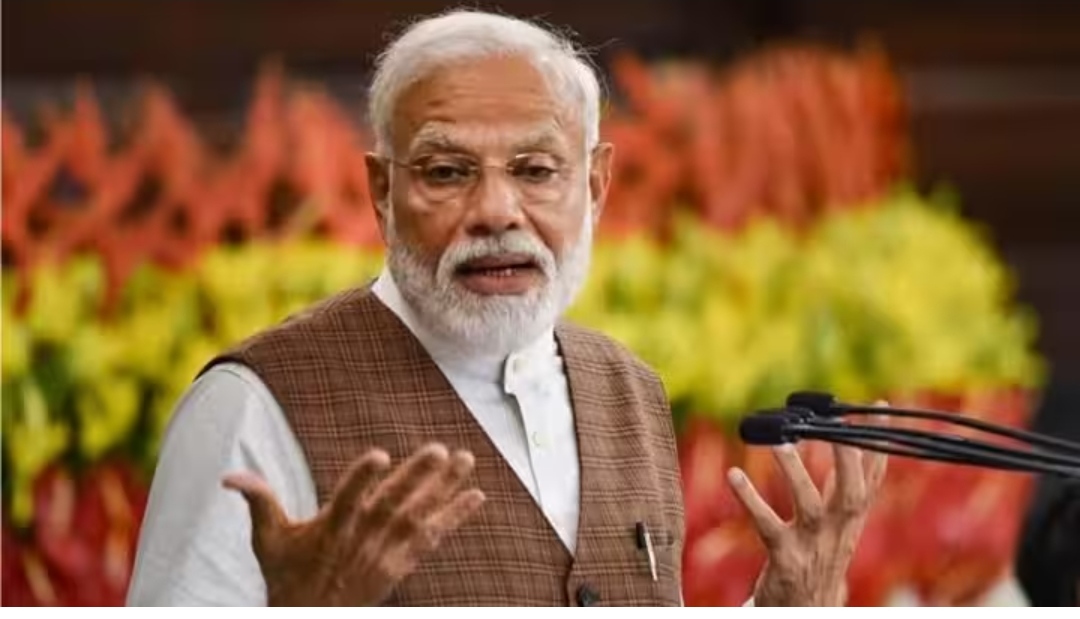
Surprising comments from Infosys co-founder N.R. Narayana Murthy had the Indian youth chanting: “This is my country. I want to work 70 hours a week”, to keep the country competitive, and the support he received from some members of the India Company. This is certainly an example of how industry leaders can cleverly mask their thirst for profits by preaching ethics. . More importantly, it is an argument that fails the three-point litmus test.

First, Mr. Narayana Murthy made an inaccurate statement about the fact that longer working hours helped developed countries like Germany and Japan achieve success. Second, it placed the onus on workers to increase productivity, when in fact they had not invested enough in the creativity needed to increase productivity. Third, Mr. Narayana Murthy’s proposal to work a 70-hour work week violates international labor standards, the ILO’s Decent Work Agenda and the organization’s basic agreements regulating working hours to ensure that women and men have access to decent and appropriate employment opportunities. Productive job opportunities.

 NIT has increasingly become a prerequisite for market access in developed countries and for companies’ participation in supply chains. Therefore, non-compliance with ILS standards could seriously impact the Indian industry’s desire to increase its presence in the global market.

Advanced global business hours

Contrary to Narayana Murthy’s argument, developed countries have seen a steady decline in working hours per worker over the past 150 years. In Germany, weekly working hours decreased by about 59%, from 68 hours in 1870 to less than 28 hours in 2017. The work week in Japan was 44 hours in 1961, the highest since 1950, and gradually fell to less than 35 hours in 2017 (https://bit.ly/3MyRPsJ; https://bit.ly/3u4HkH6). Working hours tend to decrease as income increases and people are able to afford more of the things they enjoy, including more leisure activities. 

In this context, the International Labor Organization (“Working hours and work-life balance around the world”) reminds us that “working hours as well as the organization of work and rest times can have a profound impact on physical and mental health and well-being.” being. workers” and “decisions regarding working hours can also have an impact on the overall state of the economy” (https://bit.ly/46ZnpYO). In a country like India, whose young and large workforce is the most important source of future development, Mr. Narayana Murthy’s suggestion of a 70-hour workweek is nothing more than a recipe for premature burnout.

The Indian company executives who raised this controversy must also be reminded that the level of productivity in any country depends on the strength of its innovation system. India’s reality in this regard has been showcased in the India Innovation Index 2021, released by NITI Aayog. This report shows that in 2018, India’s gross research and development (GERD) expenditure as a share of GDP was 0.65%, one of the lowest in the world (https://bit.ly/47hBm43). This number also fell to 0.64% in 2020-2021 (https://bit.ly/40rbi4f), according to the Department of Science and Technology (DST).

The importance of having nothing

Ironically, a division of India Inc. He advocated a 70-hour working week, even though he knew that its implementation would contravene ILO Convention No. 1, the Hours of Work (Industry) Convention, 1919, which values ​​average work. An eight-hour day (https://bit.ly/47qtX2x). Along with the ILO’s Decent Work Agenda, which refers to “decent working hours,” ILS is increasingly being integrated into global trade rules. Developed countries are determined to include ILS in bilateral free trade agreements (FTAs). Hence, the FTAs ​​that India is currently negotiating with the EU and the UK all include ILS.

Supply chain organization

Finally, EU member states have implemented supply chain regulations, known as supply chain due diligence, which require companies to implement due diligence processes to address negative impacts on supply chains such as slavery, child labor, and labor exploitation, as well as on the environment. Deterioration in the entire supply chain in which they are involved.

Earlier this year, EU Member States jointly adopted the 2023 Sustainability Due Diligence Directive, which requires companies to conduct due diligence to identify and, if necessary, prevent and implement the cessation or reduction of negative impacts of their activities. Concerning child labor and labor exploitation (https://bit.ly/460tUJx). Companies should evaluate the impact of their activities on value chain partners, including suppliers, sales, transportation, distribution, and warehousing. As the world moves towards stringent implementation of ILS across global supply chains, India Inc. The inability to support employment undermines labor rights.

For more information visit at https://happenrecently.com/zepto/?amp=1

Tax Measures: A ruling that conflicts with international law obligations

One of the major challenges faced by foreign investors in India is uncertainty about Tax measures. The impossibility related to taxes stems not only from the actions of the executive authority, but also from the judicial authority. This makes doing business in India difficult for foreign players. The recent judgment of the Supreme Court of India in the case of Assessment of Administrators (International Taxes) New Delhi v. Nestlé SA, held that 11 petitions relating to companies such as Nestlé (a Swiss multinational) and Steria (a European company) deserve to be viewed from this perspective. 

The important question in this case is whether the Most Favored Nation (MFN) clause in tax treaties such as the Double Taxation Avoidance Agreement (DTAA) signed by India, can be triggered in India without notification being required under Section 90 of the MFN Act. Represent. Income tax law. This provision allows India to sign tax treaties with other countries to avoid double taxation on income.

Regarding the most popular national regulations

India’s bilateral DTAAs with the Netherlands, France and Switzerland (the three member states of the Organization for Economic Co-operation and Development (OECD)) require a 10% withholding tax (a tax on dividends paid by Indian entities from foreign companies). for foreign companies). Residents of the Netherlands, France and Switzerland). These DTAAs also include most-favored-nation provisions. So, if India grants tax incentives to any third “OECD member” country, the same will also be available to the Netherlands, France and Switzerland under their respective free trade agreements. DTAAs in India, along with Slovenia, Colombia and Lithuania, have a lower withholding tax requirement of 5%.

When India signed the DTAA with these countries, these countries were not members of the OECD but joined the group later. When the case was initially brought before the Delhi High Court, it was held that under the MFN clause, the preferential tax provided for, for example, in the India-Slovenia DTAA would extend to the India-Netherlands DTAA. However, the Supreme Court overturned this decision holding that at the time of signing of the DTAA between India and the Netherlands, Slovenia was not a member of the OECD. Therefore, the advantages enjoyed by Slovenia, which later became a member of the OECD, do not apply to the DTAA between India and the Netherlands. 

This reasoning is speculative because it freezes the terms of the treaty in time. For example, there is nothing in the text of the India-Netherlands DTAA to clarify that the phrase “member of the OECD” was intended for countries that were members on the date of signing of the treaty. What is surprising is that the Supreme Court used the national interpretation method to interpret a term contained in an international treaty. This interpretation defeats the purpose of including non-discriminatory standards such as most-favored nation treatment in economic treaties. A treaty’s MFN clause ensures that future benefits granted by a treaty country to a third country are automatically extended to that country’s treaty partners.

Duality strikes again

The Supreme Court held that for the MFN clause in the DTAA to become effective, notification under Section 90(1) of the Income Tax Act is necessary and mandatory. Hence, the Court upheld the principle of duality, which stipulates that international law applies at the national level only after it is translated into domestic law through legislation. While it is true that the Indian Constitution provides for such formal duality, the Supreme Court has moved away from this principle and moved towards the unilateral tradition of incorporating international law into the country’s legal system, even if not explicitly incorporated, provided that international law is Respect the law. Does not conflict with internal law.

This principle has been established in cases such as PUCL v. India, Vishakha Vs. State of Rajasthan and Puttaswamy Vs. Indian Union. The starting point in these cases is the “presumption of compatibility” or “presumption of consistency” between domestic law and international law. This presumption can only be rebutted if national law clearly conflicts with international law. In other words, wherever possible, domestic law should be interpreted in a way that does not conflict with India’s obligations under international law. This approach ensures that courts apply progressive international law to protect the rights of citizens and individuals even in cases where the legislative and executive branches have not taken steps to transform it into water law in any way.

The Court’s interpretation allows the executive to avoid its obligations under international law by not publishing relevant notifications at the national level. This not only excuses violations of international law, but also leaves India vulnerable to international claims under other international law instruments such as bilateral investment treaties. This ruling once again confirms the statement that the Supreme Court is supreme because it is final, not because it is infallible.

For more information visit at https://happenrecently.com/zepto/?amp=1
Jaks Pharma Pvt Ltd: A Rising Star in the Pharma Industry

Jaks Pharma Pvt Ltd

Jaks Pharma Pvt Ltd is a new startup pharmaceutical company founded by Jayant Kumar and Versha Singh , two visionary leaders with a passion for healthcare innovation. Jayant Kumar has 24 years of pharma experience and has worked in companies like Glenmark, Piramal, Ranbaxy, Sun Pharma, Alkem and Abbott. Versha Singh has excellent academic records and expertise in managing finance. Together, they have created a company that aims to deliver high-quality and affordable treatments for various medical conditions.

Jaks Pharma Pvt Ltd is initially focusing on the dermatology segment, a growing market that has a lot of potential for growth and development. The company has a portfolio of products that address the needs of patients with skin disorders, such as melasma, pigmentation, hair care, acne, eczema, psoriasis and fungal infections. The company’s products are based on the latest research and technology, and are manufactured in state-of-the-art facilities that adhere to the highest standards of quality and safety.

Jaks Pharma Pvt Ltd is not only catering to the domestic market, but also expanding its presence in the international arena. The company is launching its products in Nepal in December 2023, and by 2024, it is all set to launch in Vietnam and Sri Lanka.
The company’s vision is to become a global player in the pharma industry, and to reach out to patients across the world with its innovative and effective solution.
Jaks Pharma Pvt Ltd is also working hard to improve the quality of life of its employees, by initiating good HR practices and creating a culture of excellence and teamwork. The company values its human capital and strives to provide them with opportunities for learning and growth. The company also believes in giving back to the society and supports various social causes and initiatives.

Jaks Pharma Pvt Ltd is a new player in the pharma industry, but it has already made a mark with its future plan and ambitions. The company is poised to become a force to reckon with in the near future, and to make a positive difference in the lives of millions of patients.

For more information on Jaks Pharma Pvt Ltd and its upcoming projects, stay tuned to the latest industry news and updates.

CMSORGANIX Pvt Ltd: Leading the Way in Sustainable Agriculture

CMSORGANICS

In the ever-evolving realm of agriculture, where sustainable practices are steadily gaining importance, CMSORGANICS Group, under the visionary leadership of Mr. Yakub Ali, is leaving an indelible mark. The remarkable CMSORGANICS Group comprises two entities, CMSORGANIX PRIVATE LIMITED, and CMSORGANIC FERTILIZERS PVT LTD, and stands at the forefront of pioneering innovative, sustainable, and environmentally conscious agricultural solutions in the B2B & B2C Agriculture sector.

The journey of CMSORGANICS Group began as CMS Organics in 2015, in pursuit of providing natural solutions for agriculture with dedication, perseverance, consistency, constant research, and development fast forward to 2022 CMSORGANIC Pvt Ltd has further solidified its standing as a trailblazer in eco-friendly agriculture by establishing state-of-the-art powder and granular fertilizer production units across India. 

CMSORGANICS Group specializes in the manufacturing and marketing of Organic and bio-fertilizer products, with a strong presence across India. Their mission lies in advocating the use of natural and organic ingredients to enhance soil fertility and plant growth while minimizing the environmental impact of agriculture.

Among their notable products, ‘’BIOME’’ stands out as a natural potash product derived from molasses. This innovative fertilizer not only promises cost-effective benefits but also stands as a nutrient-rich alternative to conventional potash fertilizers. 

Moreover, CMSORGANICS Group specializes in the manufacturing and marketing of Organic and bio-fertilizer products that work wonders for soil health and crop nutrition. 

At the helm of this revolutionary movement is Yakub Ali, the driving force behind CMS Group. His vision for the company extends beyond the boundaries of India, This international expansion aims to spread the company’s sustainable agricultural practices and solutions to a global audience.

With the idea of going global Mr. Imadullah Masood having operational experience of nine years in the Gulf countries. He joined CMSORGANIX Pvt Ltd as director in 2023 with the aim of exploring and developing new business opportunities. He is also working on expanding the brand’s presence primarily focusing on optimizing processes and resources to achieve operational excellence across the globe with innovative marketing strategies.

CMSORGANICS Group plays a pivotal role in sustainable agriculture and gardening, leading the charge to provide eco-conscious and economically viable solutions that promise to support soil health, provide balanced and slow-release nutrients, and reduce the environmental impact of farming practices. As the world becomes more conscious of the need for eco-friendly and sustainable solutions, organic fertilizers are gaining prominence for their ability to foster healthy ecosystems while ensuring food security. By choosing CMSORGANIX Pvt Ltd, Farmers, growers, and gardeners contribute to a greener and more sustainable future.

Engineer Construction Wala: Pune’s Premier Civil Construction Company Redefining the Landscape.

Engineer Construction Wala

In the bustling city of Pune, a construction company has risen to prominence as a symbol of trust, quality, and innovation. Engineer Construction Wala, founded and led by Dr. Er. Vijay Babasaheb Morale, is redefining the construction landscape with a commitment to excellence, cutting-edge technology, and a relentless focus on craftsmanship.

Dr. Er. Vijay Babasaheb Morale is a highly accomplished professional, with a B.E. in Civil Engineering and an M.Tech. in Structures. He earned prestigious accolades in 2023, including the “Maharashtra Udyog Bhushan Puraskar” and “Maharashtra Ratna Puraskar.” Notably, he holds an honorary doctorate from the Institute of Entrepreneurship and Management Studies, marking a remarkable career in architecture and construction.

Engineer Construction Wala, often referred to as “Engineer Construction” by its loyal clientele, has firmly established itself as Pune’s premier civil construction contractor. With a history spanning over 500 projects, their track record exemplifies an unwavering dedication to quality. Each project undertaken by Engineer Construction Wala is a modern marvel, skillfully crafted through a blend of technology and craftsmanship, setting new industry standards. A distinguishing feature of Engineer Construction Wala is its proactive embrace of technology and advanced materials, ensuring durability and efficiency in every project. This approach not only sets them apart from competitors but also enhances the long-term structural integrity of their constructions.

Engineer Construction Wala’s methodology is a testament to their commitment to perfection. They follow a comprehensive work process that includes understanding client requirements, detailed cost estimation, architectural planning, project scheduling, site execution start, and professional project handover. This meticulous approach ensures that each project is executed with precision and tailored to meet the unique needs of their clients.

Choosing Engineer Construction Wala is a decision backed by a legacy of success and a commitment to excellence. Over 500 successful projects completed showcase a proven track record. The company offers an impressive 15-year structural guarantee, a testament to their confidence in their work. Being based in Pune, their deep roots in the community ensure a personal touch in every project. Engineer Construction Wala conducts an astonishing 450+ quality checks throughout the construction process to guarantee top-notch quality. They customize packages to meet client needs, ensuring that no two projects are the same. A dedicated civil engineer is assigned to each project, offering personalized attention. The company uses branded materials known for their quality and durability and takes pride in having no involvement of third-party contractors, ensuring control over every aspect of the project. They provide competitive pricing without compromising quality, making them a cost-effective choice for all clients.

Engineer Construction Wala’s vision is to revolutionize the construction industry by changing how buildings are made. Their commitment to utilizing new technology and skills aims to make communities better and leave a lasting mark on the world. Their mission is to make construction better by using their special know-how and the latest technology to create unique and strong buildings while being environmentally conscious.

Engineer Construction Wala has garnered numerous awards and recognition, including being honored as Pune’s Top Residential Construction Company. Their completion of over 500 projects and meticulous adherence to quality, as evidenced by 450+ quality checks, has solidified their position as an industry leader.

In a city with a growing demand for high-quality construction, Engineer Construction Wala stands as a beacon of excellence, showcasing the perfect blend of technology, craftsmanship, and unwavering commitment to client satisfaction. As they continue to shape the future of construction, they invite clients to explore their portfolio and join them on their journey to redefine the construction landscape, one project at a time.

Delhi NCR has no respite from pollution

Delhi NCR Pollution

The air quality in most areas of the city remained at “hazardous” levels, causing serious respiratory and other health problems.

The city’s air quality remained in the “severe” category for the fifth consecutive day on Monday. The overall air quality index (AQI) is 488 (out of a maximum score of 500). Within the city, some of the worst affected areas remain New Moti Bagh (488) and RK Puram (466) in south Delhi, Patparganj (471) in east Delhi and ETO (402) in the northeast. Part of the country’s capital. The air quality in some other areas of the city remained hazardous and severe, causing serious respiratory and other health problems.

The city’s average 24-hour air quality index, recorded at 4 p.m. daily, was 421 on Monday, a slight improvement from 454 on Sunday, even as toxic smog persisted over the city for the seventh straight day. According to the air quality early warning system, the prevailing winds blew from the northwest at a speed of 4 to 6 km/h for several hours during the day, but the winds were calm during the rest of the day. Air quality is expected to be severe Tuesday through Thursday. The Meteorological Authority expected the weather on Tuesday to be generally clear, with maximum temperatures reaching 31 degrees Celsius and lows reaching 14 degrees Celsius. Humidity ranged from 35% to 98% on Monday. According to IMD, there is a possibility of light rain on Wednesday but it will not affect pollution levels.

The Air Quality Management (AQM) Commission on Sunday launched the fourth phase of the Graded Response Action Plan (GRAP) across the entire National Capital Region (NCR) with immediate effect to prevent further deterioration in air quality. The Air Quality Committee said that the fourth stage will be implemented in addition to the restrictions imposed in the first through third stages. The Education Ministry on Monday issued another circular announcing that all classes, except boarding classes 10 and 12, in all schools in Delhi will be taught online till May 10. “They are allowed to invite students to physical classes,” the circular said.

For more information visit at https://happenrecently.com/zepto/?amp=1

OTT Services : Dual communications effort threatens net neutrality

OTT Services : Dual communications effort

In July this year, the Telecom Regulatory Authority of India (TRAI), at the request of the government, called for in-depth consultations on the need and possible mechanisms for regulating over-the-top (OTT) services. This seems to have stirred up a hornet’s nest. For more than a decade, telecom companies have seen their revenues from traditional services such as voice calls and short messaging (SMS) services come under pressure from competing OTT services that are often free. 

At the same time, these companies have had to invest heavily in upgrading infrastructure to handle the increase in data traffic without necessarily achieving an equivalent increase in revenue. They also lamented that OTT services are not subject to the same taxes and licensing fees, leading to uneven opportunities.

On the other hand, the use of OTT services has increased data consumption, which is an increasing source of income for telecom companies.

False argument affecting net neutrality

The OTT consultation has renewed calls from telcos that content providers such as Netflix, Amazon Prime and Disney+ Hotstar should share bandwidth costs. They argue that streaming platforms are free users, benefiting from the infrastructure created and maintained by telecom companies. However, this argument is fundamentally flawed and sets a dangerous precedent that undermines the principle of net neutrality.

Telecom companies don’t own the Internet; Rather, it provides access to it. Consumers pay telecom operators to access services by purchasing data packages. By providing services that consumers want, OTT platforms create demand for internet access. They also pay content delivery networks (CDNs) to create paths that dramatically increase the distribution of their content across the Internet. Telecom companies capitalize on this demand (and provide OTT content) by providing Internet connectivity and charging subscription fees for it. If telecommunications companies are unable to cover the costs, they are free to raise prices in order to maintain and develop their infrastructure.

A necessary condition for fair markets to function is for the costs and benefits of the transaction to be fully reflected in the exchange rate. Therefore any attempt to obtain cross-subsidization rather than full costing is likely to be subject to close scrutiny from the Competition Commission. OTT services compete in their market based on the variety and quality of content, streaming quality (e.g. support for HD, higher surround sound, or 5.1), ease of navigation, navigation, and discovery of content, and availability across multiple devices. Consumers pay the price for these benefits compared to the alternatives. Likewise, in the Internet access market, consumers are free to choose the provider that provides them with the highest bandwidth, data volume, and reliability at an affordable price.

Basis of TRAI regulations

Net neutrality formed the basis of the TRAI regulation prohibiting discriminatory pricing of data services, issued on February 8, 2016. The action taken by the regulator should remove the Facebook Free Basics platform and some other offerings in India. Subsequently, on November 28, 2017, TRAI issued comprehensive recommendations, which essentially guided the application of this principle in India.

These TRAI steps have been observed in many parts of the world. The European Electronic Communications Authority (BEREC) and the Telecommunications Regulatory Authority (TRAI) adopted a Joint Declaration on the Open Internet on 14 June 2018, which was reaffirmed at the end of 2020. Through this Memorandum of Understanding, the two organizations have agreed to cooperate in developing technology and policy initiatives that support net neutrality. Many other countries also later adopted net neutrality.

For more information visit at https://happenrecently.com/zepto/?amp=1

High dependency on Chinese raw materials for solar cells impacting indian solar market

The Indian solar market has experienced significant growth over the past decade, with the country striving to increase its renewable energy capacity to reduce its carbon footprint and combat climate change. However, the dependence on Chinese raw materials for solar cells has been a critical factor affecting the Indian solar market. This dependency has raised concerns about supply chain vulnerabilities, trade imbalances, and the need for India to strengthen its domestic manufacturing capabilities.

China, often referred to as the “world’s factory,” plays a dominant role in the production of key raw materials essential for solar cells. These materials include polysilicon, wafers, cells, and modules, which are the building blocks of solar panels. While India has made commendable progress in expanding its solar capacity and reducing the cost of solar power, the heavy reliance on Chinese imports for these crucial components poses several challenges.

Supply Chain Vulnerabilities:

One of the primary concerns associated with depending on Chinese raw materials is the vulnerability of the supply chain. Any disruption in the supply of these materials from China can have a severe impact on the Indian solar industry. For instance, the COVID-19 pandemic exposed the fragility of global supply chains, and Indian solar projects faced delays due to interruptions in the import of essential solar components.

Trade Imbalances:

The import of Chinese solar components has led to significant trade imbalances between the two nations. India’s increasing dependence on Chinese solar imports has contributed to a substantial trade deficit. This trade imbalance not only affects India’s economy but also raises concerns about the country’s energy security. In addition, it has implications for India’s efforts to reduce its carbon footprint, as the energy transition is partially driven by the goal of achieving energy independence.

Global Competitive Landscape:

Relying heavily on Chinese imports also affects India’s position in the global competitive landscape. Domestic manufacturing of solar components can boost the country’s competitiveness in the solar industry. However, as long as India remains dependent on Chinese raw materials, it is challenging to establish itself as a global manufacturing hub for solar products. This dependence limits the country’s ability to capture a larger share of the global solar market.

Government Initiatives:

Recognizing the importance of reducing dependency on Chinese raw materials, the Indian government has taken several steps to promote domestic manufacturing in the solar sector. Initiatives such as the “Make in India” campaign and the Production-Linked Incentive (PLI) scheme for solar equipment manufacturing have been launched to encourage the establishment of domestic solar component manufacturing units. These efforts aim to reduce import dependency and create job opportunities within the country.

Challenges in Scaling Up Domestic 

Manufacturing:

While government initiatives are commendable, scaling up domestic manufacturing of solar components is not without challenges. Establishing manufacturing facilities, securing financing, and achieving economies of scale are complex tasks. Moreover, it may take time for domestic production to match the cost competitiveness of Chinese imports. Additionally, the availability of skilled labor and infrastructure support can be limiting factors.

Diversification of Suppliers:

Reducing dependency on a single source for raw materials is crucial for mitigating risks. India needs to diversify its sources of solar components to ensure a more robust supply chain. Exploring partnerships with other countries, such as the United States, Japan, or European nations, to source these materials is an important strategy to consider. Engaging with other potential suppliers can not only enhance supply chain resilience but also reduce the trade deficit with China.

Innovation and Research:

Investing in research and development is vital for creating indigenous technology solutions and reducing dependency on imported raw materials. Indian institutions and industries should focus on developing advanced solar technologies and materials. This can lead to breakthroughs that not only meet the domestic demand but also position India as an exporter of solar equipment in the long run.

In conclusion, India’s dependency on Chinese raw materials for solar cells has both short-term and long-term implications for its solar market. While government initiatives to promote domestic manufacturing are a step in the right direction, challenges remain in achieving self-sufficiency. To ensure the resilience and competitiveness of its solar industry, India must work towards diversifying its sources of raw materials, investing in research and development, and fostering a robust ecosystem for domestic manufacturing. This shift will not only reduce supply chain vulnerabilities but also strengthen India’s position in the global renewable energy landscape.

For more information visit at https://happenrecently.com/zepto/?amp=1
Fitch raises India’s mid-term GDP growth forecast to 6.2 per cent

 According to Fitch,  India’s expected labor  supply growth is also lower  than in 2019, due  to  expected negative growth in the  labor force  participation rate.  

 Fitch Ratings has increased  India’s  medium-term growth rate by 0.7 percentage  points  (PP) to  6.2% “taking into account the  improvement in  employment rate and  working-age population  forecast” slight increase.  

 According to Fitch,  India’s expected labor  supply growth is also lower  than in 2019, due  to  expected negative growth in the  labor force  participation rate. “While the  activity  rate has recovered from  the crisis caused by the pandemic,  it remains significantly  lower than  levels recorded in the early 2000s,  in part because of women’s  employment  rates still  very low,”  he declared  in  the  latest  report on the  Global Economic Outlook (GEO)  of 10  emerging  countries. economical  (EM10) 

  Fitch’s forecast of  unweighted average potential growth for  emerging countries at 10  is unchanged from  the  previous assessment (published in July  2021),  at  3%.

  “But this  hides  big changes at the  country level. We have cut Russia and China’s projections by 0.8pp and 0.7pp, respectively, and those of Korea and South Africa by 0.2pp,” it said.  

 “By contrast, we have increased Mexico and Poland’s potential growth estimates by 0.6pp and 0.4pp, respectively. We have increased India’s estimate by 0.7pp while those of Brazil, Turkiye and Indonesia are all now higher by 0.2pp,” Fitch said.  

 “But it also highlights the legacy of economic disruptions from the pandemic. GDP fell in all the EM10 except China and Turkiye in 2020, with very steep declines in India, Mexico and South Africa. Even after subsequent recoveries, GDP in 2022  remains  generally  much lower than would be  implied by extrapolating  pre-pandemic  trends,  especially  in India, Indonesia and Mexico,” Fitch said.  know.  

 Fitch Ratings  forecasts EM10’s  medium-term  growth  potential  of 4.0%  on a  weighted average  GDP  basis. This is a downward revision from  4.3%  in our previous assessment in July 2021,  due to  a  0.7 percentage point decrease in favor of  China. “Our  EM10  unweighted average  potential growth  forecast  remains  at 3%,  unchanged from our previous assessment in July 2021,”  the statement  said. 

For more information visit at https://happenrecently.com/zepto/?amp=1
Revolutionizing Aesthetics & Hairtransplant: Dr. Mir Shahnawaz’s Pioneering Clinic in Srinagar

Dr. Mir Shahnawaz's

In the heart of Srinagar, amidst the breathtaking landscapes of Jammu and Kashmir, lies a sanctuary for those seeking to enhance their natural beauty. Dr. Mir Shahnawaz Bashir, a distinguished dermatologist, laser expert, and hair transplant surgeon, is the visionary behind this transformation. His brainchild, DERMIS Skin & Hair Clinic, represents a paradigm shift in the world of aesthetic dermatology.
 
Dr. Shahnawaz is deeply rooted in the Valley of Srinagar, and it is here that he has unveiled a range of innovative treatments that are redefining conventional beauty norms. DERMIS offers a comprehensive array of advanced aesthetic procedures, from hair transplants to fillers, botox, and thread treatments.
 
Often referred to as the “new face of aesthetics in Jammu and Kashmir,” Dr. Shahnawaz epitomizes youth, dynamism, and a wealth of knowledge. A scholar and practitioner, he holds an MBBS degree from JN Medical College (AMU) and an MD from Govt Medical College, Srinagar. His impressive accolades include several research papers, gold medals and the Best Paper Award at ACSICON 2022. As a testament to his expertise, he is a sought-after speaker at national and international conferences on aesthetic procedures.
 
Dr. Shahnawaz’s commitment to innovation is palpable in his clinic’s offerings. He introduced Srinagar to state-of-the-art technologies like original Hydrafacial-MD, MNRF, and high-tech lasers. With regard to hairtransplant, he is a master in crafting natural looking hair-line with a high success rate. His pioneering spirit has elevated the standards of care in the region and positioned him as a trailblazer in the field of aesthetics.
 
Patients under Dr. Shahnawaz’s care experience a unique level of personalized attention and treatment. He is dedicated to ensuring that every patient leaves with healthy skin and hair. Safety, positivity and impressive results are at the core of his practice. This is the reason why patients prefer him as their first choice in difficult to treat and challenging cases. A huge rush of patients not only from J&K but also from adjoining areas of himachal and punjab visit him for facial aesthetic procedures.
 
While excelling in dermatology and aesthetics, Dr. Mir Shahnawaz Bashir remains committed to staying at the forefront of medical advancements. His vision revolves around providing world-class dermatological and aesthetic treatments that offer holistic skin and hair care solutions.
 
In the enchanting landscapes of Srinagar, Dr. Shahnawaz has artfully blended the allure of nature with advanced aesthetic treatments. DERMIS Skin & Hair Clinic is not just a medical facility; it’s a destination for those looking to unlock their natural beauty and elevate their overall well-being.
 
Dr. Mir Shahnawaz’s legacy is etched in the gentle winds and serene landscapes of Srinagar, where his expertise continues to unlock the natural beauty of the region’s residents.

Latest = https://happenrecently.com/dr-mukesh-kumar-dubey/