Wednesday, September 2, 2026
Home Blog Page 247

Indian  Railways One Station One Product  program aims  to  promote  local  artisans; operates  at  more than 1,000  stations 

 Launched on May 20 last year after a successful 15-day pilot project, the  project  has  been popular with  local artisans and workers.  The  Indian Railways ‘One  Station One  Product’ initiative,  which  aims to provide people with specially  designed  stores  to sell  local  products, is  currently  operational at 1,037 stations  across the country.  

The  project,  designed by the National Institute of  Design  Ahmedabad,  offers  distinctive  stores  that give high visibility to  local  products, benefiting local  artisans.  A senior railway official noted that the  project  is gaining  momentum  and  other  stations are expected to have these  stores  soon. 

  “One  Station One  Product” program  – Tamil Nadu  takes the lead  

 Launched on May 20 last year after a successful 15-day pilot project, the  project  has  been popular with  local artisans and workers. As of November 9 this year, 1,134  stores were operating  at 1,037 stations across 27 states. Tamil Nadu leads with 146  stores in  137 stations, followed by West Bengal with a similar number  in  123  stations  and Uttar Pradesh in third place with 112  stores in  105 stations.  Till  November 9, 39,847 direct beneficiaries  had  availed  of the  opportunities  offered by  this scheme. Considering five indirect beneficiaries for each  allocation,  the total  number of  beneficiaries  is 143,232.  The  program  recorded  a  total  revenue  of Rs 49.58 crore.  The  OSOP  program  aims to  improve  livelihoods.

 The OSOP scheme, announced in the Union Budget 2022-23, aims to  improve  livelihoods through skill development  of  local artisans,  weavers  and craftsmen.  Sales points  are  planned  at stations nationwide,  allocated  through a  bidding  process.  

 Indian Railways  expands project  

 The policy  focuses on disseminating  the  benefits  of the program  to  target groups and  creating  opportunities  for  all applicants. To achieve this,  Indian Railways has adopted various public  awareness measures  including  newspaper advertisements,  social media, public announcements, press  announcements  and personal visits to artisans. 

 The products  sold at these  stores  are indigenous to the respective  regions  and include  objects, crafts,  textiles,  weaving machines,  toys, leather products,  equipment/tools  traditional  clothing,  gems and  jewelry, as well as  locally  produced  or grown  semi-finished and semi-finished products.  processed  food products.  

For more information visit at https://happenrecently.com/zepto/?amp=1

During his visit to the United States, Goyal said that Tesla will double its imports to India.

Commerce and Industry Minister Piyush Goyal visited Tesla main electric car factory in the US and said the world’s largest electric car maker will double its imports from India.

The visit comes in the context of India’s plan to grant Tesla preferential tariffs to establish a factory in the country. “Visited @Tesla’s cutting-edge manufacturing facility in Fremont, California. “I am extremely pleased to see India’s talented engineers and financial experts taking up leadership positions and contributing to Tesla’s incredible mobility transformation journey,” the minister posted on X (Twitter), a platform The social network is also owned by Tesla founder Elon Musk.

The minister said that the demand for electric vehicles will increase and imports from India will facilitate the growth of this industry. The government previously said it was not considering offering a separate incentive for Tesla, and that the company could adopt measures under the existing production-linked incentive (PLI) regime for cars and advanced battery chemistry. Elon Musk met Prime Minister Narendra Modi in June in New York and said he planned to visit India in 2024.

In August 2021, Musk said that Tesla could establish a manufacturing unit in India if it successfully imports its cars into the country. India imposes a 100% import tax on CBU cars imported with a CIF (Cost, Insurance and Freight) value of more than US$40,000 and 70% on cars priced below this amount.

Four-day tour of America

Mr. Goyal is in the United States on a four-day visit beginning November 13, to attend the third meeting of the Indo-Pacific Economic Framework (IPEF) and its commitments to Asia-Pacific Economic Cooperation.

He met with US Trade Representative Katherine Tai to discuss strengthening trade relations. Exports to the United States fell to $38.28 billion in the April-September 2023 period, from $41.49 billion a year earlier. Imports also decreased to $21.39 billion in the first six months of the current fiscal year from $25.79 billion in the same period of the last fiscal year. Mr. Goyal also met with his Korean and Singaporean counterparts.

For more information visit at https://happenrecently.com/zepto/?amp=1

How do electric batteries work and what are their types?

As a portable power source, batteries are a cornerstone of convenience in today’s industrialized societies. The two types of batteries commonly mentioned today are lithium-ion (Li-ion) batteries and the batteries used in electric vehicles.

Electric batteries have increased the prevalence of motors and the lack of wires in our lives. Electric batteries retain the electrical energy they capture and release it by converting other forms of energy. As a source of portable electrical power, batteries are a cornerstone of convenience in today’s industrialized societies. Innovations that improve the efficiency of electrical energy management will determine what this convenience and sustainability will mean in the future.

What led to the invention of the electric battery?

All chemical reactions basically revolve around the rearrangement of electrons in bonds between atoms. The connection between this fact and the electrochemical cells that were the forerunner of the modern battery was clearly demonstrated in an experiment conducted by Luigi Galvani in 1780. Galvani touched two different metal plates and then touched them at the same time with a frog’s leg. He noticed his leg twitching but couldn’t pinpoint the cause.

The next major innovation of the pre-industrial era on this front was the electrical edifice built by Alessandro Volta in 1800. This cell consists of alternating plates of copper and zinc, separated by sheets of paper soaked in salt water. Volta found that this configuration could produce a constant current over a period of time, but, like Galvani, he could not explain why.

British chemist John Daniel improved on Volta’s design: he filled a copper vessel with copper sulfate and placed it inside a pottery vessel containing a zinc electrode contained within sulfuric acid. This more complex setup can produce current for longer periods of time. Then, in the early 1800s, Michael Faraday understood why these cells worked the way they did, and named their various components (anode, cathode, electrolyte, etc.).

What is an electric battery?

A voltaic or galvanic cell uses redox reactions to generate an electric current. The cells consist of two half cells. Each half-cell consists of a metal electrode immersed in an electrolyte of that metal, for example a zinc electrode in zinc sulfate and a copper electrode in copper sulfate. The two metal electrodes are connected by a wire, and the two electrodes are connected by a salt bridge (a material that conducts ions while remaining electrically neutral).

In a zinc half cell, zinc ions (Zn2+) in the electrode dissolve in zinc sulfate, freeing two electrons in the electrode. In the copper half-cell, the opposite happens: copper ions (Cu2+) from copper sulphate deposit on the electrode, which now requires two electrons. Therefore, the wire connecting the electrodes will transfer two electrons from the zinc to the copper electrode. Likewise, the salt bridge connecting the electrolytes allows Zn2+ and sulfate (SO42-) ions to meet and exchange electrons. Since the wire connecting the zinc to the copper electrodes carries electrons, an external circuit connected to it can attract the flow of electrons for various applications.

Batteries are collections of these cells.

What are the types of batteries?

The two types of batteries commonly mentioned today are lithium-ion (Li-ion) batteries and batteries used in electric vehicles (EV). The Li-ion battery won the 2019 Nobel Prize in Chemistry for the developers of its basic principles, a testament to the revolutionary impact it has had in the 20th and 21st centuries. This battery is a galvanic and electrolytic cell. A voltaic cell converts chemical energy into electrical energy. An electrolytic cell converts electrical energy into chemical energy. Therefore, a battery capable of doing both can be recharged.

Hydrogen fuel cells are also attracting great interest today. At the anode, the catalyst splits the hydrogen into protons and electrons. Electrons flow through the external circuit and protons flow through the electrolyte – both towards the cathode. At the cathode, molecules react with oxygen in the air to produce heat and water. A cell like this will operate as long as hydrogen is supplied, and is expected to become an important part of the hydrogen economy.

In January 2023, the Indian government approved the Rs 19,744-crore National Green Hydrogen Mission, which aims to make India a “global hub” for green hydrogen utilization and export.

For more information visit at https://happenrecently.com/zepto/?amp=1

A quarter of the infrastructure projects reached Rs 5 lakh crore. Cost overruns in September

The latest report from the Ministry of Statistics and Development said that about 417 infrastructure projects, each with investments of 150 billion yen or more, had cost overruns of more than 4.77 billion yen in January.

The ministry, which oversees infrastructure projects worth Rs 150 lakh crore or more, said that of the 1,763 projects, a quarter (417) were reported to be overrun in costs and half (842) were late. “The total initial implementation cost of the 1,763 projects is Rs 24,86,402.70 crore and their expected completion cost is likely to be Rs 29,64,345.13 crore,” the report said, and the cost is nearly 20% more than the original cost.

For 298 projects, neither the year of operation nor the temporary testing period were specified, and the average completion time for these projects was more than three years.

Reasons for the delay, according to implementing agencies, include delays in land acquisition, environmental clearance, lack of infrastructure support and linkages; Delays in financing the project, and finalizing detailed engineering and scope changes. The report added that project implementing agencies did not report revised cost estimates or operating schedules for many projects, indicating that time and cost overruns had been assessed.

For more information visit at https://happenrecently.com/zepto/?amp=1
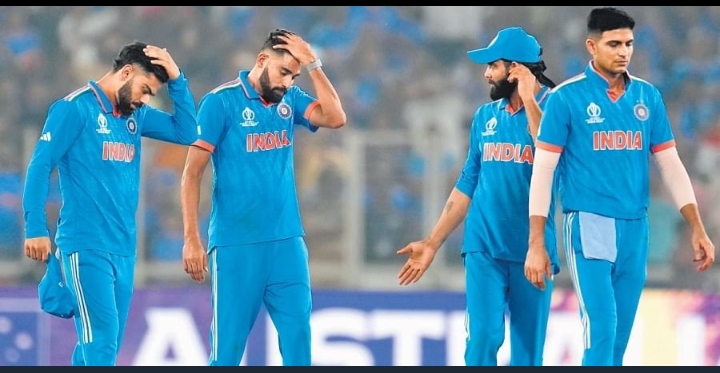
The ball goes off – Shreyas Iyer’s enemy is no more

It may seem strange to briefly mention Shreyas and mention the same sentence, but the first quote took him to his maiden World Cup century.

While the latter proved to be his most effective shot in the match against the Netherlands.

Shreyas Iyer scored his maiden World Cup century, off 84 balls, against Netherlands at the M Chinnaswamy Stadium in Bengaluru on Sunday. This hundred, his fourth in this format, came on the back of 82 against Sri Lanka and 77 against South Africa.

Shreyas reached base with a single on a short ball, and his most effective shot of the evening was a pull shot. It seems strange to mention Shreyas briefly and repeat the same sentence in an article praising his roles.

After all, Shreyas’ short-ball problem is well-documented. The problem seems to be that he has no defensive options to counter, so he opts for an unconvincing shot or awkward jump to defend rather than just getting out of line.

However, the story is different in the ODI World Cup. Trusted by captain Rohit Sharma and coach Rahul Dravid to be India’s No. 4, Shreyas is the team’s designated middle-order attacker, whose job it is to take risks against the bowlers specifically. “When you say it’s a problem for me, what do you mean?” Shreyas asked in the post-match press conference after the win over Sri Lanka secured India’s place in the semi-finals. “See how many shots I scored, especially the ones that lasted up to four shots?

However, Shreyas did not have the best of starts in this tournament as he was dismissed for a duck in the opening match of the campaign against Australia in Chennai.

In fact, he fouled out a short ball against New Zealand and England. But since then, the Mumbai right-back’s form has improved, partly due to his “temperament”, as Dravid pointed out before the match against the Netherlands. Shreyas has worked closely with Dravid since 2015, when Dravid served as an advisor to the Delhi Daredevils (now Delhi Capitals). The company later expanded into the India A organization. “Everyone will have areas they need to work on and improve. No perfect batsman can say I know everything or I am very good at everything,” Dravid said. “There will always be areas for improvement. But in the end, you should be judged on the results you achieve. How many points do you score and when do you score them? “I think with Shreyas, that’s one of the things that stands out,” he added.

Since he came to fight the Dutch, Shreyas has had his fair share of long deliveries. But that wasn’t a problem for him in what was a fairly easy match. The challenge for the opposition is that once Shreyas is appointed, they have to wait for the decision to remove him. If it’s not a short ball, the best way to get him out is when he gets out and misses, or when he scores over a hundred and is looking to do more damage. Unfortunately for the Netherlands, none of the above happened.

Brutal response

Leaders use slower, predictable balls after a certain point and are brutalized. When he gets to his feet, Shreyas waves or walks around him and hits him. He may not be the best short-ball player, but you won’t find Shreyas lacking the will to try harder.

This quality is rare in a brilliant player like him. “The last few rounds have given me a lot of confidence,” Shreyas said after the win over the Netherlands. “The game wasn’t easy at first, so I knew I had to make the most of a good start.” Shreyas recently claimed that since he has played most of his cricket matches on high-bouncy pitches in Mumbai, he is confident of his ability to handle the increase in players.

“Coming from Mumbai, especially Wankhede, the bounce is quite uniform and bounces more than any other surface. I have played most of my matches here so I know how to deal with it. It’s just that when I play a few rounds I have to get out, sometimes it works out, sometimes it doesn’t.

“Most of the time this doesn’t suit me; “Maybe that’s why you think it’s a problem for me, but in my mind I know there’s no problem,” Shreyas said. There is evidence that Shreyas acted the way he did in his shorts. It is true that most of the speedy Dutch goalkeepers were not the best players Shreyas faced, but there were signs that he made a conscious effort to get to the line and showed enough patience before deploying a string of shots.

On Sunday, when he returned to the dressing room, unbeaten on 128 off 94 balls, Shreyas knew he had rewarded his faith with another display of strength. But tougher tests await them in the first semi-final against New Zealand in Mumbai on Wednesday.

For more information visit at https://happenrecently.com/zepto/?amp=1
Street vendor  turned  snack  tycoon:  Kedarnath Aggarwal  of Bikanervala  passes away 

  Bikanervala Chairman  Kedarnath Aggarwal,  once a street vendor,  passed  away 

 Lala Kedarnath Aggarwal, who  used to sell  bhujia and rasgullas in buckets on the streets of old Delhi before  founding the  sweets and snacks brand Bikanervala, passed away on Monday. 

  The  fall  of Aggarwal,  affectionately  known as Kakaji,  “marks  the end of an era that  enriched  palaces  and touched countless lives,” Bikanervala said in a statement. The company operates more than 60  stores  in India and has  a  presence in countries such as the  United States,  New Zealand, Singapore, Nepal and the  United Arab Emirates.  

  Group CEO Shyam Sunder Aggarwal said: “Kakaji’s demise  is not  only  a loss  for Bikanervala but also  a  gap  in the culinary landscape. His vision and leadership will forever guide our culinary  journey.”  Kedarnath Aggarwal started his entrepreneurial journey in Delhi. 

  Originally  from Bikaner, his family owned a sweet shop  on  the  streets  of the city since 1905. The shop was  called  Bikaner Namkeen Bhandar and  sold  a  number  of sweets and snacks. 

  Aggarwal, who had  greater  ambitions, migrated to Delhi in the early  1950s  with his brother Satyanarayan Aggarwal, bringing his  family’s recipes  to the city. 

  Initially,  the two  struggled  to carry crates full of  bhujia and  rasgulla to sell on  the streets of old Delhi. However, the Aggarwal brothers’ hard work and  Bikaner’s  unique  aesthetic  taste  were  soon  recognized  and  accepted by  the people of Delhi. 

  The  Aggarwal brothers  then opened  a shop  at Chandini Chowk  in  Delhi,  where they used  family recipes  passed  down from generation to generation. 

  Bikaner Namkeen Bhandar  quickly  became famous for its Moong Dal Halwa, Bikaneri Bhujia and Kaju Katli,  among  others. The  brothers and the  store quickly  became  famous  as Bikanervala. 

  “When  we  say goodbye  to a legend, we  pass on  his legacy with a  profound  sense of responsibility. Bikanervala will continue to  reflect its values:  where every dish tells a story and every customer is part of our extended  family,”  said Radhey Mohan Aggarwal,  Group  Director of Bikanervala  and eldest son of  Kakaji said. 

For more information visit at https://happenrecently.com/zepto/?amp=1 
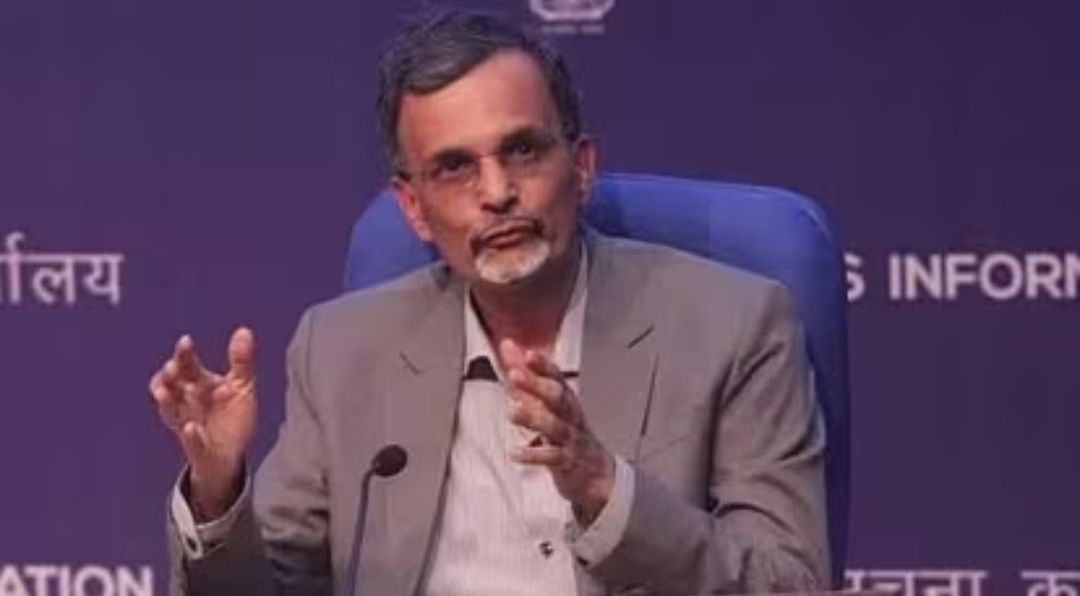
Production  growth  increased  in  the second quarter in  10  main areas; Upward momentum  likely to  continue:  FICCI 

  According to the survey, more than 79%  of  respondents shared  higher  production  levels  in  Q2FY24  and  average capacity  utilization  was higher at  74%  in Q2  compared to 73%  in  the  previous  quarter. last quarter. 

 According to  the  latest “Quarterly Survey of Indian Manufacturing” released, manufacturing  growth accelerated in July-September  across  ten  key  sectors and is  expected  to continue  in  the coming quarters. in the  financial year 2023-24  (FY24),  despite  a  slowdown in developed  countries.  by the Federation of Indian Chambers of Commerce  and  Industry (FICCI) on Monday. 

  According to the survey, more than 79%  of  respondents shared  higher  production  levels  in  Q2FY24  and  average capacity  utilization  was higher at  74%  in Q2  compared to 73%  in  the  previous  quarter. last quarter. However, ‘need’ was cited  as the  main limiting  and  constraining  factor, with over  40% of  respondents highlighting this as  an important  constraint. 

  “The  current  average capacity  utilization  in  the  manufacturing  sector  is around  74%, reflecting  sustained economic activity in the sector. This is slightly higher than  the 73%  capacity  utilization rate  reported  in  previous quarters.  Future  investment  prospects  also improved  compared to the previous quarter as  more than 57% of  respondents  said they planned to invest  and  expand  in the  next  six months. This is also a slight improvement  compared to  the previous survey,” the survey added. 

  Demand  has  proven  to be  a  major  obstacle  and limiting factor  in realizing  the true potential of the manufacturing sector in India. “Whether  domestic or export demand, this  is  still  a major limiting  factor.”  Some other constraints,  although  not  major,  are high raw material prices, increased  financing costs, logistics  and other supply chain  disruptions, he said, which  are some of the major constraints  affecting  the plan. “expand the number  of  respondents”.  

 The survey  was  conducted  in 10 sectors: automobiles  and auto components; capital goods and construction equipment; cement; chemicals,  fertilizers  and pharmaceuticals; electronics and  equipment;  machine tools;  metals  and metal products; textiles,  clothing  and technical textiles; paper; and miscellaneous  – comprising  over 380 manufacturing units  of large,  small and medium enterprises with a  total  annual turnover of over Rs 4.88 lakh crore.

  80%  of  Q2FY24  respondents  had  higher  orders, while  85%  of  respondents had  higher  or  similar  inventory  levels  in Q2.  Regarding  exports,  more than 48%  respondents  said  exports in  the second quarter were higher  compared  to 33%  in  the first quarter of fiscal 2024. 

 “However,  there is a need to  further  improve  export demand  to meet  the  country’s growth aspirations.” , he added. Regarding hiring prospects, 38%  of  respondents  plan to hire more workers  in the next three months. Electronics and  home appliances;  cement;  Automobiles  and machine tools  outperformed, while  sectors  such as  capital goods and construction machinery, chemicals, textiles, metals, paper and  others showed  moderate growth.

 For more  information visit at https://happenrecently.com/zepto/?amp=1
Teenage Maverick Amallaj KPClinches Youngest UNESCO-ICCNEntrepreneur of the Year Award2023

Maverick Amallaj

Kozhikode: In a groundbreaking moment, 19-year-old visionary Amallaj KP, the mastermind behind the global sensation Ellazia, has been crowned the “Youngest Entrepreneur of the Year 2023” by UNESCO-ICCN on the auspicious date of 11-11-2023 at The Ravi’s Kadavu. The award, presented by Julio Raman Blasco Nacher (ICCN General Secretary) in the presence of dignitaries Shri. Adv. P.S. Sreedharan Pillai (Honourable Governor of Goa), Shri. Shashi Tharoor (Honourable Member of Parliament), Shri. MK Raghavan(Honourable Member of Parliament), Rajendran Vellapalath (CEO-TP Connects Software Solutions Pvt. Ltd), and Dr. Abdul Salam Mohammed (CEO, Markaz Knowledge City), cements Amallaj’s status as a fashion maverick reshaping the industry landscape.

Amallaj’s entrepreneurial saga kicked off at an unprecedented age of 15 when most peers were navigating the intricacies of adolescence. While we were grappling with quadratic equations, Amallaj was orchestrating a fashion revolution, rolling up his sleeves to build the door to triumph himself.

At 16, Ellazia was born—not just a clothing brand, but a movement. It transcended fashion, becoming a beacon for affordable, high-quality style for everyday individuals. Amallaj, armed with determination and a talent for transforming setbacks into runway comebacks, faced challenges like a true fashion warrior.

Now, at 19, Amallaj runs a hot show. Ellazia’s showroom is not just a shopping haven; it’s a sanctuary of affordable fashion, with creations strutting their stuff across four countries—a global coup led by a teenager with a sewing machine and a dream.

Amallaj isn’t just the MD of Ellazia; he’s a disruptor, a trendsetter, a fashion maverick who declared that being ordinary was so last season. The UNESCO-ICCN award underscores his exceptional contributions and impact on the fashion industry.

The Inter-City Intangible Cultural Cooperation Network ICCN- UNESCO, the prestigious platform behind the award, recognizes outstanding contributions globally, fostering innovation and excellence.

Amallaj KP’s story is not just about success; it’s about a teenager who refused to color inside the lines, turning the fashion industry upside down and shaking out all the loose change for the rest of us.

Raise a toast to Amallaj KP, the teenage titan rewriting the rules of the fashion game!

MSME DOST – A Swadeshi Solution for Business Growth

MSME DOST

In an age where ‘Made in India’ is the buzzword, MSME DOST, a SHUDH SWADESHI initiative, has emerged as a powerful bridge between tradition and technology, all while serving the community responsibly.

What is MSME DOST?

MSME DOST is a Business Networking Forum that operates simultaneously in physical and digital formats. It’s an initiative by Bhartiya, designed to cater to the needs of the BHARAT economy. This budget-friendly platform focuses on enhancing your business network and net worth. Its core offerings include a monthly evening meeting and two digital connections, which facilitate bonding and understanding among members. MSME DOST goes beyond networking; it provides coaching, mentoring, promotion, and socializing opportunities, making it a comprehensive package for overall growth.

Objectives and Values:

The primary objective of MSME DOST is to promote self-reliance and ‘Made in India.’ It bridges the gap between traditional values and modern technology, embracing both as integral components of success. The platform emphasizes responsible service to the community, making it more than just a business network.

Advantages of MSME DOST:

  • Affordability: MSME DOST is budget-friendly, ensuring that businesses of all sizes can benefit from its offerings.
  • Networking and Bonding: With monthly meetings and digital connections, members have ample opportunities to connect and build lasting relationships.
  • Comprehensive Growth: Beyond networking, MSME DOST offers coaching, mentoring, promotion, and socialization, creating a well-rounded environment for business growth.

Expanding Beyond Kolkata:

While currently based in Kolkata, MSME DOST has ambitious plans to extend its reach to Delhi, Chennai, Rourkela, Ranchi, Patna, and Nagpur in the next few months. This expansion will bring the benefits of MSME DOST to more entrepreneurs and small businesses across India, contributing to the nation’s self-reliant journey.

In a nutshell, MSME DOST is a unique blend of tradition and technology, serving as a beacon for the ‘Made in India’ movement. It provides a responsible, cost-effective, and holistic approach to business networking, making it an invaluable resource for those seeking growth in the BHARAT economy.

Website = https://msmedost.com/

Facebook = https://www.facebook.com/msmedost

Uttarakhand tunnel collapse: Trapped workers contacted; Providing food and water

Uttarakhand tunnel collapse

Part of the tunnel collapsed on Sunday morning, trapping about 40 workers inside. The tunnel is part of the Char Dham all-weather road project.

Uttarakhand: Rescuers working through the night to rescue around 40 workers trapped after the collapse of an under-construction tunnel on the Brahmanical-Yamunotri national highway here called them and offered them food and water, officials said on Monday. The Silkiara Police Control Room said the workers were safe and had asked for food to be sent to them, adding that they were contacted via walkie-talkie. The statement said that the food parcels were transported using a compressor. Dredging and debris excavation work is currently underway inside the under-construction tunnel between Silkiara and Dandalgaon to prepare escape routes for the trapped workers, according to the District Emergency Operations Centre. Part of the tunnel collapsed on Sunday morning, trapping about 40 workers inside. The tunnel is part of the Char Dham all-weather road project.

According to the District Emergency Operations Centre, the workers were from Bihar, Jharkhand, Uttar Pradesh, West Bengal, Odisha, Uttarakhand and Himachal Pradesh. About 160 personnel from agencies like National Disaster Response Force (NDRF), State Disaster Response Force (SDRF), Indo-Tibetan Border Police (ITBP) and Road Frontier Organization (BRO) are trying to rescue the stranded workers. On Sunday, authorities appeared optimistic about the safety of the trapped workers because the water pipeline was supplying them with sufficient oxygen. Prime Minister Narendra Modi on Sunday spoke to Chief Minister Pushkar Singh Dhami to inquire about the ongoing rescue efforts.

For more information visit at https://happenrecently.com/zepto/?amp=1