Friday, June 5, 2026
Home Blog Page 236

A two-wheeled Tesla?  Ola Electric feels the  pressure  of success 

  Babish Agarwal’s  Ola Electric, which he likens to  the  Tesla  of  the West,  has grown sales of electric scooters  from zero to 338,000  units  in about two  years and aims to list on the stock market.  

 Bhavish  Agarwal, India’s  answer to Elon Musk, is  hell-bent on bringing  millions of electric scooters  to market  and  leading the country  to a cleaner future.  But some  of his mechanics  can’t  keep  up.  

  Mr. Agarwal’s  Ola Electric, which he likens to  the  Tesla  of  the West, is  seeking to go public  after  selling electric scooters  from zero to 338,000  units  in about two years. The  technology  entrepreneur  promises  to banish  internal combustion  engines  (ICE) from India, where  two-wheelers dominate  the roads. 

  “We are ending  the ICE  era,”  the 38-year-old told Reuters ahead of the launch of  the  new Ola  electric scooter, which starts  at about  $1,000,  on  August  15,  India’s  Independence  Day. Ta.  He said the company, already valued at $5.4 billion, would quadruple its annual production capacity  of electric scooters  to 2 million  units  by  the beginning of the  year. 

  But there are some holes in Ola’s  rapid  journey. 

 Parts of the company’s nationwide network of over 400 service hubs which maintain and repair its EVs are showing signs of strain after the surge in sales, according to Reuters visits to 35 centres in 10 states between July and October, plus interviews with 36 Ola service staff and 40 customers. 

  Staff at more than half of those centres, mainly sites in the big metropolitan areas of Mumbai, Chennai and Bengaluru, said they had significant backlogs, with demand outstripping their workforce or their supply of spare parts, and repair waiting times ranging from three days to two weeks.  At an Ola workshop in Thane, among the biggest of the 14 centres in the Mumbai region, more than 100 e-scooters awaiting repairs were visible outside in a clearing, many parked in a muddy clearing gathering dust and littered with bird droppings. 

  Bhavish Aggarwal’s Ola Electric, which he likens to Tesla in the West, is zipping towards a stock-market listing after going from zero to 338,000 e-scooter sales in about two years.  

 Bhavish Aggarwal’s Ola Electric, which he likens to Tesla in the West, is zipping towards a stock-market listing after going from zero to 338,000 e-scooter sales in about two years. (Photo  from  Ola Electric website) 

 Bhavish  Agarwal, India’s  answer to Elon Musk, is  hell-bent on bringing  millions of electric scooters  to market  and  leading the country  to a cleaner future.  But some  of his mechanics  can’t  keep  up. 

  Mr. Agarwal’s  Ola Electric, which he likens to  the  Tesla  of  the West, is  aiming to go public  after  increasing sales of electric scooters  from zero to 338,000  in about two years. The  technology  entrepreneur  promises  to banish  internal combustion  engines  (ICE) from India, where  two-wheelers dominate  the roads.  

  “We are ending  the ICE  era,”  the 38-year-old told Reuters ahead of the  August  launch of  Ola’s  new  electric scooters, which start  at about  $1,000. 15th, India’s  Independence  Day.  He said the company, already valued at $5.4 billion, would quadruple its annual production capacity  of electric scooters  to 2 million  units  by  the beginning of the  year. 

  But there are some holes in Ola’s rapid journey.  

  Ola’s  nationwide network of  more than  400 service  centers service  and repair  electric vehicles,  according to Reuters visits to 35  centers  in 10 states  and  interviews with 36 Ola service  employees between July  and  October. Some areas are showing signs of congestion due to large-scale power outages. Sales skyrocketed and the number of customers reached 40.  

  Aggarwal, Ola’s  founder and  CEO, promised in January  that customers would be able to  drop off  their vehicles  at the  hub and receive same-day service in most cases.  In  an  August interview, he said customers  are “voting  with their wallets every  month”  by  purchasing Ola’s electric vehicles. However,  he acknowledged  that  service capacity  was an issue  and said Ola was  “aggressively” expanding  its service network by adding 100 new  centers  and hiring more technicians. 

  “We have the  most  products on the  market…and  we  need to expand  our service network,” he said. An Ola  spokeswoman  said the Reuters  report did not  accurately capture the  scope  and quality of the  company’s  robust and growing  services business.  

 Ravi Bhatia of  automotive consultancy  JATO Dynamics said a good service network  is essential  in India, the  world’s largest  two-wheeler market.  He added that technology-packed electric vehicles  are new to  Indians as they are  more sensitive to  shocks  and  shocks  than many  traditional  scooters and  motorcycles. The driving environment in  India can  certainly be challenging, with  hundreds of millions of people  using two-wheelers  to navigate  often congested and  potholed roads.  Ola  “needs to  build  its service  infrastructure  accordingly, otherwise  it  will  get hurt by word of mouth,”  Bhatia said. 

  “Tesla  for the West, Ola for the  rest.” 

 Agarwal has often declared, “Tesla is for the West, Ola is for the rest,”  and  he is  a man in a hurry.

 He  said  all new scooters and  motorcycles  sold in India could be electric by the end of 2025,  meaning that by 2030,  70% of new two-wheeler sales  would be electric. This significantly exceeds the government’s target. 

For more information visit at https://happenrecently.com/zepto/?amp=1

Global goods trade  recovery  driven by  electric vehicle sales (WHO)  

  India’s merchandise  exports  also recorded a slight increase  in  October, rising 6.2%,  only the second  increase  in the  current  financial year. 

  Global goods  trade is  recovering thanks to  sales  of automobiles  and electronic  components,  the World Trade  Organization (WHO)  said in its quarterly Goods Trade Barometer report released on Monday. 

  The apex trade body said  the current  barometer index  of 100.7  is  higher than  the previous reading of 99.1  in August  last  year.  

 Barometer values  ​​above  100 are associated with above-trend  trading volume,  while barometer values  ​​below  100  indicate commodity trading  has  fallen below trend or will  fall below trend  in the  future  near  the. 

 “The strength of the  auto  and electronic components indices  can  be explained by  growing  global demand for electric vehicles, while the weak  performance of commodities can  be partly  attributed to This is  due to  the  weakening  real estate market while  interest rates remain  high.”  India is the  fastest growing market for  electric  vehicles.  

The Economic Survey 2022-23  indicates  that  India’s  domestic electric vehicle market will  witness  a  compound annual growth rate (CAGR)  of 49% from  2022  to  2030, with  sales of  10 million  units annually  by 2030.  The  WTO  has  predicted that  third quarter  trade statistics  will be released. rose  slightly  thanks to accelerating GDP growth in the  US  and China, even as  the  European  Union’s economic slowdown  continued to weigh on global demand. 

  Global  merchandise trade  volumes remained stable  in the second quarter of 2023, up  0.2% quarter-on-quarter  but still down  0.5%  year-on-year. 

  The  indicators that make up the barometer  are mixed, with some rising  significantly  above trend and others remaining  above  or below trend. The  largest increases  were  recorded  in the  automobile  production and  sales  index  (110.0) and electronic components trade (109.8). The  WTO said indexes  for air freight (100.3), export orders  (99.4)  and container shipping (98.0)  ended in line with trend  or slightly  lower,  while the  index  raw materials  (95.6)  fell  below  trend.  

  India’s merchandise  exports  also recorded a slight increase  in  October, rising 6.2%,  only the second  increase  in the  current  financial year. 

  Exports  fell  due to weak demand in Western economies as  high interest  rates  weighed on  consumption.  

 For more  information,  visit at https://happenrecently.com/zepto/?amp=1

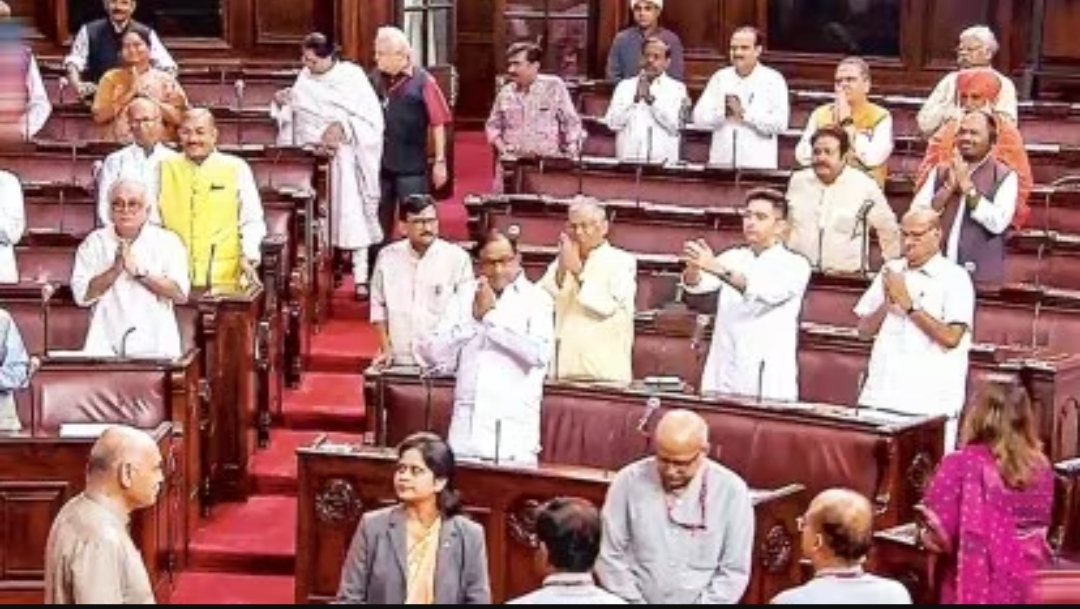
OP’s order: MLAs should not carry mobile phones in rallies.

There are no banners or posters in the house as the winter session begins on Tuesday.

The Uttar Pradesh legislature begins its four-day winter session on Tuesday with a new set of rules banning lawmakers from carrying mobile phones, banners and placards in Parliament. On the other hand, the Congress Party and the BSP will be seen in small offices that will be redistributed to the offices on the Vidhan Bhawan grounds, reflecting their current influence in the country’s most politically critical state. During the winter session, which ends on December 1, MLAs and MLCs will no longer be allowed to bring mobile phones into the country, the state parliamentary secretariat said.

 In addition, it will be forbidden to enter the House of Representatives, carry flags and banners during the sessions. About ten days ago, Parliament Speaker Satish Mahana announced the start of the winter session. He said that new rules will be introduced in Parliament during the session, which prohibits MPs from bringing mobile phones into Parliament.

The ban was part of the Standing Orders and Standing Orders passed by the 2023 UP Legislative Assembly during the monsoon session in August. However, MLAs across parties asked the Speaker to relax the rules on mobile phones. Samajwadi Party whip Manoj Kumar Pandey said public representatives should be able to connect with the people of their constituencies even during lengthy proceedings in Parliament. He called on the Speaker to relax this rule or give MPs a personal secretary who can enter the House to deliver important messages. Congress leader Aradhana Mishra ‘Mona’ also asked the Speaker to relax the rules, while BSP MLA Uma Shankar Singh said the Speaker can ask MPs to switch off their mobile phones or go on silent mode in the House.

Members of the ruling party like Rajeshwar Singh and Yogesh Shukla agreed with the opposition. The purpose of the new rules is to increase discipline in the home. The SP MLA was caught live-streaming the parliamentary proceedings on Facebook Live, drawing the ire of Speaker Satish Mahan, who asked him to leave the House immediately. The UP Assembly will also provide badges displaying the names of all the MLAs. Meanwhile, both the Congress Party and the Bangko Sentral ng Pilipinas have been assigned smaller offices inside the Vidhan Bhawan premises. Currently, the Congress has only two MLAs and one from the BSP. But the official attributed it to the ongoing renovation work in the Vidhan Bhawan premises.

For more information visit at https://happenrecently.com/zepto/?amp=1

Uttarakhand tunnel rescue: Manual drilling underway, 5-6 meters remaining.

Uttarakhand tunnel rescue

Chris Cooper said of the ongoing drilling: “It went well last night. We’ve gone 50 meters. There are still about 5-6 meters left. We didn’t hit anything last night. “

As the Silkyara tunnel rescue operation approaches its 17th day, manual drilling is underway to rescue trapped workers. Microtunneling expert Chris Cooper said on Tuesday morning that 3 meters of hand boring had been completed so far, for a total of about 50 meters completed. According to official sources, a total of around 57 meters of drilling has to be done from the entrance of the tunnel to bring the pipes into the tunnel and reach the trapped workers.

 “Last night went well,” Chris Cooper said of the ongoing drilling. We have crossed 50 meters. There are still about 5-6 meters left. We didn’t hit anything last night. Looks very positive. “

Earlier, the rescuers had completed an approximately 47-meter-long borehole for the laying of pipelines with an auger.

Drilling was halted when the auger became stuck in waste, which was later cut and removed using a plasma cutter.

Miners have been digging mouse holes by hand since Monday evening. Meanwhile, National Highways and Infrastructure Development Company Limited (NHIDCL) Managing Director Mahmud Ahmed announced on Monday that 36 meters of vertical drilling from the top of the hill has been completed. On Monday, Uttarakhand Cabinet Secretary Neeraj Khairwal said it was not possible to adopt a blanket schedule for drilling activities. “After we removed the parts of the rail that had hit the tunnel, we removed it. 1.9 meter cutting, of which the first 220 mm is pushed in and out.

 There were concerns that this might not be taken forward, but now we are not going to pursue alternative approaches. Then move another 500 mm. Rat miners run this part,” the official said.

A delegation led by Principal Secretary to the Prime Minister Pramod Kumar Mishra also took stock of the ongoing efforts earlier on Monday. Union Home Minister Ajay Kumar Bhalla and Uttarakhand Chief Secretaries SS Sandhu and PK Mishra inspected the tunnel work.

For more information visit at https://happenrecently.com/zepto/?amp=1

A New Era in Dental Care: Simpladent’s Immediate Loading Implants Redefine Efficiency and SuccessGet Your Dental Implants in 48 Hours

Simpladent's

In a groundbreaking leap towards dental excellence, Simpladent, the leading India-based dental implant clinic, is proud to announce its revolutionary corticobasal immediate loading dental implant technology, spearheaded by the renowned Dr. Vivek Gaur. This avant-garde approach ensures the replacement of missing teeth and the restoration of a radiant smile in just 48 hours, setting a new standard in dental implantology.
The Simpladent Advantage: Transforming Smiles, Transforming Lives

  1. Swift and Efficient Treatment:
    Simpladent’s state-of-the-art corticobasal immediate loading dental implant technology enables patients to regain their smiles in a mere 48 hours. This groundbreaking approach eliminates the need for prolonged treatment durations associated with traditional implant procedures, providing a swift and efficient solution for individuals seeking quick and effective dental restoration.
  2. Universal Applicability:
    Simpladent’s approach is not limited by age, making it a versatile solution for patients of all age groups. Whether you are a young adult or a senior, our advanced implant technology ensures successful outcomes across various age demographics, addressing the diverse needs of our patients.
  3. Addressing Atrophy Cases:
    Patients experiencing bone atrophy often face challenges in conventional implant procedures. Simpladent’s corticobasal immediate loading technology is designed to overcome these hurdles, offering a reliable solution for individuals with atrophy cases. Our cutting-edge approach ensures stability and durability, even in challenging anatomical conditions.
  4. No Bone Cases:
    For individuals with insufficient bone volume, traditional implants may pose limitations. Simpladent’s innovative technique eliminates the constraints associated with low bone density, providing a viable solution for patients with minimal bone structure. This breakthrough ensures that more individuals can benefit from dental implants without the need for extensive bone grafting procedures.
  5. Controlled Diabetes Cases:
    Diabetes can complicate dental implant procedures due to impaired healing and increased infection risks. Simpladent’s corticobasal immediate loading technology is designed to accommodate patients with controlled diabetes, offering a safe and effective solution for those with metabolic challenges. Our approach prioritizes patient well-being and adapts to diverse medical conditions.
  6. Redemption for Failed Implant Cases:
    Individuals who have experienced failed dental implant procedures elsewhere need not lose hope. Simpladent’s advanced technology specializes in handling cases of implant failure, providing a second chance for those disappointed by previous outcomes. Our experienced team, led by Dr. Vivek Gaur, utilizes cutting-edge techniques to rectify and replace failed implants, ensuring a successful and lasting result.
    Simpladent implant is successful in complicated cases and work for all ages, so if you are 24 or 94 years, Simpladent is the right answer and first choice for all those whose understand implants
    Dr. Vivek Gaur – Pioneering Excellence in Implantology
    At the helm of Simpladent is Dr. Vivek Gaur, a globally renowned implantologist and oral and maxillofacial surgeon. With a wealth of experience and a commitment to innovation, Dr. Gaur has played a pivotal role in developing and implementing the corticobasal immediate loading dental implant technology. His expertise, coupled with a passion for transforming smiles, has positioned Simpladent as a leader in the field of dental implantology.
    Patient-Centric Approach: Beyond Technology, a Commitment to Care
    Beyond the cutting-edge technology, Simpladent takes pride in its patient-centric approach. The clinic’s commitment to personalized care ensures that each patient receives individualized attention, comprehensive assessments, and a treatment plan tailored to their unique needs. The skilled team at Simpladent is dedicated to providing not only exceptional dental care but also a supportive and comforting environment for patients on their journey to a restored smile.
    Join the Smile Revolution – Your Journey to a Radiant Smile Begins at Simpladent
    Simpladent invites individuals seeking a swift, reliable, and innovative solution to missing teeth to experience the transformational power of corticobasal immediate loading dental implants. Embrace the future of dental restoration and regain your confidence in just 48 hours.
    About Simpladent
    Simpladent is a leading dental implant clinic based in India, dedicated to providing cutting-edge solutions for missing teeth. Led by Dr. Vivek Gaur, a renowned implantologist and oral and maxillofacial surgeon, Simpladent is committed to transforming smiles through innovative and efficient dental implant procedures. Book your appointment now, visit Website: www.simpladentclinics.com

The Advantages of Using AirOK Air Purifiers

AirOK

In recent years, the importance of healthy indoor air quality has gained widespread recognition. As a result, the demand for air purifiers has skyrocketed, with consumers eager to invest in products that can safeguard their health and well-being. Among the numerous offerings in the market, AirOK air purifiers have emerged as a popular choice, offering a range of advantages that set them apart from the competition.

Efficient Filtration Technology

One of the key advantages of AirOK air purifiers lies in their use of cutting-edge filtration technology. These devices are equipped with advanced filters that can effectively capture a wide range of airborne contaminants, including dust, pollen, pet dander, mold spores, and even volatile organic compounds (VOCs). The multi-layered filtration system ensures that both large particles and microscopic pollutants are trapped, thereby significantly improving the overall air quality within the indoor environment.

Furthermore, many AirOK air purifiers feature HEPA (High Efficiency Particulate Air) filters, which are designed to remove up to 99.97% of particles as small as 0.3 microns. This level of filtration is particularly beneficial for individuals suffering from allergies, asthma, or other respiratory conditions, as it helps to minimize exposure to common airborne triggers.

Additionally, certain AirOK models incorporate activated carbon filters, which excel at adsorbing various odors and harmful gases, providing a comprehensive solution for addressing indoor air pollution.

Customization and Versatility

AirOK air purifiers are designed to accommodate diverse indoor settings, from residential homes to commercial offices. These products are available in a range of sizes and capacities, allowing consumers to select the most suitable model based on the dimensions of their living or working space. Whether it’s a compact unit for a small bedroom or a powerful unit for a large open-plan office, AirOK offers a versatile range of air purifiers to meet varying needs.

Moreover, some AirOK models are equipped with smart sensors that can detect changes in air quality in real time. This feature enables the purifiers to automatically adjust their operation based on the level of pollution present, ensuring optimal performance while minimizing energy consumption. By providing this level of customization and intelligent control, AirOK air purifiers offer a user-friendly experience that prioritizes both efficiency and convenience.

Whisper-Quiet Operation

In contrast to many traditional air purifiers that produce disruptive noise levels, AirOK devices are engineered to operate with minimal sound. This is achieved through the integration of advanced noise reduction technologies, resulting in whisper-quiet performance that is conducive to a peaceful and undisturbed indoor environment.

The low sound output of AirOK air purifiers makes them an ideal choice for bedrooms, nurseries, and other areas where tranquility is paramount. Users can enjoy the benefits of purified air without the distraction of excessive noise, enhancing their overall comfort and satisfaction with the product.

Energy Efficiency

AirOK is committed to sustainability and energy efficiency, a commitment that is reflected in the design of its air purifiers. These devices are engineered to deliver high-performance air purification while consuming minimal energy, making them cost-effective to operate in the long term.

By utilizing energy-efficient components and intelligent control systems, AirOK air purifiers are able to maintain optimal air quality without placing undue strain on electricity consumption. This not only reduces the environmental impact of the products but also translates into lower utility bills for the users, offering both ecological and financial advantages.

Elegance and Aesthetics

In addition to their functional benefits, AirOK air purifiers are designed to complement modern interior spaces with their sleek and stylish aesthetic. These devices are crafted with a focus on aesthetics, featuring clean lines, premium materials, and contemporary finishes that enhance the visual appeal of any room.

The elegant design of AirOK air purifiers allows them to seamlessly integrate into various settings, whether it’s a home, an office, a healthcare facility, or a hospitality environment. The thoughtfully curated appearance of these purifiers ensures that they not only serve a practical purpose but also contribute to the overall ambiance and design of the space, making them a seamless addition to any interior decor scheme.

Health and Well-being

Ultimately, the most significant advantage of using AirOK air purifiers is the positive impact they have on health and well-being. By effectively removing airborne pollutants and allergens, these devices contribute to a cleaner, healthier indoor environment, reducing the risk of respiratory issues, allergies, and other health concerns associated with poor air quality.

Clean air is essential for promoting a sense of well-being and comfort, and AirOK air purifiers play a crucial role in achieving this goal. Whether it’s supporting better sleep, enhancing productivity in the workplace, or providing a sanctuary for individuals with respiratory sensitivities, the health benefits of purified air cannot be overstated.

Conclusion

In conclusion, AirOK air purifiers offer a range of advantages that make them an appealing choice for consumers seeking to improve their indoor air quality. From advanced filtration technology to customizable operation, whisper-quiet performance, energy efficiency, and elegant design, these devices are positioned to meet the diverse needs of modern lifestyles.

As the demand for clean air solutions continues to grow, AirOK has established itself as a leading provider of air purifiers that prioritize both functionality and style. With a focus on enhancing health, comfort, and overall quality of life, AirOK air purifiers represent a valuable investment for those seeking a reliable and effective solution for breathing cleaner, purer air within their indoor spaces.

Instagram = https://instagram.com/airok_airpurifiers?igshid=MTNiYzNiMzkwZA==

Website = https://Airoktech.com

Rajesh Babu K Sooranad – A Maestro’s Journey from HR to the Heart of Cinema

Rajesh Babu K Sooranad

Rajesh Babu K Sooranad, a multifaceted artist, has seamlessly transitioned from a successful career in Human Resource Management to becoming a notable figure in the Malayalam film industry. Born in Sooranad village, Kollam district, Kerala, Rajesh’s musical journey began under the tutelage of Shri Sooranad Gangadharan, and his passion for music flourished during his academic years.

After earning a Master’s in Human Resource Management from Nagpur University, Rajesh spent fifteen years as an HR professional in diverse industries, including retail, hospitality, IT, manufacturing, and services. In 2015, he ventured into Malayalam cinema, making his mark as a screenwriter with the film “Take It Easy,” drawing inspiration from his personal and professional life.

Rajesh’s journey as a music director and producer gained momentum with films like “Perfume-Her Fragrance,” “Binary,” and “Zha.” His innovative approach to music composition, using HR management practices, has garnered attention and accolades. Notably, his film “Pullu,” produced by First Clap, won awards at international film festivals.

The cinematic landscape further embraced Rajesh with the release of “Binary” in 2023, receiving critical acclaim and solidifying his position in the industry. However, his comments on the lead actors’ absence from promotional activities stirred controversy.

Beyond his role as a musician and producer, Rajesh is actively involved in nurturing new talents, having provided opportunities to over 50 debutant artists and technicians in his recent films. His commitment to bringing together various talents reflects his entrepreneurial spirit.

Currently working on projects like “Meenakshi” and “Blood Moon,” Rajesh Babu continues to shape the future of Malayalam cinema. His unique journey from the corridors of HR to the heart of cinema exemplifies purposeful determination and a visionary perspective on filmmaking.

Ajit Pawar is yet to participate in seat-sharing talks in the Lok Sabha elections

Maharashtra Deputy Chief Minister and Nationalist Congress Party (NCP) leader Ajit Pawar on Saturday said that so far there has been no discussion in the ruling alliance on allotment of seats for the upcoming assembly and parliamentary elections.

He said the tripartite Mahayut comprises the Bharatiya Janata Party (BJP), Chief Minister Eknath Shinde’s Shiv Sena and a faction of Mr Ajit Pawar’s National Communist Party (NCP). The government is stable as all 200 MLAs are united and the state is doing well under the government. . Mr. Shinde management.

Pawar has denied allegations that he feigned suffering from a “political disease” and made some complaints to Union Home Minister Amit Shah following the recent 15-day dengue outbreak. “I have been suffering from dengue fever for 15 days. But some people claim that I am suffering from a ‘political disease’, which I am not,” he said. He claimed that the issue of allotment of seats for assembly elections has not yet been discussed and “some states are holding assembly elections. 

Therefore, no negotiations have taken place so far. “Amid the drought-like situation prevailing in this state, Mr. Pawar drew attention to water management and mentioned an upcoming meeting with the Chief Minister, Deputy Chief Minister and Collector to address the issue.

request for disqualification

Meanwhile, rival NCP factions have filed replies to Assembly Speaker Rahul Narvekar on mutual disqualification petitions. In July, Mr Pawar and eight other NCP MPs joined Mr Shinde’s Shiv Sena-BJP government, splitting the party. Pawar was appointed deputy chief minister, while eight MPs, including Chagan Bhujbal and Dilip Walsh-Patil, a confidant of rival faction leader Sharad Pawar, were made ministers.

For more information visit at https://happenrecently.com/zepto/?amp=1

It’s still bad, no justice: Dalit boy attacked in Uttar Pradesh, forced to drink urine and shave his eyebrows.

The victim’s father said the Sujanganj police initially refused to register an FIR.

On November 23, 2023, communalists allegedly attacked a Dalit teenager, forced him to drink urine and shaved his eyebrows in a village near Sujanganj police station in Uttar Pradesh on November 23, 2023. The police conducted a medical examination of the victim and registered an FIR in November.

Friday 24 November. The assailants, believed to be two people, filed a counter-complaint with the police, accusing the boy of sexually abusing the girl at their home.

A report quoting IANS quoted the victim’s father as saying in a police complaint that his son was returning home from Ami area when someone grabbed him and beat him. The complaint also said they forced him to eat dirt and urine and shaved his eyebrows. The defendants allowed him to take his son home after they called him on the spot and warned him not to report the incident to the police. The victim’s father also claimed that he had contacted the Sujanj police on Thursday evening, but his complaint was not registered and he had to meet the Jaunpur SP later.

Recently, a case was reported from Gujarat where a tribal woman living in Viala town of Tapi district was allegedly abducted, beaten, shaved and left half-naked by the roadside by her beloved family. On November 14, 2023, two Dalit youths were tortured and beaten by a gang in Vellore, Tamil Nadu, where one of the victims drove off in his car while they stopped briefly at a railway gate. 

It may also be recalled that in a gruesome incident of casteism in Vengevayar, Tamil Nadu, human excrement was found in the only elevated tank that provided drinking water to a Dalit-dominated village. So far, apart from rhetoric, the state government has failed to deliver justice to Dalit victims. Moreover, none of them are isolated cases. Many cases go unreported due to intimidation or fear of reporting to the police

Systemic dehumanization and casteism emerge whenever the media reports on horrific incidents. Otherwise, the social evils embedded in the system are dormant. The victim will be forced to run from pillar to post. Where should they go to seek justice? Only the authorities can answer.

For more information visit at https://happenrecently.com/zepto/?amp=1

India gains as Big Pharma looks beyond China to ‘de-risk ’  force chains 

Drugmakers are reducing their reliance on Chinese contractors and turning to manufacturers in India for clinical trials and early- stage manufacturing, as pressures with China and  enterprises over  force chain exposure increase. 

   Drugmakers are seeking to limit their reliance on Chinese contractors who produce  medicines used in clinical trials and early- stage manufacturing, a move that’s  serving rivals in India, according to interviews with 10 assiduity  directors and experts.

   China has for nearly 20 times been the  favored  position for a range of pharmaceutical  exploration and manufacturing services due to the low cost and speed offered by contract drugmakers there. 

  That relationship largely held firm despite aU.S.- China trade war under the Trump administration and  force chain annihilation endured by other  diligence during the COVID- 19 epidemic. But  adding  pressures with China have  urged more Western governments to recommend that companies”de-risk”  force chains from exposure to the Asian superpower.   That’s leading some biotech companies to consider using manufacturers in India to produce active pharmaceutical  component( API) for clinical trials or other outsourced work.  ” moment you are  presumably not  transferring an RFP( request for offer) to a Chinese company,” said Tommy Erdei, globalco-head of healthcare investment banking at Jefferies.” It’s like,’ I do not want to know, it does not count if they can do it for cheaper, I am not going to start putting my product into China’. 

” Dr Ashish Nimgaonkar, the author of Glyscend rectifiers, aU.S.- grounded biotech  establishment testing treatments for type 2 diabetes and  rotundity in early trials, agreed.” All of the factors over the  once several times have made China a less  seductive option for us,” he said.  

 Nimgaonkar told Reuters that when Glyscend issues an RFP  latterly in the development stage of the  drugs it has in trials, Indian contract development and manufacturing organisations( CDMOs) would be preferred over Chinese bones.

 Four of India’s largest CDMOs- Syngene, Aragen Life lores, Piramal Pharma results, and Sai Life lores- told Reuters they’ve this time seen increased interest and requests from Western pharma companies, including major chains.

   Sai declined to  note on profit growth but said deals have grown 25- 30 in recent times. The other companies said they reported strong profit growth in the most recent quarter. 

  Top  directors at the  enterprises said some  guests want to add India as a alternate source, in addition to China, for manufacturing. Others are seeking to leave China and indeed making requests to  appear  force chains in India.   The full benefit for these Indian manufacturers won’t be immediate, said Peter DeYoung, CEO of Piramal Pharma results.

   It’ll take time for treatments in early development to make it to the  request, when contracts would come more economic for outsourcing  enterprises like his, he said.   Chinese CDMOs are established makers of birth  medicines, which bear a advanced threshold of nonsupervisory  blessing than conventional  drugs, said Helen Chen, Greater China Managing Partner atL.E.K. Consulting in Shanghai. 

  Hiring a new  establishment for complex work  similar as birth manufacturing can take three to five times, she added.” It’s really not  commodity that( companies) just pick up and move like shoes.”   

STRONG GROWTH  

 India is seeking a bigger base in the pharma services sector to boost deals and character for its$ 42 billion  medicinals assiduity. 

  But  enterprises over lax oversight persist. Nimgaonkar said Indian CDMOs need to do  further to  insure their character on quality  norms matches Western and Chinese bones.

  In February, theU.S. Food and Drug Administration( FDA) advised against using an eye drop made in India linked to the outbreak of a  medicine- resistant bacteria in the United States that caused one death. 

  India- grounded  exploration  establishment Mordor Intelligence estimates  profit from India’s CDMO assiduity at$15.6 billion this time compared to$27.1 billion in China. But it estimates earnings from India’s assiduity will grow, on average, at  further than 11 annually over the coming five times, compared to about9.6 for China.   

The Indian CDMOs told Reuters that their  installations are routinely audited by the FDA. An FDA  prophet declined to  note.   Piramal Pharma has this time  entered requests from  guests for” backward integration to India”, which means that indeed the most  introductory raw accoutrements  are sourced from the country  rather of China, said DeYoung. Piramal buys about 15 of its raw accoutrements  from China but is trying to reduce that.   

Sai Life lores said it  nearly doubled manufacturing capacity since 2019 and is adding another 25 in the coming time or so to meet demand.   Ramesh Subramanian,  principal  marketable officer of Aragen, a  intimately-  possessed Indian  establishment that has grown from 2,500 to 4,500  workers in the  once five times, said  profit growth of 21 last time was  incompletely driven by new contracts with Western biotech  enterprises. Aragen counts seven of the 10 biggest pharma companies as  guests, he said, declining to name them.  

 The shift is particularly apparent in  medicine discovery work for conventional  medicinals.  ” New biotechs are deciding to put eggs in both the Indian and China baskets from the  launch,” Subramanian said. 

For more information visit https://happenrecently.com/zepto/?amp=1