
Wednesday, September 2, 2026
Home Blog Page 232

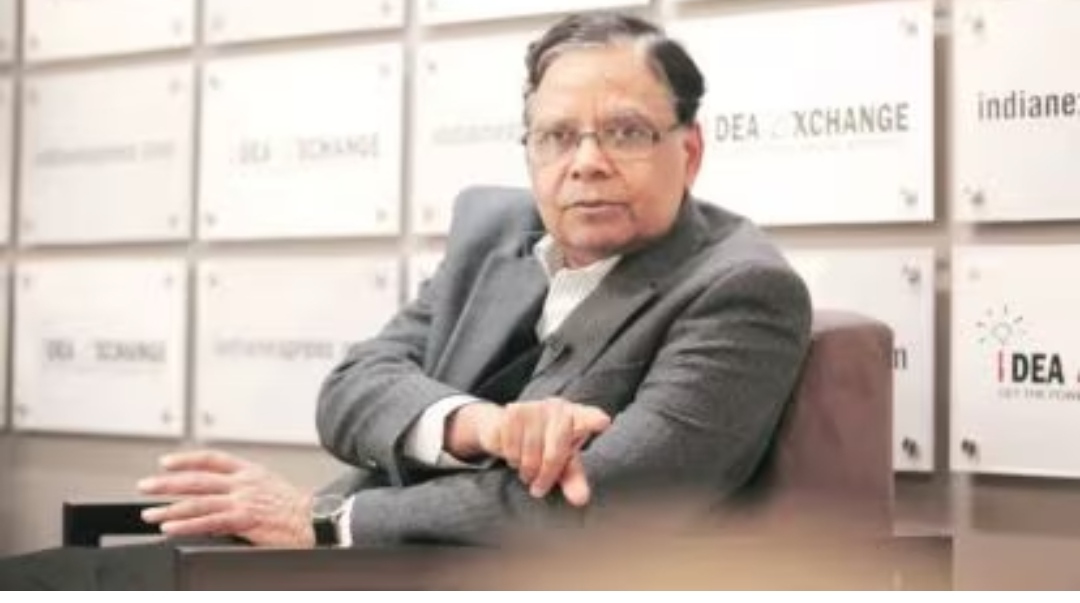
Country of 1.4 billion people can’t rely on service sector alone, need all growth engines to fire for jobs, says Harvard’s Ricardo Hausmann

Hausmann warned that India’s petroleum exports may not be sustainable. India’s refined petroleum exports have been on the rise and has helped India register net export growth in FY23 even as non-oil exports remained stagnant.

India is witnessing remarkable success in the service sector that primarily employs high-skilled workers but the world’s most populous country that continuous to have a “surprisingly small” presence in global goods market compared to the size of the economy needs jobs for everyone, said Ricardo Hausmann, founder and Director of Harvard’s Growth Lab in an interview with The Indian Express.

He, however, believes that India is in the right by making major investments in infrastructure which has accelerated growth rates in some parts of the country such as Uttar Pradesh, where connectivity has improved enormously.

Hausmann, Professor of Economic Development at Harvard University who famously developed the ‘Economic Complexity Index’ that projects a country’s growth potential based on the progress made by it in expanding and diversifying its export basket over the years, predicted that India has the highest potential for growth in the coming year compared to any other country in the world. But Hausmann said India “hasn’t been exploiting” that potential.

“India is the country that has the easiest, or the highest diversification potential. But it hasn’t been exploiting that potential. So we think if it exploited that potential, then that will generate another emphasis for growth. But we think that goods have been hurt relative to services because goods are relatively intensive in inputs that India has been very bad at providing and those inputs are things like mainly the infrastructure side, transportation, infrastructure, logistics, energy, water, etc,” Hausmann said during the interview on the sidelines of CII’s Global Economic Policy Forum 2023.

The economic complexity index (ECI) shows a stagnation over the last two decades as India could barely move from 43 in 2000 to 42 in 2021. During the comparable duration, China managed to move from 39 to 18, Vietnam from 93 to 61 and UAE from 81 to 56. ECI measures the current state of a country’s productive knowledge. Countries improve their ECI ranking by increasing the number and complexity of the products they successfully export.

“I think that India’s success in services is remarkable. It may be that the index doesn’t fully capture that. But it’s also the case that India’s presence in many industries in the global market is surprisingly small. India is smaller than Bangladesh in textiles, it is smaller than Thailand in machinery. It is smaller than Vietnam in terms of electronics. That’s in part because the success that happened in services has not yet happened in manufacturing,” he said.

Hausmann warned that India’s petroleum exports may not be sustainable. India’s refined petroleum exports have been on the rise and has helped India register net export growth in FY23 even as non-oil exports remained stagnant.

“The industry probably has benefited from buying oil from sanction countries, like Russia and Venezuela. I think that that is going to go away, eventually. And you have to think of the sustainability of that industry in a world where India no longer benefits from all of other countries’ willingness to incur costs in order to constrain some bad actors,” he said.

For more information visit at https://happenrecently.com/zepto/?amp=1

COP28 Head pushes for fossil fuel deal as negotiations get bogged down

The world’s two biggest emitters — China and the US —  are in intensive talks to find language on fossil fuels that can bring the two-week climate summit to a successful close.

The controversial oil executive presiding over global climate talks in Dubai is stepping up efforts to get a deal to curb all fossil fuels for the first time. 

Sultan Al Jaber, president of the United Nations-backed COP28 summit, held a special meeting of ministers from nearly 200 countries, in a bid to break the deadlock over the future of oil and gas.

The issue has dominated the fortnight of talks hosted in the United Arab Emirates, after countries failed to reach an agreement at last year’s COP27 talks in Egypt. Al Jaber told reporters on Sunday that now the “time has come for us to shift gears” to deliver a timely and ambitious outcome for the summit, due to end Dec. 12.

Saudi Arabia’s Energy Minister Prince Abdulaziz bin Salman said this week that the kingdom won’t agree to a text that calls for the phase down of fossil fuels. The text must be agreed unanimously. Meanwhile OPEC’s top official urged member countries in a letter to reject any agreements that target fossil fuels.

But the world’s two biggest emitters — China and the US —  are in intensive talks to find language on fossil fuels that can bring the two-week climate summit to a successful close. The European Union and other countries are also pushing for language to see the phase out of fossil fuels, which will be key to keeping temperature rises at 1.5C.

“We need to find consensus and common ground on fossil fuels, including coal,” Al Jaber said. “We need to also come to terms with the sources of finance and support” for adaptation and a just transition.

Despite pushing for stronger fossil fuel language, Al Jaber declined to name specific oil producing nations that were holding up climate action. Worldwide carbon dioxide emissions from burning fossil fuels will rise 1.1% this year over 2022, to 36.8 billion metric tons, according to the Global Carbon Project, an international collaboration of scientists.

To try and break the deadlock, the COP president held a “majlis” — an Arabic convention — on Sunday. The session moved all ministers into one room to encourage them to talk openly about their positions and allow them to hash out their differences. A similar approach was used at the Paris talks in 2015, when the presidency hosted indaba sessions to sort out conflicting positions through constant dialog.

The meeting was designed to help inform a new negotiating text that is expected to be released overnight by the COP28 presidency, covering everything from the stocktake of progress on climate change to the first global goal on adaptation.

The argument over the future of fossil fuels is happening almost a decade after nearly 200 countries signed the Paris deal to limit global temperatures to well below 2 degrees, ideally to 1.5C, to avoid the worst impacts of climate change. However, the divisions over fossil fuels are spilling out into other tracks.

Arab nations and a group of developing countries had rejected an initial text on the global goal on adaptation earlier in the week, though that stalemate ended on Sunday, as groups expressed their will to negotiate.

But divisions still exist over this key part of the talks, which should set measurable targets on humanity’s attempt to adapt to a warming planet. China and other developing countries said they want to see more specific references to finance for adaptation throughout the text, while the US disagreed.

“We think we got considerable ways to go to get a decent outcome that will be lasting,” said Trigg Talley, special adviser to US special climate envoy John Kerry, during a meeting of negotiators on Sunday. “What we are doing is creating a framework for implementation over a long period of time that should be robust, clear and consistent.” 

For more information visit at https://happenrecently.com/zepto/?amp=1
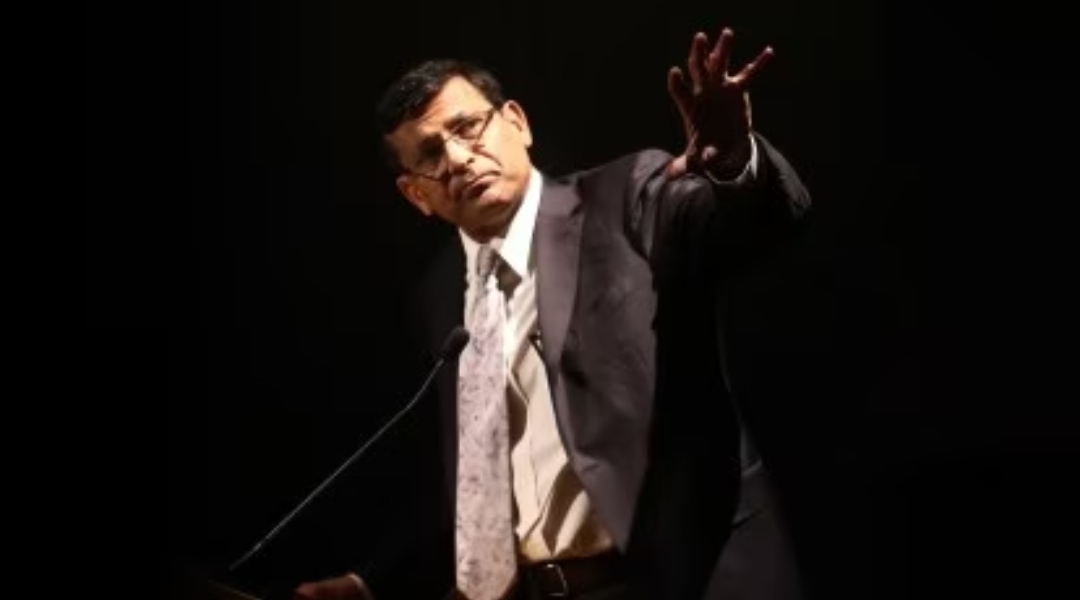
Need to follow consistent  policy and  focus on  ‘Make  in  India’:  FICCI EV panel  chairman  amid Tesla bid 

 FICCI has also proposed  the government to  support  small electric cars  through  incentives under the FAME scheme. 

  FICCI EV committee chairman Sulajja Firodia Motwani said the  government should not dilute  the  Make in India initiative and follow a consistent policy,  amid  pressure  from  US  electric  car maker  Tesla  over its activities.  special  incentive  to  install their  factory in the country. 

  Motwani,  founder and CEO of Kinetic Green which sells  three-wheelers, scooters,  e-bikes  and  battery-powered carts, is  also  focused on  creating a  comprehensive  ecosystem for  growth.  of the electric vehicle segment. 

  She also  fought to maintain  incentives for  purchasing electric vehicles  to  support demand in  the  coming  years.  

 Motwani also noted that the industry body is also  promoting  the  introduction  of electric cars priced up to Rs 20 lakh to  avail  incentives under  India’s  third  adoption and adoption scheme to produce Faster production  of  electric  and  hybrid vehicles (FAME). “I  strongly  believe  that the Make in India policies that the government has  introduced  should not be  reversed  because now people have started investing in local  manufacturing,”  Motwani told  PTI.  

  She added that if they do  not  diligently comply,  manufacturers  will switch  to importing components from other  countries,  including  China.  

 When asked  whether  US carmaker Tesla should get policy support to enter the Indian market, Motwani said:  “As for entering  some of the premium  carmakers  like  Tesla,  I  Don’t  know the details  of this proposal,  but I  think it’s relevant.” .  to a  significant investment. But personally  I still  think  there should  be  no  confusion and the policy should be consistent. 

  People  need to  know that there is a policy in place and it  must  be followed, she  emphasized.  

  “One  day you  should not  say that Make in India is  important… and  then you say that now  customs duty has come down. The policy must  be  consistent  and  long-lasting,”  Motwani said. 

  She noted that  India should definitely focus on Make in India  as this  will only create  competitiveness in the long run.  

 “Otherwise,  we will become  a country where  people use electric vehicles  but  the  materials  needed to produce them come  from other countries,” she added.  

 Motwani said FICCI has also proposed to the government to  support  small electric cars  through  incentives under the FAME scheme. 

  “FICCI has  given its  recommendation  to the  Ministry of  Heavy Industries  on  the FAME 3  program  and said that now we should also  look at passenger  cars because  the public  is  really interested.  We  only give incentives on  cars  worth  up to Rs 20  lakh,”  she noted.  

 The FAME India  programme, first  introduced on April 1, 2019,  now targets  public and commercial transport in the  electric  three-wheeler,  electric  four-wheeler  and electric  bus segments.  

 The benefit of the  offer  is also available  for  registered  private  electric two-wheelers (e-2W). 

  Motwani  said  that  until  battery prices come down  significantly, demand needs  to continue  to be encouraged over  the next  three to five  years.  

 She noted that  now is  the time  for a  deeper inter-ministerial dialogue  on  the  electric vehicle  segment.  “I think  now is  the time  to  set up  working groups  to look at  creating the ecosystem over  the next five  years,” Motwani said. Assuming that  demand  dynamics continue accompanied by  demand incentives,  we  also  need to  create an ecosystem with all  stakeholders  on board.” 

 For more  information,  visit at https://happenrecently.com/zepto/?amp=1
Article 370: 4 years after  scrapping J&K’s  special  status, today’s verdict of the  Supreme Court  

 On September 5, a five-judge  constitution bench headed  by Chief Justice of India D Y Chandrachud  reserved its  verdict  after hearing the petitioners, the  Center  and  the  J&K  government  for 16 days.  

 Over four years after Jammu and Kashmir (J&K) lost its special status following the abrogation of Article  370  and the state was  reorganized  into  two Union  Territories,  J&K and Ladakh, the Supreme Court  is expected to ruled  on  one batch  on  Monday.  petitions challenging the  legality  of the  Centre’s  decision.  

 On September 5, a five-judge  constitution bench headed  by Chief Justice of India D Y Chandrachud  reserved its  verdict  after hearing the petitioners, the  Center  and  the  J&K  government  for 16 days. The  bench comprised  Justices S K Kaul, Sanjeev Khanna, B R Gavai and Surya Kant. Justice Kaul will retire on December 25 while the  remaining  three  judges will become  Chief  Justices  of India.  The court heard a  series  of 23  applications. Of these,  some  were filed before the August 5, 2019  amendments,  challenging  Article  35A of the Constitution  which allowed  J&K to  pass  special laws for its permanent residents. 

  Some of the  petitioners  who  began arguing  on August  2 argued  that Article 370 was  temporary  until  the erstwhile state  Constituent Assembly  took a decision, one way or the other. But  when  the Constituent  Assembly’s mandate  expired in 1957, the provision became permanent and could not be  changed through  any constitutional  procedure,  they said.  

 The petitioners contended that  no annexation agreement  was  signed between the Union of India and the then Maharaja of J&K but only  the  Instrument of Accession  (IoA)  and, therefore, there was no surrender of sovereignty. They argued that the IoA limited  Congress’s legislative  power  over  the state  to ensure  its subjects would have a greater say.  

 The petitioners contended that the manner in which the special status was  removed  by  the  Presidential  Order  dated August 5 and 6, 2019, while J&K was under  the President’s rule, violated  the Constitution. 

  Refuting  the  allegations,  the  Center  and the J&K  government asserted  that  proper procedure  was followed in  bringing in  the changes.  Contrary to  the  arguments of the petitioners as to  how  the National Assembly  could assume the role of the Constituent Assembly, the  Government stated that  the  word “Constituent Assembly”  in Article 370(3)  refers to  can be read  as  “Legislative Council”.  

 The  Center argued  that during  the President’s tenure,  the powers of the J&K Assembly  were  vested  in  the Parliament, which  in turn had legislative  powers  for the state.  They  called  the changes  to Article 370  “historic”  and said  they  had  “brought  unprecedented development, progress, security and stability to the region, which was often  lacking under  the old  regime of  Article  370”.  

 During the hearing, the  judges also questioned  the claim  that  the provision  would become  permanent and wondered why it was then  included  in Part XXI of the Constitution which  refers to  “temporary, transitional and  special”.

The  petitioners  include  IAS officer Shah Faesal and activist Shehla Rashid.  However, they  withdrew  before the hearing  began.

 For more  information,  visit at https://happenrecently.com/zepto/?amp=1

Foodie Extravaganza: The Culinary Gem of Sion, ‘The Palate’ Hosts an Unforgettable Blogger Meet

'The Palate'

Mumbai, 10th Dec: Renowned culinary aficionados Rahul Saha and Ansu Chourasiya orchestrated a mesmerizing blogger meet at ‘The Palate,’ a culinary haven nestled in the heart of Sion. The event, a fusion of gastronomic brilliance and community spirit, united esteemed bloggers in an evening of delectable dishes, insightful conversations, and unwavering camaraderie.

The esteemed gathering, graced by notable personalities revered for their fervor for gastronomy and exploration of culinary frontiers, indulged in an exclusive tête-à-tête with Rajveer Singh from timesnowbusiness.com. Among the luminaries present were Akshay Sanghvi, Chef Juliano Rodrigues, Rajdev Aulakh, Irfan Shaukat, Randeep Gujral, Shubam Pancheshwar, Jasmeen Chandok, Jash Notaria, and Utkarsh Samel. Each luminary, possessing an unparalleled expertise in their domain, added a distinctive hue to the tapestry of flavors that enveloped the evening.

The Palate, true to its appellation, offered an opulent assortment of both vegetarian and non-vegetarian delicacies, transcending culinary boundaries. The diverse menu was meticulously curated, ensuring that every discerning palate found its perfect symphony of tastes. The restaurant’s bespoke dining sections unveiled a personalized experience, tailored to cater to a myriad of preferences, amplifying the evening’s allure.

The pinnacle of the event, besides the culinary opulence, resided in the commendable demeanor and efficiency exhibited by The Palate’s staff. Their cordiality and proficiency radiated an aura of warmth, adding an invaluable dimension to the soirée. The impeccable management orchestrated a seamless event, where prompt and impeccable service etched an unforgettable mark on the attendees.

Visionaries Rahul Saha and Ansu Chourasiya articulated their gratitude for the bloggers’ involvement, emphasizing the significance of showcasing Sion’s vibrant gastronomic culture.

“We envisioned a conclave where bloggers could relish exceptional cuisine while immersing themselves in the unmatched service and ambiance that The Palate embodies. It’s about fostering a community of epicureans who celebrate the artistry of dining,” shared Rahul Saha.

Ansu Chourasiya echoed these sentiments, affirming, “Beyond a mere restaurant, The Palate epitomizes an experience. Witnessing bloggers unite, sharing their fervor, and collectively contributing to the culinary narrative is immensely gratifying.”

As the evening unfolded in a symphony of laughter, engaging conversations, and clinking glasses, the blogger meet metamorphosed into a testimony. It encapsulated the richness of Sion’s culinary panorama and underscored hospitality’s profound ability to unite souls. The triumph of this rendezvous foreshadows future collaborations and promises shared gastronomic odysseys.

For comprehensive coverage and inquiries, please reach out to Rajveer Singh (RV) at +917710030004.

Website: https://timesnowbusiness.com/

IndiGo’s  Chatbot 6Eskai:  a game changer  in  the field of  air travel  support! Here’s  how you can use it 

Preliminary  results  from the initial  deployment show  an impressive  75% increase  in  customer service  staff workload, highlighting  the  bot’s effectiveness  and  efficiency.  

IndiGo’s  AI  chatbot, 6Eskai,  has been making waves in the  aviation  industry since its launch in November 2023. This innovative tool is quickly becoming a favorite among  passengers for  its ability to provide  support Seamless  and  personalized.  Developed in-house by the  airline’s  digital team in collaboration with Microsoft, this marks a significant  step forward  in the  airline’s  customer service capabilities. For those who  haven’t used  this chatbot for  help,  6Eskai is capable of performing a  variety  of tasks, including: 

 –  Book  tickets 

 –  Apply promotions  

 –  Reservation module  

 –  Perform  web  recording  

 –  Support in choosing seats 

 – Make travel plans  

 –  Answer frequently asked questions  

 –  Connect  customers with  agents  

  Here is  a step-by-step guide  to easily book  Indigo  tickets  with the help of 6Eskai: 

 – Visit  official website: Login  to  IndiGo  official website at www.goindigo.in.  – Access 6Eskai: Click on the 6Eskai tab  on the  right  side of the  home page.  

 –  Navigation options:  Explore  the  various options displayed on the screen and select “Book  flight tickets”.  

 – Enter  trip information: enter departure point,  destination,  travel  date  and  select travel  type  (one-way  or  round-trip).  

 – Passenger  information:  Enter the number of passengers and  passenger type.  

 – Apply  promotional code: Choose  to apply  promotional  code or skip this step.

  –  Verify  and  confirm:  Check the final details and  move  to the next step.  – Select  flight: Select desired  flight  time  and  ticket price.

 – Payment and  confirmation:  Pay the exact  amount  and your ticket will  appear  on the screen. 

  Preliminary  results  from the initial  deployment show  an impressive  75% increase  in  customer service  staff workload, highlighting  the  bot’s effectiveness  and  efficiency.  Additionally, 6Eskai streamlines the booking  process, using  natural language conversations to  easily  guide customers through the  booking journey.  

 Here are some  key benefits of using 6Eskai: 

 24/7 customer service:  Whenever  you need help, 6Eskai is  always ready  to  help.  Personalized  support:  6Eskai can tailor its  response  to your specific needs and preferences. 

  Fast  and easy to use:  book  a flight,  check in  or  get  your questions  answered in  just a few  clicks.  

  Save  time: 6Eskai can help you avoid long  waits  on the phone or at the airport. 

  Reduce  stress: Planning a trip can be stressful, but 6Eskai  will  definitely  make  it easier.  

For more information visit at https://happenrecently.com/zepto/?amp=1
$250  monthly  SIP?  What  does  SEBI  Chairman say  about mutual funds 

  The  Sebi  Chairman  said  they are working with mutual funds to make  ₹250  SIP  viable for the  public,  which will lead  to increased investments. 

  Noting  the  rise in  investments in systematic investment  schemes, Madhabi Puri Buch, Chairman,  Securities and Exchange Board of India  (SEBI), explained  how the regulator is working with  funds  mutual  to  reduce  the minimum  cost  of  SIP.  

 SIPs in mutual funds  have seen significant  growth in the last  few  years,  systematic investments  worth  ₹500  crore became possible,  but there  was  no option to explore SIPs  worth  ₹250, which could lead to  greater participation  in the market. 

  “We  are working with them (MF industry) to see where  the  cost is,  what  Sebi  can  do to facilitate  reducing  that viability  to ₹250  per  month, because then  that number  is  equivalent  to What  Hindustan Lever did with  shampoo. You’re blowing up  the  market,”  Buch said while speaking at  the  Business  Today event.  Indian capital markets will get a  major boost  through smaller  scale SIPs  and  packaging  the market will  contribute to  the  country’s  financial inclusion  agenda,  the Sebi  chairman  said. 

  These  comments  come  soon  after the mutual fund industry reported its  highest ever  monthly  investment  through SIPs  of  over ₹17,000 crore  in  November.  Buch said, although  investors  Foreign investors sold  Indian  stocks but  the market  did not  collapse because Indian investors held  the  fort.  

 She  said:  “In  fact,  the  benefits  of our domestic flows and  retail flows  have  a  dual impact: the  impact of  their entry  and the impact  on  foreign  withdrawals  because they  cannot give allow yourself  to miss  Indian  history.”  

  SIP hits  new high in November 

 The number of systematic investment plans (SIPs) hit an all-time high in November  this year, recorded at  ₹17,000 crore.  According to AMFI data,  SIP investments in November 2023 surpassed  October’s  figure of  ₹ 16,928 crore.  

SIP bundling could  further boost these  numbers,  especially amid expectations of an aggressive entry  of  Reliance  group’s  Jio Financial Services  entity  into the MF space. 

 For more  information,  visit at https://happenrecently.com/zepto/?amp=1

The emergence of  Deepfake  technology raises deep concerns:  Supreme Court  Justice  

 Justice Kohli said the indistinguishable nature of deepfakes from reality poses a profound challenge to the authenticity of information and the sanctity of  individual identities.  

New Delhi: 

Supreme Court Justice Hima Kohli on Saturday  expressed  concern over the  growing  trend of sexual harassment  on  social media and said the emergence of deepfake technology is  a revolution,  but it also  resonates. Alarm bells ring about invasion of privacy,  security risks and  the spread  of misinformation.  Speaking at a  ceremony  on the  subject  of harassment and discrimination, Justice Kohli said that in the contemporary digital landscape, the  rapid  rise of social media has not only  changed  the way people communicate but  also  redraws  the contours of harassment,  especially on the basis of gender. power. abuse. “At the same time,  the emergence of deepfake technology, a type of artificial intelligence, is a  source  of deep concern. Its  ability  to  easily  create highly realistic content  is  revolutionary  in  entertainment  ,  but it also raises  alarm bells when it comes to  privacy  invasions,  security  risks,  and  the spread  of  misinformation,”  she said.  Justice Kohli said the indistinguishable nature of deepfakes from reality poses a profound challenge to the authenticity of information and the sanctity of  individual identities. “The biggest  danger posed by deepfakes is  the  ability to spread false information that appears to come from  trustworthy sources,”  she said.  speak. 

 She said  this paradigm shift, further accelerated by the global  trend toward  remote working, has blurred the once-clear  lines  between professional and personal spaces.  “Harassment,  once  a concern  primarily  within the physical confines of office spaces and  workplaces, is  now  spreading to  virtual arenas where  professional and personal lives  ours  intersect and  interact.”  

 Justice Kohli said that despite its  advances  and conveniences, the digital  age  also  caused glaring  vulnerabilities. 

  “Harassment in  these virtual environments is  not limited  by  any  physical barriers or  regular work schedules,  creating opportunities for  this behavior  to  occur anytime,  anywhere, online. 

The inherent  characteristics  of digital platforms  –  including  anonymity, easy access, and rapid  dissemination  of information  –  magnify the severity and  scope  of such  harassment.”  she said. 

  Warning  of its  impact, Justice Kohli said that in  the  realm of social media, harmful content can  quickly  multiply and  spread, further  complicating efforts to mitigate and address  the consequences of It.  

 She  says the problem  is  further complicated by  the often invisible nature of virtual  harassment,  as it can be  just as damaging,  if not  more severe,  than  offline  harassment.

  “This  fosters an environment  in which anonymous offenders  can act with  disturbing  impunity.  On the other hand, the victim  may  feel increasingly isolated  and  helpless.  They  often  find themselves  grappling with the  challenge  of  gaining  support in a space where evidence is  ephemeral  and accountability  is  often  unclear,”  she said.  

 Justice Kohli said the  multifaceted  challenges of online harassment  require  a  thorough  understanding of digital platforms as  tools  of empowerment  and potential  vectors of  abuse.

  “Abuse  includes  blackmail,  ruining a person’s  reputation  or simply cyberbullying. To  tackle  these issues, a  comprehensive  approach is  needed,  involving  cooperation  between  policymakers policy makers,  social media  organizations,  employers and  businesses.  This strategy should focus on creating safe online environments, promoting digital literacy, fostering  respect  and  provide strong  support  to victims,”  she said.  She added  that  the goal is not  only  to  respond  to the changing landscape of  harassment  but  also  to actively create a  safe, inclusive and inclusive  digital  world.  

  “With  these technological advances, the urgent need to  strengthen  and expand legal frameworks such as  PoSH (Prevention of Sexual Harassment Act)  becomes increasingly important. “It  is essential to adapt legal structures to effectively  combat  harassment in  digital and online spaces, ensuring that they keep pace with  rapid technological  advances,”  she  said ” digital world. 

  Justice Kohli  added  that  gender-based violence, especially violence against women, is endemic  whether  at  home  or  in  the workplace and  is  often a  feature  of conflict  situations  and humanitarian crises.  

  “Despite  India’s commitment to women’s rights through various  laws,  policies and  programs  over the past 70 years, women continue to face  discrimination based on gender; They  are systematically  prevented  from  participating fully  in the economic, social, civic and political spheres. They  face  persistent structural barriers to  equality,”  she said.  Justice Kohli  emphasized  that women’s paid and unpaid contributions,  essential  to the global economy, are often undervalued and  easily  overlooked. 

  “Furthermore, the proportion of women  in decision-making  positions  is  very  low and they  often face obstacles  in their professional lives  solely due  to their  gender,”  she said. 

  For more  information,  visit at https://happenrecently.com/zepto/?amp=1

According to Putin, Mr.  Modi  is the  main guarantor of  strong relations between Russia and India  

 Putin made  comments  in  “Russia  Calls!”  Investment Forum”, held on December 7 and 8 in Moscow. 

  Praising him for  protecting India’s  national interests without being  “threatened”,  Russian President Vladimir Putin  credited the  policies  pursued by Prime Minister Narendra Modi as the  “main guarantor” of each country’s development. step  of the  relationship  between the two countries. 

  Putin made  comments  in  “Russia  Calls!”  Investment Forum”, held on December 7 and 8 in Moscow. 

  The Russian President said he  “cannot  imagine that  Mr.  Modi could be  scared, threatened  or forced to take  actions,  measures or  decisions that  conflict  with the national interests of India and the Indian  people.” “. He added that  Russia and India are developing in all  fields.  Putin, who on Friday announced his intention to run for  president  again in 2024, said he  could  feel pressure on Modi from  hostile  countries.  However,  he  said that  he and Modi  had  never discussed  the  subject,  Russia’s  TASS  news agency  reported.  

 “I just look at what is happening from the  outside  and sometimes,  to be honest,  I am even surprised  by  his tough stance  in protecting our  national  interests,”  the Russian  President  said.  Indian state”.  

 India has been  criticised  by  Western countries for charting its own course in the face of Western sanctions against Russia  over  its invasion of Ukraine and continuing  to  import  Russian crude  at low prices. discount. 

For more information visit at https://happenrecently.com/zepto/?amp=1
New Aptar Mumbai Site to Increase Manufacturing Capabilities

Aptar Pharma,

Aptar Pharma, a global leader in drug delivery systems, services and active material science solutions, today announced the opening of its new Aptar Mumbai site, which will increase manufacturing capabilities in South East Asia.

An inauguration ceremony held on December 1, 2023, marked the official opening of the new Aptar Mumbai production facility in the Palava Industrial and Logistics Park at Taloja, Mumbai. Members of Aptar’s Executive Committee and Aptar Pharma’s Global Leadership Team welcomed more than 100 key customers and Aptar employees from the Mumbai and Hyderabad, India sites to this momentous occasion, which included a ribbon cutting and tree-planting ceremony.

Manufacturing capabilities at Aptar Mumbai, which began in 2012 with the assembly and supply of metered dose valves and pumps, have now been expanded to offer more innovative product solutions and ensure increased manufacturing capacity to pharma customers in South East Asia.

Assembly operations and product delivery to customers have already begun at Aptar Mumbai’s new 7,000 m2 state-of-the art site, which has also received ISO 15378 certification.

This expansion, which began in early 2022, is in line with Aptar’s localization strategy, and is a direct response by Aptar Pharma to growing customer demand in the region.

“Our Aptar Pharma business in India has shown robust growth in recent years, and today marks yet another milestone in our investment in the South East Asia region,” commented Gael Touya, President, Aptar Pharma. “Over the past 11 years, Aptar Mumbai has continuously supplied safe, high-quality products that meet even the highest of regulatory requirements. This new facility is a key step in serving the needs of our customers in the region, which will ultimately benefit patients.”

Sanjay Kapote, President, India & Head, Pharma – SEA, said, “This new site in Mumbai provides a larger space, not only for the expansion of our well-established assembly operations, but also to fuel further localization and support our vision of bringing in other Aptar Pharma technologies suitable for the Asian market.”

Aptar Pharma Prescription President, Alex Theodorakis, commented on more than a decade of success for Aptar Pharma in India, which he described as both a key pillar in the pharma ecosystem and a new chapter of growth in the region.

In her virtual address, Xiangwei Gong, President, Aptar Asia, wholeheartedly congratulated the global and local Aptar Pharma teams for their tireless efforts that contributed to the completion of the Mumbai facility in just under two years. She also noted how this new site will enhance local capabilities, allowing Aptar Pharma to be closer to its customers and to serve them with speed and agility. She also spoke of the growth opportunities for local talent and expected business growth that the new Aptar Mumbai facility will provide.

Website: https://www.aptar.com/pharmaceutical