
In the ever-evolving realm of interior design, Reset Spaces emerges as a trailblazer, ready
to redefine the way we conceive and experience our living and working spaces.
Anticipation builds as Reset Spaces prepares for its grand launch on December 21, 2023,
inviting you to step into a world where your space becomes a canvas for your dreams,
personality, and aspirations.
Welcome to Reset Spaces—an online 2D & 3D interior design platform that beckons you
to plan your dream space with meticulous attention to detail. It’s not merely about
crafting a space; it’s about creating an environment that resonates with you on a profound
level. A space that seamlessly blends your dreams with the tactile reality, revealed through
the clarity of 2D plans and the immersive experience of 3D designs.
As the countdown to December 21, 2023, intensifies, Reset Spaces invites you to stay tuned
for news articles that shed light on the revolutionary ethos, innovation, and boundless
possibilities it brings to the world of interior design. Prepare to witness a paradigm shift as
Reset Spaces sets the stage for a new era where your dreams manifest in both the
intricacies of 2D plans and the immersive beauty of 3D designs, shaping the very essence
of your living spaces.
Reset Spaces is committed to breaking free from conventional boundaries, offering a fresh
perspective on design for homes, offices, warehouses, and private sanctuaries. Unyielding
in its dedication to ensuring your imagination knows no limits, Reset Spaces brings forth
crafty, curated, and personalised suggestions that seamlessly align with your unique
vision and theme.
Contact Us :- 8530550500
Email Us :- enquiry@resetspaces.in
Website : www.resetspaces.in
Reset Spaces Introduces a Revolutionary Era in Interior Design: Unveiling 2D & 3D Design Services on December 21, 2023

“Cultivating Green Joy: Embark on an Organic Gardening Journey with SACS Vanya”

Introduction:
Step into the world of home gardening with SACS Vanya, your trusted companion in cultivating green joy. Whether you’re a seasoned nursery owner, terrace gardener, or a budding enthusiast, our sustainably sourced and eco-friendly products are here to guide you toward a thriving organic garden. Let’s delve into the wonders of organic gardening and discover how SACS Vanya’s offerings can transform your garden dreams into reality.
Organic Gardening: A Rewarding and Sustainable Choice:
Adopt organic gardening with SACS Vanya’s easy-to-use plant care products. Designed to enrich the soil naturally, our locally sourced offerings foster a biodiverse environment for your plants. By choosing organic, you not only contribute to a healthier ecosystem but also experience the unparalleled joy of growing your own greens.
Organic gardening extends beyond aesthetics, positively impacting your immediate surroundings and overall well-being. SACS Vanya’s commitment to sustainability is evident in our products, ensuring that your garden is not just beautiful but also eco-friendly.
Overcome Hesitations with Easy-to-Use Organic Plant Care Products:
Let go of any hesitations about starting a home garden with SACS Vanya’s user-friendly organic plant care products. Our trusted solutions make taking the first step towards a greener, healthier lifestyle a breeze. If your plants aren’t looking their best, or if you’re struggling to find the right soil, we get it – and we’re here to make things better. We understand the everyday struggles of gardeners and offer a holistic approach to turn your organic gardening journey into a joyous adventure. Experience the satisfaction of nurturing your plants with the care they need for optimal growth and productivity.

Choose SACS Vanya for:
Proven results provide assurance and confidence.
Enhanced gardening experiences with every season.
Unwavering quality for repeat satisfaction.
Organic vermicompost and potting mix for a resilient and self-sustaining garden.
Happy Customers Speak:
“Harvesting vegetables from my terrace garden feels like a small victory every time.”
“Seeing new buds and flowers on my plants light up my day.”
“SACS Vanya’s Vermicompost increased my microgreens harvest by 20 percent.” – A commercial microgreens producer.
SACS Vanya: Your Partner in Cultivating Green Joy:
SACS Vanya is your partner in cultivating green joy through organic gardening. Explore our exciting range of products at https://www.sacsvanya.com/ and embark on a journey towards a flourishing, eco-friendly garden. Embrace the beauty of nature with SACS Vanya, where every product tells a story of sustainable growth and vibrant life. Happy gardening!
Shop at eCommerce: www.sacsvanya.com
Shop at Amazon
https://www.amazon.in/stores/SACSVANYA/page/D7F547D3-13AC-436A-B9FF-35BAE4684887?ref_=ast_bln
“Cultivating Green Joy: Embark on an Organic Gardening Journey with SACS Vanya”

Introduction:
Step into the world of home gardening with SACS Vanya, your trusted companion in cultivating green joy. Whether you’re a seasoned nursery owner, terrace gardener, or a budding enthusiast, our sustainably sourced and eco-friendly products are here to guide you toward a thriving organic garden. Let’s delve into the wonders of organic gardening and discover how SACS Vanya’s offerings can transform your garden dreams into reality.
Organic Gardening: A Rewarding and Sustainable Choice:
Adopt organic gardening with SACS Vanya’s easy-to-use plant care products. Designed to enrich the soil naturally, our locally sourced offerings foster a biodiverse environment for your plants. By choosing organic, you not only contribute to a healthier ecosystem but also experience the unparalleled joy of growing your own greens.
Organic gardening extends beyond aesthetics, positively impacting your immediate surroundings and overall well-being. SACS Vanya’s commitment to sustainability is evident in our products, ensuring that your garden is not just beautiful but also eco-friendly.
Overcome Hesitations with Easy-to-Use Organic Plant Care Products:
Let go of any hesitations about starting a home garden with SACS Vanya’s user-friendly organic plant care products. Our trusted solutions make taking the first step towards a greener, healthier lifestyle a breeze. If your plants aren’t looking their best, or if you’re struggling to find the right soil, we get it – and we’re here to make things better. We understand the everyday struggles of gardeners and offer a holistic approach to turn your organic gardening journey into a joyous adventure. Experience the satisfaction of nurturing your plants with the care they need for optimal growth and productivity.

Choose SACS Vanya for:
Proven results provide assurance and confidence.
Enhanced gardening experiences with every season.
Unwavering quality for repeat satisfaction.
Organic vermicompost and potting mix for a resilient and self-sustaining garden.
Happy Customers Speak:
“Harvesting vegetables from my terrace garden feels like a small victory every time.”
“Seeing new buds and flowers on my plants light up my day.”
“SACS Vanya’s Vermicompost increased my microgreens harvest by 20 percent.” – A commercial microgreens producer
SACS Vanya: Your Partner in Cultivating Green Joy:
SACS Vanya is your partner in cultivating green joy through organic gardening. Explore our exciting range of products at https://www.sacsvanya.com/ and embark on a journey towards a flourishing, eco-friendly garden. Embrace the beauty of nature with SACS Vanya, where every product tells a story of sustainable growth and vibrant life. Happy gardening!
Shop at eCommerce: www.sacsvanya.com
Shop at Amazon: https://www.amazon.in/stores/SACSVANYA/page/D7F547D3-13AC-436A-B9FF-35BAE4684887?ref_=ast_bln
Paper Arizona Soars to Success with PROR IN Pvt Ltd’s Strategic Funding Support
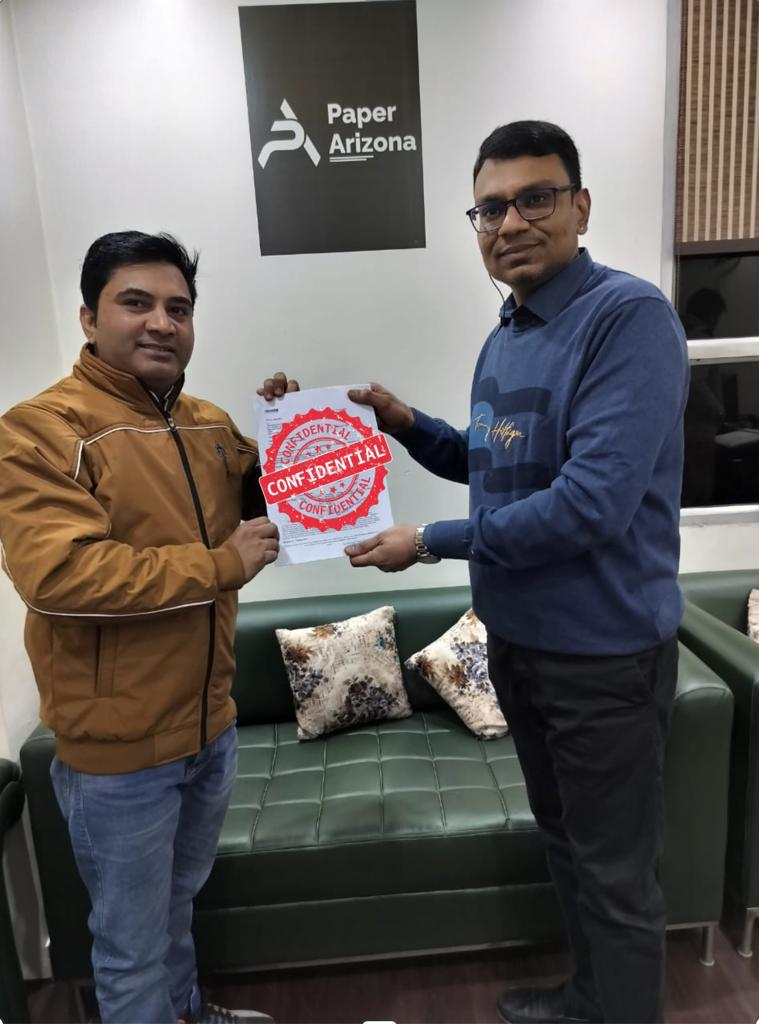
A Transformative Funding Journey Ignites Paper Arizona’s Ascendancy
Paper Arizona, a beacon of innovation and growth, has reached new heights with the strategic funding assistance from PROR IN Pvt Ltd. Under the visionary guidance of Ayu Sharma and Neeraj Kumar Pawar, PROR has played an instrumental role in fueling Paper Arizona’s remarkable success trajectory in the competitive entrepreneurial landscape.
The recent accomplishment of securing a significant 1 million USD funding round for Paper Arizona stands as a testament to PROR’s commitment to fostering and elevating promising ventures. This funding injection has been pivotal in catalyzing Paper Arizona’s expansion plans and augmenting its position as a leading force in its industry.
PROR’s approach, characterized by its operational finesse and commitment to a success-driven model, ensured a seamless and efficient funding journey for Paper Arizona. The platform’s unique strategy aligned perfectly with Paper Arizona’s vision, resulting in a streamlined process from application to funding, providing the necessary financial backing without compromising the integrity and autonomy of the venture.
Paper Arizona’s success narrative, propelled by PROR’s strategic support, underscores the power of collaborative partnerships between investors and ambitious startups. It showcases how a synergistic relationship between a funding platform like PROR and a visionary venture like Paper Arizona can drive exponential growth and innovation within the entrepreneurial ecosystem.
As PROR continues to redefine the investment landscape, the success story of Paper Arizona stands as a testament to their dedication to empowering startups. This collaborative success journey between PROR and Paper Arizona not only signifies financial assistance but also symbolizes the triumph of entrepreneurial spirit, innovation, and strategic vision.
For further information or inquiries:
PROR IN Pvt Ltd
A Morning of Honors: India’s Magic Gems Award 2023-24 Unfolds at Jhunjhunwala College on December 21st.
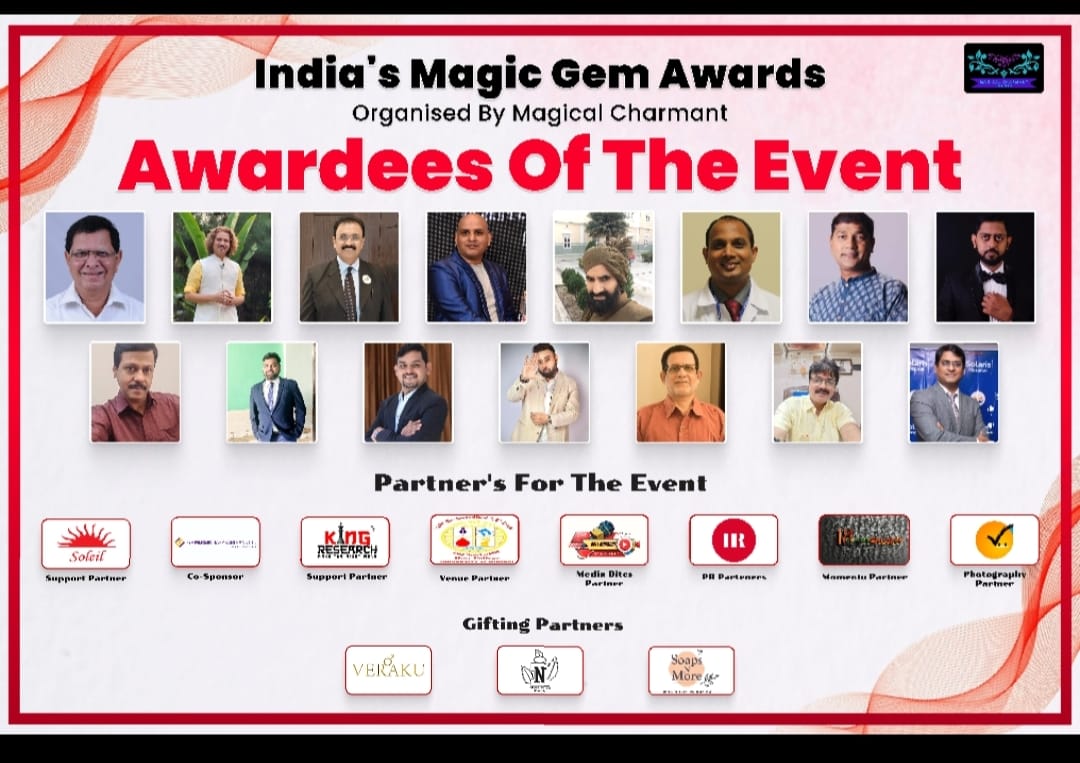
Jhunjhunwala College is poised to host a transformative morning on December 21, 2023, as it presents the India’s Magic Gems Award 2023-24. This unique event is dedicated to recognizing and celebrating the achievements of exceptional individuals who have carved remarkable paths in their respective fields, becoming beacons of inspiration for college students.
The distinguished awardees include inspiring doctors such as Dr. Ashok Tiwari, a dedicated family physician; Dr. Amit Aiwale, a skilled neurosurgeon; and Dr. Nilesh Chordiya, a renowned oncosurgeon. These medical professionals exemplify unwavering commitment and excellence in their service to society.
The category of inspiring entrepreneurs under 40 introduces Avdt. Prakash Bhate, the innovative founder of Bharati Chemicals; Mr. Yogesh Sonawane, a magician who weaves magic beyond the ordinary; Mr. Ullesh Khandare, a celebrity makeup artist defining beauty standards; and Mr. Rajeev Singh, a marketing influencer associated with Soleil Capital Groups, showcasing leadership in the business world.
The dynamic startup award goes to Mr. Akash Bhabad, the visionary founder and CEO of Bhadab International Publications, highlighting entrepreneurship and innovation.

In the realm of entertainment, the celebration extends to Mr. Harshal Rane, a multifaceted actor, director, and owner of TTMM Activity Studio; Mr. Ninad Shetye, a talented writer and casting director; and Mr. Rajeev Joshi, an accomplished writer and journalist, contributing significantly to the creative industry.
The lifetime achievement category pays homage to individuals whose impact transcends time. Mr. Narayan Gawand, Chairman of GP Parsik Janta Bank in Kalwa, stands as a testament to a lifetime of service. Prof. Dr. Pramod Rajput, a mentor and global speaker, has shaped minds and inspired many. Mr. Ram Awana, a seasoned actor, and Mr. Vikas Ingale, a prolific photographer, receive well-deserved recognition for their enduring contributions.
The success of this event is made possible through the support of esteemed partners. Apli Mumbai Live, led by Ma. Chandan Patil, serves as the media partner, while Happen Recently, under the guidance of Mr. Shubham Pancheshwar, takes on the role of PR partner. Dr. Rajesh R’s 18 Art Gallery is the momento partner, and Vikas Ingale adds a visual touch as the photography partner. Co-sponsored by GP Parsik Janta Bank Kalwa, the event finds its home at Jhunjhunwala College, the dedicated venue partner. Further support comes from King Research Academy and Soleil Capital Groups.
The morning’s charm is enhanced by gifting partners Nimco, Veraku Lifestyle Pvt Ltd, and Soaps and More, adding a special touch to the celebration. Hosting the morning and ensuring a seamless experience for all attendees is the talented team from TTMM Studio.
Adding to the excitement, special guests include Mr. Jayesh Khade, a social entrepreneur and mentor; Mr. Abhishek Jamnare, the founder of Kinetic Innovations; Mr. Harinder Sahu, the founder of King Research; and Ms. Nisha Kapila, a distinguished fashion designer and Mrs. Maharashtra 1st Runner Up.
On December 21, 2023, at Jhunjhunwala College, witness the magic unfold and honor these extraordinary individuals who have left an indelible mark on their respective fields.
RBI tightens norms for lenders investing in AIFs

Regulated entities (REs) make investments in units of AIFs as part of their regular investment operations. RBI, however, said that certain transactions of REs involving AIFs raise regulatory concerns.
In a move aimed at curbing evergreening of stressed loans, the Reserve Bank of India (RBI) on Tuesday directed banks, non-banking financial companies (NBFCs) and other lenders not to invest in any scheme of alternative investment funds (AIFs) which has downstream investments in a debtor company.
An AIF means any fund established or incorporated in India which is a privately pooled investment vehicle, and which collects funds from sophisticated investors, whether Indian or foreign, for investing it in accordance with a defined investment policy for the benefit of its investors. Regulated entities (REs) make investments in units of AIFs as part of their regular investment operations. RBI, however, said that certain transactions of REs involving AIFs raise regulatory concerns.
“These transactions entail substitution of direct loan exposure of REs to borrowers, with indirect exposure through investments in units of AIFs,” the RBI said in a notification. Evergreening of loans is a process whereby a lender tries to revive a loan that is on the verge of default or in default by extending more loans to the same borrower. The process of evergreening of loans is typically a temporary fix for a bank.
As of December 19, there were 1,220 AIFs registered with the Securities and Exchange Board of India (SEBI). Total investment commitment raised by AIFs stood at Rs 8.44 lakh crore as of June 30, 2023 compared to Rs 6.94 lakh crore as of end June 2022, according to SEBI data. Total funds raised by the AIFs as of end June 2023 quarter was Rs 3.74 lakh crore, of which Rs 3.5 lakh crore worth of investment was made by the end of the first quarter.
In order to address concerns relating to possible evergreening through this route, the RBI said the regulated entities should not make ‘investments in any scheme of AIFs which has downstream investments either directly or indirectly in a debtor company of the RE’. Downstream investments mean the actual investment by the AIF in a company using the funds they have raised from AIF investors. The RBI said the debtor company of the RE, for this purpose, means any company to which the RE currently has or had a loan or investment exposure anytime during the preceding 12 months.
For more information visit at https://happenrecently.com/zepto/?amp=1
Maersk reroutes its ships via the Cape of Good Hope

Maersk said: “For all future ships planning to sail in the region, a case-by-case assessment will be undertaken to determine whether adjustments need to be made – including diversion through the Cape of Good Hope and other contingency measures.
The world’s second-largest container shipping line, Maersk, said on Friday that all suspended ships previously scheduled to pass through the Red Sea region will now be rerouted around Africa via the Cape of Goods. Hope for safety reasons.
Maersk said: “For all future ships planning to sail in the region, a case-by-case assessment will be undertaken to determine whether adjustments need to be made – including diversion through the Cape of Good Hope and other contingency measures.
The company announced on December 15 that it would suspend all ships sailing to the Red Sea or Gulf of Aden due to the very degraded security situation in the region.
“This decision was made to ensure the safety of our crew, our vessels and our customers’ goods on board,” the company said.
For more information, visit at https://happenrecently.com/zepto/?amp=1
G20 trade policy becomes restrictive, according to WTO

This comes as India’s goods exports were under pressure for much of the year due to weak demand from Western countries. Slowing demand in China, which is grappling with a major crisis in its real estate sector, is also contributing to the slowdown in economic growth.
According to the WTO trade report, with global goods trade slowing amid rising interest rates and geopolitical conflict, trade measures introduced by G20 economies, account for 85% of output. global economy, has become more restrictive in recent months. According to monitoring reports.
This comes as India’s goods exports were under pressure for much of the year due to weak demand from Western countries. Slowing demand in China, which is grappling with a major crisis in its real estate sector, is also contributing to the slowdown in economic growth. “For the first time since 2015, the monthly average of 9.8 new trade restrictions introduced by G20 economies during the reporting period exceeded trade facilitation measures (8.8 ). Furthermore, persistent import restrictions within the G20 show no signs that current measures will be significantly lifted,” the WTO said in the report.
The WTO said G20 economies introduced more restrictive trade facilitation measures on goods from mid-May to mid-October 2023. However, the value of the goods traded is applied. The use of facilitation measures continues to exceed those specified in the restrictions.
As of mid-October 2023, $2.287 billion in traded goods, or 11.8% of G20 imports, have been affected by import restrictions implemented by G20 economies since 2009 . The trade monitor report points out that export restrictions have become more significant since 2020, with a series of measures introduced first in the context of the Covid-19 epidemic and more recently in the war in Ukraine and the food safety crisis.
“While some of these export restrictions have been lifted, as of mid-October 2023, 75 export restrictions on food, feed and fertilizers remain in force across world”.
The WTO’s latest forecast released last month projects merchandise trade volume growth of 0.8% in 2023, down from previous estimates of 1.7% and 3.3% in year 2024.
In the first half of 2023, global goods trade volumes fell 0.5% year-on-year as high inflation and rising interest rates weighed on trade and production in advanced economies, as well as tensions in the real estate market preventing stronger post-war development. the recuperation. The report added that the pandemic in China has resumed.
For more information, visit at https://happenrecently.com/zepto/?amp=1
Satellite communications spectrum without auction: Telecom and technology operators must compete on a level playing field

Jio and Bharti face competition from Starlink and Amazon
Although the Telecommunications Bill, 2023 has paved the way for administrative allocation of satellite spectrum, Reliance Jio, which is fighting the airwaves auction, will not be at a disadvantage. It’s just that the company will now have to compete strongly with tech giants like Starlink, Amazon, etc. Allocating spectrum through auctions is likely to have only limited competition for telcos, as big tech companies are unlikely to participate.
Unlike telecommunications, due to the different nature of services, each service provider must have its own spectrum, satellite spectrum is a shared resource and no player has super ownership based on strategy Bidding.
TV Ramachandran, president, India Broadband Forum said, “With the bill paving the way for administrative spectrum allocation, there will now be natural competition in the sector, which will ensure access to services”. According to Ramachandran, auctions are essentially impossible in the satellite space and if spectrum bands are auctioned, it will prevent new players from entering the segment.
Satellite services are also different from telecommunications in that satellite services focus on high-speed Internet services, mostly in low-lying areas where it is difficult to provide telecommunications services. In a way, this also reduces the size of the industry’s target market. Sources said this is also a factor considered in the administrative allocation of satellite spectrum in the country.
Jio’s argument for auction during Trai’s consultation was based on the principle of one service, one rule. Citing legal opinions, Jio also said since the spectrum would be used by companies for their personal benefit, any method other than auction would violate Article 14 of the constitution.
However, it is understood that the administrative allocation of spectrum to satellite companies will involve point-to-point communications between the satellite and the ground station gateway and while satellite operators tend to provide provide access services, like telecommunications companies, they will have to participate. at the auction.
“For any company to provide meaningful satellite communications services, it is necessary to first have a comprehensive satellite constellation, as this is needed to provide seamless connectivity for consumers, businesses, and other use cases.” from Hughes Communications India.
According to Chatterjee, OneWeb is expected to become a leader in the satellite communications market as the company not only has the necessary approvals but also has a large team to deliver the services. OneWeb, recently named Eutelsat OneWeb, consists of more than 630 satellites distributed across 12 synchronous orbital planes at an altitude of 1,200 km, in low Earth orbit (LEO). Recently, Sunil Bharti Mittal, Chairman, Bharti Enterprises, had said that OneWeb will be ready by the end of November.
In comparison, Jio also introduced India’s first gigabit satellite Internet service, JioSpaceFiber, in October, which can be used to provide high-speed Internet services in hard-to-reach areas. vicinity of the country. The company has connected four remote locations with
JioSpaceFiber: Gir in Gujarat, Korba in Chattisgarh, Nabarangpur in Odisha and Jorhat in Assam, using tested spectrum.
Jio has a joint venture with SES to provide high-performance satellite broadband services across India. The companies will provide Internet access via satellites in medium Earth orbit (MEO). Knowledgeable experts have said that Jio may lag behind in capturing market share in the satellite space, purely due to the lower number of MEO satellites. SES has currently only launched 6 MEO satellites. However, experts say, to provide universal coverage and avoid interference, satellite volume needs to be increased in space.
Since MEO satellites orbit 10,000 to 20,000 km above Earth, they provide greater ground coverage than LEO and have an average lifetime of 9 to 10 years, which is better than LEO. However, LEO satellites have lower latency. Companies like OneWeb, Starlink, etc. uses LEO satellites to provide services.
“Unpredictability will no longer exist in the market with administrative allocation. Now, the competition will be conducted on the basis of a concrete business plan, use cases and technological innovation,” said AK Bhatt, Director General of the Indian Space Association (ISpA).
According to a joint report by ISpA and Deloitte, the market potential for satellite broadband connectivity in rural areas is expected to reach $263 million in the next five years.
For more information visit at https://happenrecently.com/zepto/?amp=1
India Fashion Week City Tour Delights Fashion Enthusiasts with Creative Designers, Star, Celebrities & Prominent Influencers.
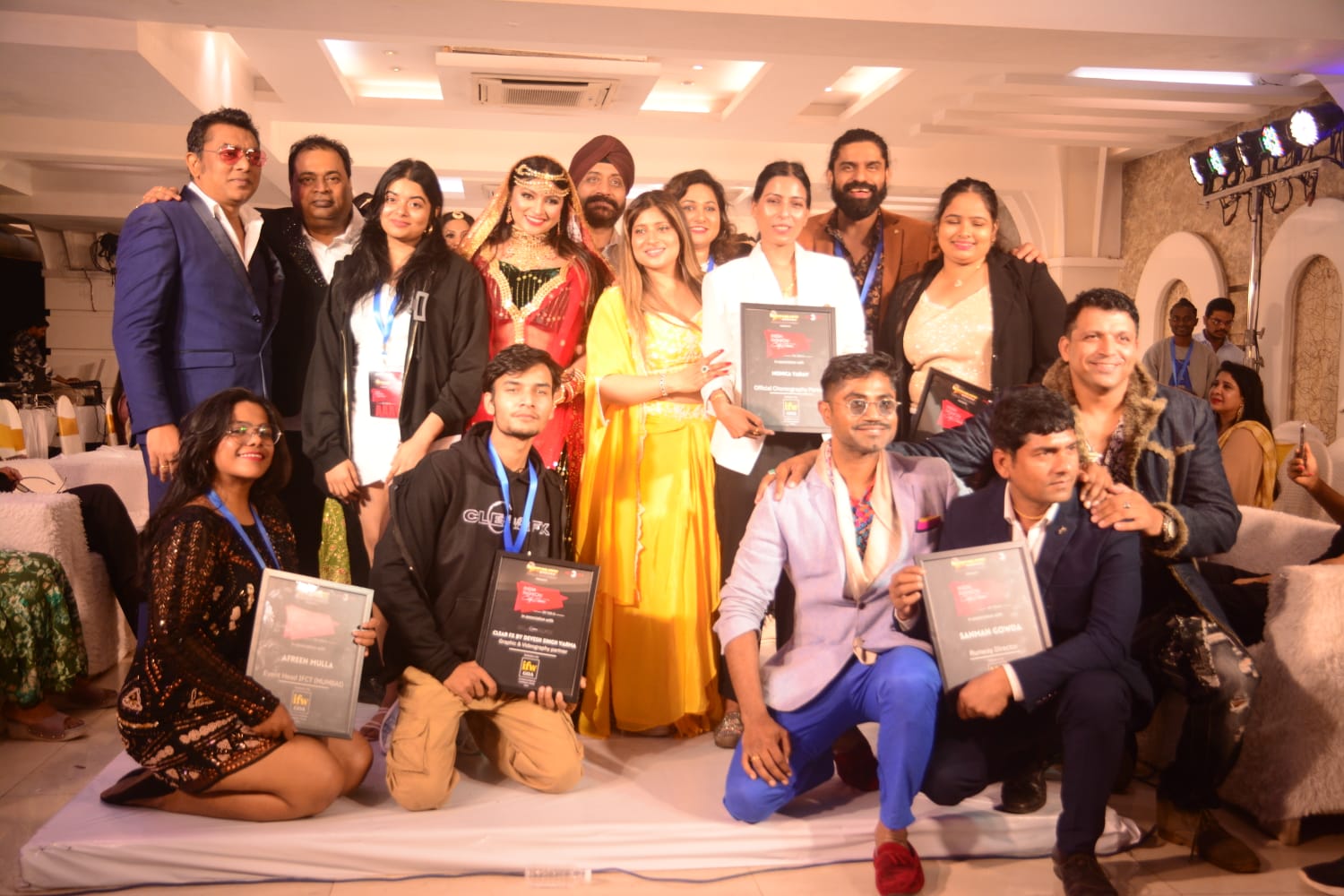
17th December, Renaissance Club Juhu – The glamour of haute couture and the magic of fashion converged at the India Fashion Week City Tour held on 17th December, captivating audiences with an array of renowned designers and esteemed personalities. The Show was Presented by Dreamzz Makers by Soumya Singh alongwith the silent backbone of the Event, their Event Head Ms. Afreen Mulla. The grand fashion extravaganza had 12 Designers and more than 80 dashing Models walking for the show, Celebrating excellence in the industry, 51 notable Personalities were honored during the event.! Among the esteemed recipients were Dr. Sanjeev Kumar (Director of SK Builders) recognized for his contributions to the field, Mr. Vijay Shukla (Vice President of Lokmat Media Pvt Ltd) lauded for his exceptional achievements, and Mr. Ashok Mehra (Director of Shikara Constructions) honored for his outstanding contributions to the industry.Adding to the glitz and grandeur of the evening were distinguished celebrity Awardees like Mr. Sharhaan Singh, Mr Surender Pal, Ms. Aleeza Khan, Ms. Ruchira Jadhav and Shubam Pancheshwar & his team of offical magazine partner Happen Recently were among those who graced the occasion with their presence, Prominent Influencers like Rajveer Singh, Bhookkad Baba, Turbanmirchie, Chef Juliano Rodrigues along with Irfan Shaukat added an extra touch of prestige to an already illustrious affair.

The event, a spectacular showcase of sartorial brilliance, featured the creative genius of trailblazing designers including K P Couture by Komal Parihar, M P House of Sare by Meenakshi Pathak, Raja Designer By Rameez Raja, Maai Kid by Raksha Shalabh Pokharna, SD fashion by Swati Dubey, Style Agent by Moonmoon Chakraborty, Pardesi Pallu Couture by Namrata Dubey, Heena Official by Heena, Black Queen by Mr.R K, Shobha Malhotra, Bawree Fashion by Dhiren Bheda,Sangeet by Amit Jain among many others. Each designer brought forth their distinctive flair, igniting the runway with innovation and style. The India Fashion Week City Tour once again proved to be a celebration of creativity, innovation, and excellence in the world of fashion. With stellar designers and esteemed personalities coming together, the event underscored the industry’s vibrancy and its ability to inspire and captivate audiences.
To know more about Soumya Singh & Dreamzz Makers visit https://www.instagram.com/dreamzz_makers
For news & media please contact: Rajveer Singh (RV) 7710030004