
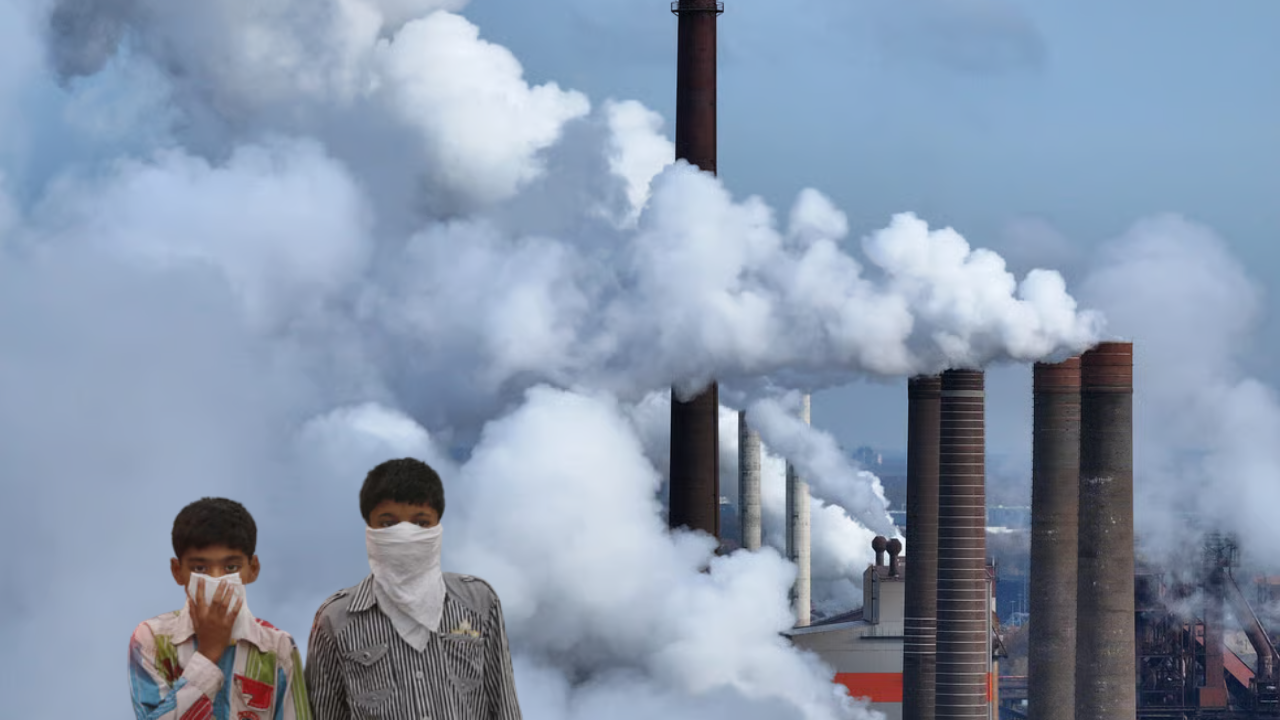
As a thick blanket of smog chokes Delhi once again, pushing the Air Quality Index (AQI) well into the “hazardous” zone, health and climate experts across the country are sounding alarm bells. The deteriorating air quality has been declared a “public health emergency”, prompting an urgent call for systemic reforms, including the phasing out of fossil fuels and an accelerated adoption of clean and renewable energy solutions.
The AQI in several parts of Delhi crossed the 450 mark this week, with PM2.5 levels — tiny particulate matter that penetrates deep into the lungs — nearly ten times higher than the safe limit prescribed by the World Health Organization (WHO). For residents of the national capital, this has meant stinging eyes, coughing fits, breathlessness, and for many, a return to masks and air purifiers.
But the crisis is no longer limited to short-term discomfort. Doctors and climate scientists alike are warning of long-term health consequences, particularly for children, the elderly, and those with pre-existing respiratory conditions.
“We are not just facing an environmental issue; this is a full-blown public health crisis,” said Dr. Rajesh Khanna, a pulmonologist at AIIMS. “Prolonged exposure to such toxic air increases the risk of asthma, COPD, cardiac ailments, and even neurological disorders.”
Fossil Fuels Under Scrutiny
The primary contributors to Delhi’s recurring air pollution include vehicle emissions, industrial activities, coal-based power generation, construction dust, and seasonal stubble burning in neighboring states. But experts emphasize that fossil fuels lie at the heart of the crisis.
“From tailpipe emissions to coal-fired power plants, our addiction to fossil fuels is poisoning the air we breathe,” said Meera Subramaniam, an environmental policy researcher at TERI. “Unless we decisively transition to clean energy sources, we are condemning ourselves to a future of unbreathable air and unlivable cities.”
Several international organizations, including the United Nations Environment Programme (UNEP) and the World Health Organization (WHO), have consistently warned that fossil fuel combustion is the leading driver of both air pollution and climate change. In 2024, air pollution was responsible for over 1.7 million premature deaths in India, according to a Lancet Commission report.
A Wake-Up Call for Policy Makers
Despite various measures announced in the past — from odd-even traffic rationing to firecracker bans — experts believe these are mere band-aid solutions. What is required, they argue, is a comprehensive policy overhaul that tackles the root cause: fossil fuel dependence.
“We need a roadmap to shut down coal-fired plants, invest massively in public transport electrification, and incentivize solar and wind energy adoption,” said Ankit Bhatia, policy director at
. “This isn’t just about Delhi anymore — cities across India are beginning to face similar crises.”
Environmentalists have also demanded strict enforcement of the National Clean Air Programme (NCAP) and allocation of sufficient funds to ensure long-term impact.
Public Health on the Line
Hospitals across Delhi have reported a sharp surge in respiratory complaints over the past 10 days. Pediatric wards are filled with children suffering from wheezing and bronchitis. Cardiologists warn that the fine particles in polluted air can trigger heart attacks and strokes, even in young adults.
“It is tragic that simply breathing has become a health hazard in the nation’s capital,” said Dr. Neha Verma, a pediatrician at Safdarjung Hospital. “We see newborns being brought in with serious breathing difficulties — this should be unthinkable.”
School closures, cancellation of outdoor sports, and advisories urging residents to stay indoors have become common. But many daily wage workers and commuters have no option but to continue their routines, risking long-term damage to their health.
Call for Collective Action
The current crisis in Delhi has reignited civil society’s push for climate justice. Youth-led groups like Fridays for Future India and Extinction Rebellion Delhi have announced peaceful demonstrations across the city, demanding decisive government action.
In a joint statement released today, over 100 doctors, scientists, and climate activists urged both the Central and Delhi governments to act now.
“This is not just an air pollution emergency — it’s a warning of the climate crisis at our doorstep,” the statement read. “India must lead the global shift away from fossil fuels and towards a sustainable, breathable future.”
The Way Forward
Delhi’s air crisis is no longer an isolated event, nor is it seasonal. It is the symptom of a deeper systemic problem — one that demands courageous leadership, multi-sector collaboration, and unwavering public support.
Experts recommend the following immediate and long-term steps:
- Enforce emission norms across all sectors including transport and industry.
- Invest in renewable energy infrastructure, especially solar and wind.
- Promote electric public transport and discourage private vehicle use.
- Phase out coal-based power plants with a clear transition plan for workers.
- Implement stricter stubble burning alternatives with farmer-friendly incentives.
- Launch public health advisories and distribute protective gear during high-risk days.
- Educate and engage citizens in sustainable practices.