
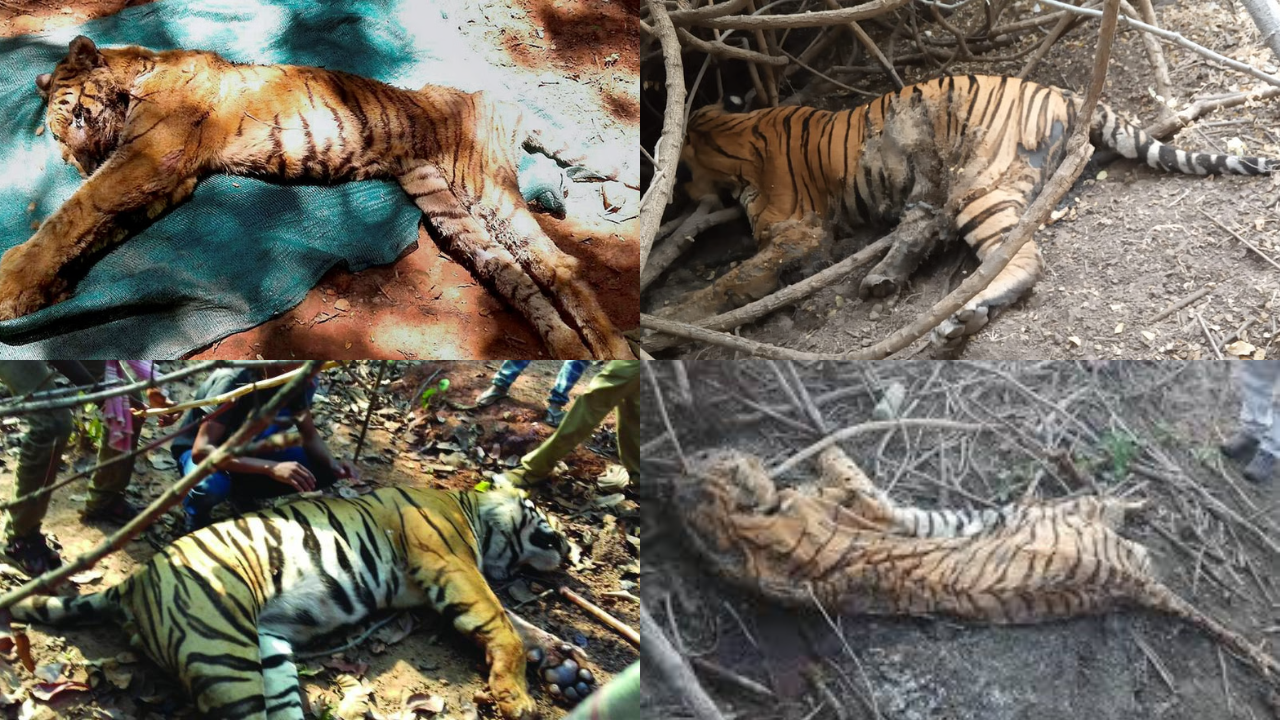

Wildlife officials launch probe as state’s tiger mortality reaches alarming levels amid rising human–wildlife conflicts.
In a concerning development for wildlife conservation efforts, a tiger carcass was discovered in Sagar forest of Madhya Pradesh, marking the 55th tiger death reported in the state this year. This figure is the highest recorded since 1973, when India launched its ambitious Project Tiger to protect its national animal and revive dwindling populations.
According to preliminary information from the state forest department, the carcass was found during a routine patrol by forest officials on Sunday morning. The discovery has triggered immediate action from the wildlife division, and a detailed investigation has been initiated to determine the cause of death. Samples have been collected for forensic tests, and senior officials, including veterinarians and wildlife experts, have been sent to the site.
Madhya Pradesh Retains “Tiger State” Status but Faces Crisis
Madhya Pradesh, known as the “Tiger State of India,” has long been regarded as a stronghold for the Bengal tiger. With more than 750 tigers as per the 2022 national census, the state holds the highest tiger population in the country. Its vast protected landscapes, including Kanha, Bandhavgarh, Pench, Satpura, and Panna tiger reserves, have been models of conservation success.
However, this recent spate of deaths has sparked deep concern. With 55 tiger fatalities recorded in 2025 so far, conservationists fear that the state’s tiger population is under increasing pressure from both natural and human-induced threats.
Officials Launch Investigation into Rising Deaths
Forest officials have launched parallel investigations into each death reported this year. Preliminary reports suggest multiple causes—ranging from territorial fights and old age to poaching and electrocution in areas near human settlements. Unnatural deaths, however, are raising red flags about potential lapses in monitoring and patrolling.
Speaking to reporters, a senior officer from the Madhya Pradesh Forest Department said, “Every tiger death is a setback to conservation. Our teams are on high alert. In the Sagar incident, forensic analysis will reveal whether it was a natural death or a case of poisoning or poaching. We are also reviewing protection protocols across all reserves.”
Sagar Forest Becomes Latest Flashpoint
The Sagar division, though not a major tiger reserve, forms an important corridor connecting key forest habitats in central India. Wildlife experts say such areas often face pressure from expanding agricultural lands, road networks, and infrastructure projects, leading to increased human–animal conflict.
The carcass found in Sagar adds to a growing pattern of tiger deaths reported outside major reserves. This trend indicates that tigers are increasingly moving beyond designated protected zones in search of food, territory, or mates — putting them at risk of collisions, poaching, and accidental killings.
Experts Call for Stronger Monitoring and Corridor Protection
Wildlife conservationists and NGOs have urged the state government to strengthen monitoring mechanisms and address gaps in management. Experts recommend deploying more camera traps and drones, expanding corridor protection, and improving coordination between forest guards and local communities.
“There is no question that Madhya Pradesh remains the heart of India’s tiger population, but we cannot afford complacency,” said an official from the Wildlife Institute of India. “As tigers disperse outside protected areas, they need safe passage and stronger guard mechanisms. Community awareness and rapid response systems can make a real difference.”
Balancing Conservation and Development
The rise in tiger deaths also reignites debate over balancing wildlife conservation with rapid human development. Madhya Pradesh’s forests have witnessed increasing encroachment pressures, mining activities, and road constructions. Conservationists argue that unchecked development without proper wildlife clearance often leads to habitat fragmentation—making tigers more vulnerable to conflicts and accidents.
Environmentalists have suggested forming a state-level Tiger Conservation Task Force that includes ecologists, local forest officers, and representatives from the National Tiger Conservation Authority (NTCA) to regularly assess and update action plans.
NTCA and State Government Step In
The National Tiger Conservation Authority (NTCA) has reportedly sought a detailed report from the Madhya Pradesh government regarding all tiger deaths recorded in 2025. Officials from the state’s Wildlife Headquarters in Bhopal have assured that every case is being documented, and steps are being taken to prevent similar incidents.
An NTCA source stated that they would review the current infrastructure and protection budgets for all tiger reserves in the state. Increased investment in camera trap grids, anti-poaching squads, and rapid veterinary response units is expected in 2026.
Public Awareness and Community Role
Conservationists emphasize that protecting tigers cannot rely solely on officials. Local communities play a vital role in safeguarding wildlife. Programs promoting eco-tourism and forest-based livelihoods have shown promise in encouraging communities to protect forests as shared resources.
Officials have been instructed to increase community engagement efforts — educating villagers about reporting suspicious activities, discouraging electrocution traps used for wild pigs or cattle predators, and ensuring quicker compensation for livestock losses to prevent retaliatory incidents.
A Wake-Up Call for Wildlife Protection
The discovery in Sagar has triggered renewed discussions across social media and environmental circles. Several wildlife activists have described 2025 as a wake-up call for Madhya Pradesh’s conservation strategy. Despite the state’s success in maintaining the largest tiger population, sustaining that achievement will require proactive measures and stronger enforcement.
As investigations continue, the Sagar forest incident underscores a somber reality — even in the heart of India’s tiger territory, continuous vigilance is essential. Every tiger lost is not just a statistical entry; it represents a challenge to India’s environmental commitment and the lasting legacy of Project Tiger.