
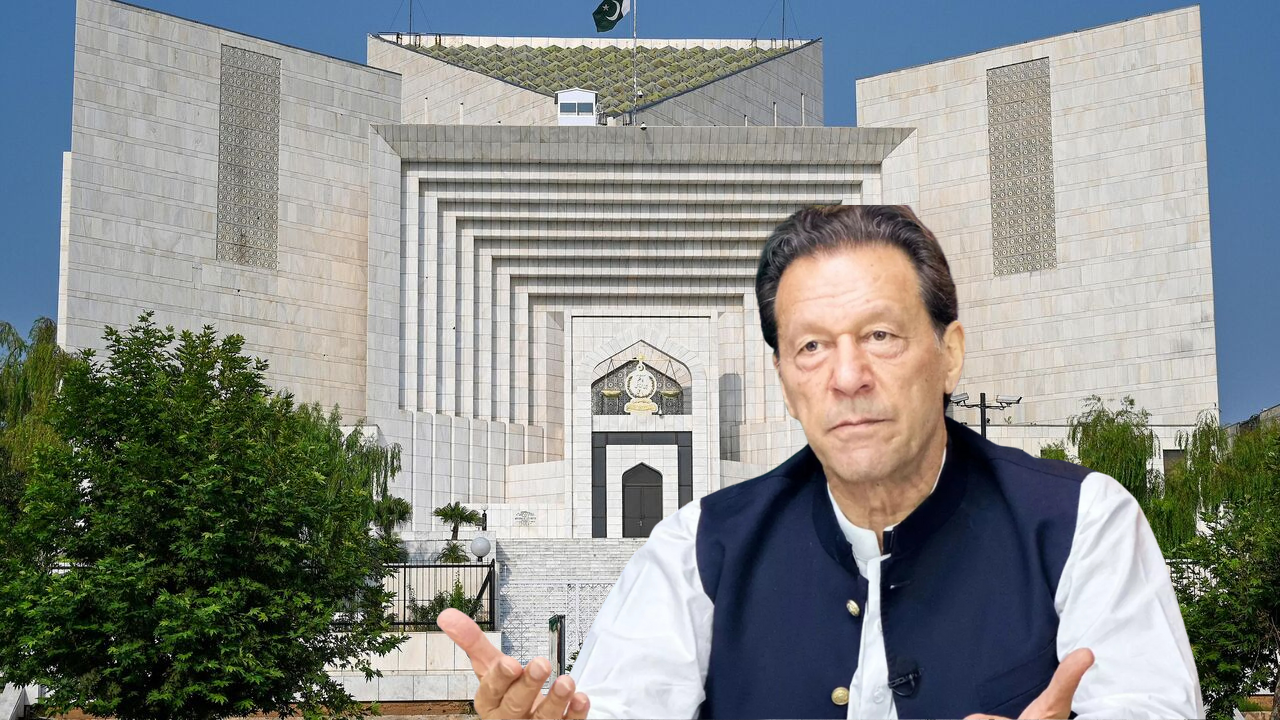
In a dramatic development with far-reaching political, security, and democratic implications, Pakistan’s Supreme Court on Friday granted bail to former Prime Minister Imran Khan in eight separate cases connected to the violence that erupted nationwide on May 9, 2023. The decision marks a major turning point in the country’s ongoing political crisis and has reignited debates about judicial independence, accountability, and the future trajectory of Pakistan’s democracy.
The bail verdict comes after months of legal battles and heightened tensions between Khan’s Pakistan Tehreek-e-Insaf (PTI) party and the ruling coalition government. Imran Khan, who was ousted from power in April 2022 through a no-confidence motion, has since faced dozens of cases ranging from corruption charges to allegations of inciting violence.
Background: May 9 Violence and Political Fallout
The May 9 unrest was sparked by Khan’s dramatic arrest in Islamabad by paramilitary forces, which led to nationwide protests and widespread clashes between PTI supporters and security agencies. Several government buildings, including sensitive military installations, were attacked or vandalized during the protests, which the state termed as an “unprecedented assault on national security.”
The government launched a sweeping crackdown on PTI leaders, workers, and sympathizers in the aftermath, branding the violence as a “conspiracy against the state.” Thousands of PTI members were arrested, and Khan himself was slapped with multiple charges of incitement, sedition, and terrorism-related offenses.
Supreme Court’s Decision
In its ruling, the Supreme Court bench observed that the prosecution had failed to provide sufficient grounds to justify Khan’s continued detention across the eight cases under review. The Court emphasized the principle of fair trial, constitutional guarantees of liberty, and the importance of avoiding politically motivated persecution.
Chief Justice-led remarks underscored that while the May 9 violence was a matter of grave concern, the responsibility of the judiciary was to ensure justice was applied equitably and without bias. The Court also reminded law enforcement agencies of the need to distinguish between peaceful political expression and acts of violence.
Political Reactions
The ruling has drawn mixed reactions across Pakistan’s polarized political landscape. PTI hailed the decision as a “victory for democracy and rule of law,” with party spokespersons declaring that Khan’s release paves the way for his return to active politics.
“The people of Pakistan have stood by Imran Khan despite immense pressure. Today’s decision reaffirms that truth cannot be suppressed indefinitely,” a PTI statement read.
Conversely, members of the ruling coalition expressed concern that Khan’s release could embolden his supporters and reignite unrest. Several leaders accused the judiciary of succumbing to “populist pressure” and undermining the state’s efforts to maintain order.
Regional and International Implications
Imran Khan’s bail carries implications beyond Pakistan’s borders. As a nuclear-armed nation and pivotal South Asian player, Pakistan’s political stability directly impacts regional security, counter-terrorism cooperation, and trade dynamics.
Observers note that the ruling comes at a sensitive time, with Pakistan facing economic instability, inflationary pressures, and ongoing negotiations with international financial institutions. Additionally, heightened political uncertainty could complicate Islamabad’s diplomatic engagements with neighboring countries such as India, China, and Afghanistan, as well as strategic allies in the United States and the Gulf.
Global watchdogs and rights organizations have consistently raised concerns over political freedoms and human rights in Pakistan. The Supreme Court’s move is being interpreted by many as a test case for the country’s democratic resilience.
Judicial Independence
Legal experts believe that the ruling strengthens judicial independence in a system long criticized for political interference. However, they caution that Khan’s release does not mark the end of his legal troubles, as numerous other cases remain pending against him.
Political analysts warn that the verdict could sharpen existing divides between the civilian government, the powerful military establishment, and the judiciary. “This decision could either de-escalate tensions by opening space for dialogue, or it could fuel another cycle of confrontation if both sides dig in further,” Dr. Ayesha Malik said , a political scientist at Lahore University of Management Sciences (LUMS).
The Road Ahead
Imran Khan’s release comes at a time when Pakistan is preparing for the next general elections, with speculation mounting about whether he will be allowed to contest. The Election Commission of Pakistan has yet to clarify his eligibility, given the ongoing legal proceedings.
For Khan, the ruling is a lifeline to re-energize his political campaign and mobilize his voter base, particularly the youth who remain staunchly supportive of his anti-corruption and populist platform. For the government, the challenge lies in balancing law and order with democratic freedoms, while navigating the country through economic and security headwinds.
The Supreme Court’s decision to grant bail to Imran Khan in eight May 9-related cases has introduced a new chapter in Pakistan’s turbulent political saga. While welcomed by Khan’s supporters as a triumph of democracy, the move also raises questions about stability, governance, and the delicate balance of power among Pakistan’s institutions.
As the nation stands at a crossroads, the coming weeks will determine whether this development opens avenues for reconciliation and democratic consolidation, or whether it deepens Pakistan’s political crisis.