
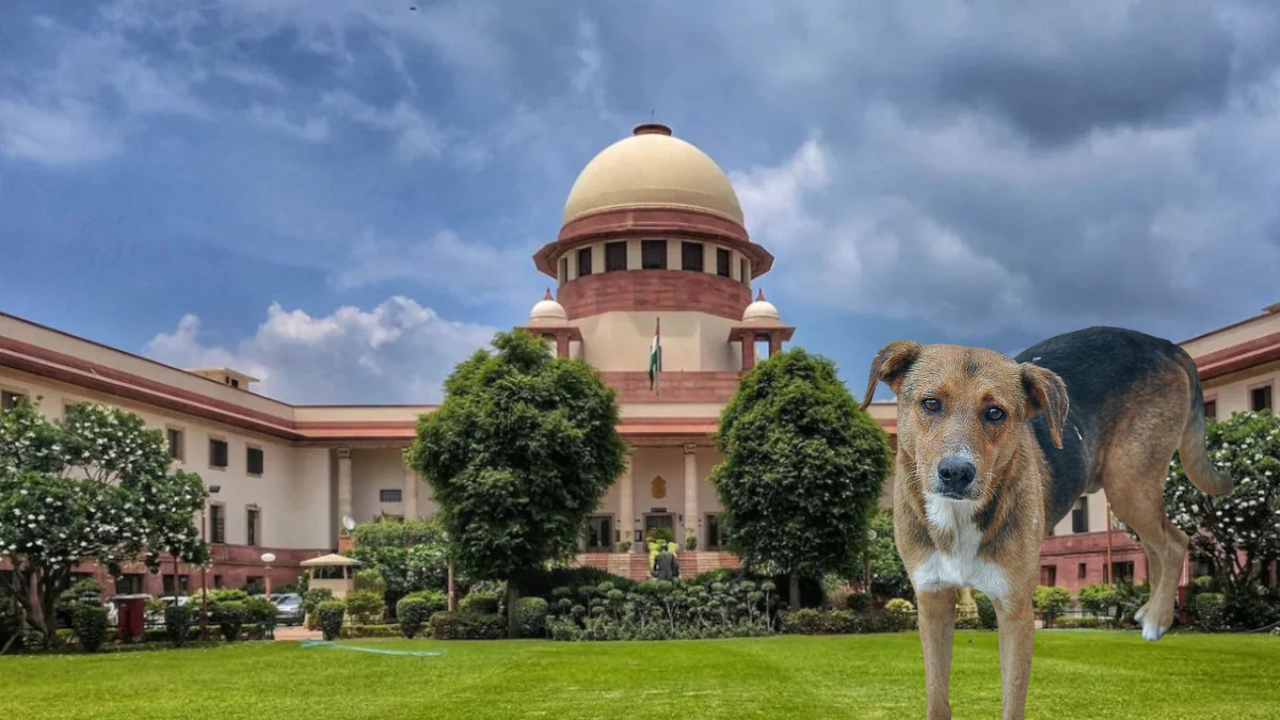

In a significant development that has stirred nationwide debate, the Supreme Court of India has issued an order directing state and local authorities to remove stray dogs from sensitive public institutions such as schools, hospitals, railway stations, and government offices. The apex court has instructed that these animals be relocated to designated shelters where they can be cared for in a safe and humane environment.
The order, aimed at ensuring safety in public places, has sparked mixed reactions among citizens, animal rights activists, and civic bodies. While some have welcomed the move as a step toward controlling the growing stray population and preventing dog-bite incidents, others view it as an insensitive approach that overlooks the welfare of street animals.
Concern Over Rising Incidents
In recent months, reports of stray dog attacks have increased across several cities including Delhi, Mumbai, and Bengaluru. Parents and school authorities have voiced concerns about the safety of children in school premises where dogs freely roam. Hospital administrations too have raised alarms after several videos surfaced showing stray dogs entering wards and hospital corridors, raising hygiene concerns.
The Supreme Court, while issuing the directive, noted that public institutions should be safe and accessible spaces for everyone, particularly children, patients, and commuters. The bench emphasized the need for a balanced approach — one that addresses both human safety and animal welfare. The court also directed state governments to coordinate with animal welfare boards to ensure proper relocation and shelter management.
Cities Mobilize After the Order
Following the Supreme Court’s order, municipal corporations across the country have begun reviewing their action plans for handling stray dogs. In Mumbai, Pune, Bhopal, and Chennai, civic bodies are identifying suitable spaces for temporary shelters and vaccination centers.
The Brihanmumbai Municipal Corporation (BMC) has announced that it will work with NGOs and veterinary teams to relocate stray dogs from schools, hospitals, and railway stations to designated shelters. A senior BMC official stated that the process will be carried out carefully to ensure that no animal is harmed or neglected.
However, the operation is not without challenges. Mumbai has an estimated population of over one lakh stray dogs, and finding adequate shelter and care facilities for them remains a major concern. Animal welfare groups have demanded more transparency and better conditions in municipal shelters, which are often overcrowded and under-resourced.
Protests and Public Reactions
The Supreme Court’s decision has triggered protests in several cities, particularly in Mumbai, Pune, and Bengaluru. Animal rights activists took to the streets with banners reading “Shelter, Not Capture” and “Strays Deserve Compassion.” They argue that relocating dogs from their habitats can cause stress and suffering to the animals.
Activists also fear that local authorities might resort to cruel or inhumane methods in executing the court’s order. Several NGOs, including People for Animals and the Stray Animal Foundation of India, have urged the government to implement the directive with humane treatment and strict supervision.
Meanwhile, many parents and residents have lauded the Supreme Court’s intervention. They believe that the move will reduce the threat of dog bites and improve public hygiene around crucial facilities like schools and hospitals.
One Mumbai resident said, “We all love animals, but children’s safety should come first. Stray dogs inside school compounds or hospital areas must be relocated. This order was necessary.”
The Balancing Act Between Welfare and Safety
Experts say the challenge now lies in balancing compassion for animals with public safety. Animal behaviorists and veterinarians note that sterilization and vaccination remain the most effective ways to control stray populations over the long term.
The Animal Birth Control (ABC) program, in place in several Indian cities, has shown successful results in reducing stray numbers when implemented consistently. However, poor coordination, lack of funding, and limited resources have slowed progress in many areas.
The Supreme Court, while acknowledging the importance of the ABC program, has urged state authorities to expand vaccination drives and ensure the newly relocated dogs receive proper medical care. It has also cautioned against mass culling or harsh removal practices, stressing that relocation should be done under veterinary supervision with proper tagging and record-keeping.
Mumbai at the Center of the Debate
Mumbai, India’s financial capital, has emerged as one of the focal points of this debate. The city’s dense population and large number of street animals make implementation particularly challenging. Several local organizations, including Welfare of Stray Dogs (WSD) and the Mumbai Animal Welfare Board, have expressed willingness to assist BMC in identifying healthy ways to relocate and rehabilitate street dogs.
City residents remain divided. While some advocate for the complete removal of strays from public institutions, others call for coexistence, suggesting secure enclosures within campuses where sterilized dogs can remain without posing risk.
As protests continued through the weekend across various Mumbai suburbs, civic authorities assured citizens and activists that no dog would be harmed. BMC officials stated that the relocation process will be transparent and closely monitored by both government and independent animal welfare bodies.
Way Forward
The Supreme Court’s directive has once again highlighted India’s complex relationship with its street animals. Stray dogs are an integral part of the urban landscape, often fed and cared for by local communities. Yet, safety concerns in hospitals, schools, and transport hubs remain valid and pressing.
Authorities now face the dual responsibility of executing the court’s order while ensuring humane treatment of animals. The success of this initiative will depend largely on cooperation between civic bodies, NGOs, and the public.
In its closing remarks, the court reminded local administrations that compassion and safety must go hand-in-hand. “Public spaces must be secure,” the bench noted, “but the dignity of all living beings must also be preserved.”
As India grapples with the implementation of this landmark judgment, all eyes are on how cities like Mumbai will handle this delicate balance between human and animal welfare in the days ahead.