
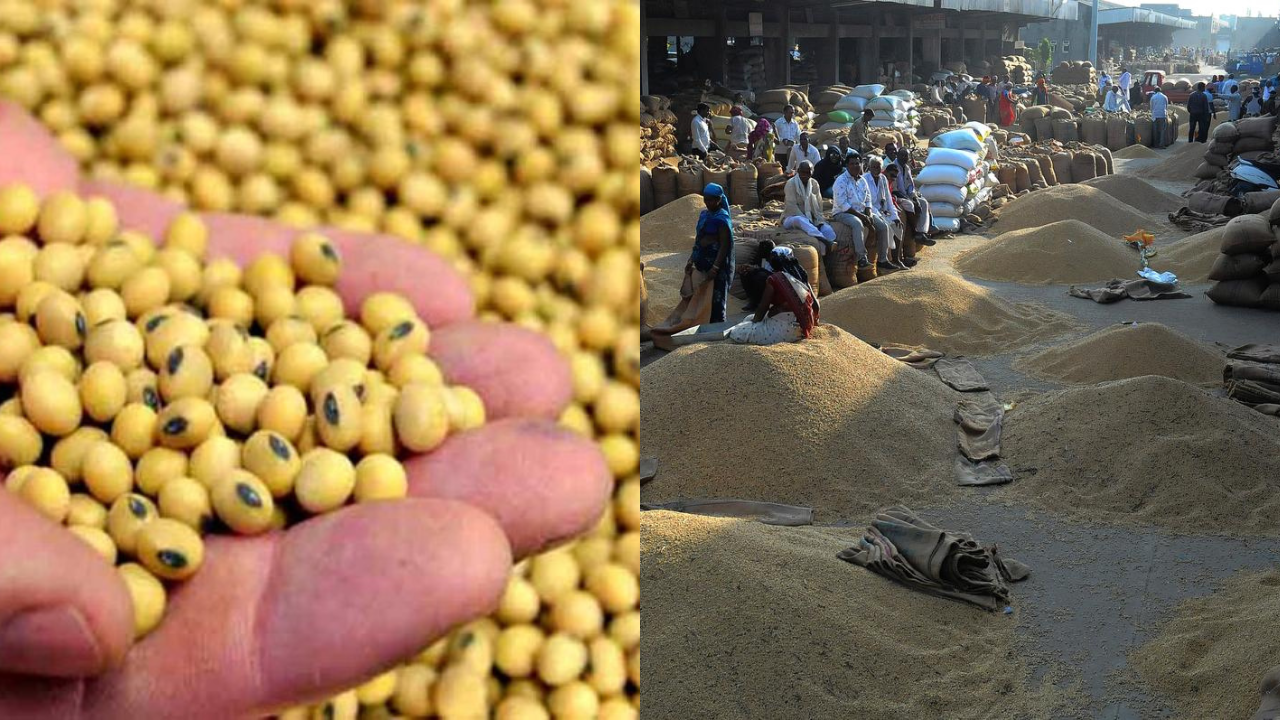
Soybean farmers across Maharashtra are witnessing a steady rise in market prices this month, a development that has sparked optimism in villages and trading markets ahead of the government’s upcoming Price Support Scheme (PSS) procurement season.
In major soybean-producing districts such as Amravati, Akola, Latur, Beed, and Washim, the recent upward movement in prices has created a positive buzz among both farmers and local traders. With procurement operations expected to begin soon under the assistance of agencies like NAFED, agricultural markets are already experiencing heightened activity as mandi arrivals and trade inquiries grow steadily.
Experts believe that this surge reflects multiple factors — from lower-than-expected production due to unseasonal rainfall during the sowing stage to rising demand from domestic oil mills and exporters. Farmers who held back produce after harvest are now benefiting from the market’s gradual strengthening.
Prices Strengthen Across District Markets
Soybean prices have firmed up in several major markets of Maharashtra, moving closer to the government’s Minimum Support Price (MSP). In Amravati and Akola, mandi rates have touched around Rs. 5,200 to Rs. 5,500 per quintal, while in Latur and Parbhani, quotes have climbed above Rs. 5,600. Traders say the sentiment remains strong as more buyers enter the market in anticipation of official procurement.
Many farmers have limited arrivals, choosing instead to wait for the PSS program to commence. This reduced immediate supply has helped support prices in the open market, while expectations of assured government procurement add a layer of confidence among growers.
An official from one of the local cooperative marketing societies noted that this year’s procurement is likely to start earlier than the previous season, ensuring timely support for farmers affected by erratic monsoon patterns. He added that centers across key regions are being equipped with weighing, grading, and payment mechanisms to ensure transparency and efficiency once purchases begin.
Farmers’ Relief After a Challenging Monsoon
For thousands of cultivators across Vidarbha and Marathwada, the steady recovery in prices has come as a welcome relief. This year, excessive rainfall in some phases and dry spells in others affected soybean yield and quality, leading to uncertainty after harvest. Many farmers had incurred high input costs on seeds, fertilizers, and pest management, making favorable market conditions crucial for their recovery.
Ramesh Pawar, a farmer from Washim district, shared that he had stored his produce for nearly four weeks after harvest, hoping that market prices would improve. “Soybean prices were low right after harvesting due to heavy arrivals, but now they are increasing daily. We expect the government to start procurement soon, which will help us get a fair price,” he said.
Analysts highlight that the state’s soybean production this year may see a moderate decline compared to last year, but the fall is being offset by stronger demand from crushing units in Madhya Pradesh and Gujarat. This inter-state movement of produce is also adding strength to wholesale rates.
Traders Anticipate a Busy Procurement Season
Local traders and commission agents in district mandis expect brisk business activity once the government’s procurement drive gains momentum. Many private buyers are also closely monitoring the MSP trends and export signals, especially with international soybean oil prices staying firm.
According to small traders in Akola and Hingoli, the current price trend indicates a balanced market where both farmers and buyers stand to benefit. “Procurement always improves liquidity in rural markets,” explained a trader, “And since farmers have already seen an improvement this month, PSS operations will further stabilize rates without sharp volatility.”
Agri-economists agree that a well-timed Price Support Scheme can act as a strong market stabilizer, protecting farmers from distress sales while keeping supply consistent for processors and millers.
Impact on Rural Economy and Future Outlook
The rise in soybean prices is likely to boost the rural economy across central and eastern Maharashtra in the coming weeks. As farmers secure better returns, local transportation, warehousing, and input service providers will also experience increased activity. This ripple effect often benefits small businesses and daily-wage workers connected to agricultural value chains.
Government officials have indicated that detailed announcements about procurement schedules, centers, and quantity limits will be released shortly. In the meantime, the current market momentum continues to lift confidence among rural households.
Economic observers suggest that the soybean trend could set a positive tone for the upcoming rabi sowing season as well. With earnings from Kharif crops gradually improving, many farmers are expected to reinvest in seeds, fertilizers, and land preparation for wheat and gram.
A Positive Turn for the Farming Community
The rise in soybean prices marks a welcome shift from the uncertainty that has clouded Maharashtra’s agricultural outlook in recent years. As the state prepares for the next phase of PSS procurement, both farmers and traders appear optimistic about steady returns and enhanced market stability.
Market observers note that consistent implementation of support schemes, coupled with transparent grading and digital payment systems, can help strengthen farmer confidence in institutional procurement. Such measures not only ensure fair prices but also promote long-term sustainability in agricultural trade.