Former Union Agriculture Minister and Nationalist Congress Party (NCP) chief Sharad Pawar has appealed to the Maharashtra government to intensify its ongoing flood relief operations, emphasizing the urgent need for swift damage assessment and timely compensation to affected farmers across the state.
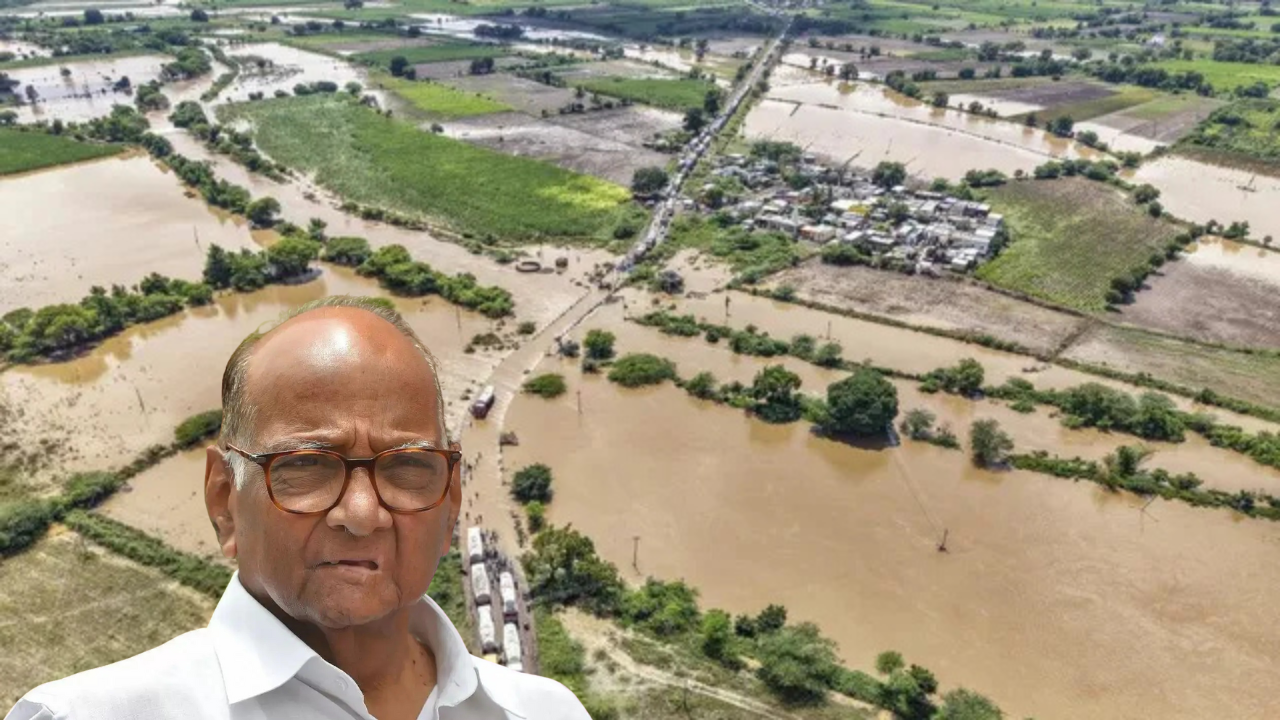
The recent floods, triggered by incessant rainfall in several districts of Maharashtra, have left a trail of severe damage to crops, agricultural lands, and rural infrastructure. Thousands of farmers have been left helpless, awaiting state support and financial relief to revive their livelihoods.
Pawar called on the state leadership to immediately deploy additional manpower and resources to ensure that farmers’ grievances are addressed without delay. According to him, mere announcements and surveys will not help unless ground-level assessments are carried out rapidly with transparency, and compensation is disbursed efficiently to those who have suffered losses.
Pawar Highlights Farmers’ Plight
Addressing reporters on Friday, Sharad Pawar expressed concern over the plight of farmers whose kharif crops have been destroyed due to excessive flooding. “Agriculture is the backbone of our rural economy, and when farmers face devastation due to natural calamities, the government has a moral responsibility to act with urgency. Immediate deployment of additional officers and manpower is crucial for damage assessment, otherwise farmers will be left waiting indefinitely for compensation,” Pawar emphasized.
He further noted that several villages remain cut off due to waterlogging and damaged roads, making it difficult for officials to access farms and record crop losses. In such cases, he urged the administration to make use of modern technology, including satellite imagery and drone surveys, to speed up the process.
Call for Transparent Compensation Mechanism
Pawar reiterated his demand to ensure a transparent compensation mechanism free of bureaucratic hurdles. He insisted that farmers should not be forced to run from pillar to post for relief payments. Highlighting the delays historically seen in disaster compensation distribution, Pawar said, “Relief funds must directly reach farmers’ accounts with minimum interference. The longer we delay, the deeper the distress gets.”
Farmer organizations across Maharashtra have welcomed Pawar’s intervention, stating that timely compensation is the only way to prevent farmer migration from rural areas and safeguard future agricultural productivity.
Maharashtra’s Flood Impact
According to preliminary state government estimates, districts such as Kolhapur, Sangli, Satara, and Nashik have recorded extensive damage, with thousands of hectares of farmland submerged under floodwaters. Major crops like sugarcane, soybean, maize, paddy, and vegetables have been badly affected, leading to fears of both crop loss compensation claims and potential price escalation in the state’s urban markets.
Local authorities have confirmed that hundreds of homes and cattle shelters have also been damaged, worsening the challenges faced by farming households. Relief camps have been set up in several districts, but farmers complain that support is not being distributed evenly and survey teams are overstretched.
Sharad Pawar’s Recommendations for Relief Acceleration
Pawar outlined several key recommendations during his address to the government:
- Mobilize additional officers and ground staff across badly affected districts to fast-track surveys.
- Deploy drones and use satellite imagery for real-time crop loss verification.
- Ensure compensation payments directly into farmers’ bank accounts through digital transfers.
- Establish village-level help centres to register grievances swiftly.
- Provide advance relief amounts to farmers to stabilize immediate needs like seeds, food, and cattle feed.
“These measures, if implemented sincerely, can make a real difference for the farming community struggling to recover from this disaster,” Pawar noted.
Political and Public Reaction
Sharad Pawar’s strong stance comes at a time when the Maharashtra government is facing mounting pressure to respond comprehensively to the flood crisis. Opposition leaders have accused the ruling coalition of being slow in offering aid, while farmer associations have staged protests in multiple districts demanding urgent compensation.
Analysts believe Pawar’s statement carries weight given his extensive experience in agriculture policy and governance. As a former Agriculture Minister of India, Pawar has long been hailed as a veteran voice for the farming community, and his appeal adds momentum to the broader demand for effective relief measures.
Meanwhile, state government officials have reassured the public that survey teams are on the ground and compensation announcements will follow once assessments are complete. However, administrative challenges and manpower shortages remain pressing hurdles.
Ground Reality for Farmers
Despite reassurances, many farmers remain skeptical about the speed of government response. Farmers in parts of Satara and Kolhapur have reportedly been waiting for survey officers to visit their fields for over a week, with no official records of their crop damage yet.
A sugarcane farmer from Sangli shared, “Floods have destroyed almost my entire crop. Without immediate compensation, it will be impossible to repay debts or prepare for the rabi season. We need action, not paperwork.”
Such testimonies are echoing across flood-hit regions, underscoring Sharad Pawar’s call for greater manpower deployment in relief and assessment missions.
Looking Ahead
As Maharashtra continues its recovery efforts, attention will now be on whether the state government accelerates its relief distribution process. Sharad Pawar’s intervention has once again brought farmers’ challenges into focus, pressing authorities to act with urgency and empathy.
With agriculture forming the cornerstone of Maharashtra’s rural economy, timely support to farmers will not only ensure survival for thousands of families but will also play a decisive role in stabilizing the state’s food supply and economic resilience.