
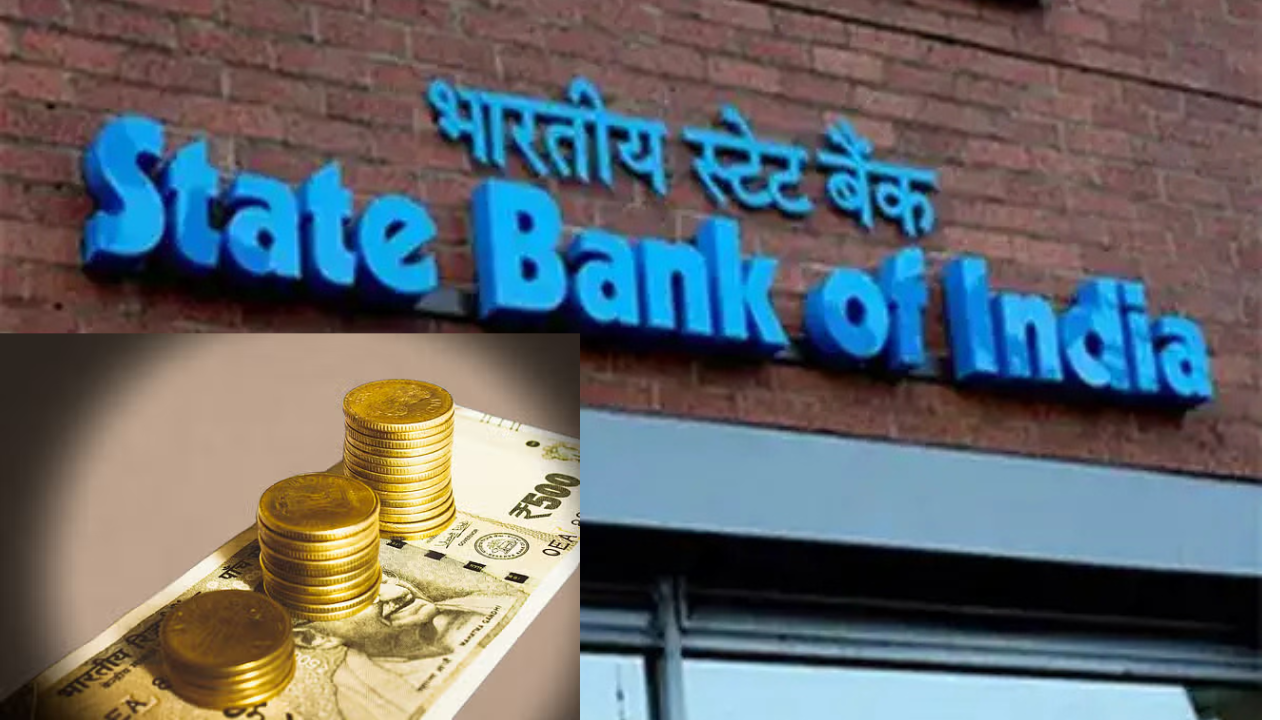

The State Bank of India (SBI), the country’s largest public sector lender, has released a comprehensive economic report forecasting potential volatility in the Indian rupee if former U.S. President Donald Trump secures a second term in the White House. The report, titled “US Presidential Election 2024: How Trump 2.0 Impacts India’s and Global Economy”, highlights the possibility of the rupee depreciating by 8-10% against the U.S. dollar in the immediate aftermath of such a political shift.
This analysis comes at a time when the rupee touched a historic low of ₹84.38 per dollar on Monday, underscoring the mounting challenges for India’s currency amid global economic uncertainty and geopolitical shifts.
The State Bank of India (SBI) is India’s largest public sector bank and a Fortune 500 company. With a heritage spanning over 200 years, SBI serves more than 48 crore customers through a vast network of branches and digital platforms. SBI plays a pivotal role in India’s economic development by providing financial services across retail, corporate, rural, and international banking segments.
SBI’s Key Projection
The report notes that if Trump’s return to power results in aggressive policy changes on trade, tariffs, and global capital flows, emerging markets including India could witness heightened currency volatility. The rupee, which has already been under pressure due to persistent dollar strength, rising U.S. bond yields, and capital outflows, could see a temporary depreciation of 8-10%.
However, SBI emphasized that this depreciation may be short-lived. The bank projects that structural fundamentals of the Indian economy – including strong foreign exchange reserves, resilient domestic consumption, and steady capital inflows into equity markets – will help the rupee recover over the medium to long term.
Global Context and Market Reactions
SBI’s report suggests that a Trump victory could reignite debates around protectionism, renegotiation of trade agreements, and stricter immigration norms, all of which may lead to a stronger U.S. dollar in the short run. Historically, Trump’s economic policies during his first tenure created mixed outcomes for global markets – with some sectors benefiting from tax reforms while others faced challenges due to tariff wars.
In India’s case, the direct impact is expected to be visible in currency markets and trade balances. “The rupee’s recent fall to 84.38 against the dollar reflects not only domestic pressures but also global dynamics where the dollar remains exceptionally strong. A Trump 2.0 presidency could amplify these pressures, at least initially,” the report stated.
Impact on Indian Economy
While a weaker rupee could raise India’s import bill, especially for crude oil and essential commodities, SBI pointed out that it might also boost export competitiveness. Sectors such as information technology, pharmaceuticals, and textiles could benefit from a relatively weaker rupee, enabling them to expand their global market share.
On the flip side, a sharp depreciation could add to inflationary concerns, particularly through higher imported inflation in fuel and raw materials. This, in turn, might compel the Reserve Bank of India (RBI) to adopt a more calibrated monetary stance to maintain price stability.
The report also highlighted that India’s robust forex reserves, currently among the world’s largest, provide a critical buffer against external shocks. With prudent fiscal policies and continued emphasis on Atmanirbhar Bharat (self-reliance), India is better positioned to withstand global uncertainties compared to previous years.
SBI’s Forward-Looking Outlook
SBI economists remain cautiously optimistic about India’s economic trajectory, even under a Trump presidency. The report underscores three key reasons for this optimism:
- Strong Domestic Demand: India’s consumption-driven economy continues to act as a stabilizing factor, providing resilience against external shocks.
- Reforms and Infrastructure Push: Ongoing structural reforms, digital transformation, and infrastructure investments will sustain long-term growth momentum.
- Investor Confidence: Despite short-term volatility, foreign investors are likely to remain committed to India, drawn by its large market, reform-driven policies, and demographic advantage.
The report concluded that “while the rupee may witness temporary weakness in a Trump 2.0 scenario, its eventual rebound is almost inevitable, supported by India’s macroeconomic fundamentals and strategic global positioning.”
“Currencies reflect the push and pull of global politics and economics. While the rupee may face headwinds if the U.S. dollar strengthens under new policy regimes, India’s underlying fundamentals remain strong. We expect the rupee to recover its lost ground over time.”
Market analysts also echoed SBI’s assessment, stressing that India’s long-term growth story remains intact. They highlighted that businesses and investors should prepare for near-term volatility but continue to view India as one of the most attractive investment destinations globally.
The State Bank of India’s report provides timely insights into how global political shifts – particularly the U.S. presidential election – could shape India’s economic outlook. As the world watches the unfolding events in Washington, policymakers, businesses, and investors in India are preparing to navigate possible turbulence with a mix of caution and optimism.
While the rupee may experience bouts of weakness in response to U.S. policy shifts, SBI believes that India’s growth engine, structural reforms, and strong reserves will ensure eventual stability. The message is clear: short-term pain may be unavoidable, but long-term prospects for the Indian rupee – and the Indian economy at large – remain robust.