


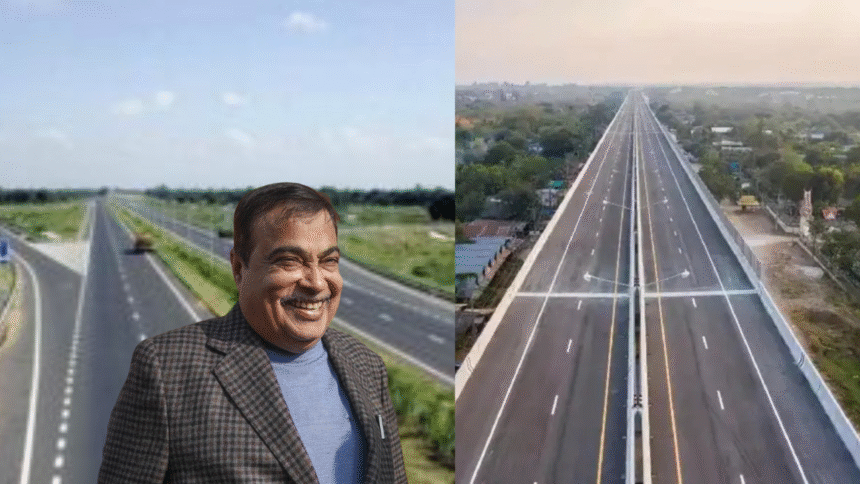
Infrastructure upgrades to transform regional logistics, reduce travel time, and strengthen Nagpur’s role as a central transport hub.
Union Minister for Road Transport and Highways, Nitin Gadkari, inaugurated a series of key road and infrastructure projects worth ₹2,980 crore in Nagpur on Monday, marking a major boost to central India’s transport network. The event took place just hours before the announcement of local body election dates in Maharashtra, giving it both developmental and political significance.
Addressing a large gathering of officials, engineers, and local citizens, Gadkari said that these projects would transform connectivity, reduce travel time, and promote economic development across the Nagpur region and surrounding districts. The inauguration included a mix of new highway stretches, widening of existing routes, flyovers, bypasses, and modern amenities supporting national highways and rural connectivity.
Boost to Connectivity and Local Economy
According to Gadkari, the ₹2,980 crore investment will primarily aim to improve road infrastructure under the National Highways Authority of India (NHAI) and other related agencies. The new projects are expected to strengthen Nagpur’s position as a central logistics hub—often called the “Zero Mile City” due to its geographical location at the center of India.
“These new roads and flyovers are not just about better travel—they are about saving time, reducing logistic costs, and accelerating business opportunities in the Vidarbha region,” Gadkari emphasized. He also mentioned that improved connectivity will help industries like agriculture, manufacturing, and logistics grow faster, creating employment for local youth.
Key Projects Inaugurated
The ceremony covered multiple infrastructure initiatives in and around Nagpur, including national and state highway improvements. Among the important developments were:
- Expansion and modernization of key highway corridors connecting Nagpur with surrounding districts such as Wardha, Bhandara, and Chandrapur.
- Construction of new bypass roads and flyovers to reduce city congestion and streamline vehicle flow.
- Upgradation of rural roads under the Pradhan Mantri Gram Sadak Yojana (PMGSY) to ensure better last-mile connectivity.
- Development of road safety measures, including smart traffic management systems, dedicated pedestrian zones, and improved signage.
- Infrastructure for sustainable transport, such as new bridges and culverts designed with eco-friendly materials.
Officials from the Maharashtra Public Works Department (PWD), National Highways Authority of India, and local administration attended the event. They praised the timely execution and coordination between central and state agencies in completing these major road projects.
Gadkari Highlights Vision for “Green Roads” and Sustainability
Known for his commitment to eco-friendly road construction, Gadkari also highlighted new initiatives aimed at environmental sustainability. He said that future projects in Vidarbha will incorporate “green roads,” which use alternative materials such as waste plastic and fly ash, reducing carbon emissions during construction.
He further announced that electric vehicle (EV) charging infrastructure will be added along major highways, encouraging the adoption of electric mobility. “Our goal is to make 60 percent of highway construction based on green technology by 2030. This is not just about roads—it’s about sustainable nation-building,” he said.
Political Context and Development Push
The timing of the inauguration, just hours before the Election Commission’s announcement of local body elections in Maharashtra, drew attention from political observers. While opposition parties described the event as a “pre-election show,” government officials clarified that the projects had been planned and funded well in advance and were part of ongoing development efforts under the Ministry of Road Transport and Highways.
Despite the political undertone, the public reception in Nagpur remained overwhelmingly positive. Locals expressed optimism that smoother roads and better connectivity will attract new businesses and tourism to the region. Traders, transporters, and industrialists present at the event echoed the sentiment that infrastructure growth will directly benefit the economy of Nagpur and neighboring districts.
Future Roadmap for Vidarbha Region
Gadkari, who has represented Nagpur in Parliament for several terms, reaffirmed his long-term vision for transforming Vidarbha into a model of infrastructure-led growth. He outlined plans for additional highway projects, expressways connecting key industrial belts, and logistics parks that would reduce cargo handling costs.
He also mentioned the ongoing works of the Nagpur–Mumbai Samruddhi Mahamarg, one of India’s most ambitious expressway projects, connecting Nagpur to the state capital in just eight hours. Gadkari said that such projects will not only enhance trade routes but also expand investment opportunities in agriculture processing, warehousing, and tourism across central Maharashtra.
Closing Remarks
The event concluded with the symbolic flag-off of several newly completed road sections, witnessed by senior officials and local residents. Gadkari reiterated the government’s commitment to improving road safety and expanding India’s national highway network to 200,000 kilometers by 2030. He thanked the engineers, workers, and agencies involved in completing the projects on schedule, despite challenges such as adverse weather conditions and land acquisition issues.
With the commissioning of ₹2,980 crore worth of infrastructure projects, Nagpur stands poised for significant growth in connectivity, trade, and urban development. The city continues to play a central role in India’s expanding network of highways and smart mobility initiatives—reflecting Gadkari’s broader vision of infrastructure-driven progress for the nation.