
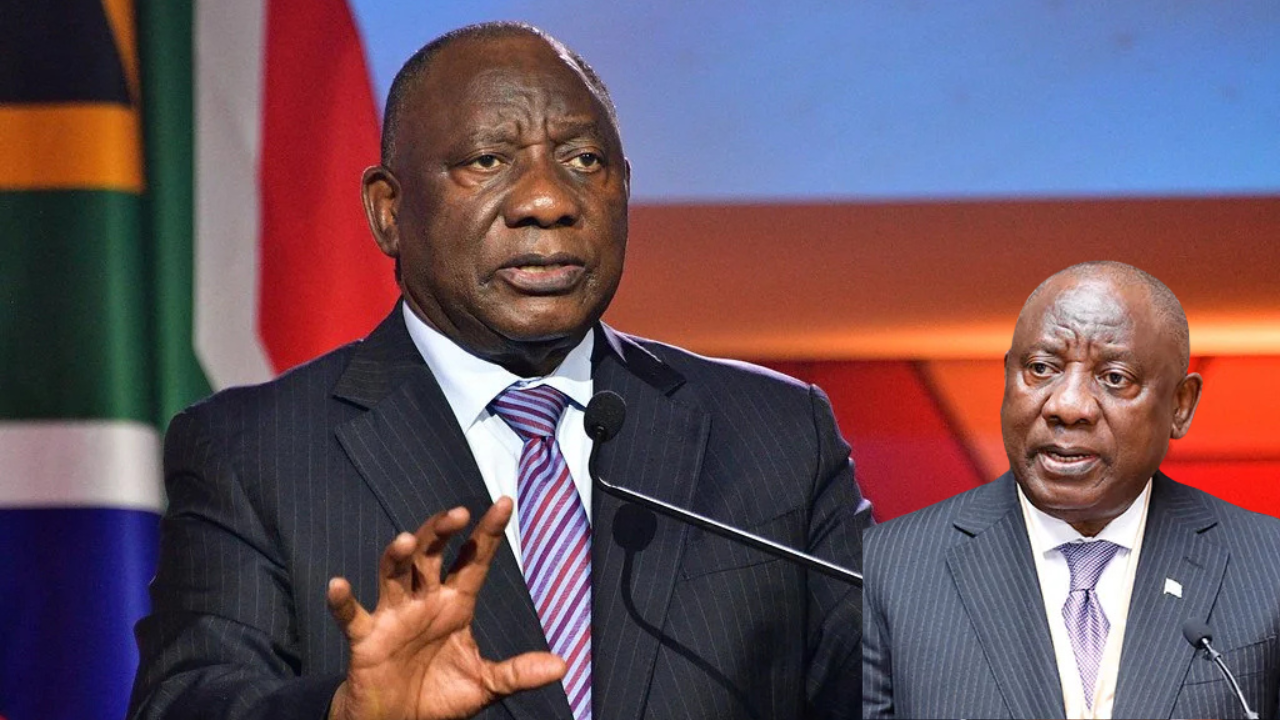
In a meeting marked by sharp tensions and striking visuals, South African President Cyril Ramaphosa and former U.S. President Donald Trump clashed at the White House over controversial claims of violence against white South African farmers — claims experts and human rights groups have widely dismissed as baseless.
The meeting, held on May 21, was part of President Ramaphosa’s effort to repair strained diplomatic ties between Pretoria and Washington. Relations had cooled since the beginning of Trump’s second term, largely due to the U.S. administration’s increasingly vocal criticism of South Africa’s internal land reform policies and racially sensitive narratives being amplified in certain U.S. media outlets.
Tensions escalated when former President Trump played a provocative video during the meeting, alleging that white South African farmers were being systematically targeted and killed. The video, which included clips of Black South African officials purportedly inciting violence and alleged footage of “burial sites,” was played in front of Ramaphosa and gathered members of the media and diplomatic corps.
Ramaphosa: “This is not government policy,”
In response to the video, President Ramaphosa remained composed but firm. He clarified that the violent rhetoric in the video did not reflect the stance or policies of the South African government.
“What you saw, the speeches that were being made — that is not government policy,” President Ramaphosa asserted, directly addressing the former U.S. president’s accusations.
While watching the footage, Ramaphosa reportedly turned to the media and calmly stated:
“I’d like to know where that is, because this I’ve never seen.”
Expert Consensus: No Evidence of White Genocide
The claim of a so-called “white genocide” in South Africa has circulated in far-right and fringe online communities globally for years, but has been repeatedly debunked by human rights groups, crime analysts, and even farming advocacy organizations within South Africa itself.
The Institute for Security Studies (ISS), an independent African think tank, has stated that while violent crime is a serious problem in South Africa, it affects citizens across all racial and socio-economic groups — and not just white farmers.
Similarly, AfriForum, a civil rights group representing Afrikaner interests, has also cautioned against using the term “genocide,” warning that such language can be inflammatory and misleading.
Diplomatic Strains and the Path Forward
President Ramaphosa’s trip to Washington comes amid growing concerns that misinformation could further undermine the relationship between the two democratic nations.
“We want to deepen cooperation, not division,” said a senior South African official traveling with the delegation. “Our countries share values of democracy and rule of law. We must not allow misinformation to become the foundation of policy decisions.”
President Trump, however, remained adamant in his stance, telling the press, “What you’re seeing in these videos — this is real, this is happening.” The former president has in the past tweeted about alleged land grabs and attacks on white farmers, prompting South Africa’s Department of International Relations and Cooperation (DIRCO) to request official clarification from the U.S. Embassy in Pretoria.
A Battle of Narratives
Observers have noted that the exchange is emblematic of a broader battle of narratives in the digital age, where misinformation can rapidly shape international discourse, even on complex, sensitive domestic issues.
The South African Embassy in Washington issued a brief statement following the meeting:
“South Africa remains committed to upholding human rights and constitutional values. The government rejects all forms of racism and violence, and works tirelessly to ensure justice and security for all citizens, regardless of race.”
Political analysts warn that the continued circulation of unverified or sensationalized claims could have real-world diplomatic consequences.
“When political leaders engage with misinformation, it lends legitimacy to false narratives,” said Dr. Naledi Khoza, a foreign policy expert at the University of Cape Town. “This exchange at the White House underscores the urgency of basing international relations on verified facts and mutual respect.”
Looking Ahead: Unity Over Division
President Ramaphosa has emphasized that land reform in South Africa — a key issue often linked with the false “white genocide” narrative — is being handled through legal, constitutional, and inclusive processes aimed at correcting historical injustices without threatening current property rights.
The President concluded the visit by reaffirming South Africa’s commitment to peaceful, lawful reform and its desire to build strong partnerships based on truth, respect, and mutual understanding.
As the international community continues to grapple with misinformation and its impact on diplomacy, this high-profile exchange serves as a reminder that facts matter — and leadership means being accountable to them.