
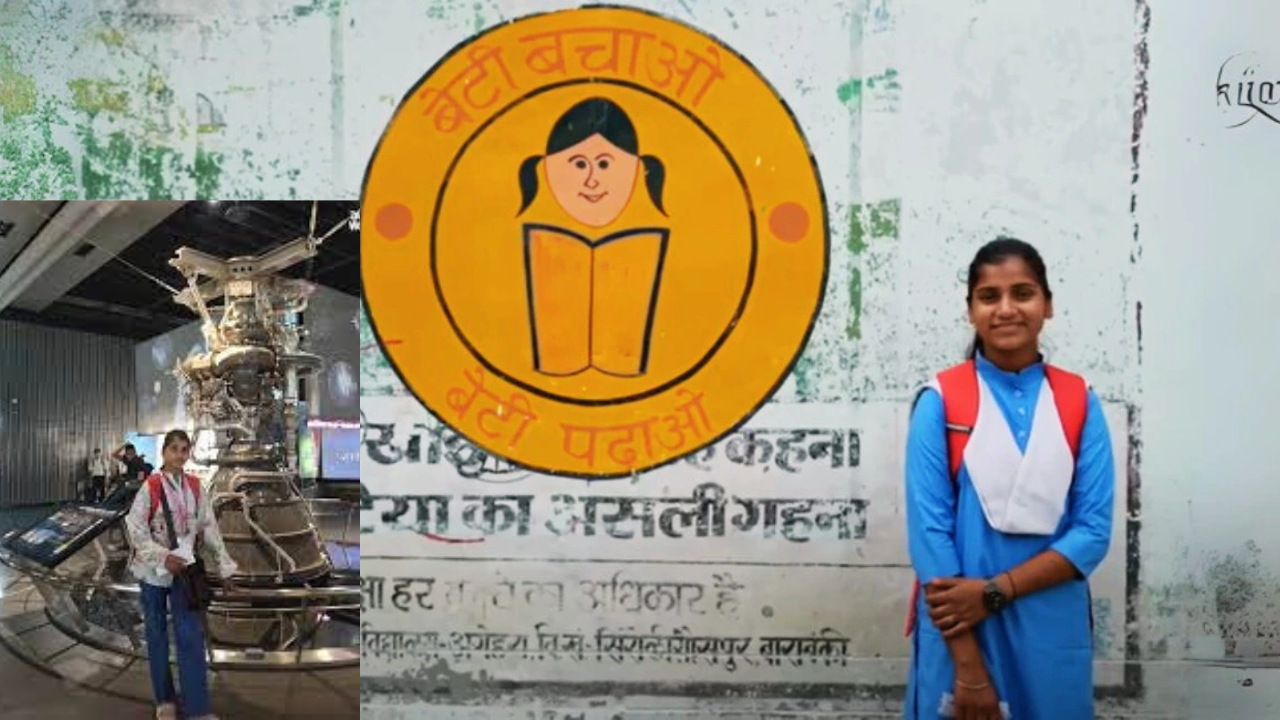

In a small village tucked away in the Barabanki district of Uttar Pradesh, where electricity is unreliable and basic sanitation is scarce, 17-year-old Pooja has achieved what few could dream of. Rising above poverty and systemic neglect, Pooja has engineered a low-cost, dust-free thresher that is already being hailed as a game-changer for India’s rural farming community.
This remarkable invention has not only improved the health and working conditions of farmers in her village but has also catapulted her onto the global stage. Pooja recently represented India at the International Youth Science Fair in Tokyo, Japan, where she earned widespread recognition for her innovation, competing against young scientists from over 60 countries.
A Seed of Innovation in Harsh Soil
Pooja’s journey is nothing short of inspirational. Growing up in a mud-brick house without electricity or a toilet, she often studied under dim kerosene lamps and walked kilometers to access clean water. Her family, like most in the region, relies on agriculture for survival. During harvest seasons, she would observe her father and other farmers suffer from chronic coughing, sneezing, and respiratory discomfort—often caused by the clouds of dust released during threshing.
“I realized that the health issues my father was facing were not just seasonal allergies, but long-term consequences of repeated dust exposure”. “I wanted to do something that could help not just my family, but the entire farming community.”
With limited resources but unlimited determination, Pooja set to work. Using discarded fan parts, bicycle chains, scrap metal, and locally available materials, she built a prototype of a thresher that could significantly reduce dust emissions during grain separation. Her model costs less than ₹6,000 (around $70)—a fraction of the price of industrial machines—and operates manually, making it ideal for off-grid farming villages.
Recognition at Home and Abroad
Pooja’s invention first caught the attention of her science teacher, who encouraged her to enter local innovation contests. Her success at district- and state-level competitions opened doors to mentorship from agricultural scientists and engineers. Eventually, she was selected by India’s Department of Science and Technology to participate in the prestigious International Youth Science Fair in Tokyo.
At the event, Pooja’s dust-free thresher stood out not just for its ingenuity but for its real-world applicability. International delegates, researchers, and industry experts praised her for designing a solution that addressed a critical health and safety issue faced by millions of smallholder farmers across the developing world.
“Pooja’s work exemplifies the spirit of innovation—practical, affordable, and transformative,” said Dr. Kenji Takamura, one of the lead judges at the Tokyo fair. “It’s amazing how a teenager from a remote Indian village could develop a solution that global researchers have been trying to crack for years.”
A Ripple Effect of Empowerment
Since returning from Japan, Pooja has been celebrated in her community as a local hero. Schools and women’s groups have invited her to speak about her journey. NGOs and rural development agencies are now working with her to expand the reach of her invention.
The district administration has also announced a scholarship to support Pooja’s higher education in mechanical engineering. Plans are underway to patent her design with the help of a local incubation center, and micro-manufacturing partnerships are being explored to scale production.
“It’s not just about one machine”. “It’s about changing the mindset—showing people in my village, especially girls, that we can innovate, solve problems, and become leaders in science and technology.”
A Message of Hope and Resilience
Pooja’s story is a powerful testament to the untapped potential in India’s rural heartlands. In a world where innovation is often measured by sophisticated labs and advanced degrees, her journey underscores a different kind of brilliance—born from necessity, nurtured by resilience, and driven by empathy.
India has long been a country of contrasts, where scientific breakthroughs coexist with stark rural challenges. Pooja’s achievement bridges this gap and redefines what grassroots innovation can look like. With better access to education, mentorship, and resources, countless young minds like hers could be empowered to solve local problems with global relevance.