
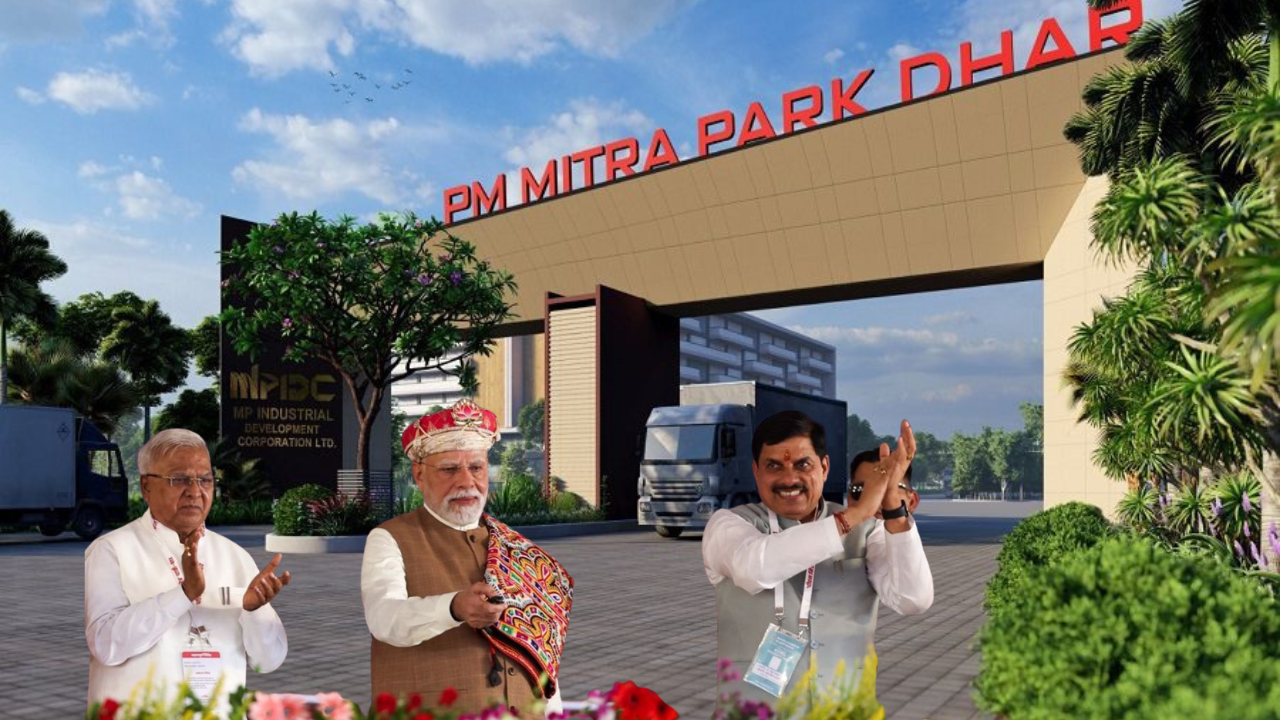
Madhya Pradesh is rapidly transforming into a major destination for investment, industrial development, and employment generation. With ambitious projects like the Prime Minister Mega Integrated Textile Region and Apparel (PM Mitra) Park being established in Dhar district, the state is positioning itself as a driving force in India’s vision of becoming a global manufacturing hub. The project, backed by the central government’s focus on infrastructure-led development, is expected to bring massive opportunities for industries, entrepreneurs, and workers across the region.
Madhya Pradesh: A Growing Industrial Landscape
Over the past decade, Madhya Pradesh has strengthened its position as the “Heart of India” not only in geographical terms but also in the field of industry and infrastructure growth. The state government has actively collaborated with the Union Government to attract investments in sectors such as textiles, agriculture-based industries, information technology, pharmaceuticals, renewable energy, and food processing.
The state offers a strategic geographical advantage, well-connected logistics corridors, and policies designed to support industrial ease of doing business. With abundant land, skilled labor, and sector-specific incentives, Madhya Pradesh is increasingly attracting domestic companies and foreign investors looking for opportunities in central India.
PM Mitra Park in Dhar: A Game-Changer
Among the many projects, the upcoming PM Mitra Park in Dhar stands out as a transformative initiative under the Government of India’s flagship program for strengthening the textile and apparel sector. Dhar was chosen strategically due to its connectivity, skilled workforce, and existing textile ecosystem in nearby hubs like Indore.
The park will integrate the entire textile value chain — from spinning, weaving, processing, dyeing, finishing, and garment production — under one robust ecosystem. This will not only cut down logistic costs but also enhance productivity and export competitiveness. With world-class infrastructure, common utilities, and sustainability-focused planning, the PM Mitra Park aims to create a globally competitive textile manufacturing hub in Madhya Pradesh.
Employment and Economic Opportunities
One of the most significant benefits of the PM Mitra Park is its potential to generate large-scale employment. According to initial government estimates, the project could create over one lakh direct and indirect jobs, opening doors of opportunity for skilled, semi-skilled, and unskilled workers in the state. Rural youth, women entrepreneurs, and small-scale businesses will be direct beneficiaries of this development.
The park will boost ancillary industries such as packaging, logistics, and raw material supply chains, providing opportunities for local small and medium enterprises (SMEs). The multiplier effect of the project is also expected to enhance income levels, increase demand for housing, and spur service-sector growth in nearby towns and cities.
Strengthening the Textile Sector
Madhya Pradesh already enjoys a strong base in the textile industry, with Indore, Pithampur, and Ujjain emerging as regional hubs for manufacturing and exports. With the PM Mitra Park in Dhar, the state is all set to consolidate its reputation as a textile powerhouse. This project will not only support large investors and industries but also benefit micro, small, and medium units that are a backbone of the textile value chain.
By offering dedicated infrastructure support, modern research facilities, training centers, and eco-friendly waste management, the park is designed to meet the needs of the global textile industry, keeping sustainability at its core.
Investor-Friendly Policies
Both the central and state governments have announced investor-friendly policies to attract businesses to the Dhar park and other industrial clusters of Madhya Pradesh. The state’s “Industrial Promotion Policy” emphasizes simplified procedures, fast-track approvals, and subsidies on capital investment, employment generation, and power consumption.
The focus on creating industrial corridors, logistics parks, and skill development centers is paving the way for holistic growth. Special incentives for export-oriented industries and green manufacturing practices are ensuring that Madhya Pradesh meets both economic and environmental goals.
Boost to Regional Development
The PM Mitra Park is not just an infrastructure project; it is an enabler of regional growth. Dhar, which has traditionally been dependent on agriculture and small industries, will witness a major transformation in its social and economic landscape. New opportunities in education, skill development, healthcare, and infrastructure will directly benefit local communities.
Moreover, the connectivity of Dhar with Indore — a hub for industries, business services, and airports — will ensure that the project develops into a truly integrated industrial ecosystem. Local farmers will also find new opportunities as cotton and raw material demand rises, thereby strengthening the rural economy.
A Step Towards Atmanirbhar Bharat
The initiative aligns with the government’s vision of Atmanirbhar Bharat by empowering local industries, reducing dependence on imports, and boosting textile exports. Madhya Pradesh’s strides in industrialization are expected to contribute significantly to India’s global trade competitiveness, especially in the textile and apparel sector.
As the PM Mitra Park comes to life in Dhar alongside other industrial projects across the state, Madhya Pradesh is poised to emerge as a powerhouse in India’s manufacturing journey. By creating jobs, fostering entrepreneurship, and strengthening industrial ecosystems, the project is turning the state into an attractive destination for investors.
Conclusion
Madhya Pradesh is setting the stage for a new wave of economic development with forward-looking policies and ambitious infrastructure projects. The PM Mitra Park in Dhar is not just about building a textile hub; it is about shaping the future of central India as a leader in industrial growth. With opportunities for employment, investment, and innovation, the state is well on its way to becoming one of the most dynamic industrial destinations in India.