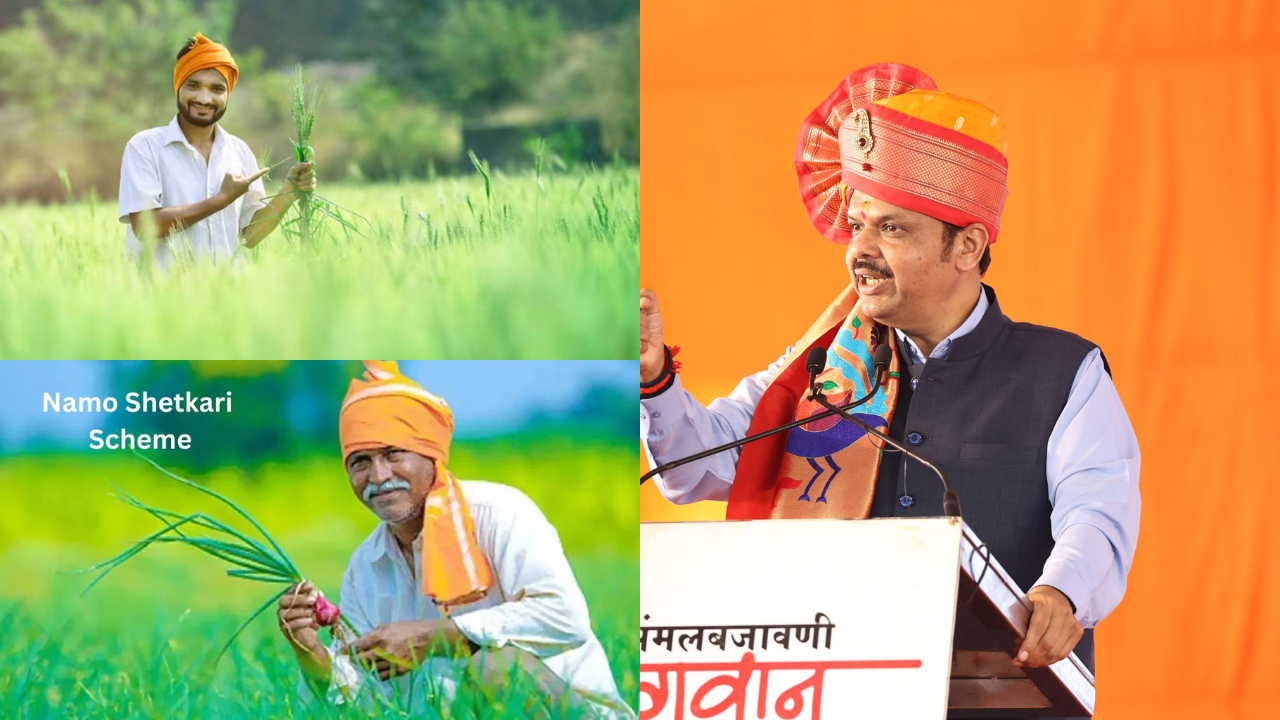
Maharashtra’s flagship Namo Shetkari Mahasamman Nidhi Yojana, designed on the lines of the central government’s PM-Kisan scheme, has reached a major milestone with the disbursement of over ₹1,892 crore to more than 91 lakh farmers across the state. The initiative, aimed at empowering farmers and ensuring regular income support, has significantly boosted the financial security of cultivators, reinforcing the state’s commitment towards agricultural welfare.
A Mirror of PM-Kisan with a Maharashtra Identity
The Namo Shetkari Mahasamman Nidhi Yojana was launched to supplement the Pradhan Mantri Kisan Samman Nidhi (PM-Kisan) scheme at the state level. While PM-Kisan provides ₹6,000 annually to farmers in three installments, the Maharashtra government’s version ensures additional direct benefit transfers (DBT) to reinforce farmer support. The objective is to bring Maharashtra’s agricultural community into the center of developmental planning and reduce their dependency on credit cycles.
According to government officials, the scheme has not only provided crucial financial relief but is also helping farmers plan their cropping cycles, purchase quality seeds, fertilizers, and invest in modern equipment. By aligning seamlessly with PM-Kisan, the state ensures that a holistic safety net is created for farmers.
The Scale of Disbursement
As per the latest data, more than 91 lakh farmer beneficiaries in Maharashtra have received assistance so far under the Namo Shetkari scheme. The cumulative disbursement has crossed ₹1,892 crore, directly reaching the bank accounts of registered farmers through DBT.
This wide-scale financial outreach highlights the government’s focus on eliminating middlemen and ensuring that state funds directly reach cultivators without any leakage. The robust integration of Aadhaar-based identification and improved transparency in the process has led to faster disbursals and minimized scope for irregularities.
Officials have emphasized that the scheme is not merely about the quantity disbursed but about the timely delivery of funds, especially before sowing cycles, which allows farmers to make crucial agricultural investments at the right time.
A Push for Aatmanirbhar Shetkari
Agriculture remains the backbone of Maharashtra’s economy, and the welfare of over 1.5 crore farming families is closely tied to the state’s development trajectory. The Namo Shetkari Yojana is part of a broader vision to cultivate the idea of an “Aatmanirbhar Shetkari” (self-reliant farmer).
- The scheme empowers farmers with assured annual income support.
- It supplements other state schemes like crop insurance, irrigation projects, and soil health initiatives.
- By giving financial steadiness, the scheme enables cultivators to adapt to challenges like unpredictable weather, rising input costs, and market fluctuations.
Farmer leaders across districts have welcomed the disbursement milestone, noting that financial aid at the right time encourages cultivators to move beyond subsistence towards sustainability.
Bridging the Rural-Urban Divide
The Namo Shetkari Mahasamman Nidhi Yojana also supports the larger aim of reducing the rural-urban income gap by empowering farming families. Unlike short-term subsidies, direct income transfers provide farmers with the autonomy to spend the aid based on their specific needs—whether that is mechanization, purchase of seeds, or household requirements linked to farm stability.
The scheme also places Maharashtra among the leading states in adopting technology-backed DBT models for welfare. Transparent payments boost trust in government policies and encourage more farmers to voluntarily register under welfare initiatives without fear of bureaucratic delays.
Voices from the Ground
Farmers in Vidarbha, Marathwada, Western Maharashtra and Konkan regions have shared that these funds have provided timely help, especially when dealing with weather uncertainties. One cotton farmer from Akola mentioned that the direct transfer allowed him to purchase pesticides without taking loans from private moneylenders. Similarly, sugarcane cultivators in Western Maharashtra stressed that direct aid is helping cover rising labor and input costs.
Agricultural economists also believe that the scheme can reduce the mounting rural debt burden by steadying incomes and supplementing agricultural credit.
Government’s Commitment to Farmer Welfare
The Maharashtra government has reiterated its commitment to doubling down on farmer-centric policies. With the disbursement of ₹1,892 crore already completed, officials expect the beneficiary base to expand further as more farmers complete the registration process.
State ministers have highlighted that this financial support works in sync with other flagship projects such as:
- Expansion of micro-irrigation schemes for water efficiency.
- Implementation of crop insurance coverage under the Pradhan Mantri Fasal Bima Yojana (PMFBY).
- Promotion of organic and sustainable farming practices.
Together, these efforts represent a multi-pronged approach: not just supporting farmers with direct funds, but also investing in infrastructure and services that reduce risks faced by cultivators.
Looking Ahead
The successful distribution under the Namo Shetkari Mahasamman Nidhi Yojana represents an important step forward towards strengthening Maharashtra’s agricultural economy. Moving forward, the scheme’s integration with digital land records, Aadhaar authentication, and real-time grievance redressal systems is expected to make transfers even smoother, ensuring that no eligible farmer is left out.
As Maharashtra continues to modernize agriculture, schemes like Namo Shetkari will serve as a financial backbone, empowering farmers to embrace technological advancement while maintaining traditional farming wisdom. The journey from financial hardship to empowerment is a long one, but initiatives like this create strong building blocks for future growth.
Conclusion
The Namo Shetkari Mahasamman Nidhi Yojana’s impact is evident in the lives of over 91 lakh farmers who have benefitted from the ₹1,892 crore disbursement. Beyond numbers, the scheme symbolizes a renewed social contract between the state and its farmers—one based on trust, empowerment, and shared progress.
By reinforcing the central PM-Kisan with a state-level push, Maharashtra has placed itself as a leader in farmer welfare, setting an example for other states to follow. For farmers, it represents not just a financial package but the assurance that their contribution to the state’s economy is recognized, valued, and supported with concrete action.