
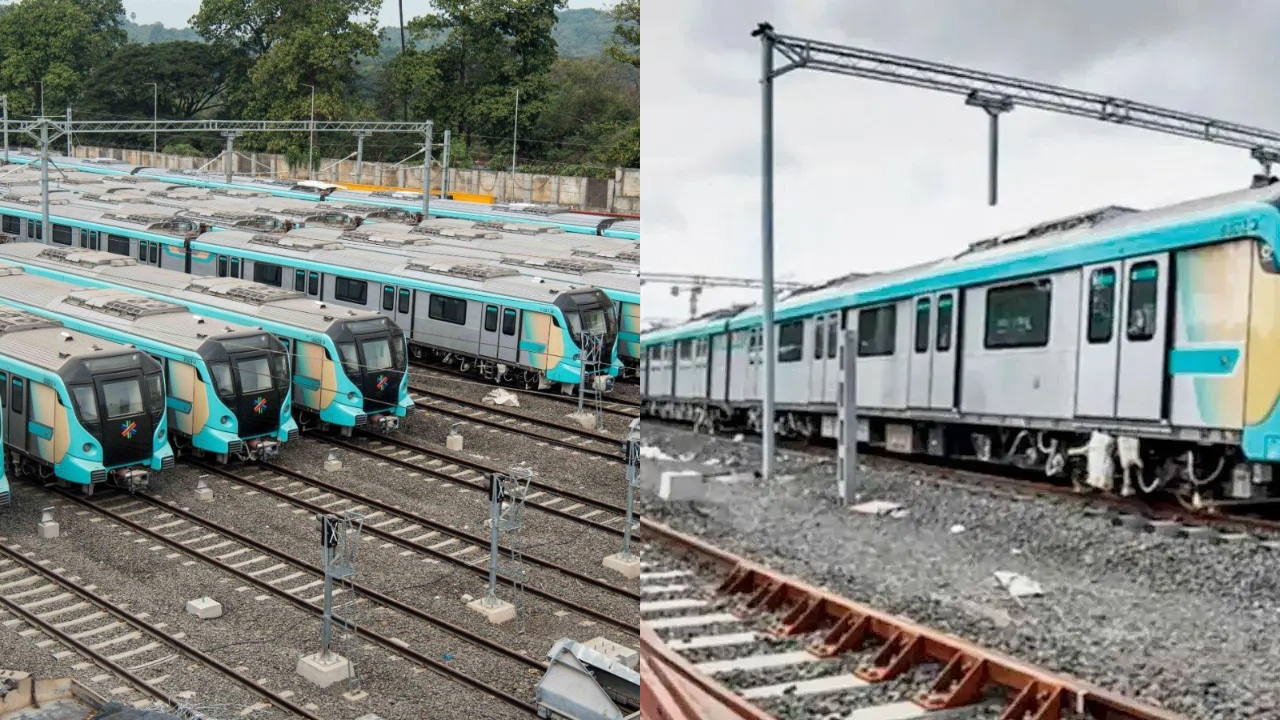
MMRC announces extended Aqua Line services from 10:30 PM to 5:55 AM to ensure safe and smooth travel during New Year celebrations.
In a move to ensure safe and convenient travel for Mumbaikars celebrating New Year’s Eve, the Mumbai Metro Rail Corporation (MMRC) has announced that Metro Line-3, popularly known as the Aqua Line, will operate throughout the night on January 1, 2026.
According to the official statement from MMRC, the special extended night service will begin after 10:30 PM on December 31, 2025, and continue until 5:55 AM on January 1, 2026. The usual schedule of metro operations will resume at 5:55 AM on the same day.
MMRC stated that the decision has been taken to help commuters move safely and conveniently across the city during the festive night, offering reliable public transport to those attending New Year celebrations or late-night events in different parts of Mumbai.
Ensuring Safe and Seamless Travel on New Year’s Eve
The Mumbai Metro Line-3 team said this initiative aims to reduce traffic congestion, improve last-mile connectivity, and enhance commuter experience during one of the busiest nights for the city’s transport network. MMRC has also urged citizens to plan their journeys in advance and use metro services responsibly to avoid overcrowding.
“By running overnight metro services, we wish to provide uninterrupted urban mobility and support citizens celebrating responsibly. Our key focus remains the safety, comfort, and convenience of passengers,” an MMRC spokesperson said.
The move has been widely appreciated by daily commuters, office-goers, and festive travelers alike, as it provides a reliable and environment-friendly transport option during New Year celebrations. With Mumbai’s roads typically witnessing heavy jam and longer travel times on December 31, the extended metro service is expected to bring significant relief.
A Landmark Year for Mumbai Metro Line-3
The announcement comes just a few months after a major milestone — the complete operational launch of the Colaba–Bandra–SEEPZ corridor on October 8, 2025. This marked the official opening of Mumbai’s first fully underground metro line, connecting Aarey in north Mumbai to Cuffe Parade in south Mumbai through a 33.5-km stretch.
The final section between Acharya Atre Chowk and Cuffe Parade stations was inaugurated by Prime Minister Narendra Modi in a grand ceremony held at the Navi Mumbai International Airport. The event saw the presence of key dignitaries, including Japan’s Ambassador to India ONO Keiichi, Maharashtra Governor Acharya Devvrat, Chief Minister Devendra Fadnavis, Union Civil Aviation Minister Kinjarapu Rammohan Naidu, and Deputy Chief Ministers Eknath Shinde and Ajit Pawar.
During the inauguration, Prime Minister Modi described the underground metro as “a living symbol of a developing Bharat,” commending the engineers, planners, and construction teams for successfully bringing the project to life in one of the most densely populated urban regions in the world.
Engineering Marvel with International Collaboration
The Mumbai Metro Line-3 project, implemented by the Mumbai Metro Rail Corporation Limited (MMRCL), was developed with significant international support through the Japan International Cooperation Agency (JICA). The project received Japanese Official Development Assistance (ODA) loans worth JPY 354,132 million, out of a total project cost of JPY 680,692 million.
This collaboration between India and Japan reflects a shared vision of sustainable urban development and advanced public transport infrastructure. The Line-3 corridor features cutting-edge engineering, stringent safety standards, and eco-friendly technology that aligns with Mumbai’s long-term development goals.
MMRC officials have highlighted that Line-3 will drastically reduce travel time between the city’s southern business hubs and northern residential zones. The corridor strategically connects Colaba, Bandra-Kurla Complex (BKC), Dharavi, Mumbai International Airport, MIDC (Andheri), and Aarey depot, ensuring faster and seamless mobility across critical business and residential districts.
A Game-Changer for Mumbai’s Urban Transport
Metro Line-3, also known as the Aqua Line, is Mumbai’s most ambitious public transport project to date. Being completely underground, it not only preserves the city’s above-ground space and heritage structures but also significantly reduces air and noise pollution compared to traditional road transport.
Transportation experts consider this line a game-changer for Mumbai, as it integrates with other key modes of transit, including Western and Central Railway, Mumbai Metro Lines 1, 2A, 7, and Mumbai Monorail, creating a strong multimodal network.
Daily ridership is expected to increase steadily as citizens experience the fast, comfortable, and climate-controlled commute offered by Line-3. Operating through the city’s financial, commercial, and residential zones, the Aqua Line will serve as the backbone of Mumbai’s urban mobility in the years ahead.
New Year with New Connectivity
The MMRC’s decision to extend overnight metro operations on New Year’s Eve demonstrates a people-centric approach to public transport management. With major tourist zones, clubs, hotels, and seafronts likely to see large gatherings, metro connectivity will help prevent road blockages and reduce the risk of accidents associated with night travel.
“Urban infrastructure must adapt to citizens’ evolving lifestyle needs, especially during festive events. The Aqua Line overnight service is an excellent initiative that reflects modern Mumbai’s readiness for 24/7 connectivity,” said a senior transport official.
As Mumbai gears up to welcome 2026, the overnight Metro Line-3 service stands as a tribute to the city’s resilience, spirit, and forward-looking infrastructure. Offering safe, efficient, and comfortable travel through the night, the Aqua Line ensures that the celebrations continue — while keeping Mumbai moving.



 will operate overnight on New Year’s Eve from 10:30 PM to 5:55 AM, MMRC announced, ensuring safe.)