

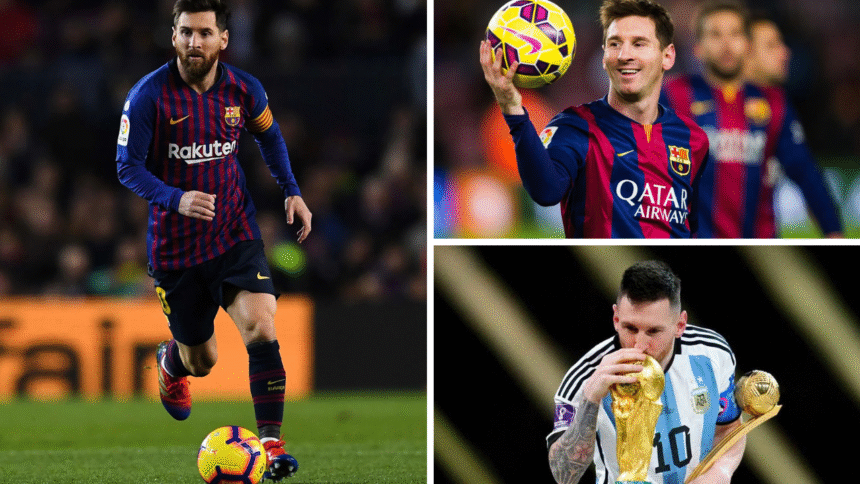
In a match destined to be remembered as one of the greatest finals in FIFA World Cup history, Argentina emerged victorious over defending champions France after an electrifying 3-3 draw and a dramatic penalty shootout. The win secured Argentina’s third World Cup title and their first since 1986, cementing Lionel Messi’s legacy as one of the greatest footballers of all time.
The Lusail Iconic Stadium provided the perfect stage for a football spectacle filled with skill, drama, and raw emotion. Argentina twice took the lead during the game, only to see Kylian Mbappé’s brilliance drag France level on both occasions. The final concluded with a tense penalty shootout, in which Argentina’s goalkeeper Emiliano Martínez delivered crucial saves to guide his nation to glory.
Messi’s Moment of Destiny
For Lionel Messi, widely regarded as the best player of his generation, this triumph was the culmination of a glittering career. Already a multiple Ballon d’Or winner and Champions League hero, Messi had one trophy missing from his cabinet — the FIFA World Cup.
The 35-year-old captain was instrumental throughout the tournament, scoring in the final and leading by example both on and off the pitch. His composed finish in the first half set the tone for Argentina’s dominance in the opening stages. Later, he added another goal in extra time to put his side 3-2 ahead, sparking wild celebrations among Argentine fans.
Messi’s performances earned him the prestigious Golden Ball award as the tournament’s best player — making him the first footballer to win it twice, having also claimed the honor in 2014. With 793 career goals for club and country, the goals in the Lusail final may well be remembered as the most significant of his storied career.
Mbappé’s Historic Hat-Trick
While the night belonged to Argentina, France’s Kylian Mbappé delivered an extraordinary individual performance. The 23-year-old Paris Saint-Germain forward became only the second player in history to score a hat-trick in a World Cup final, following England’s Sir Geoff Hurst in 1966.
France, trailing 2-0 with just 10 minutes of normal time remaining, roared back into contention thanks to Mbappé’s composure under pressure. He scored twice in quick succession — a penalty followed by a stunning volley — to force extra time.
When Messi restored Argentina’s lead in the 109th minute, Mbappé responded yet again, converting another penalty to complete his hat-trick and take the match to a shootout. His goals ensured he claimed the tournament’s Golden Boot with eight goals in total.
A Final for the Ages
From the very first whistle, the match showcased the very best of world football. Argentina’s intense pressing and clinical finishing put them firmly in control during the first hour. Ángel Di María, restored to the starting lineup, played a pivotal role — winning the first penalty and scoring Argentina’s second goal with a sweeping counterattack.
However, France refused to bow out quietly. Manager Didier Deschamps’ substitutions injected fresh energy into the side, with Randal Kolo Muani and Marcus Thuram playing key roles in the comeback.
Extra time saw both teams pour everything into finding a winner, with end-to-end attacks and desperate defending keeping fans on the edge of their seats.
Penalty Shootout Glory
In the decisive penalty shootout, Lionel Messi and Kylian Mbappé each converted their opening kicks. From there, Argentina held their nerve, with Paulo Dybala and Leandro Paredes adding to the tally.
Goalkeeper Emiliano Martínez, already celebrated for his penalty-saving heroics in the semi-final, once again rose to the occasion. He denied Kingsley Coman and forced Aurélien Tchouaméni to shoot wide, giving Argentina the advantage. Gonzalo Montiel stepped up to score the decisive penalty, sparking jubilant celebrations among players and fans alike.
Argentina’s Third Star
This triumph adds a third star to Argentina’s jersey, joining the 1978 and 1986 victories. The win is also seen as a symbolic passing of the torch — from the late Diego Maradona, who inspired the nation nearly four decades ago, to Lionel Messi, who has now achieved football’s ultimate prize.
In Buenos Aires and across Argentina, millions of fans flooded the streets in celebration, waving flags, singing songs, and paying tribute to their heroes. The scenes echoed the unity and passion that football brings to the South American nation.