
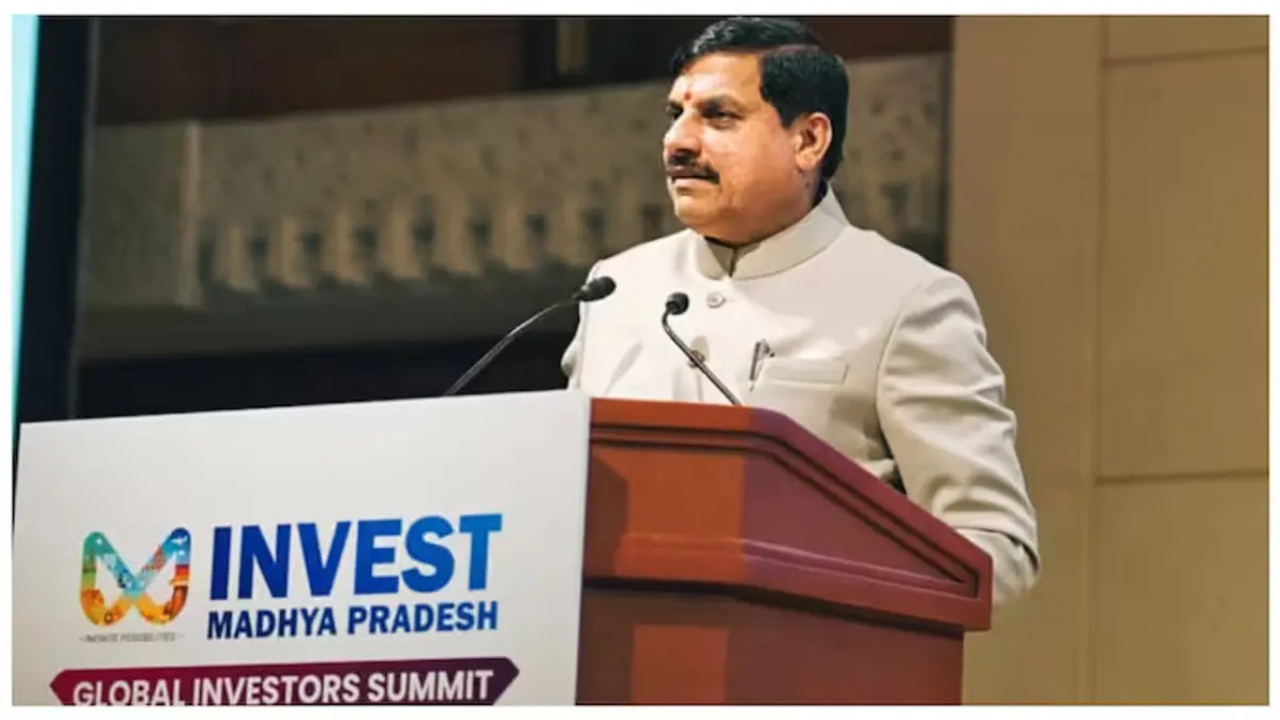

New policy aims to double industrial GSDP to ₹6 lakh crore and create 20 lakh jobs by 2030.
The Government of Madhya Pradesh has announced the Industrial Promotion Policy 2025 (IPP 2025), marking a major step toward making the state a leading hub for manufacturing, innovation, and investment in India. The policy aims to double the industrial sector’s contribution to the state’s Gross State Domestic Product (GSDP)—raising it from ₹2.9 lakh crore to ₹6 lakh crore by 2030. Along with this, it envisions the creation of 20 lakh new employment opportunities across various sectors.
The policy reflects the government’s vision of “Viksit Madhya Pradesh 2030”, focusing on balanced regional development, self-dependence, and sustainable industrialization. IPP 2025 was designed to strengthen both traditional industries and emerging sectors, ensuring that industrial growth reaches every corner of the state—from large cities to backward districts.
Focus Areas of the Policy
The Industrial Promotion Policy 2025 is aimed at attracting large-scale investments through improved infrastructure, simplified business regulations, and targeted financial incentives. It also outlines plans to encourage green industrial practices, focus on export-oriented manufacturing, and promote industry-academia collaboration for skill development.
According to the policy, Madhya Pradesh will focus on several high-potential sectors including:
- Automobile and EV manufacturing
- Textiles and garments
- Food processing and agro-based industries
- Pharmaceuticals and biotechnology
- Renewable energy and green technologies
- Metallurgy, chemicals, and IT-enabled services
By boosting these sectors, the state hopes to establish itself as a competitive and investor-friendly destination at both national and international levels.
Infrastructure and Ease of Doing Business
To support rapid industrialization, the government will upgrade industrial corridors, logistics networks, and cluster-based development zones across the state. Major emphasis will be given to projects under the Delhi-Mumbai Industrial Corridor (DMIC) and Bengaluru–Mumbai Economic Corridor, as well as on developing new industrial parks in districts like Indore, Bhopal, Jabalpur, Gwalior, and Rewa.
The IPP 2025 emphasizes faster approvals through single-window digital systems, transparent land allotments, and predictable policies for investors. Authorities have pledged to provide unified guidance to new investors, ensuring that bureaucratic procedures do not hinder industrial growth.
Employment and Skill Development
One of the most ambitious goals of IPP 2025 is the creation of 20 lakh job opportunities by 2030. The policy stresses collaboration between industries, technical institutions, and skill development centers to enhance employability and train youth in emerging technologies.
Special incentives will be given to companies that generate local employment, invest in vocational training, and set up dedicated skill training centers within their industrial units. The policy also encourages entrepreneurship through support for MSMEs and startups, particularly in tier-2 and tier-3 cities, where industrial momentum has been relatively slow.
Sustainable and Inclusive Growth
In line with India’s commitment to sustainability, the new policy integrates environment-friendly industrial practices and promotes the use of renewable energy sources. The government plans to incentivize green certification, efficient energy use, and adoption of waste management and recycling technologies.
Additionally, the policy includes measures to ensure that backward regions and underdeveloped districts also benefit from industrialization. By developing rural industrial clusters and agro-based industries, the government aims to bridge the regional economic gap and provide sustainable jobs closer to home for rural youth.
Support for Startups and MSMEs
Micro, Small, and Medium Enterprises (MSMEs) are a central pillar of the state’s economic framework, and IPP 2025 gives them a strong boost. The policy provides simplified compliance frameworks, subsidized land rates, financial incentives, and funding assistance to promote MSME expansion.
Startups working in innovation-driven fields like AI, IoT, agri-tech, health-tech, and renewable energy will also receive special support under state innovation programs. The establishment of startup incubation centers, seed funding schemes, and mentorship initiatives is expected to empower the youth and promote entrepreneurship in emerging areas.
Investor Confidence Rising
Industrial experts have welcomed the policy, calling it “transformative and forward-looking.” With Madhya Pradesh already attracting several investors in manufacturing, logistics, and IT services, IPP 2025 is expected to further strengthen investor confidence and accelerate capital inflows into the state.
State officials emphasized that the government’s approach is proactive, transparent, and investor-first, ensuring that Madhya Pradesh positions itself as the “growth engine” of Central India. The introduction of incentive-based facilities for large investments, sector-specific clusters, and skill-oriented development programs indicates a comprehensive roadmap for sustainable economic growth.
Vision for 2030
By 2030, the government envisions Madhya Pradesh as a dynamic, industrially advanced, and job-rich state, where industries drive innovation and self-reliance. The Industrial Promotion Policy 2025 stands as a landmark step that not only aims to create wealth but also ensures equitable growth, skill enhancement, and environmental responsibility.
As implementation begins, the state’s focus will remain on execution, accountability, and continuous monitoring of progress to ensure that the targets of ₹6 lakh crore industrial GSDP and 20 lakh jobs are achieved effectively.