Tuesday, November 3, 2026
Home Blog Page 260

Women-led startups setting the standard for gender equity: Report 

 New report reveals how female founders are paving the way for gender equality in the startup ecosystem.  

 Women-led startups are surpassing their male-led counterparts in achieving gender equity in senior roles, says report 

 Women-led startups have 2.5 times more women in senior roles compared to startups founded exclusively by men 

 Women in senior roles in startups are increasing their presence 

 A report, titled “Women in India’s Startup Ecosystem Report (WISER),” has shed light on a remarkable trend in India’s startup landscape: women-led startups are surpassing their male-led counterparts in achieving gender equity in senior roles. The report provides insights into how startups founded by women are setting new standards for inclusivity. 

  The findings from WISER demonstrate that women-led startups have 2.5 times more women in senior roles compared to startups founded exclusively by men. This underscores the critical role of female founders in fostering an environment of gender equality within the startup ecosystem.

  The report’s detailed analysis shows that  startups  founded by women  are actively leading the way in breaking down barriers for women in  leadership roles.  These startups have  strived to create  a culture that not only encourages but actively promotes gender  equality.  

 While gender equality remains an ongoing challenge in the corporate world, women in  leadership  roles  at  startups are increasing their presence, with 21% of women  holding  director or vice president  roles,  compared to 15% in  businesses.  This significant disparity is a testament to the progressive efforts  of  women-led startups  to close  the gender gap. 

 The WISER report attributes this success to a combination of factors, including strong mentorship from senior  female  leaders, an inclusive work environment, and  DEI (Diversity,  Equity) goals  and Inclusion)  gender-specific  set and achieved by women-founded startups.  .  These startups have also  launched  policies and initiatives  to  address barriers such as maternity leave,  flexibility  and safety concerns,  thereby increasing workplace attractiveness. jobs  for  female  employees. 

  One of the report’s  key  findings  is that  startups  founded by women don’t  just talk about gender  equality; They  are actively taking steps to make it a reality. This commitment to  promoting inclusion  is  one of the  driving  forces  behind their impressive  record  of  gender  equality  at senior  level.  

 The WISER report reinforces the importance of promoting diversity and gender  inclusion in  the startup ecosystem. As  female-founded  startups continue to lead  the  way, we  hope  their success will inspire the  entire  industry to adopt similar practices and create workplaces that value talent and potential  rather than  gender.

  As India’s startup ecosystem continues to grow,  the WISER  report’s findings  highlight the potential for a more inclusive and diverse  future in which  women-led startups  play  a  role. central  role in setting  standards in  gender  equality issues. 

For more information visit at https://happenrecently.com/zepto/?amp=1

YouTuber Elvish Yadav was fined for serving snake venom at a party

Yadav has millions of followers on social media.

Maneka Gandhi tries to arrest Bigg Boss OTT winner; Yadav once ‘dumped’ Aryan Khan in a video two years ago for ‘drug use’.

Noida Police on Friday arrested Bigg Boss OTT reality show season 2 winner and YouTuber Elvish Yadav and arrested five people for supplying snake venom at a raucous party in Noida.

The accused was arrested under the Wildlife (Protection) Act, which is a non-bailable offense punishable with imprisonment of up to seven years and judicial custody for 14 days. The aviation information area was registered on the basis of a report issued by Gaurav Gupta, an animal welfare officer at People for Animals, a non -governmental organization run by BJP Maneka Gandhi Deputy.

Mrs. Gandhi sought to arrest Utiper and accused him of serving snakes in Nuwaida and Georg. Mr Yadav described the allegations as “baseless”.

Divisional forest officer Pramod Kumar Srivastava said they rescued five cobras, two sand boas, a python and a rat snake, all of which fall under the threatened species category.

DCP (Noida) Ram Badan Singh said Mr Gupta told police that, as part of a sting operation, he had approached the YouTuber to buy snake venom for a party at a ballroom in Sector 51 in Noida.

Gupta said he contacted a man named Rahul Yadav, who agreed to the deal. 20ml of poison was seized

“The sting operation was conducted in conjunction with Forest Department officials. All five accused present at the scene were arrested and 20 ml of snake venom was seized,” the DCP said, adding that the venom has been sent for analysis to determine whether it has psychotropic or not.

Mr Yadav, who has millions of followers on YouTube and Instagram, has become famous for hosting shows in which he mocks or “attacks” public figures. In one such show, Yadav “roasted” Aryan Khan, son of Bollywood star Shah Rukh Khan, for “drug use”. Mr. Aryan was arrested in the cruise ship drug case in 2021 but was later acquitted by the DEA. “Bollywood tried to normalize the fact that a 23-year-old man [Aryan Khan] was using drugs. I don’t like SRK’s supporters who blindly support Aryan even when he does something wrong. Aryan Khan was found in possession of banned substances. “I think what he did was wrong.”

Aryan Khan was found to be in possession of banned substances. I think what he did was wrong,” he said in the two-year-old YouTube video. After the news of the poisonous snake incident, pictures of Mr. Yadav with some central ministers appeared on the internet.

When Mr. Yadav’s team was contacted for comment, he did not respond.

For more information visit at https://happenrecently.com/zepto/?amp=1
IIT is overburdened, and in crisis

IIT system faces difficulties as several IITs build campuses abroad as part of India’s soft power efforts.

The Indian Institute of Technology (IIT) is globally recognized as the crown jewel of the Indian higher education system. In fact, these are often the only Indian higher education institutions known internationally. They have trained leaders in high-tech and related fields in India and abroad. IITs may be the most difficult higher education institutions to get into in the world, with more than a million students taking the entrance exam each year and competing for 17,385 places at 23 international institutes. However, the IIT system faces difficulties as many schools build branches abroad as part of India’s soft power efforts. It is necessary to look closely at current realities to understand the impending crisis.

Adventure abroad

A satellite campus of IIT-Madras was recently opened in Zanzibar, and IIT Delhi will launch its programs from its Abu Dhabi campus in 2024. A small initial batch of 70 students has been accepted. How many faculty members from the Chennai campus will be based in Zanzibar (this is often a problem for Western campuses)? Admission criteria are not the same as at home. Admissions are based on IIT Madras Zanzibar Selection Test (IITMZST) 2023 screening test followed by interview. A number of screening centers are offered to potential candidates not only in Tanzania but also in Ethiopia, Nigeria, Kenya, Uganda and the UAE (where there is a significant Indian community presence).

Initially, the Zanzibar campus offered only two programmes: a Bachelor of Science in Data Science and Artificial Intelligence and a Master of Technology in Data Science and Artificial Intelligence. It is open to students from all over the world. The annual tuition fee is $12,000 for the Bachelor’s program and $4,000 for the M.Tech program, and as mentioned, there are only 70 students enrolled. Reports say that the rules and regulations for the IITM Zanzibar campus will be based on the existing rules of IIT Madras.

College challenges and future prospects

At the heart of every academic institution are professors. Attracting the best and brightest is becoming increasingly difficult. Salaries are well below international standards. Indians educated abroad are often reluctant to return to uncompetitive salaries, poorer work environments, and more academic bureaucracy (although the Indian Institutes of Technology are less restrictive than the rest of the academic system). India’s best talent is increasingly drawn to the growing IT sector, emerging biotechnology and related fields – rather than to academia – both in India and abroad.

Currently, the IIT system is seriously lacking in scientists. In 2021, of the 10,881 sanctioned positions, 4,370 were vacant.

It would not be an exaggeration to say that the Indian Institute of Technology is in crisis. Building quality into new IBIs is a major challenge, and if this is not done in the long term, the reputation of the entire system will suffer. Maintaining the quality of faculty and attracting young professors who are dedicated to the idea of ​​IIT and India’s development are serious tasks. Expanding nationally may not be a wise idea – and building branch offices abroad is problematic. One might wonder whether expanding abroad is a good idea anyway, but given the systemic challenges facing the country, such expansion seems particularly wrongheaded.

For more information visit at https://happenrecently.com/zepto/?amp=1
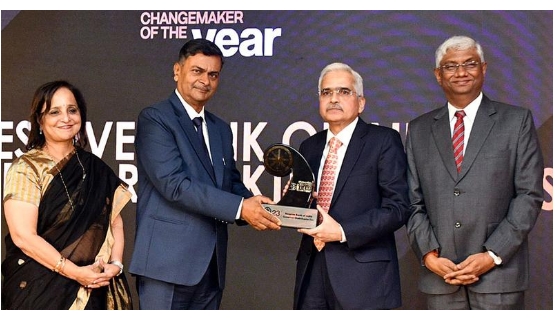
RBI has been crowned Industry Changemaker of the Year for its role during the pandemic

RBI has been crowned Industry Changemaker of the year

Union Energy Minister R.K. Singh presented the Industry Changemaker of the Year award to RBI Governor Shaktikanta Das in the presence of Nirmala Lakshman, Chairman, Hindu Publishing Group Pvt Ltd and Industry Editor Raghuveer Srinivasan on Friday in New Delhi.

In an attractive ceremony that included joyful moments, a wonderful violin playing and a captivating hula hoop performance, Energy Minister R.K. Singh presented the Industry Changemaker of the Year award to the Reserve Bank of India f(RBI) or guiding the country through the turmoil of this period. illness. Amol was named Iconic Changemaker of the Year. “Early in the morning, at 5am, you will see only two change makers: the press and the milkman,” says Jain Mehta, executive director of GCMMF (Amul), kindly. Reserve Bank of India (RBI) Governor Shaktikanta Das also presented awards to all officers and officials of the Department of Financial Services (DFS), bank officials and central bank employees,(RBI ) praising their commitment and dedication.

The fifth edition of the event witnessed the distribution of awards in six categories: Digital Transformation, Social Transformation, Financial Transformation, Young Changemakers, Iconic Changemakers, and Changemaker of the Year. The digital transformation winner is Stellaps Technologies, a startup working to digitize the dairy industry. In social transformation, there are two winners: HERKI, which aims to reverse the brain drain among women, and Girls’ Education, an NGO aiming to improve access to and quality of education for girls. The Financial Transformation Award went to Pradhan Mantri Jan Dhan Yojana. The Young Change Maker Award went to Shrinidhi R.S, creator of the educational app CherriLearn.

“I am thinking about change,” Mr. Singh said in his speech. Only when you make a difference can you say you have justified your existence… When you have made a difference for a few people or a large number of people. When it’s time to say goodbye to the world, this is what matters. Listening to the CEO of Amul and the Governor of the Reserve Bank of India, I realized that while the rest of the world is still grappling with the impact of the pandemic or other crises, we remain among the most stable and fastest-growing economies in the world.

Earlier, inaugurating the event, Dr. Nirmala Lakshman, Chairman, Hindu Group Publishing Private Limited, said: “Impactful change begins with the vision and determination of individuals and organizations willing to challenge the status quo.”

Raghuveer Srinivasan, Business Editor, said his aim was to highlight unrecognized change makers.

For more information visit at https://happenrecently.com/zepto/?amp=1
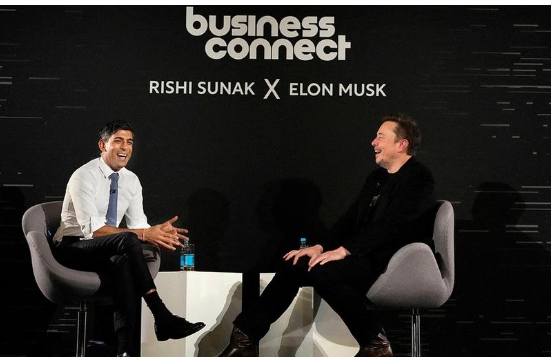
Elon Musk told Prime Minister Sunak that AI will replace every job: We are witnesses to the most destructive force in history

According to SpaceX and Tesla founder Elon Musk, there will come a time when AI will replace every job.

“I think we are witnessing here the most destructive force in history,” Musk, owner of the social media platform X, told British Prime Minister Rishi Sunak. Sunak was speaking on television with Musk at the end of a two-day AI safety summit hosted by the British government at Bletchley Park.

“…For the first time we will have something smarter than the smartest human,” Musk said. “There will come a time when nothing needs to be done,” he said, adding that it was difficult to say when that point would be reached. People will be challenged to find meaning in their lives.

Musk said AI will “most likely” be a force for good, but there is still a chance things could go wrong.

“I think sometimes there can be too much optimism about technology, and I say that as a technology expert,” he said. At another point in their interview, Musk said that in the future there will not be a universal basic income, but rather a high global income, although he did not explain the mechanism for achieving this.

Realistic possibilities

Musk also backed Sunak’s controversial decision to invite China to the AI ​​Security Summit, saying that if Beijing was not on the invitation list it would be “useless.” He argues that China cares about the safety of AI (rather than uncontrolled development), and during his recent visit to China, he spoke with Beijing’s leadership about the topic. “We need people to treat us in the same way if we are to have a realistic chance of solving this problem,” Sunak said. China is a signatory – along with India, the US, the UK and 24 other countries – of the Bletchley Declaration, signed on Wednesday, which agreed with others that AI risks must be addressed collectively. It can be managed.

Musk backed calls for regulation of AI by saying that although it would be “annoying”, it would be good to have “governors“. He thanked Sunak for organizing the AI ​​Security Summit and said it would go down in history as very important. Musk stressed the need for regulation, because in the case of “digital superintelligence” there will be issues related to public safety.

For more information visit at https://happenrecently.com/zepto/?amp=1

Honey Grover: A Visionary Investor Spearheading Startup Success

Honey Grover

In the dynamic world of business and entrepreneurship, there are individuals who stand out as pioneers and visionaries. One such remarkable figure is Honey Grover, a prominent investor who has recently made waves in the startup ecosystem. With an impressive ticket size for investment and a keen eye for potential, Grover is quickly becoming a name to reckon with in the business world.

Honey Grover’s investment journey has taken the industry by storm, as he has recently poured a staggering 12 crores into a series of profitable startups. This impressive financial commitment not only speaks volumes about his confidence in the startups but also highlights his dedication to supporting and nurturing new ventures.

A visionary investor like Grover is not merely defined by the amount of capital invested, but rather by the impact he has on the companies and the industry at large. Grover’s strategy goes beyond financial support; he actively engages with the startups he invests in, offering guidance, mentorship, and access to his extensive network. This holistic approach sets him apart as a hands-on investor, ensuring that the startups he supports have the best chance of thriving in a competitive market.

Grover’s investment choices reflect his astute understanding of market trends and emerging opportunities. His portfolio of profitable startups covers a diverse range of sectors, from technology and healthcare to consumer goods and sustainable energy. This strategic diversity demonstrates his adaptability and foresight in identifying promising growth areas.

Honey Grover’s reputation as a successful businessperson is not merely based on his financial investments. He brings to the table a wealth of experience and knowledge accumulated over the years. His business acumen and insights are invaluable to the startups he supports, and they benefit greatly from his strategic input.

In addition to his financial and intellectual contributions, Grover’s passion for fostering innovation and nurturing entrepreneurship is evident. He understands the challenges that startups face and is committed to creating an ecosystem where they can flourish. His dedication to the growth of these companies ultimately contributes to the economic development and job creation in the region.

As a result of his significant investments and substantial impact on the startup ecosystem, Honey Grover is rapidly gaining fame and recognition. His name is now synonymous with successful entrepreneurship and strategic investment. Grover’s story is an inspiration to budding entrepreneurs and investors alike, serving as a testament to what can be achieved through vision, dedication, and a commitment to the future.

In conclusion, Honey Grover is not just a good investor but a visionary, a mentor, and a dynamic force in the world of startups and business. His recent investments of 12 crores into profitable startups are a testament to his unwavering belief in the potential of emerging businesses. As Grover continues to make a significant mark in the world of entrepreneurship, his influence and impact are sure to be felt for years to come. It is individuals like him who drive innovation and economic growth, and his journey is one that deserves to be celebrated and followed closely by all those with an interest in the world of business and startups.

Unveiling International Award-Winning Photographer, And Also A Multifaceted Professional, Mr. Sir Ranjan Kundu.

Sir Ranjan Kundu

In the world of accomplished individuals with diverse talents and an insatiable thirst for knowledge, one name stands out – Mr. Sir Ranjan Kundu. This exceptional individual boasts an impressive background that combines education, professional certifications, and a profound passion for storytelling through the lens of his camera.

Mr. Sir Ranjan Kundu’s educational journey is nothing short of extraordinary. He holds a Professional Diploma in NASA System Engineering, a testament to his technical prowess. Additionally, he’s a Double Graduate, with a B.Tech in Electronics and Communication Engineering (ECE). He has also earned a Human Resource Management certification from the prestigious International Business Management Institute (IBMI) in Berlin, Germany. To further enhance his skills, he earned a LEAN SIX SIGMA certification from CSSC (Council for SIX SIGMA Certification) from New York, USA.

In the realm of IT, Sir Ranjan Kundu’s expertise shines brightly, with certifications in IT programming and Network Communication, MySQL in RDBMS, ERP-SAP in Data Processing, and Network Communication Fundamentals.

In the realm of digital marketing and analytics, Mr. Sir Ranjan Kundu shines as a Google Certified expert. He has garnered an impressive array of certifications, including Google Tag Manager, Google Analytics, Google Data Studio, Google My Business, Google Analytics 360, Google Analytics for Power Users, Advanced Google Analytics, and also a Digital Marketing Certificate from Google. His dedication extends beyond digital marketing, as he also holds a CISSP certification in IT audit, in addition to certifications in business analysis (CCBA), project management (CAPM), and agile practices (PMI-ACP), along with an Advanced SEO Certification.

Mr. Sir Ranjan Kundu is an expert in Augmented Reality (AR), Virtual Reality (VR), and Artificial Intelligence (A.I.), holding certifications in AR Game Development, VR Development with Controllers, and Game-Playing A.I. with S4TF from IBM.

Mr. Sir Ranjan Kundu is celebrated as the International Award-Winning Photographer and Celebrity Photographer from India. Nicknamed as “Mr. CHECKMATE” in the world of international photography for his internationally acclaimed photo-frame “CHECKMATE”, Sir Ranjan Kundu has won numerous international awards and exhibited worldwide.

Mr. Sir Ranjan Kundu is the first Indian Photographer to be the Platinum Award Winner in European Photography Awards. He is the first and only Indian photographer to be the 1st place winner in Umbra International Photography Awards. He is also the only Indian photographer to be honored with Monovision Photography Award for two consecutive years in 2019 and 2020.

Awards:
2018

  • 1st Place Winner In 1st Edition of Umbra International Photography Awards 2018 from USA.
    2019
  • ND Awards 2019: Honorable Mention in Professional People Portrait.
  • Monovisions Photography Awards 2019: Honorable Mention in Professional Portrait category in London, UK.
  • Monovisions Photography Awards 2019: Honorable Mention in Professional Nude category in London, UK.
  • Featured in LensCulture Portrait Awards 2019.
    2020
  • Monovisions Photography Awards 2020: Honorable Mention in Professional Portrait category in London, UK.
  • Monovisions Photography Awards 2020: Honorable Mention in Professional Nude category in London, UK.
  • Featured in LensCulture Portrait Awards 2020.
    2021
  • 16TH Black and White Spider Awards: Nominee in Professional People category.
  • 7TH Fine ART Photography Awards (FAPA) 2021: Nominee in Professional Nude category.
  • Featured in LensCulture Street Photography Awards 2021.
    2023
  • Platinum Award Winner in European Photography Awards 2023.

Exhibitions:

  • Arhust Art Prize 2019: Photo-frame “CHECKMATE” Displayed in Arhust London International Multimedia Exhibition in London, UK.
  • 3rd ONYX 2019: International Exhibition of Photography in Romania
  • Odyssey Exhibition 2019 in Pennsylvania, USA.
  • Blank Wall Gallery 2023 Exhibition in Athens, Greece.

In summary, Mr. Sir Ranjan Kundu is a multifaceted professional with an extraordinary educational background, a wealth of professional expertise, and an exceptional talent for photography. His work has garnered acclaim on both the national and international stage, and his unwavering mission is to continue crafting stories through the lens of his camera, making a lasting impact on those fortunate enough to experience his work.

Instagram: https://www.instagram.com/sir.ranjan.kundu/

October services PMI at 7-month low as demand cools 

 India’s dominant services industry expanded at its slowest pace in seven months in October while a slight tapering in demand led to sluggish job creation, but underlying activity remained solid and exports continued to rise healthily, a survey showed on Friday. 

  India’s dominant services industry expanded at its slowest pace in seven months in October while a slight tapering in demand led to sluggish job creation, but underlying activity remained solid and exports continued to rise healthily, a survey showed on Friday. 

  Taken together with a cooling in the manufacturing sector last month, the result may still pose a challenge for India’s economic growth outlook which a recent Reuters poll pegged at 6.3% this fiscal year, the fastest among major countries.  

 The S&P Global India Services Purchasing Managers’ Index fell to 58.4 last month from September’s 61.0 and lower than the Reuters poll expectation of 60.5. 

 Still, the reading was above the 50-mark separating growth from contraction for a 27th consecutive month. 

  “The Indian service economy continued to register impressive growth, despite the increases in business activity and new work intakes softening from September’s over 13-year highs,” said Pollyanna De Lima, economics associate director at S&P Global.  “Exports  were a particularly dynamic sector  in October, with new business gains from Asia, Europe and the  United States driving  growth to its  second highest level  in  nine years.”  

 While new business  –  a key  indicator  of demand  – grew  at the slowest pace in five months, exports accelerated  after  slowing  last month from  August’s record.  

 The survey noted  “fierce  competition and  weak  demand for  some services”,  which appeared to  cloud  the  company’s  outlook for the  next  12  months,  with the  Future Activity  sub-index falling  down  to 63.5  after the highest level  in  more than 9 years.  September.  Job creation falls  to  three-month low. 

  However,  this  did not stop  businesses from  passing on  rising  input costs to  customers,  with  input prices and  invoice  prices  rising faster than  last month due to inflation  in  food, fuel and  personnel  costs. 

  De Lima added: “While  survey  respondents  passed these additional  costs  on to  customers, thanks to strong demand, tax increases are likely responsible for  the  slowdown  in sales  growth. Sales slow down. “In addition, rising  inflation expectations in October  weakened  business confidence.” 

  This  could pose  a risk of rising retail inflation in  the South Asian  country,  which  fell  to a three-month low of 5.02% in September.  

 With manufacturing activity expanding at its slowest pace in eight months and services growth also  slowing,  the overall  composite  PMI  index  fell to 58.4 in October from 61.0. 

For more information visit at https://happenrecently.com/zepto/?amp=1

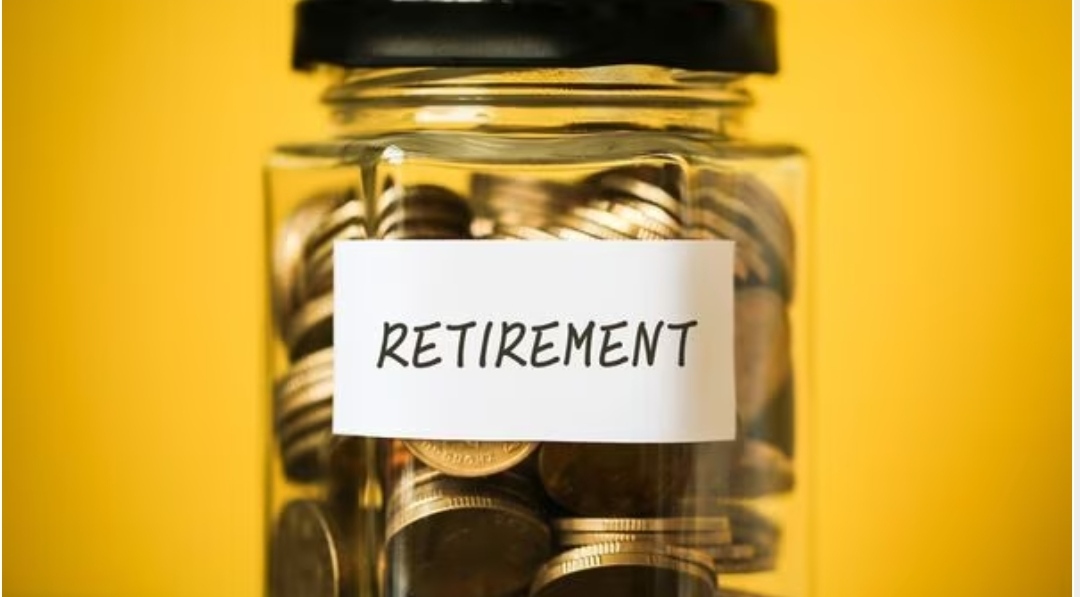
National Pension System: How will the new NPS  rules  benefit subscribers and who  will benefit  from the SLW option?  

 National Pension System,NPS : SLW is a method of withdrawing the  entire  NPS  after purchasing  the  annuity, providing retirees with  regular  cash  flow  and enhancing their post-retirement  income.  

 National Pension System: As part of  the  proposed  changes  in the National Pension System  ‘NPS’ As per the  withdrawal rules, the Pension Fund Regulatory and Development Authority (PFRDA) will  periodically  allow automatic  withdrawal of funds  from the  pool of  NPS  subscribers. “As per Regulations  3 and  4 of  the  PFRDA  (Transfer  and  Withdrawal  under  NPS) Regulations, 2015 and  its amendments,  it is proposed to provide  facility for gradual  withdrawal of  lump sum  amount  through  Single  Withdrawal  Scheme systematic times (SLW), “the” stated  PFRDA  in its circular dated  October  27,  2023.  

 NPS subscribers are allowed to withdraw up to 60% of their pension  funds,  through  SLW,  monthly, quarterly,  semi-annually  or  annually  for a period  of up to  75 years  as per  their  choice at the time of  exit from the status Normal. 

 What is SLW? 

 The SLW facility is similar to the  systematic withdrawal plan  (SWP)  of mutual funds. Through  the SLW facility, NPS subscribers can  systematically  withdraw the desired amount  at regular  intervals. 

  “From age  60  to  age  75, subscribers must  devote  at least 40% of their  assets  to  purchasing annuities. An  annuity provides periodic payments based on its terms. The remaining  data  can be  removed in aggregate  or systematically  using  the SLW method. SLW allows retirees to receive  regular  cash flows,  thereby  enhancing their post-retirement income and covering  their  regular expenses. This withdrawal method can be  selected only once  and  payouts  will  be as per  the subscriber’s  preferences,  said Kurian Jose, CEO,  Tata Pension Management.  

 NPS: Who benefits from the SLW option? 

  According to  Kurian Jose, SLW is an attractive option for retirees  looking for  a  steady source of  income  during their retirement years. It can be  claimed at the time of retirement of the  subscriber  and  is applied  to the  NPS  pool  after purchasing the annuity.  

How does NPS work? 

  NPS is a  program sponsored by the Government  of  India and managed  by PFRDA. An NPS subscriber invests in  capital  markets (equities, government  securities, corporate  bonds  and alternative assets)  based on his  respective risk appetite to build  his retirement  fund.  

 Meanwhile, to ensure  timely  remittance,  the pension regulator has made  it  mandatory  to verify rebates on withdrawals  by NPS subscribers, PFRDA informed in its  circular dated  October 25.

 For more  information,  visit at  https://happenrecently.com/zepto/?amp=1
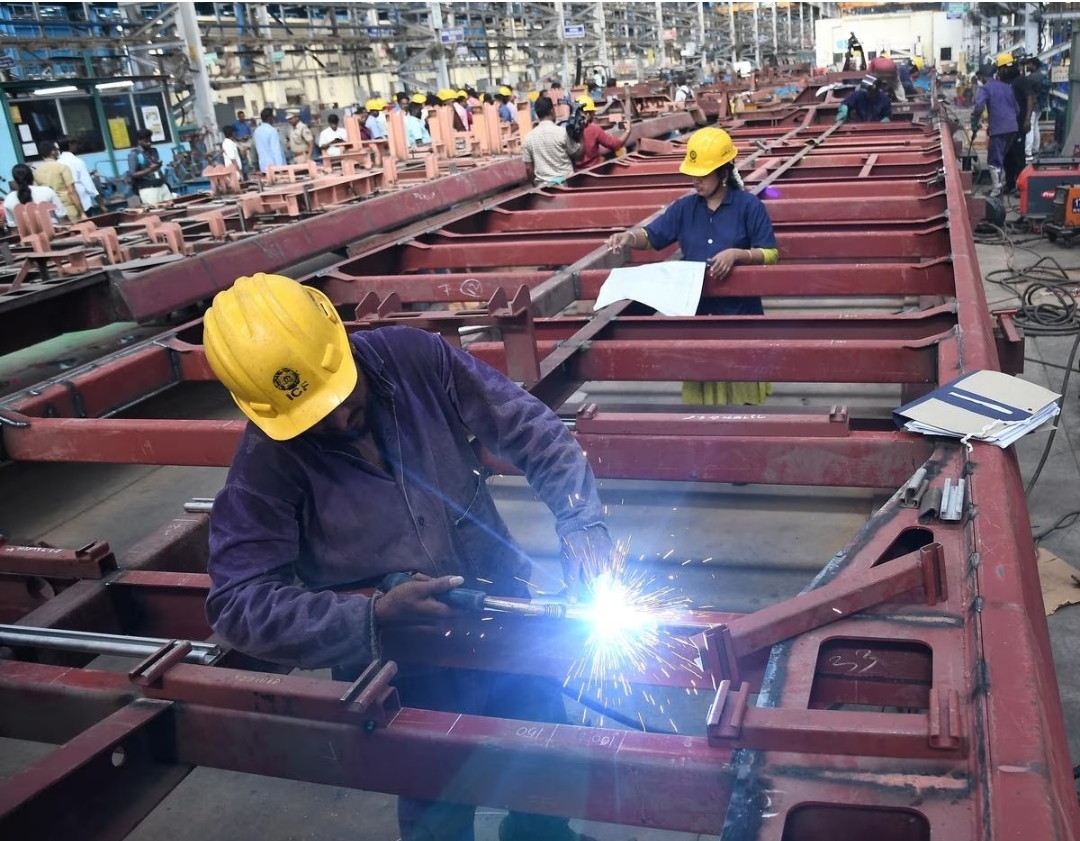
CBAM: The Controversial Climate Policy That Could Impact Manufacturing in the European Union

Title: The Impact of CBAM on Manufacturing in the European Union: Exploring the Potential Consequences The European Union’s proposed Carbon Border Adjustment Mechanism (CBAM) has recently sparked heated debates and concerns within the manufacturing sector. As the EU strives to achieve its ambitious climate goals, this mechanism aims to address the issue of carbon leakage and level the playing field for European industries. However, there are growing concerns that CBAM could have unintended consequences, particularly for the manufacturing sector. In this blog post, we will delve into the potential impact of CBAM on manufacturing in the European Union, examining the arguments from both sides of the debate and exploring the possible outcomes. Join us as we unravel the complexities of this controversial mechanism and its implications for the future of manufacturing in the EU.

Section 1: Understanding CBAM (Carbon Border Adjustment Mechanism)

Section 2: Potential impacts of CBAM on manufacturing in the European Union

Section 3: Challenges and concerns surrounding CBAM

Section 4: Possible solutions and alternatives to CBAM

Section 5: Conclusion and final thoughts.

CBAM Will kill manufacturing in European Union

CBAM Will kill manufacturing in European Union

1.

The topic of CBAM (Carbon Border Adjustment Mechanism) and its potential impact on manufacturing in the European Union is a controversial one that has sparked many debates among experts and industry leaders. CBAM is essentially a proposal to impose carbon taxes on imported goods based on their carbon footprint, aiming to prevent carbon leakage and ensure a level playing field for European businesses. While proponents argue that CBAM is necessary to incentivize global partners to reduce their carbon emissions, critics express concerns about its potential negative consequences. One of the major concerns is that CBAM could lead to a significant increase in production costs for manufacturers in the European Union. Manufacturers fear that the additional costs associated with carbon taxes on imported goods could make them less competitive in the global market. This could result in a decrease in demand for EU-manufactured products, leading to job losses and a decline in the overall manufacturing sector. Furthermore, critics argue that CBAM could have unintended consequences, such as an increase in protectionism and trade disputes. Some worry that the implementation of CBAM may lead to retaliatory measures from other countries, potentially escalating trade tensions and affecting global supply chains. However, proponents of CBAM argue that it is a necessary step in achieving climate goals and creating a more sustainable future. They believe that the carbon taxes imposed through CBAM will encourage non-EU countries to reduce their carbon emissions, ultimately leveling the playing field and promoting global environmental responsibility. As the debate surrounding CBAM continues, it is crucial for policymakers to carefully consider the potential impact on manufacturing in the European Union. Balancing the need to address climate change with the concerns of the manufacturing sector will be a challenging task, requiring thoughtful and collaborative decision-making.

2.

CBAM, or the Carbon Border Adjustment Mechanism, is a policy that has stirred up considerable controversy and debate within the European Union. While proponents argue that it is a necessary step to combat climate change and protect European industries, there are concerns that CBAM could have detrimental effects on manufacturing in the EU. One of the main points of contention is the potential impact of CBAM on the competitiveness of European manufacturers. Critics argue that the introduction of a carbon border tax could place an additional burden on EU industries, making their products less competitive in the global market. This could result in a decline in manufacturing activities within the EU, as companies may choose to relocate to countries with less stringent environmental regulations. Another concern is the potential for retaliatory measures from trading partners. The implementation of CBAM could spark trade disputes and retaliatory tariffs, further damaging the manufacturing sector in the EU. This could lead to a loss of market share, reduced exports, and ultimately, job losses within the manufacturing industry. Furthermore, the complexity of implementing CBAM is also a cause for concern. The practicalities of accurately measuring carbon emissions associated with imported goods and administering the necessary taxation measures present significant challenges. These complexities could lead to administrative burdens and increased costs for businesses, further impacting the viability of manufacturing operations within the EU. While the objective of CBAM to create a level playing field for European industries in the face of climate change is commendable, it is crucial to carefully evaluate the potential consequences. Striking a balance between environmental protection and maintaining a vibrant and competitive manufacturing sector is essential. Ensuring that the implementation of CBAM takes into account these concerns will be crucial in safeguarding the future of manufacturing in the European Union.

3.

CBAM, or Carbon Border Adjustment Mechanism, has been a topic of intense debate and discussion in the European Union. While it is touted as a measure to tackle carbon emissions and level the playing field for industries, there are concerns about its impact on manufacturing in the region. The implementation of CBAM is expected to place a significant burden on manufacturers within the European Union. This mechanism aims to impose carbon taxes on imported products based on their carbon footprint, thereby incentivizing manufacturers to reduce their emissions. However, critics argue that this approach will disproportionately affect industries that heavily rely on carbon-intensive processes. One of the main concerns is that CBAM will lead to increased costs for manufacturers, making them less competitive in the global market. The additional taxes on imported goods could drive up production costs, making it difficult for EU manufacturers to compete with counterparts from countries that do not have similar carbon pricing mechanisms in place. This could potentially lead to job losses and a decline in manufacturing activities within the European Union.  Moreover, there are concerns about the potential for retaliatory measures from trading partners. As the European Union imposes carbon taxes on imported goods, other countries may respond with their own trade barriers or tariffs, further impacting the competitiveness of EU manufacturers. While the intention behind CBAM is to promote sustainability and reduce carbon emissions, the potential consequences for manufacturing in the European Union cannot be ignored. It is crucial for policymakers to carefully consider the implications and potential mitigations before implementing such measures. A balanced approach that addresses environmental concerns without jeopardizing the competitiveness of EU industries is essential for the long-term success and growth of manufacturing in the region. 

For more information visit at https://happenrecently.com/zepto/?amp=1