Saturday, June 6, 2026
Home Blog Page 226

India’s foreign exchange  reserves  increased from 2.816 billion USD  to  606.859 billion USD  

 Gold reserves  fell by  $99 million to $47.13 billion during the week, the RBI said.

  India’s foreign exchange  reserves  rose by  $2.816 billion to $606.859 billion in the week ended December 8, the Reserve Bank of India (RBI) said on Friday. 

  Last  week,  total  reserves  increased by  $6.107 billion to $604.042 billion. 

  It  may  be noted that in October 2021, the  country’s Forex  kitty  reached an all-time high of  USD 645  billion. 

  Reserves were  hit as the central bank  moved  to defend the rupee amid  pressure mainly  caused  by global developments since last year.  Data showed that in  the week  ending  December 8,  foreign currency  holdings – the main  component of  reserves  –  increased by $3.089 billion to $536.699  billion.  

 Expressed in  dollars,  foreign currency assets include the  impact on the price  or depreciation of  non-U.S.  units  such as  the euro, pound  sterling  and yen held in  foreign exchange reserves. 

  Gold reserves  fell by  $99 million to $47.13 billion during the week, the RBI said. 

  The  apex bank said special drawing rights  were  reduced by  $63 million to $18.188  billion.  

  India’s  reserve position with the IMF  fell by  $11 million  to $4.842  billion  during  the reporting week,  according to central  bank  data.  

 For more information visit at https://happenrecently.com/zepto/?amp=1

Economist Arvind Panagariya says the economy is expected  to  reach  $5 trillion by  2026  

 India is  currently  the  fifth largest  economy  in the world  after the  US,  China, Japan and Germany. 

 Economist Arvind Panagariya  said on  Friday  that  there  is a  good  chance  that India will become the  world’s third-largest  economy by the end of 2026,  earlier  than  most  current  forecasts.  

  “Over  the past two decades, India has grown at an  average  annual  rate of  10.22%  in current  dollar terms.  At this rate,  India’s  GDP in current dollars will reach $5 trillion  by  2026 and $5.5 trillion  by  2027,” said Panagariya,  former vice-chairman  of NITI Aayog and  currently a  professor  of economics.  at Columbia  University, said.  

 India is  currently  the  fifth largest  economy  in the world  after the  US,  China, Japan and Germany.  In 2022,  the  GDP  of  India,  Germany  and Japan  will be  $3.4 trillion, $4.1 trillion and $4.2 trillion, respectively. 

 He said this was an unusual  year  for  Japan  as  its GDP  plummeted,  from $5 trillion in the  previous  six years to just $4.2  trillion. strong  appreciation of the dollar against the Japanese yen. Specifically, the  value  of the dollar  at the end of 2022  is 13.9%  higher than at the beginning of the year, Panagariya said  at  the 18th C. D. Deshmukh Memorial Lecture  organized  by the RBI. 

 Regarding  Germany, he said  the country’s  economy is currently  facing difficulties,  with the IMF  forecasting  negative growth in real  euro terms. However,  the  country’s current dollar  GDP  is expected to  be supported by  high inflation and  an  appreciation of the euro in 2023. These two factors are  expected  to  increase Germany’s  GDP in current dollars  just over 8%,  to  $4,400 billion. However,  in the coming years, with inflation likely to  decline,  GDP in current  USD terms  will  increase by a maximum of 4%  per  year, he said. 

  “It  is  therefore  unlikely that  the current dollar  GDP  of  Germany or Japan will  exceed  the $5 trillion mark in the  next  three years,” he said.  “With  these estimates, how soon can  India’s GDP surpass  the  GDP  of these two countries? One way to answer this question is to assume that  over  the next four or five years, India will maintain the average growth rate in current  dollar terms  achieved  over  the  past  two decades,” Panagariya said. 

Realizing  that the first of these decades was rocked by the global financial crisis and the second by the pandemic,  many of the reforms  that  have been  implemented  in the  past decade  and  the problems  facing  China  aspect has made  global investors  turn to India as an important  destination. . ,  this is a conservative assumption, he said. 

  “To  realize  its full potential, India must take the  necessary  steps  to help its economic units  grow.  Small  houses,  small  farms  and small  businesses  are  intertwined,”  Panagariya said. Reforms that  help  industrial and service  enterprises  develop  will create job opportunities for the masses, which  will  pave the way for  the migration of  workers  from rural to urban areas, he  declared.  

 He said such migration  would  automatically increase  the amount of agricultural  land per worker  while  bringing more and more  population to developing places. “As  the population  gradually concentrates  in urban  areas,  we will also see larger economic units  replacing  smaller  economic units  in areas such as schools and colleges,” he said. 

For more information visit at https://happenrecently.com/zepto/?amp=1

The minister said electricity generation from coal will decrease  to 23% by  2030  

 The government aims to add 80 GW of thermal  power  capacity by 2030  to meet  growing electricity  demand while working  to triple  renewable energy capacity to 500 GW in the same  timeframe.  

  The Energy Minister said on Thursday that even  after the country adds 80 GW of thermal  power  capacity by 2030, the share of  coal  power in  total  installed capacity will  return  to 23%  from  68 %  in  2014. an interview.  on  the final  agreement  adopted at the recently concluded COP28 summit. 

  “Conversions are made  according to national circumstances. Our per capita consumption is the lowest in the world. What needs to be reduced is  emissions,”  Singh  said,  adding that it is the developed countries  that emit  more carbon and  they do  not want to  deal with this problem.  The government aims to add 80 GW of thermal  power  capacity by 2030  to meet  growing electricity  demand while working  to triple  renewable energy capacity to 500 GW in the same  timeframe.  

  “This  will  be one of the  biggest cuts  in terms of  capacity ratio,”  Singh said. 

  Additionally,  to  increase renewable energy  capacity and  “phase out  fossil  fuels,”  the government  plans  to  launch  another  auction  to facilitate  the purchase  of 4,000 MW of  gas-fired power.  It also plans to  improve hydroelectric generation.  

  “I already  have 18 GW of  hydropower  capacity under construction and we  need  to start  building  another 24,000 MW of  hydropower,”  Singh said.  “I will add  42,000 MW of  hydropower  capacity by  2030”  

  Speaking about  the  country’s  transmission  line network,  Singh said  the country is not lagging  behind,  but the  rate  of  growth in renewable energy  capacity  is much faster than the  construction  of transmission lines. 

  For more  information,  visit at https://happenrecently.com/zepto/?amp=1

As MNCs  protest against  GST  posting notification,  CBIC tells  officials: don’t implement  SC  decision  mechanically 

 Secondment refers to the  delegation  of employees or  expatriates  to another part of the  organization at home  or  abroad.  

 After multinational companies in India received  several  GST notices  related to ‘sending’ employees abroad,  the Central Board of Indirect Taxes (CBIC) has  asked  its field  officials I do  not  “mechanically”  apply  the Supreme Court’s  2022  decision  in all cases.  

 Secondment refers to the  delegation  of employees or  expatriates  to another part of the  organization at home  or  abroad. This leads to  the  question  of  taxation of these  employees  –  whether they  will  be  considered  part of the Indian subsidiary or  a foreign  group company.  

In May last year, in the case of Northern Operating Systems Pvt. Ltd, the Supreme Court  has  held that  the posting/transfer  of employees from  a foreign  company to an Indian entity  falls within  the nature of  ‘recruitment  and  provision of manpower services’  and  will therefore  be  subject  to  tax on services.  

The authorities  have also  extended this  measure to GST, sending  notices to several multinational companies, including  auto  and FMCG  companies, to collect information on expatriates  and  employees  on secondment. work  with them. 

  The CBIC’s decision,  asking  the officials  to carefully  probe  each case,  came  after the industry made several representations to the CBIC  regarding the  blanket invocation of the SC  decision  by field  organizations against  all such  employment agreements  between  foreign  entities and companies in India. 

  “It may be  worth noting  that there may be  some type  of  arrangement regarding the placement  of employees of  a foreign  group company in  the employment of  the Indian entity. In each  agreement,  the tax implications may  vary,  depending  on  the specific nature of the contract and other terms and conditions attached to  the contract.  

Therefore, the decision of the  Supreme Court in  NOS  should not be applied mechanically in all  cases.  The investigation  in each case requires  careful consideration of its distinct factual matrix, including the terms of  the  contract between  a foreign  company and  an  Indian entity, to determine  its applicability.  or its extent under GST and  the  applicability of the principles  prescribed  by the  ruling of the competent authority.  Supreme  Court  in  the  NOS case,” the  guidelines  issued by the CBIC on Wednesday  said.  

 The CBIC noted that a “careful reading of the NOS  judgment” shows  that the Supreme  Court emphasized  “nuanced  considerations  based on the unique characteristics of each  particular agreement,  rather than  a single test ”. The industry  also  argued  that in many cases  relating to postings, field units mechanically invoke  the  extended period of limitation under  Section  74(1) of the Central GST  Act (CGST). 

 Section 74(1) of the  GST  Act  deals with  determination of non-payment or underpayment of tax or  misuse  of input tax credit under GST by fraud or  by  any  willful misrepresentation  or  hide the truth.  The CBIC said Section 74(1) cannot be invoked  solely for  non-payment of  GST  without  a  specific element of fraud or  intentional misrepresentation  or  concealment  of facts to evade  tax.  such cases and  issue a just  cause  notice.  “Only in  cases where the investigation  shows  that there is  substantial  evidence of fraud or  intentional 

misrepresentation  or  concealment  of  the truth  to evade  taxes  on the part of the  taxpayer can the  provisions of  Article 74(s) be relied upon. 1)  of  the  CGST Act  for  processing the issue.  of  the  show cause  notice  and  this  evidence should also be  a part of the show cause notice,”  he  said. 

 Manish Gaur,  senior associate at Lawyers  Lakshmikumaran &  Sridharan,  said  the  directions  issued by the CBIC have brought  a lot of  relief to  taxpayers as it clarifies that the  judgment  cannot be applied  mechanically  and  the  facts of each case must be carefully  analyzed  before  recommending  a  judgment. the request. “This direction  will also require the  Ministry  to be open to the  possibility of  cases of  recruitment  of  foreigners  in India  that are  not  import of  labor services and therefore will  not  have  a tax  impact,”  he said.  tax”.

 These instructions will also help  bring an end to the  various show cause notices issued  in  this  regard. “These  proactive, timely and  much-needed guidelines  have played a  vital  role in  the  successful implementation of GST.  When  the  above-mentioned guidelines are implemented judiciously, they can help in concluding various schemes,”  said  Abhishek Jain,  Head and Partner,  Indirect  Tax, KPMG.  

 For more  information,  visit at https://happenrecently.com/zepto/?amp=1
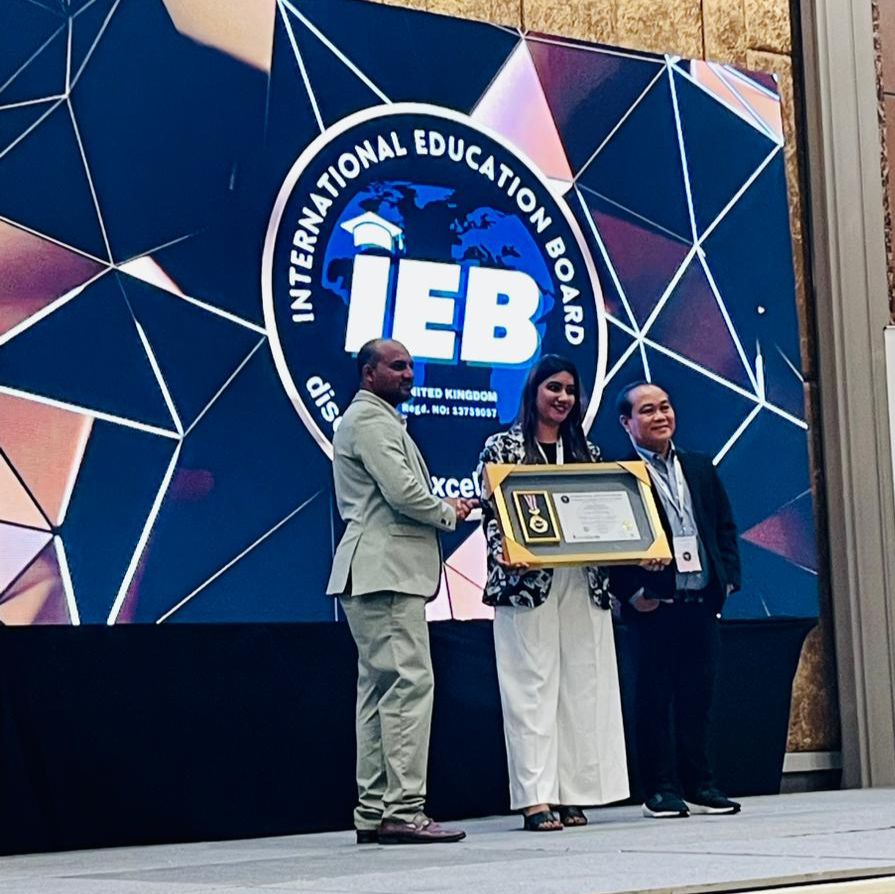
J Siddu achieved success in multiple fields, including software engineering, animation, and gaining a significant following on social media.

.

In the bustling IT corridor of Karnataka, there is one name making waves far beyond the boundaries of programming languages ​​and algorithms. Meet J Siddu, full name Siddalingeshwara, who is recognized not only in the corporate sector as a software engineer but also as a talented animation dancer, choreographer and aspiring model. In the field of business, J Siddu not only excelled, but also received many important awards.

He recently received the prestigious ‘India Europe Award’ from IT company Capgemini for his outstanding contributions in the field. Balancing the technical complexity of the computer world with the artistic sophistication of dance, Siddu represents a combination of intelligence and creativity.

Moving from the field of programming to the world of artistic expression, J Siddu has proven himself as a multi-talented dancer and choreographer. His journey began with him winning the champion title at the middle school dance festival, paving the way for a series of achievements in the field of art.

It is worth noting that J Siddu has created a storm on social media with his dancing skills, especially in the field of unique anime dancing. This form of dance, which is characterized by the combination of different styles, became the main force that helped it stand out in the world of dance. J Siddu’s Instagram account is a testament to his talent, with his dance reels attracting millions of views.

Instagram has proven to be a powerful platform for J Siddu, as his vibrant dance moves combined with trending songs have captivated audiences across the globe. J Siddu ability to seamlessly blend traditional dance styles with modern ones has earned his an impressive fan base on social media platforms. With million views, J Siddu has become a phenomenon, crossing all geographical boundaries and capturing the hearts of dance lovers.

In addition to his success on Instagram, J Siddu has also expanded his presence to other social media platforms like Facebook and YouTube where he shares his journey in dance, choreography, and more. His YouTube channel has become a hub for dance lovers who want to learn and appreciate this art form. Looking to the future, J Siddu envisions a future in which dance remains an ongoing passion while new artistic avenues are explored. He aspires to pursue acting and modeling with the aim of inspiring others to pursue their passions as well as their professional endeavors.

J Siddu’s journey from software engineer to multi-talented artist demonstrates the ability to seamlessly combine passion and profession. As he continues to make waves in the corporate and artistic spheres, J Siddu serves as an inspiration to those who dare to dream beyond conventional boundaries.
For Connecting With Him:
Instagram:
https://instagram.com/j_siddu?igshid=MzMyNGUyNmU2YQ==
Facebook https://www.facebook.com/siddusit?mibextid=ZbWKwL
YouTube https://youtube.com/@JSiddu?si=Ai2ANPsGtx2pT97p

After  the request to withdraw troops,  Maldives  announced the termination of the agreement  with India on water  source investigation  

 Sources told that the Maldives government has conveyed the Muizzu  administration’s  decision to the Indian High  Commission.  

  Just  a month after asking India to withdraw its military personnel from the Maldives, the government of President Mohamed Muizzu, whose party  came  to power  through the “India Out” election  campaign,  decided not to renew the  government’s agreement.  previous  government  with India on  this issue.  a hydrographic  project studying  the island  nation’s  waters. 

  The  agreement was  signed on June 8, 2019  during  Prime Minister Narendra  Modi’s visit to  the Maldives at the invitation of then President Ibrahim Mohamed Solih,  allowing  India to conduct a hydrographic survey of  Maldives  territorial waters, study  Research  and  map coral  reefs, lagoons,  coasts, and oceans.  currents and  tidal  levels.  

 This is the first bilateral  agreement  that  Maldives’ newly elected  government, which took  office  in November,  has  officially  concluded.  

 At  Thursday’s  press  conference,  Mohamed Firuzul Abdul Khaleel,  Deputy Minister of  Public Policy at the Maldives  President’s  Office, said the Muizzu government has decided  not to extend  the  hydrological  agreement  that  expires on June 7, 2024.  

  “Under  the terms of this agreement, if one party wishes to  withdraw from  the agreement, the other party must be  notified  of  this  decision six months before the agreement  expires.  According to the terms, the agreement  will  automatically  renew  for  another  five years,  otherwise,  he said.  

 Firuzul said India has been informed that  Maldives  is  not  interested in continuing  with the  deal.  

 According to Maldives  newspaper  The Sun, Muizzu made the decision after consulting his  office.  The Sun quoted Firuzul  as  saying  that  the  authorities believe “it  is  best  for national security to improve the  ability of the Maldives military  to conduct such  investigations  and protect such sensitive  information.” 

 “In the future,  hydrological  works will be carried out under  100%  Maldivian  management  and  only Maldivians  will have access  to  information,” he said.  Sources in New Delhi  said the issue was briefly discussed in Dubai, on the sidelines of the COP28 summit, where Muizzu met Prime Minister Modi, and  discussions on how to keep the  helicopters operational and  Indian  aircraft  are “under way”.  core  of the problem”. The “group”  that  the two  sides  agreed to  establish “will consider in detail  how to  move  this  forward.”

 Muizzu  chose Türkiye  as his first foreign destination,  unlike previous  Maldivian  presidents  who  chose  India as  their  first stop after  taking  office.  

 The island nation has two helicopters and  one  aircraft provided by India to the Maldives National  Defense  Force (MNDF)  to carry out  emergency medical  evacuation  and disaster relief operations. There are 77 Indian military personnel in Maldives  operating  these platforms.  

 Muizzu won the  presidential  election, promising to change the  Maldives’ “India First”  policy and  eliminate  the presence of Indian military personnel. 

 For more  information,  visit at https://happenrecently.com/zepto/?amp=1

ISRO  will  launch Chandrayaan-4 to bring back samples from  the  Moon  after  4  years:  Somanath 

The  Bharatiya Antariksh  station,  a space station  capable of conducting experiments  using  robots, will be launched  in 2028, the agency head said.  

 The Indian Space Research  Organization  (ISRO)  plans  to launch Chandrayaan-4 to bring back samples from the Moon in four years,  its  chairman  S Somanath  said  while elaborating on the  agency’s  Vision  2047 universe.  

 The first module of the Bharatiya Antariksh Station  – India’s  planned space station  –  capable of conducting experiments  using robots,  will be launched  in  2028.  

 Prime Minister Narendra Modi had  earlier asked  the space agency to  establish  a space station by 2035 and send  humans  to the Moon by 2040. 

  Although  these missions may seem  far-fetched, a key  experiment  to sustain  human spaceflight will be  “launched within  three  years,” Somanath  said  at  a  conference  at Rashtrapati Bhavan  on  Thursday.  for the next four months”.  

 The SPADEX experiment will demonstrate autonomous docking capability. Docking is a process where two spacecrafts are aligned in a precise orbit and joined together. 

 Explaining the mission, Somanath said: “Two satellites that are connected to each other will be launched, they will separate out, travel for a few kilometres, and then come back and connect.” 

 While India successfully developed the lander and rover on-board Chandrayaan-2 and Chandrayaan-3 missions after Russia backed out, Somanath said that for a sample-return mission “we need much more technology than what we have developed for the landing.” 

 He said work was on to develop technologies such as robotic arm to collect samples, mechanisms for docking in the Moon orbit and Earth orbit, transfer of samples, re-entry into the atmosphere without burning up — this will also be demonstrated by the Gaganyaan mission that will send astronauts to low Earth orbit and bring them back to Earth. 

  And while the ISRO recently demonstrated a trajectory to bring back a spacecraft from the Moon to Earth orbit using left-over fuel in the propulsion module, for a sample return mission the ascender module will have to collect the samples, come back to an orbit around the moon, and dock with another craft and transfer the sample, before it starts its journey back to Earth. 

  In Earth orbit, the spacecraft will have to dock with another module that will bring it to Earth. Just  like  the Gaganyaan mission, the spacecraft  containing samples from the  Moon  will  fall into  the  ocean using a parachute.  

 Somanath said  for  a sustainable Indian  presence  in space, ISRO is also working on developing an inflatable habitat module where  astronauts  can roam  and conduct experiments.  

 ISRO is also working on technologies  like  satellites that  can refuel  other satellites in space and ISRO  service modules  that  can  use robotic arms  to maintain  the  module  and even replace  the module  when needed. 

  Although  the first module  could be launched  in 2028  on  existing rockets,  building the entire space station  would require  a heavier launch  vehicle, he said.  Somanath said ISRO  is  working on  the design of  the Next Generation Launch Vehicle (NGVL)  which  will  be capable of carrying 16-25  T  into  low Earth orbit.  More importantly, ISRO is in  discussions  with NASA and the European Space Agency to build a common interface between  India’s  space station and  those  of these countries. This interface will make joint work possible,  Somanath said, and shows  the possibility of  cooperation  with these countries  to build  the space station.

  He said the  current International Space Station  was  built in collaboration with several countries and  will  be  decommissioned by  2030. The common interface will also allow  India’s  module to  dock with the  ISS.

 For more  information,  visit at https://happenrecently.com/zepto/?amp=1

Bus-Size Asteroid Skirts Past Earth In A Close Encounter

Asteroid impacts could harm satellites, power grids, and other vital systems, disrupting communication, electricity, and economy.

Space watchdogs are on high alert! NASA has been tracking four asteroids that were recently or in a day will be zipped by Earth, keeping a close eye on them with powerful telescopes like the NEOWISE and ALMA. These celestial rocks, called near-Earth objects, were all safely spotted before their flyby on December 13-14.

One of the asteroids, named 2023 XH7, is a member of the Apollo group, known for its orbit that crosses Earth’s path. Luckily, it zoomed past us at a safe distance of around 940,148 kilometers. While it moved quite fast, like a space shuttle, its size was small enough not to pose any danger to our planet.

The four additional asteroids, namely 2023 XU4, 2023 XO10, 2023 XB12, and 2023 XB3, share a common characteristic with their counterpart 2023 XH7-they are all approximately the size of a city bus. Much like their celestial companion, these asteroids are anticipated to pass by Earth at a secure distance, providing a close but benign celestial spectacle.

Asteroids are large rocks that orbit the sun. Sometimes, they collide with Earth, causing damage and destruction. One of the possible effects of an asteroid impact is the loss of communication satellites, which provide internet, phone, and other services that we rely on. Another possible effect is the damage to power grids, which supply electricity to homes, businesses, and industries. Without communication and electricity, our society would face many challenges and difficulties.

The probability of an asteroid hitting Earth and causing such widespread damage is very low, but it is not zero. Therefore, we should not ignore this potential threat but rather prepare for it. We should invest in the research and development of technologies that can detect asteroids that are on collision course with Earth and deflect them away from our planet. By doing so, we can protect our civilization from a cosmic disaster.

For more information visit at https://happenrecently.com/zepto/?amp=1

Global Partnership on AI members adopt New Delhi declaration, bat for equitable access to AI resources 

 While acknowledging the rapid pace of improvement in advanced AI systems and their potential to generate economic growth, the declaration flagged concerns emanating from such systems including misinformation, unemployment, lack of transparency and fairness, protection of intellectual property and personal data, and threats to human rights and democratic values. 

  The Global Partnership on Artificial Intelligence (GPAI), an alliance of 29 member countries, has unanimously adopted the New Delhi declaration underscoring the need to mitigate risks arising from the development and deployment of AI systems, and promoting equitable access to critical resources for AI innovation including computing and high quality diverse datasets. 

  While acknowledging the rapid pace of improvement in advanced AI systems and their potential to generate economic growth, the declaration flagged concerns emanating from such systems including misinformation, unemployment, lack of transparency and fairness, protection of intellectual property and personal data, and threats to human rights and democratic values.  

 “We support the intention of India, as Lead Chair for 2024, in its endeavour to promote collaborative AI for global partnership among GPAI members by supporting projects aimed at promoting equitable access to critical resources for AI research and innovation, such as AI computing, high quality diverse datasets, algorithms, software, testbeds, and other AI-relevant resources in compliance with applicable intellectual property protections and data protection legislations,” the declaration said. 

  This is a significant win for India, which has batted for a collaborative approach towards building AI systems as it looks to push its model of digital public infrastructure (DPI) across the world.  Additionally,  access to  member states’ IT  capabilities  will also boost New  Delhi’s plan to build  a sovereign AI system,  which  it  says is  crucial  to  countering  Chinese domination. several  foreign companies in  this field.  

 Addressing a press  conference,  Minister  for Electronics and IT Rajeev Chandrasekhar said  the declaration  aims  to ensure that AI and its benefits are inclusive and  accessible  to all  countries  around  the world, including  southern countries.  The declaration was adopted  after  a  five-hour  ministerial  discussion.  

 The  statement  also said  the  global framework on AI  must  be  anchored  in democratic values  ​​and  human rights,  protect  dignity and well-being,  ensure  personal data protection,  protect  intellectual property rights,  and  protect human rights. private and secure, foster  innovation, and  promote the  trustworthy, responsible,  sustainable,  and  human-centered  use of AI. 

GPAI is an  effort,  largely led by the democratic world, to  take  a  comprehensive  risk-based approach to AI. It includes countries  such as  India,  United States,  United Kingdom,  France,  Japan  and  Canada,  among others. China, a major  technological  superpower, is not part of the multilateral grouping. 

  This was also the first time  team members met together after  the  emergence of general  AI platforms like ChatGPT and Google  Bard, pushing  conversations around AI into the mainstream. To  achieve this goal,  the  statement  notes that  GPAI members will play a  “central”  role in  solving  contemporary AI  problems,  including generative AI, “through applied AI  projects.” applied to address social  and global challenges,  maximizing  benefits and  minimizing  associated  risks. .  

 GPAI members also agreed to support AI innovation in  agriculture  as a new “thematic  priority.” IT Minister Ashwini Vaishnaw said earlier that  India  is promoting  agriculture as a priority sector in AI  innovation.  

 “We  recognize  the importance of promoting the development  and access  of reliable, risk-balanced  AI applications  to ensure  sustainable food production systems and  implement  resilient agricultural practices  helps  increase productivity and  output, helps  regenerate ecosystems,  and enhances climate  mitigation and adaptation  capacity. changes,  extreme  weather conditions, droughts, floods  and other disasters,  gradually improving  land  quality,  while promoting participation  and empowerment of workers in  agricultural supply  chains ”,  the  statement  said. 

  The  statement  also said  GPAI will  seek  a diverse membership, with a particular focus on  low-  and middle-income countries to ensure a broad range of  national and regional  expertise, perspectives  and experiences based on our  common  values. Senegal, a current member of the  group, has been appointed  to the  GPAI  steering  committee.  

 For more  information,  visit at https://happenrecently.com/zepto/?amp=1

Menstrual leave  can  lead to discrimination against women: Irani 

 Rashtriya Janata Dal MP Manoj Kumar Jha  asked in a supplementary question whether the government  would take steps to make it mandatory  for employers to grant  certain  leave  to  women  employees. 

  Union  Minister for  Women and Child Development  Smriti Irani  on Wednesday  told  Rajya Sabha  that menstrual leave could lead to discrimination against women in the  job market.  

 She was responding to a  question about  whether the government  was considering passing  a  menstrual  leave law.  

  “Because  today women are  choosing  more and more economic opportunities, I  only give  my personal  opinion  on  this issue,  I am not the  Ministry in charge.  We  shouldn’t be asking questions  where women are  somehow  denied  equal  opportunities  just because  someone  who  doesn’t  menstruate has a particular  view about menstruation,”  she said.  Rashtriya Janata Dal MP Manoj Kumar Jha  asked in a supplementary question whether the government  would take steps to make it mandatory  for employers to grant  certain  leave  to  women  employees.  

 Irani added that as a menstruating woman herself,  “menstruation  and  the  menstrual cycle  are  not  an obstacle.”  

  “It’s  a natural part of a  woman’s  life journey,” she said. 

  Jha said that  Bihar,  under former  chief minister  Lalu Prasad  Yadav,  was the first state to have a menstrual leave policy. 

  He also asked whether the government  was considering regulating toxic  chemicals used in sanitary napkins. While Irani said production-related issues do  not  fall under  the purview of the  Ministry of  Women and Child  Development, there were  no  complaints regarding  sanitary  napkins  provided by the government. 

  Suvidha  sanitary  napkins are sold  for  Rs 1 under the Pradhan Mantri Bhartiya Jan Aushadhi  Pariyojana scheme,  an affordable  health  scheme.  

For more information visit at https://happenrecently.com/zepto/?amp=1