

Sunday, June 7, 2026
Home Blog Page 210

During the  trade  meeting,  India  called for increased drug testing,  easier  visa issuance, raising the  US  flag to monitor  laptop  imports  

 Union Commerce Minister Piyush Goyal highlighted  the  challenges faced by  Indian businessmen coming  to the US due to  delays in  visa processing  and  asked  the US to  enhance  processing.  

 The Union government  on  Friday asked the US to increase the number of  US Food and Drug Administration  inspections  in India to boost  pharmaceutical  exports and reiterated its  long-standing need  to restore the  system  of  preferences  (GSP) for easier access  to  goods  in the US, according to  a  joint statement from the  Trade Policy Forum  on  Friday.  

 Union Commerce Minister Piyush Goyal highlighted  the  challenges faced by  Indian businessmen coming  to the US due to  delays in  visa processing  and  asked  the US to  enhance  processing. Visa delays  for  Indians  have hit  record levels  in the wake of  Covid-19, causing severe  disruption  for IT professionals working in the US. 

  At  the  same time, the United States imposed several  trade measures introduced by India to  limit imports  of  low-cost  quality  goods,  including  the Quality Control Order  (QCO) and the  Computerized Import Monitoring System. portable, which some  countries  consider commercial. fence.  These measures were  introduced mainly  to  limit  imports from China  in the context of the growing  trade deficit.

  “Ministers reiterate  their commitment to  ensuring  that technical regulations, such as  quality control orders  (QCOs), do not create unnecessary barriers to trade by providing  adequate  opportunities  Consult with relevant stakeholders  and  ensure  that relevant  national  standards  are consistent  with international standards  wherever possible, said  the  press release.  

  The two  countries discussed  the over-reliance  and lack of diversity  of active pharmaceutical ingredients (APIs), important drug input materials,  in  the global pharmaceutical supply chain. India has identified  API  manufacturing  as a  sector  of strategic importance  and has  started production  under the PLI  programme.  

 The joint statement said  the  two  governments  have  agreed to establish a  roadmap for  India and the US  to jointly  recognize  the  results  of recognized  conformity assessment bodies. This comes as several Indian exports  are being rejected  in the US due to differences  between  US and Indian standards. 

  “This will allow  laboratories  and conformity assessment bodies to certify that products  comply  with certain standards. This  will  eliminate  duplicate  testing requirements and reduce compliance costs  when selling  high-quality  products.  Ministers  are  committed to  identifying  priority  areas  of mutual interest for implementation and  establishing  a Joint  Facilitation  Mechanism (JFM) for  these areas,  the terms of reference of which will be finalized at the  earliest,” it said. Dad said.  

 “India  has  emphasized the need to increase the number of inspections  carried out  by the US Food and Drug Administration  (FDA)  in India to facilitate trade and  further  reduce  delays. late.  The United States  appreciates India’s comments,  noting that the US FDA has increased staffing to  enhance  pharmaceutical  testing  conducted by the agency,” the joint statement said. 

  United States Trade  Ambassador  (USTR)  Katherine Tai raised the issue of  India’s  new  requirements for  imports of  computers,  tablets  and servers. 

  “She  also  welcomed  the fact  that India has implemented the  “Import Management System  for  Specified  IT Hardware” in  an enabling  manner that has  so  far minimized the impact on trade and urged India to ensure that  The  end-to-end online system  is now operational  and  the  policies do not restrict  future trade,”  the statement  said.  

 India  lost GSP in 2019 when former US President Donald Trump began introducing  sweeping  trade measures citing  a  widening trade  deficit  with India and China.  Trump’s  trade war  has hurt  New  Delhi, which  was the  biggest  beneficiary of GSP status in  2017,  with $5.7 billion  of imports into the  United States enjoying  duty-free status.  “Secretary  Goyal reiterated  India’s  interest in  restoring  beneficiary status under the US Generalized  Program  of  Preferences.  Ambassador Tai noted that this  may  be considered,  if  warranted,  based on  eligibility criteria determined by the  United States  Congress,” the statement  said.  

 For more  information,  visit at https://happenrecently.com/zepto/?amp=1
Janata Party’s Presidential Race: A Prelude to Political Change

Janata Party's

The political landscape is abuzz with earnest anticipation of the Janata Party President’s Election that will take place on January 26. This historic event is planned primarily for the Janata Party Punjab State Headquarters in Ludhiana on January 23. The impending election would further be symbolic as leaders and office-bearers from across the nation are expected to gather.

Shri Kunal Sofat, the Punjab State President, focuses on the value of the forthcoming plenary session, which has to serve more than a proceeding formality. It is a platform that focuses on the commitment of the party to transparency and provides an opportunity for leaders to engage in constructive discussions regarding pivotal issues besetting this nation.

An article about the Janata Party written by Dr. Manoj Vajpayee, Vice President of this political party, sheds light on its history. 2013 saw the departure of Dr. Subramanian Swamy, and efforts to merge with the BJP reflect the dynamic shifting path of the Janata Party over time.

Famous investigative journalist Shri Navneet Chaturvedi was elected National President in 2021, and during his tenure with the Congress party, he played an important role in exposing major scams. Now that his tenure of two years is elapsing, Chaturvedi has opted not to stand for re-election in this leadership post.

Thus, the stage is now set for a competitive presidential race, with several prominent leaders declaring their activities. The leaders who are fighting for the prestigious position include Shri Vijay Kumar Ramkinkar Jha, Advocate Ranjeet Singh, Shri A.K. Jha, Shirajaiprakash Bandhu Rajkapoor Yadav, and Tejnarayan Singh.
The Janata Party has not been deterred from its quest to hold a fair and transparent election despite all these challenges. The plenary session is also relevant to the consideration of pending legal cases at the Hon’ble Civil Judge Tis Hazari Court in Delhi, which corresponds with what has been recommended by way of direction given by the Election Commission of India.

The Janata Party has a long history and national presence but does indeed stand at the threshold of its transformation. It was the upcoming presidential election that signified not only a shift in leadership but also an extension of this party’s dynasty as one of the greatest political powers within India. In their preparations for this electoral challenge, the Janata Party continues to be a symbol of democracy that is about to turn another page in its great history.

India’s  “wealthy” class, expected  to reach 100 million in three years, will  drive sales of luxury products.  

Goldman Sachs Group  Inc.,  in a report released  January  12, projected  that India’s  “wealthy”  class is  expected  to reach 100 million  people  in the next three  years . He said this would allow the country’s premium products companies  to  perform  better  than their  broader competitors. 

The report titled  The  Rise of  ‘Rich  India’ said  strong  economic growth,  stable monetary  policy  and  strong  credit growth over the past decade have  fueled  purchasing power of  high-income Indian students. He added  that 60 million  people,  or  4.1%  of the  population,  now earn  more than  $10,000  a year, up from  24 million in 2015.  This  is  certainly  a small percentage of the  total  population. 

  Who  understands “Rich India”? 

 Goldman Sachs has classified the  richest 4%  of  India’s  working-age  population, whose  per capita income  exceeds  $10,000  per year,  as  “Rich Indians”.  They contrast with India’s  per capita income of  about  $2,100. The  “rich India”  group,  with  about 44 million  people of working age,  is  expected  to reach  about  60 million  considering the total population of 1.42  billion.

 This  growing demographic,  comprising  approximately 60 million consumers and 12-14 million households,  reflects  the widespread adoption of discretionary products and services in India.  The report highlights notable  statistics  including approximately  40 million air travelers  per year,  approximately 30 million monthly users  interacting  with online food aggregators, 30 million broadband  connections  and  about  26 million international  tourists depart  from India each  year.  

 The  strong wealth effect is a factor 

 The report notes that the  increase in  wealth  comes from  a variety of  factors. India’s market  capitalization  has  grown  more than  80%  in the  past  three years, driven by  growing  retail participation. From 2020 to 2023,  gold prices also increased significantly by 65%. As a result,  the  total  value of  India’s stock  and gold  holdings increased  from $1.8 trillion to $2.7 trillion.  Real estate  prices  have notably increased by about 30% between fiscal years 2019 and 2023,  in contrast to  the 13% increase  observed  between fiscal years 2015 and 2019.  

  He  added that growth in the  ‘affluent  India’ segment is expected to  drive  sustained expansion in  luxury  consumption,  categories such as  entertainment,  jewellery,  dining out, care Healthcare  and  luxury  brands  in  various sectors  are  the  main areas. beneficiaries.

On the equity side,  the report identified a strong preference for brands and network  expansion  efforts such as Apollo, Devyani, Eicher, MakeMyTrip,  Phoenix ,  Sapphire,  Titan  and Zomato.  Research shows  that companies  targeting high-end  consumption  are growing  faster  than  those targeting  large-scale  consumption.  

 Over the  past  12 months, stocks  on  Goldman  Sachs’ ‘Rich  India’ list have seen  consensus estimates for  their  fiscal 2024  revenue  rise 7%,  while  overall consumer stocks decreased by 3%. India emerges as  the  third largest economy  by 2027.

 The International Monetary Fund (IMF) predicts that India, currently the world’s  fifth largest  economy, is  on track  to become the  third largest  by 2027. This growth is  due  to  growing purchasing power. rise  of the middle class,  especially  benefiting companies  that provide high-priced end-brand services.  in  entertainment,  jewelry,  outdoor dining  and healthcare, according to Goldman.

Goldman’s report highlights  significant increases  in the value of financial and physical assets in India over the past three years, contributing to the  country’s  growing  wealth.  While traditional assets such as gold and  real estate  remain important,  over the past five years  there has been a significant  trend of  households investing in equities through direct stocks or mutual  funds.  

 What  drives profits?

  The  top  three  asset classes  with  notable  growth in  value  from  2019 to 2023  are gold,  stocks  and  real estate. Stocks  and gold  had  the most  significant gains,  with  real estate  prices  rising  at  higher  levels over  the  past  3-4 years. 

  The market  capitalization  of the Indian stock market  increased  by  80% between  January 1, 2020 (just before the market  crash  due to COVID-19  pandemic  disruptions)  and  January 1,  2020. January  2024. During this period,  the participation of  retail  investors is increasing.  Indian  stock  market.

The number of ‘demat accounts’ has increased from around 41 million in FY20 to  around  114 million in FY23.  Furthermore, savings  flow  Household flows  into  equities have increased  significantly  since  fiscal 2017, remaining at persistently  high  levels between 2017 and 2023,  indicating  growing and  sustained  participation in the  market stocks in the context of sharply increasing profits.  

  Consumers own stocks  through direct retail  holdings  and mutual funds, both  of which have grown  in recent years.  Total direct retail investor participation in the  BSE 200  increased from  8.5%  in  December 2019  to  9.8%  in  September 2023,  while  mutual  fund participation in water increased  from  8.1%  in  December 2019  to  9.2%  in  September 2023.

  Additionally,  Indian households  own about  25,000 tons of gold,  accounting for  about  10-11%  of the world’s physical gold  reserves,  according to the World Gold Council.  Gold prices have increased  from an average of  ₹39,900/10g  in January 2020 to an average of  ₹62,200/10g  in December 2023,  an increase of about 65%. 

 The total value of household gold  reserves  in India  increased  from $1.1 trillion to $1.8 trillion  between  2019  and  2023, contributing significantly to the  growing  wealth effect in  “India is rich”. 

Although real estate  prices  have not increased  as  strongly  as gold and  stocks,  the  growth rate  of  real estate  prices in India  has changed clearly  in recent years. According to Propequity data, average  real estate  prices in India  rose about 30% in the 2019-2023 financial year,  compared to a slower  rise  of about  13% in the 2015-19 financial year. 

The spending power gap still exists  

  However,  despite  overall economic growth in India, a  purchasing  power  gap persists  between  top earners and the middle  class. According to the report, with  a  per capita  GDP  of less than $3,000 a year, only 30 million Indians can afford a  car,  even though more than 960 million debit cards have been  issued  and 93 million  people  have  pay  phone  connections after.  

 This  shows  that while  some  sectors are  booming,  challenges related to income inequality and access to basic amenities  persist  in  India’s growing economy.

For more information visit at https://happenrecently.com/zepto/?amp=1

“Beyond Culinary Boundaries: Dobaraa’s Menu Enchants with Zaatar Pita and Prawn Fataka, Drawing Rave Reviews from Influencers Prithvish Ashar and Pankaj Kaklotar.

Dobaraa’s

Rajveer Singh, an ace journalist and fervent food enthusiast, had vibrant discussions with highly influential culinary icons, setting the stage for a captivating dialogue. Prithvish Ashar, the mastermind behind this flavorful evening and a luminary in India’s PR landscape, joined forces with tastemaker Pankaj Kaklotar and culinary trailblazer Yoshita Shah, along with Chef Shilpa Seth Bhambri. Together, they marveled at Dobaraa’s vintage vibes, hailing it as the epitome of Mumbai’s culinary scene. Their praise encompassed its finesse, vintage charm, and exceptional service, affirming Dobaraa’s commitment to delivering an extraordinary dining experience. Alongside these stalwarts, budding influencers Neha Sanghvi, Ritika Jasani, Riya Shah, and Ayesha Mohta shared their awe-inspiring experiences, adding depth to the acclaim.

Guiding Dobaraa’s culinary vision is Chef Anil Nair, celebrated for his innovative repertoire from Seattle’s gastro pub scene. His menu, a symphony of Middle Eastern delights and inventive creations, featured Zaatar Pita with Hummus, Methi Malai Aranchii, and Prawn Fataka that tantalized taste buds. The Ghee Roast paired with the signature Berry Pulav claimed attention, while the Baida Roti Chicken, Gado Gado Salad, and the captivating seasonal cheesecake added layers to a memorable culinary journey.

Brand Head Sanjay Gupta shared his thoughts on the new menu, ambiance, vintage decor, and rustic aesthetics, transporting guests to an era of classic charm seamlessly combined with contemporary comforts. This enigmatic setting, reminiscent of Berlin’s underground allure, promised unforgettable dining moments, appealing to both nostalgia and modernity.

The discussions among these prominent influencers, echoing admiration for Dobaraa’s fusion of vintage charm and culinary excellence, further affirmed its status as a culinary landmark in Mumbai.

For news & media coverage, connect with us at 7710030004.

Infosys’  total headcount  has decreased  by  7% over  the  past  12 months 

 While attrition fell to 12.9% in  Q3  from 14.6% in  2QFY24,  the  company’s utilization rate increased  to 82.7% in the  upcoming quarter through precious.  

  Infosys’  net headcount  fell  by 6,101 to  a total of 322,663 employees  in  the third quarter of  2024.  This  was  the fourth  consecutive  quarter in  which an  IT company reported a decline in its total headcount. 

  In the September quarter of  fiscal 2024,  Infosys had about  3,28,764  employees.  Over  the  past  12 months, the company saw a total decline of 24,182 employees,  or  about 7% of its  workforce in Q3 FY 2023.  This  was  also  the  year  when  the IT  industry saw 3 out  of  the  10 highest paid employees in FY23  leave  the company.  

 While attrition fell to 12.9% in  Q3  from 14.6% in  2QFY24,  the  company’s utilization rate increased  to 82.7% in the  upcoming quarter through precious.  This  compares with  81.8% in the second quarter.  

 Nilanjan Roy, outgoing CFO of Infosys,  said:  “We continue to monitor the  usage  and our  flexible  hiring model with Covid, on  and off campus,  this is  a  post  new  to  us… At this stage, of course,  we are  not seeing  immediate  recruitment on campus.  But  to  increase  numbers,  we have a very strong off-campus  program.  

 After  about five  months of delay,  Infosys last month rolled out  pay  hikes to  select employees,  effective  November 1, with the new amount credited to accounts  along  with  December  salaries . Lower-level employees  who  join  the company after October  2021 will  not  receive a salary increase,  nor  will  those at the  management  level who  join  the  company  after October  2020 receive a salary increase.  Generally,  IT  companies give  annual  salary increases  to  June-July  hires  and they are  effective. right  from the start of the  exercise.  

 Salil Parekh,  CEO of  Infosys, said  many general  AI projects are  underway  and the company now has  100,000 employees trained in GenAI.  Infosys also saw a decline in the number of  active and smaller  customers  in the third quarter.  

 The company saw its number of active  customers increase  from 1,884 to 1,872 in the third quarter. Even the number of  million-  and  ten-million-dollar customers dropped  seven and four,  respectively,  to 944 and 308 in the third quarter. 

  For more  information,  visit at https://happenrecently.com/zepto/?amp=1

The US and UK  will pay a heavy  price: Houthis warn  after  UK and  US  air strikes  on Yemen 

  A US-backed  coalition including  Britain  launched heavy  air strikes  in Yemen on Thursday, targeting Houthi rebels. The  Yemeni government has  now  promised a blood feud,  saying  “the US  and  UK  will  be prepared  to pay a heavy  price”.  

 The  US and UK  attack  on Yemen comes weeks after  Houthi rebels  reportedly launched  disruptive attacks  in the  Red  Sea, damaging  commercial shipping on the trade route. 

  US and UK  airstrikes in  Yemen  reportedly  targeted an  air base, airport  and a military camp. 

  According to media officials, Houthi Deputy Foreign Minister Hussein Al-Ezzi said: “Our  country  has suffered  a  powerful  attack  from  American and British ships, submarines and  fighter jets.” . “The US  and  UK  will have to  be prepared  to pay a heavy price and bear all the  disastrous  consequences of this blatant  act of aggression,”  Al-Ezzi added. 

  Houthi-run Al-Massirah TV  channel  said the  airstrikes targeted  the capital Sanaa as well as the cities of Hodeida and Saada. 

  According to US officials,  large-scale  retaliatory  attacks  on Yemen were  carried out  using  Tomahawk missiles and fighter  aircraft launched by warships and submarines.  

 President Joe Biden said the  attacks  were  intended  to demonstrate that the  United States  and its allies “will not  tolerate”  the  Houthi continued offensive in  the Red Sea. Biden said they only made  this decision  after  trying  diplomatic negotiations and careful  consideration.  The  attacks were  the first  U.S.  military response to what  appears to have  been a  sustained  campaign of drone and missile attacks  against  commercial  shipping  since  at  the  beginning  of the  war between Israel and Hamas.  

 The  coordinated  US-UK  military  attack took place  just a week after the White House and  many  partner  countries  issued a final warning  asking Houthi forces  to  stop attacking  or face  military action.  can happen.  

 The  resurgence of  the  Middle East  oil  crisis comes weeks after  Houthi forces  reportedly attacked ships in the Red Sea. While the Houthis  claim  their attack is  aimed at protecting  Palestinians in Gaza  from  Israel, it  should be  noted that many  of the  ships attacked by  the  Houthis  have tenuous  or  no connections  to Israel.  

 US and British forces  reportedly shot down 18 drones and three missiles fired by Houthi rebels in the Red Sea  this week,  in what Washington called a “complex  attack orchestrated by Iran”. next”. 

 For more  information,  visit at https://happenrecently.com/zepto/?amp=1

Lulu Group  is gearing up  to set up  a mega  shopping mall in Ahmedabad,  a  project  worth ₹4,000  crore 

 UAE-based retailer LuLu Group  plans  to  build  what it  calls  India’s  largest  shopping mall, in Ahmedabad,  at  an estimated cost of ₹4,000 crore. 

  Construction of  the proposed shopping mall will  begin  in  2024,  said Yusuff Ali MA, Chairman and Managing  Director,  Lulu Group International,  while speaking  to ANI on the sidelines of the  Vibrant  Global Summit.  Gujarat is happening.  

 A miniature  painting was displayed  at the UAE  stand  in Vibrant Gujarat. 

  “Construction of  India’s  largest  shopping mall will  begin  and  this  is a  scaled-down (model),” Ali said. Construction  will  begin  this  year.”  In September 2023, Yusuff Ali  proposed  that his  team would  set up two  major  shopping malls in  India,  in Ahmedabad and Chennai. 

  “We  will build  one of the  biggest  malls in Ahmedabad and Chennai and we  will open a  mall in Hyderabad  by the  end of this month.  We will also go  to different states  to build malls  shopping  and food  processing center,”  

 Currently, it has malls in six Indian cities  –  Kochi, Thiruvananthapuram, Bengaluru, Lucknow,  Coimbatore  and Hyderabad being the  newest ones.  

 Lulu Group, headquartered in Abu Dhabi,  United Arab Emirates, is  known as a  pioneer  in the retail  sector  in the Middle East and North Africa region. It operates  more than  250 hypermarkets and  hypermarkets  and is  extremely  popular with discerning shoppers  in  the GCC, Egypt, India,  Indonesia  and Malaysia.  Lulu Group employs more than  65,000 people  from 42 different  countries  and has  annual  revenue  of  $8  billion globally. 

  For more  information,  visit at https://happenrecently.com/zepto/?amp=1
There are no plans  to lift  the  ban on onion exports despite  fall in  mandi prices 

 In other key onion producing districts  like  Pune, Ahemadnagar and Solapur, mandis prices are currently  around Rs  1,800 – 1,900 per quintal.  

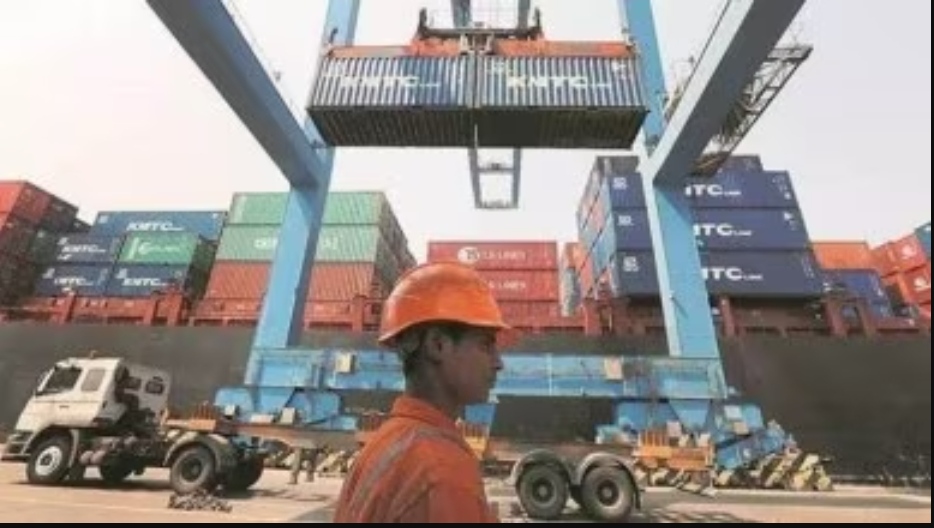
 Despite reports of  plummeting  onion prices  in major markets,  the government is taking a cautious  approach and taking  no immediate  steps  to lift the  export  ban  imposed  on  the key  vegetable. booked  last month. 

  Official sources  said  there was  a recent  assessment of  the  domestic  onion supply situation and  there was a consensus that lifting the ban on onion exports was not feasible under the current circumstances. 

 “We are closely assessing the supply situation and onion prices,”  an official said. With the  arrival  of kharif  crop,  mandi prices  in  Lasalgaon, Nasik, Maharashtra, the  country’s  wholesale trade  hub, fell  to  Rs  1,500-1,800 per quintal  on  Thursday,  from around Rs  3,700 to  Rs  4,000 per quintal. before.  prior to the imposition of  the shipping  ban announced  from  December 7  to  March 31, 2024.  In other key onion producing districts  like  Pune, Ahemadnagar and Solapur, mandis prices are currently  around Rs  1,800 – 1,900 per quintal.  A trader said that  due to  the  high  humidity of the kharif onion crop, it cannot  be  preserved, and  the  quantity of goods arriving is increasing, causing prices to decrease.  

Farmers and traders  are  demanding  that the export  ban  be lifted  so that prices do not  fall.  

  “Mandi  prices have  come down  sharply and the current  price is  below the cost of production for  farmers,”  said  Balasaheb Misal, former  director of the Mandi Board of  Manmard (Maharashtra)  and an onion  grower.  

 According to the  ministry,  the modal retail  price  of  onions fell  by  33 per cent  to Rs  40 per kg  on  Thursday, compared to  Rs  60 per kg  on December 8 when  the export  ban  was announced.  

 Retail onion inflation rose  86.46% in November as retail prices in  some  cities touched Rs  90 per kg  last month  due to delayed  kharif  harvest  and  unusual  rains  affecting  the  crop planning  in Maharashtra and Karnataka.  Onion inflation,  which  has  been  negative  since  September  2021,  reached  23.18% in August. In  February  2020, onion inflation  reached  140%  year-on-year. 

  Government  agencies –  Nafed  Agricultural Cooperatives  and  India’s  National  Consumer  Cooperative  Federation  (NCCF)  have so far  procured 20,000  tonnes  of kharif onions  against  the  target of 0.2 million  tonnes  (MT)  further The government’s  decision to increase  the  buffer stock target  to  0.7 million  tons continues.  from 0.5  mt  for the current  financial year.  

 The estimated  onion  production  in  2022-23  (July-June) is around 31.8 MT  as  against 31.7 MT reported in the previous year.  

For more information visit at https://happenrecently.com/zepto/?amp=1

HDFC  Life and  SBI Life  remain Jefferies’ top choices in  the  insurance sector  

 Jefferies  revealed  that  as of December 23,  retail  annual premium equivalent  (APE) growth  had improved significantly,  reaching 9%  year-on-year,  compared  with 4%  combined  in  October and November. 

  In a recent  Jefferies  report  on  insurance  companies, HDFC Life and SBI Life  emerged as the top picks in the insurance sector. The report sheds light on the overall performance of life insurance companies,  focusing on  key  insurers  and their growth  trajectory.  

 According to Jefferies, HDFC Life and SBI Life are  standout  picks  in the insurance  space, reflecting  confidence in their future performance. 

  The report  looks at  the  performance of life insurance  premiums in December 2023,  noting  notable  growth  growth. Jefferies  revealed  that  as of December 23,  retail  annual premium equivalent  (APE) growth  had improved significantly,  reaching 9%  year-on-year,  compared  with 4%  combined  in  October and November. 

  Private  insurers  continued to outperform the market, with  overall growth in premium equivalent  (OPF)  of +11%  year-on-year,  gaining market share  to  the  detriment  of LIC (+2%). Among  listed companies, SBI Life  stands  out with a  strong  comeback,  recording  20%  ​​year-on-year growth.  

 While some companies  are experiencing  strong growth, others  are experiencing  a slowdown. Max  Life’s  growth slowed to  15%  and ICICI  Prudential’s  growth was recorded at 13%, compared to 8% in the combined months of October and November.  HDFC Life  faces a notable challenge,  marking  its  weakest performance with a  rating of 5%  in  December 2023.  

 The report highlights the impressive growth of unlisted  companies  such as Bajaj,  Tata  and Birla, with growth rates of 20%,  17%  and 10%  respectively over the same period last year.  

Below  are  Jefferies’ key recommendations in  the  insurance  sector

 HDFC Life Insurance:  ‘BUY’ rating  for  target  Rs 1,990,000,800 crore  

 SBI Life Insurance:  “BUY” rating targets  Rs.  1,990,000,1700  

 ICICI Lombard General Insurance:  “BUY” rating  for  target of  Rs 1,990,000 crore. 5:30 p.m  

 ICICI Prudential Life Insurance:  “BUY” rating  for  target of Rs.  1,999.  630 

  Maximum  Financial Services:  “BUY” rating  for  target of Rs.  1,990,000,1200  

 For more  information,  visit at https://happenrecently.com/zepto/?amp=1

Maldives, Jamaica among countries where Indians can visit without visa: Complete list

Passport Index has become the most popular online interactive tool for viewing, sorting and organizing passports in the world.

New Delhi:

For Indian passport holders, the dream of traveling abroad has become much more accessible in recent years. Thanks to India’s growing global influence, Indians can now travel to 62 destinations without having to go through the cumbersome visa application process. According to the latest Henley Passport Index released on Tuesday, the Indian passport ranks 80th in the world, allowing Indians visa-free travel to 62 countries.

Here is the complete list of destinations that Indians can visit without needing to apply for a visa before travelling:

Angola

Barbados

Bhutan

Bolivia

British Virgin Islands

Burundi

Djibouti

Dominic

Gabon

Jamaica

Jordan

Kazakhstan

Malaysia

Maldives

Micronesia

Montserrat

Mozambique

Burma

Nepal

Niue

Oman

Palau Islands

Qatar

Senegal

Seychelles

Somali

Saint Kitts and Nevis

Saint Vincent and the Grenadines

Tanzania

Thailand

Timor-Leste

Go

Trinidad and Tobago

Tuvalu

Zimbabwe

Passport Index has become the most popular online interactive tool for viewing, sorting and organizing passports in the world. The rankings are based on data from the International Air Transport Association (IATA). Afghanistan ranked last on the list, with visa-free access to only 28 countries. Syria, which has visa-free access to only 29 destinations, is in second place, followed by Iraq with 31 and Pakistan with 34.

For more information visit at https://happenrecently.com/zepto/?amp=1