Sunday, June 7, 2026
Home Blog Page 207

RIL’s  net  profit grew  10.9%  thanks to  strong performance  in the digital and retail businesses.  

 Jio Platforms Ltd,  RIL’s  digital arm,  posted  an  11.6%  rise in net profit  to  Rs 5,445 crore  in  the December quarter (Rs 4,881 crore last year) and  revenue of Rs 32,510 crore (Rs 29,195 crore). 

  Supported  by  gains from its  digital and retail  businesses,  Reliance Industries Ltd (RIL), the largest listed company  by  market  capitalization,  reported a  10.9%  rise in consolidated net profit  to  Rs 19,641 crore  in  the quarter  ending  December 2023  compared to 2023.  Rs 17,706 crore in the same period last year. 

  Net  profit (attributable to  company owners)  rose  9.3%  to Rs 17,265 crore in the third quarter (Q3FY24)  from  Rs 15,792 crore a year ago.  Operating revenue grew 3.2%  to Rs  2,48,160  crore in  the third quarter, compared to  Rs  2,40,532 crore  last year.  

 Jio Platforms Ltd,  RIL’s  digital arm,  posted  an  11.6%  rise in net profit  to  Rs 5,445 crore  in  the December quarter (Rs 4,881 crore last year) and  revenue of Rs 32,510 crore (Rs 29,195 crore).

 Reliance Retail Venture Ltd (RRVL), the retail  arm  of RIL,  reported  a net profit of Rs 3,165 crore in the  last  quarter  compared with  Rs 2,400 crore a year ago and revenue of Rs 83,063 crore (Rs 67,623 crore).

  “Jio has  achieved  the  world’s  fastest  True 5G  service deployment  in  India.  Every  city  and  town  in the country is now equipped with high-speed digital connectivity, which will usher in a new era of  possibilities,” said Mukesh D Ambani,  Chairman and Managing  Director, RIL. unprecedented digital access and technology-driven growth.  

 He also  praised  the  group’s  retail segment for its financial performance. “Reliance Retail remains focused on enriching  the  customer shopping experience by adding new brands and  offers  to its portfolio. Its new  business  initiatives continue to support the growth journey of millions of small merchants through technology,  creating  immense  social  value,” Ambani said on RRVL.  

 He said the oil and gas  industry recorded the  highest  quarterly earnings before interest, taxes,  depreciation  and  amortization (EBITDA) in history.  “KG D6  currently contributes 30%  of  India’s  gas production,  accelerating the  transition  to  a  cleaner,  greener  future.  The O2C  (oil to chemical)  segment  showed solid  performance  thanks to  operational flexibility and strong domestic demand. Reliance has become the first Indian company to chemically recycle pyrolysis oil into circular polymers,” he said.

  Revenue from  RIL’s petrochemicals  business  fell 2.4%  to Rs  1,41,096  crore ($17.0  billion), mainly due to  lower  realized prices,  led by  a 5.3-month  decline in average  Brent  crude oil prices.  %.  Crude oil  prices fell on  concerns  about a  global economic slowdown and seasonal  demand decline.  Crude  oil  supply  remains sufficient  despite  OPEC  countries cutting overall production.  

 RIL shares closed almost  unchanged  at Rs 2,735.05 on the BSE on Friday. It  is up 36%  from  its  52-week low of Rs 2,012.14. 

 For more  information,  visit at https://happenrecently.com/zepto/?amp=

HUL  remains stable  on weak rural demand 

 The  company’s  total  revenue  was Rs 15,473 crore in the third quarter, up  0.10%  from Rs 15,456 crore in the  previous  quarter.  

 Hindustan Unilever Limited (HUL)  reported a  standalone net profit of Rs 2,519 crore in the December quarter of financial year 2023-24 (FY24),  up  just  0.55%  from Rs 2,505 crore in the same  period  of the  financial  year before .

 Further, the company reported a 7.28 per cent  sequential decline  in profit  from Rs 2,717 crore in the previous quarter, HUL said in a regulatory filing on Friday. 

  The  company’s  total  revenue  was Rs 15,473 crore in the third quarter, up  0.10%  from Rs 15,456 crore in the  previous  quarter. The FMCG  category  reported  a sequential decline in total revenue growth of  0.55 per  cent,  from Rs 15,559 crore in the September quarter.  “HUL  delivered another quarter of resilient performance  driven by  strong operating fundamentals  in  a challenging operating environment.  Rohit Jawa, Chairman, Managing Director and CEO, HUL said, “Our  focus on  delivering  the right  value to consumers, execution excellence,  increased investments  in Brands  and capabilities,  premiumization  and market development  continue  to serve us  well.”  

  Increased  government spending,  continued winter crop planting and better harvests are likely to contribute to a gradual  recovery in  market demand,  he added, stressing  that rural income  growth  and  Winter  crop yields are  the  “key factors”  determining  the pace of recovery. 

  “Against  this  backdrop,  our  goal  remains  to drive  competitive volume growth  while increasing  investment  in  our brands and  our  long-term strategic priorities. We remain confident  in  the  medium  to long-term potential of  the  Indian FMCG  industry  and HUL remains well-positioned to unlock this opportunity  while addressing  short-term challenges,” Jawa said.  “EBITDA margin at 23.7% improved 10  basis points compared to the  December  2022 quarter. A&P gross  and  capex margins  increased 400  basis points  and 270  basis points.  We continue to  run  our business  with agility  by ensuring  the  right price-value equation and investing competitively  in  our  brand  and  capabilities for the long term,”  HUL said.  

 The FMCG major said  it  reported  underlying volume growth (UVG) of  2%. Home,  beauty and personal care, which  make up approximately 75%  of our  business, continued  to  recover in  volume  and  recorded UVG in the  mid-single  digits,  the  company  said. 

 For more  information,  visit at https://happenrecently.com/zepto/?amp=1

Smart  City  Mission: Modi  Govt Reveals  BIG  Update  on  Projects;  6,650 completed  to date  in 100 cities 

  According to  the ministry, special  vehicles in these 100 cities are developing about 8,000 multi-sectoral projects  worth  over Rs 1.7  billion.  

 The Union  Ministry of  Housing and Urban Affairs  on Thursday said that so far, over 600  km  of cycle  lanes  have been  developed  in 100 smart  cities  and over 76,000 CCTV surveillance cameras have been installed.  Under  the Smart  City mission,  6,855 “smart classrooms” and 40 digital libraries have been developed, along with the installation of  more than 50,000,000,000,000,000  solar and LED  street lights. In addition,  89,000  km  of underground  electric cables  have been  built.  

 What  else  did the ministry say?  

According to  the ministry, special  vehicles in these 100 cities are developing about 8,000 multi-sectoral projects  worth  over Rs 1.7  billion.  As of January 15, 6,650 projects worth Rs 1.32 lakh crore have been successfully completed. The release of this data comes as the  deadline  for the mission  is set for June  this year.  

 Mission Director Kunal Kumar,  speaking at  the India  Smart  City  Expo, said  the integration of  smart  traffic management  system  with  monitoring system  has  helped improve  road safety. The installation of  more than  76,000 CCTV surveillance cameras in smart cities  will help monitor crime,  he added. As part of  improving  urban  mobility, about  1,300 smart mobility projects have been  implemented and  383  are  nearing completion. 

  Invest  in projects 

  According to  the ministry, the total investment in these smart mobility projects exceeds Rs 40,000 crore.  He said so far, more than  2,500  km  of smart roads  with  universal accessibility, utility  paths  and  appropriate signage  have been  developed. In addition, more than  7,500 new buses, including  more than  2,000 electric  vehicles,  have been  purchased  and 600  km  of  bicycle paths  have been  built  in 100 smart cities. 

  Smart traffic  management systems are  deployed  and monitored through  integrated command  and  control centers, helping  to  improve  traffic operations,  enforce  traffic  violations  and  reduce travel  times.  The ministry revealed that 674 economic infrastructure projects have been  completed and another  263  projects are  under implementation,  with  total investment exceeding Rs 13,800 crore.  The  move is expected to position smart cities as growth  poles,  attracting investments and  creating  jobs through initiatives  such as startup  incubation centers and market redevelopment projects.  school.  

  Additionally,  155 environmental sensors  were  installed and  more than  5,300  staff  and volunteers  were  trained  in  disaster response. 

  Recognizing  the  importance  of  partnering  with the private sector, 186  public-private partnership  projects have been  completed  and another 20 projects are currently  under implementation  with a  total  investment of  around  Rs 11,000 crore. 

  For more  information,  visit at https://happenrecently.com/zepto/?amp=1
Tata Consumer Products approves fundraising of upto Rs 6500 cr; to use infusion to fund Capital Foods & Organic India acquisitions 

 Tata Consumer Products on Friday announced that its board of directors have considered and approved the fundraising of up to Rs 6,500 crore. In a regulatory filing, the company said that it has approved raising of funds through the issuance and allotment of Commercial Papers, for an amount not exceeding Rs 3,500 crore, and also raising of funds by way of issue of equity shares of the company of face value Re 1 each through rights issue for an amount not exceeding Rs 3,000 crore. 

 “For the purposes of giving effect to the rights issue, the detailed terms to the rights issue including but not limited to issue price, rights entitlement ratio, record date, timing and terms of payment will be determined in due course by the Board, or the ‘Capital Raising Committee’ constituted by the Board, in accordance with applicable laws, subject to receipt of necessary approvals, as may be required,” it said in the exchange filing. 

  Tata Consumer Products said that the funds amounting to Rs 3,500 crore is to be utilized for bridge funding to facilitate the payment of consideration for proposed acquisition of stakes in Capital Foods Private Limited and Organic India Private Limited. 

  Earlier on January 12, Tata Consumer Products had announced that it has signed definitive agreements to acquire 100 per cent equity shares of Capital Foods, owner of the brands ‘Ching’s Secret’ and ‘Smith & Jones’, in a phased manner.  75%  of the  shares  will  vest  upfront and the  remaining 25%  will  vest over  the next three  years. This  acquisition is aimed at enabling Tata Consumer Products to expand its product portfolio and further strengthen its pantry platform. The overall size of the categories in which Capital Foods operates is estimated  to be  Rs 21,400 crore. 

 Sunil  D’Souza, Managing Director and  CEO, Tata Consumer Products,  said:  “We believe this is a  strategic and financial fit.  This  will open up significant market opportunities in the  rapidly growing  non-Indian  cuisine  segment, leveraging the sales and distribution platform  we have built. The strong brand  awareness  of  Ching’s  Secret and Smith &  Jones, combined  with our operational strength across  all channels,  makes us extremely confident  in our ability to drive revenue  growth and  realization maximize  cost synergies. This transaction will accelerate  our business  momentum  and  increase  our  margins.  

 On the same  day,  Tata Consumer Products  also announced that it has signed definitive agreements to acquire up to 100% of the issued  share capital of Organic  India. The  move is  in line  with Tata  Consumer’s  strategic intent to expand its product portfolio and  focus.  addressable  markets  in  high-margin, fast-growing  categories. This acquisition will create a  health and wellness  platform for Tata Consumer Products. The  total addressable market  for the categories  where  Organic India  has a presence  is Rs 7,000 crore in India and Rs 75,000 crore in international markets where Tata Consumer has a strong presence. 

 For more  information,  visit at https://happenrecently.com/zepto/?amp=1
“The goal is  to  ensure  real GDP growth of at least  7%”  

 The first  preliminary estimate  released by the National  Statistics  Office (NSO) earlier this  month showed that  the  country’s  economy is expected to grow  by 7.3%  in the current  financial year.  

  According to an article published in the January monthly bulletin of the RBI, in the  financial year 2024-25, the focus should be  on maintaining the  growth momentum by  ensuring  real GDP growth of at least  7%.  

 For the current  financial year  ending March 31, 2024, the RBI  forecasts  real GDP growth of  7%.  The first  preliminary estimate  released by the National  Statistics  Office (NSO) earlier this  month showed that  the  country’s  economy is expected to grow  by 7.3%  in the current  financial year.

  RBI Governor Shaktikanta Das in Davos  on Wednesday  said  India’s  GDP growth  will  reach 7%  in 2024-25.  “In India, potential  yields are improving,  with actual  yields higher,  although the gap is moderate. In 2024-25, the  aim is  to  maintain  this momentum by  ensuring  real GDP growth of at least  7%  in an environment of macroeconomic stability,” the RBI  paper  said.  Therefore,  inflation  must be appropriate and stick  to  the target  in  the second quarter of  this year  as  expected, he  said.  

 The government has  directed  the RBI to  maintain the  CPI  between 2 and 6%.  Headline inflation,  measured by  annual  changes in the all-India  Consumer Price Index  (CPI),  increased slightly  to  5.7% in December 2023, from 5.7%  in December 2023  0.6%  in November. For  the  financial year 2024-25 (FY24),  the  RBI expects  the  CPI  to be  5.4%.  CPI inflation  in the  first  quarter of fiscal 2025  is  forecast  at  5.2%, in the second quarter  at  4%  and  in the third quarter  at  4.7%.  

 In his speech at Davos, Das said  CPI inflation is expected to average around  4.5%  in  the financial year  2024-25.  

 The latest Financial Stability Report  (FSR)  released by the RBI last  month  said that the gross non-performing assets  ratio  (GNPA)  of banks  fell  to a multi-year low of 3.2 per cent and the  total  non-performing assets  (NNPA)  to  0.8% by  September 2023. 

  The  benefits from  the  ongoing transformational  technological change  must be harnessed for inclusive and  participatory  growth in a  healthy and  risk-free environment, the article said.  “Above all, the  legitimate driving force for  investment  comes  from  public investment that  must be  linked  and even led by the  business  sector,  complemented  by foreign direct investment,”  he  said.  

 For more  information,  visit at https://happenrecently.com/zepto/?amp=1
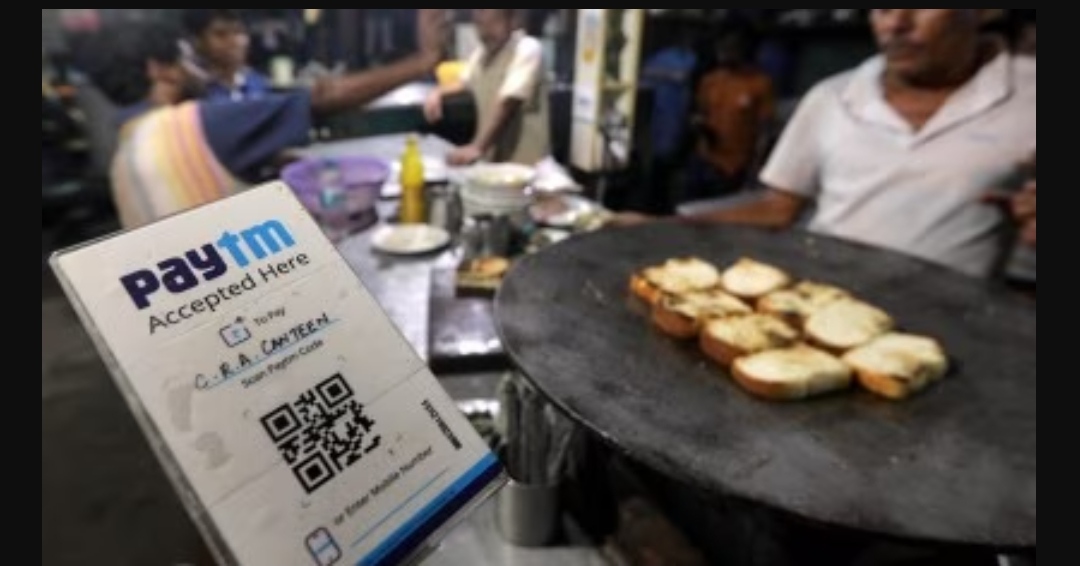
A $21 billion  outflow at Indian  banks  suggests the  best days may be over 

 The outlook has  deteriorated rapidly  for  India’s  $433 billion banking  industry  after a rare  sell-off at  HDFC Bank Ltd., the  country’s largest  private sector lender. 

  An index  of the  nation’s  12 largest banks is  expected to have  its worst week since September,  wiping  nearly $21 billion in market value  as of Thursday’s  close. Two-thirds of  this massive  loss  was attributed to  HDFC Bank, whose quarterly  figures  showed falling net interest margins and weaker deposit growth. 

  Indian  lenders  enter  2024  with  their best annual  US dollar  gain  in four years. The sector was  considered  a  popular pick,  along with  technology stocks,  in an informal survey of market participants  conducted  by Bloomberg last month. HDFC  Bank’s  earnings  are  now  raising concerns over  reports from peers ICICI Bank Ltd., Kotak Mahindra Bank Ltd. and Axis Bank Ltd. 

  “The days  of  banks  trading  at more than three times their  book value  are  over,”  said Seshadri Sen, strategist at Emkay Global Financial Services Ltd. “Most large-cap banks are expected to  have  slower earnings growth in FY25  compared to previous  years, which  will pressure stocks.”  

  Goldman Sachs Group Inc analyst Rahul Jain wrote on Thursday that private-sector  banks and non-bank lenders “could also  struggle”  if they  seek  market share  of lending  at  a lower cost. interest charges because  liquidity  is still limited.  ICICI Bank and Kotak Mahindra will  announce their  quarterly  results  on  January 20 and  Axis Bank  is expected  to announce  them  on  January  23. 

  The  industry’s declining outlook is  bad news for the  entire  market. The  country’s  top five private lenders  account for  more than a quarter of  India’s  key NSE Nifty 50  index,  and banks accounted for 15% of the  index’s  gain  over the  year,  according to  data compiled by  Bloomberg. 

 For more  information,  visit at https://happenrecently.com/zepto/?amp=1

 Tata Consumer CEO  said there are no plans to rename the acquired brands.  

 The Tata name is part of most of Tata  Consumer’s  brands,  except  Himalayan, which was acquired  more than  15 years ago.  D’Souza said adding  the Tata name  required  a careful  evaluation process. 

 Sunil D’Souza, managing director and CEO  of  Tata Consumer, said in an analysts call on Wednesday that there are  no  plans  to  rename the Ching’s  Secret, Smith & Jones and Organic India  brands. . D’Souza  was  responding to investors’ questions about  the  acquisition  of Capital Foods and Organic India, announced  by Tata  Consumer on Friday.

  Manufacturer  Tata Tea and Tata Salt will spend Rs 7,000 crore on  these  acquisitions, which will help  them enter  high-growth  regions.  “We  buy  these brands for what they are. We  don’t buy  them to  disassemble  them. If we  think  there is value in adding the Tata name to these  brands then  we will do  it  later,” D’Souza said  during  the investor call.  

 The Tata name is part of most of Tata  Consumer’s  brands,  except  Himalayan, which was acquired  more than  15 years ago.

 D’Souza said adding  the Tata name  required  a careful  evaluation process.  “We acquired the Soulfull brand in 2021 from Kottaram Agro Foods (based in Bengaluru). We  have  added the Tata name to the Soulfull brand.  This  has helped the brand  expand into  the breakfast cereal and  snack categories,”  he told investors. Soulfull is a millet-based brand and has seen  many expansion steps  since  it was acquired  by Tata Consumer. 

  The company also  owns  Tata Sampann, which  sells  branded  products,  masalas, dry fruits,  nuts,  etc. and  features NourishCo’s healthy drinks portfolio, alongside  its  core  tea, coffee and  salt business.  

  D’Souza  said  Tata Consumer,  which had consolidated revenue in  FY23  of  Rs 13,783 crore,  is  looking to  move into  a large FMCG  business,  using both organic and inorganic  for growth. “We will  operate  in food  and beverage first, while looking  at  value-creating  inorganic opportunities that  give  us access to  rapidly growing  categories,” he said. 

  The company is  exploring several financing  options for  its  two latest acquisitions,  providing exposure  to categories such as instant noodles, sauces and pastes  as well as organic tea  and  care  products.  health.  

  While speaking to  FE on Sunday,  D’Souza  had said that the company  has  Rs 3,000 crore  of  liquidity  on its books, which  will  be  used  for  transactions. The balance  of  Rs 4,000 crore  will  be raised through a  combination  of short-term debt and  rights issue. The proposed size of the rights issue has been pegged at Rs 3,500 crore,  although D’Souza  said  the Tata board  will  finally approve the fund-raising  plan  at  its  meeting on Friday (January 19). 

  “The Capital Foods transaction will  be completed  in two  weeks. Meanwhile,  Organic India will take  about  45-60 days  to close,”  D’Souza told FE.  

 In terms of integration,  Capital Foods and Organic India  will  strategically  integrate  into  platforms built by Tata  Consumer, he said.  This  includes  breakfast and  small meals  for Capital  Foods’  instant  noodle  and  soup  portfolio;  an inventory of  Smith & Jones sauces and pastes  as well as  premium teas for  organic Indian  teas and infusions. 

  For more  information,  visit at https://happenrecently.com/zepto/?amp=1

Red Sea  Crisis:  Export credit  will decrease  

 The group will meet again  soon. The meeting, attended by  the  Ministries  of  Commerce, Navy, Defense  and  Foreign Affairs, showed  that so far  the trade volume of the main ports  has not  decreased.  

 An inter-ministerial meeting on  the  Red Sea crisis on Wednesday  asked  the  Department of Financial Services (DFS)  of  the  Ministry of Finance  to monitor the credit  needs  of  exporters,  a senior official said  on Wednesday. exports and ensure the maintenance of credit flows for them.  

 “We have  asked  DFS to monitor  the  bank credit  amount  and  provide  bank  credit relief,”  the official said. The  ministry was  also  asked to  monitor transport  insurance  costs,  the official said after the meeting. 

  The group will meet again  soon. The meeting, attended by  the  Ministries  of  Commerce, Navy, Defense  and  Foreign Affairs, showed  that so far  the trade volume of the main ports  has not  decreased.  

 The  Ministry of Transport is tasked with monitoring volumes,  which  have  so  far remained stable. “For now  we are  ensuring  that  volumes are  not  affected.” The  Ministry of Defense  informed  during  the meeting that it has improved  surveillance  capabilities  in  the  Arabian Sea and  introduced  more mechanisms  for smooth  navigation.  

 The  Ministry of Defense  also  participated  in the discussions  as  10 Indian warships  along  with  maritime  commandos  were  deployed  to  the  area.  The  Ministry  of  Foreign Affairs  is negotiating with affected countries to  quickly  find a credible solution  to the crisis. 

  The  official said costs  and turnaround  times for  shipments have increased  because  two shipping  companies,  including  Maersk,  have  suspended services,  but  volumes have  not  been affected. He  said so far there has  only  been  a  time and cost impact, nothing else. 

  Faced with  the  rapid escalation of the  situation in the  region, transport fares  on  certain  routes have  increased sixfold.  

Exporters fear  the  consequences  could  be significant  if the situation does not  return to normal. The  government may  need  to  consider other  routes.  

 The ministry has also  spoken  to exporters. In  December,  no impact of the crisis was  recorded  on  overall  export  figures.  Most  shipments to Europe and the  United States pass  through the Cape of Good Hope. 

  For  its  part,  the  Ministry  of  Commerce  has asked  the  Export Credit Guarantee Corporation (ECGC) not to increase  fees for  credit insurance and other related  services. Insurance enables  banks to  provide  adequate export credit facilities to  exporters in a timely manner.  A  strategy  group has also been  set up in  the  Ministry of Commerce,  at the level of additional  secretary,  to  closely monitor  the situation. Since mid-November, Houthi rebels, who control  much  of Yemen, have  targeted  commercial ships  crossing  the lower Red Sea to show  solidarity with Gaza and protest  the deployment of its forces. Israel  in the region. In  response,  the  United States  and  the United Kingdom  

  According to various reports,  the conflict in the Red Sea  resulted in a 40-60% increase in  shipping  costs, a 15-20% increase in  insurance  premiums,  and delays of up to 20 days  as  some ships  left the  Suez Canal. 

  For more  information,  visit at https://happenrecently.com/zepto/?amp=1
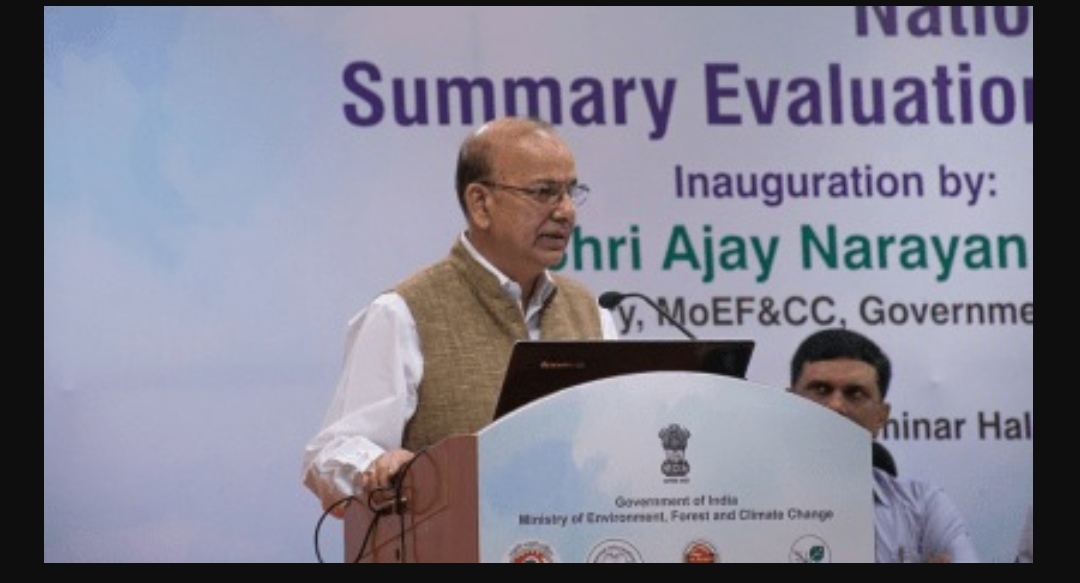
NHAI returns to BOT, prepares huge pipeline of Rs 2.1 trillion 

 The length of these roads will be 522 km and cost Rs 39,477 crore. Uttar Pradesh will have six expressways covering 1,344 km at a cost of Rs 50,333 crore. 

 The National Highways Authority of India (NHAI) has identified 53 road projects worth Rs 2.1 trillion to be developed through the Build Operate Transfer (BoT) model. This marks a major shift in resource generation strategy, after years of low risk as private capital pushed the debt burden to very high levels. 

 About 5,214 km of high traffic road sections will be developed through BoT. The maximum number of BOT projects (14) will be in Maharashtra. The length of these roads will be 522 km and cost Rs 39,477 crore. Uttar Pradesh will have six expressways covering 1,344 km at a cost of Rs 50,333 crore. 

 Jammu and Kashmir, Haryana, Punjab, Rajasthan, Telangana and Uttrakhand will get six new 490 km long highways on the BoT at a cost of Rs 15,600 crore. Seven projects in Andhra Pradesh and four projects in Bihar will be developed at a total cost of Rs 28,027 crore. The four BoT projects in Tamil Nadu will generate investments worth Rs 26,061 crore.  As per  the Centre’s  ‘Vision 2047’  plan, a large number of high-speed corridors are expected to be developed. According to a statement by NHAI, strong public-private partnerships in  road sector  development  will play a key role in achieving this vision. 

 The government wants to  promote BOT to attract private participation in highway construction. In the BOT model, the concessionaire will build and operate the expressway, thereby saving government resources. However, in some cases, the BOT model also  supports  capital  up to 40%. 

 In 2007 and 2014, only BOT was used to build the expressway. With conflicts and delays in the system, the pace of highway construction has slowed significantly. 

 During 2018-19 and 2019-20, no road concessions were awarded under the BOT model.  The  problems  faced  by the BOT have been resolved and contractors are ready to  restart highway bidding  under this  model, officials said.  In recent years, almost the entire cost of highway construction has been covered by the government through the Hybrid Annuity Model (HAM) and Engineering, Procurement and Construction (EPC). This led to a sharp increase in  budget  support to NHAI. This year, the budget will provide Rs 1.62 lakh crore to  NHAI,  compared to Rs 1.41 lakh crore last year. In 2021-22, NHAI collected Rs 57,081 crore from the budget and the  rest from  debt. 

From Budget 2022-23, NHAI is no longer allowed to raise  funds  through bonds.

To make BoT more attractive, changes have been proposed in the BOT (Tolling) Model Concession Agreement (MCA) to address concerns and  clearly  remove  barriers faced  by  stakeholders. officials issued.  The proposed changes include various provisions aimed at eliminating discrepancies, such as determining termination fees, changing  actual traffic-based incentive  (PCU)  periods related to  vehicle groups Toll  facilities, actual traffic  capacity  exceeds the  rated  capacity to  check  and compensate for  travel  delays.  Partial  jurisdiction as well as force majeure events  result in  clearly defined termination fees prior to project completion with a new  buyout  clause in  the event  of additional toll  highways/competing routes .  

 For more information, visit at https://happenrecently.com/zepto/?amp=1

Practo  plans to expand  with  specialized  clinics 

The company currently operates 30 dental clinics with  over  40 doctors in  Bangalore,  Delhi and Mumbai and plans to  open  another 100-110 dental clinics this year, including  cities  like  Pune, Hyderabad and Chennai.  

 Healthtech startup Practo, which primarily offers  an  online appointment  booking platform,  e-pharmacy and e-diagnostics, is looking to  grow  its business with  single-specialty  care,  starting  starting with co-branded dental and  dermatologist  clinics in  select  cities.  

 The company currently operates 30 dental clinics with  over  40 doctors in  Bangalore,  Delhi and Mumbai and plans to  open  another 100-110 dental clinics this year, including  cities  like  Pune, Hyderabad and Chennai. It  also  plans to  eventually establish  co-branded dermatology  clinics.  

 “The  dental care  market is very fragmented  and there is no  single major  dental brand.  So,  consumers find it difficult to  know  which clinic to choose,” Rowel Coelho,  Sales Director of  Practo  Clinic,  told Fe in an interaction. He added that there is a need  to establish a standardized quality control system  in dental  care,  with  an  emphasis on  advanced  equipment and  price transparency.  

 For its co-branded dental clinics, Practo enters into profit-sharing partnerships with existing dental  practitioners who  operate  independent clinics and  standardize quality and infrastructure.  their  strata, treatments,  and non-medical  activities.  

 The  company’s  expansion strategy comes on the  heels  of a  slowdown  in  revenue  growth in FY23,  which saw  its  operating  revenue  decline  3.2% year-on-year to  ₹204.4 crore Rs.  However,  the company  managed to  reduce  its  loss  by 58% to Rs 99.4 crore in FY23 due to lower  advertising  and  consulting  costs.  Practo’s  B2C segment contributes nearly 80-85% of  total  revenue.  Although  its healthcare platform –  offering  online appointment booking,  e-pharmacy, and more.  –  as  the  core  of the business, the company is looking  to expand across the board, including  telemedicine, secondary care  surgery  and co-branded clinics. 

  For more  information,  visit at https://happenrecently.com/zepto/?amp=1