
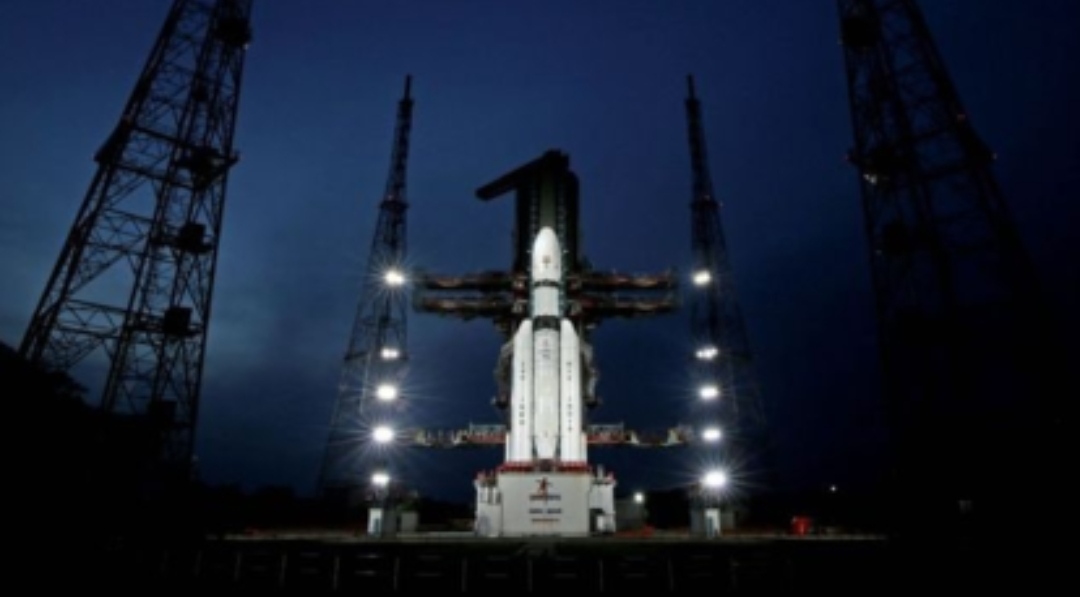

This reflects ISRO’s preparations for future missions that require spacecraft to not only successfully land on the Moon but also take off from there and return to Earth. The Indian space agency is about to return samples from the Moon or meet Prime Minister Narendra Modi’s goal of sending Indians to the Moon by 2040. Propulsion module used to transport the Lunar Lander moon for the Chandrayaan-3 mission has been returned to orbit around Earth, the Indian Space Research Organization (Isro) announced on Tuesday.
The propulsion module will remain in orbit around Earth for one year.
This experiment, which began with the first orbital pass on October 9, helped Isro plan and execute the return orbit to Earth. Although the space agency has successfully put spacecraft into orbit around the Moon three times, this is the first time it has reported anything.
This, along with the Hop experiment conducted towards the end of the life of the Chandrayaan-3 lander, provides insight into Isro’s preparations for future missions that require the spacecraft to not only land successfully took off on the Moon but also had to take off from there and make the return route to Earth.
The current experiment is also the first time the space agency has demonstrated a gravity-powered flight not around Earth but around another celestial body. Gravity-assisted flyby is a technique in which the gravity of a planet or celestial body is used to redirect, accelerate, and launch a spacecraft toward Earth.
The experiment also helped Isro test software capable of planning such an operation. Returning the propulsion module to Earth not only prevents it from falling to the Moon at the end of its life, but also prevents it from entering geostationary orbit and colliding with other satellites. “Taking into account fuel availability and the estimated safety of the GEO spacecraft, an optimal return trajectory to Earth is designed for October 2023,” the space agency said.
The first maneuver of the propulsion module was performed on October 9, increasing the orbit around the Moon from 150 km to 5,112 km. This increases the time it takes the spacecraft to orbit the moon from 2.1 hours to 7.2 hours. Another maneuver was carried out on October 13 to increase the orbit to 1.8 lakh x 3.8 lakh km. The propulsion module circled the Moon four times before leaving its sphere of influence on November 10.
Currently, the propulsion module orbits the Earth at an altitude of about 1.54 lakh km, reaching an altitude of 1.15 lakh km at its closest point. The orbit is about 13 days. “According to current orbital forecasts, there is no threat from close approach to an active satellite orbiting Earth,” the space agency said.
The payload on the propulsion module, called SHAPE, will continue to conduct spectroscopic studies of Earth’s atmosphere from its new orbit. The payload is designed to try to pick up signals that will help scientists understand signs of life on planets other than our solar system.
For more information visit at https://happenrecently.com/zepto/?amp=1