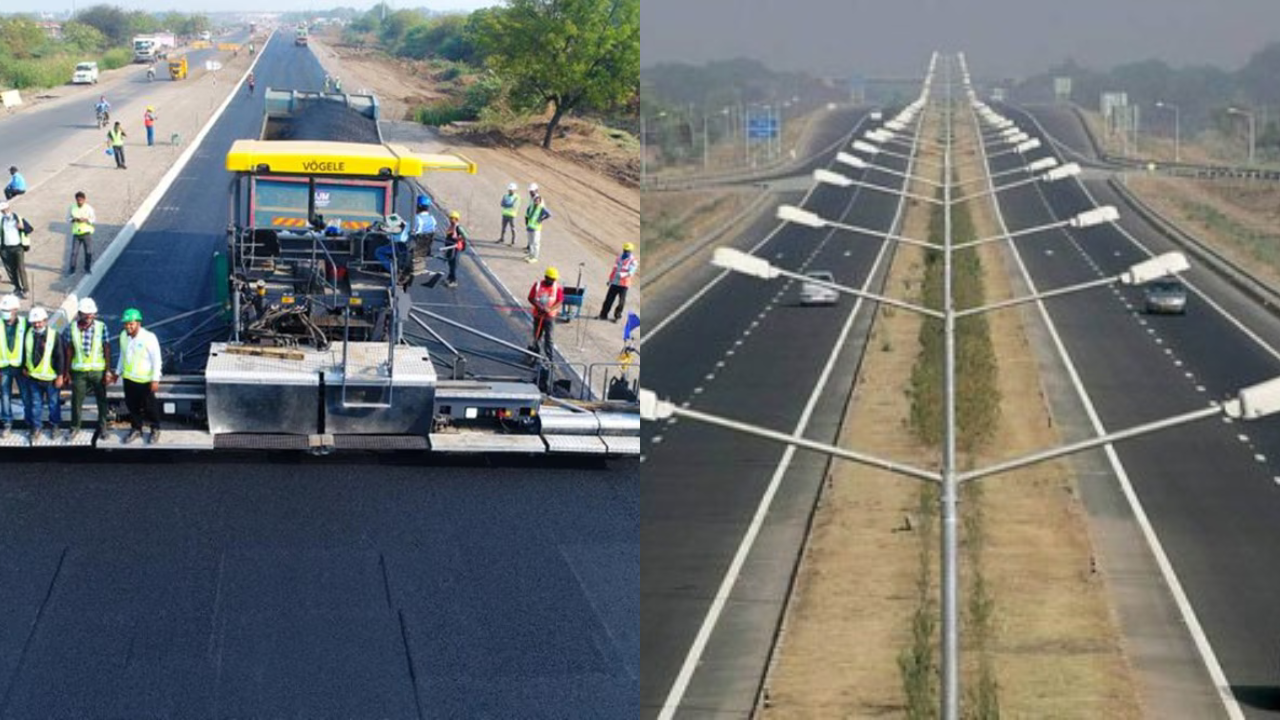
The Nashik–Solapur–Akkalkot corridor aims to transform connectivity and create over 250 lakh man-days of employment.
In a major infrastructure push, the Cabinet Committee on Economic Affairs (CCEA) has given its approval for a massive ₹19,000 crore Build-Operate-Transfer (BOT) project to construct a six-lane greenfield access-controlled Nashik–Solapur–Akkalkot corridor in Maharashtra. The project is among the largest BOT-based infrastructure initiatives in the country and marks a transformative step aligned with the government’s PM GatiShakti mission for integrated and seamless connectivity.
Prime Minister Narendra Modi described it as a game-changing development that will significantly enhance west-to-east connectivity, cut down travel time, and generate large-scale employment opportunities. “The 6-lane Nashik–Solapur–Akkalkot greenfield corridor, aligned with PM GatiShakti, will cut travel time, strengthen connectivity, and power economic growth,” the Prime Minister said in a social media post.
Largest Value BOT Road Project in India
According to official data, the project will be executed with a total capital outlay of ₹19,142 crore, making it the largest value BOT project in India’s road sector. The model concession agreement for this project is being designed with lessons learned from earlier experiences to ensure smoother execution and maintenance. Information and Broadcasting Minister Ashwini Vaishnaw, while briefing the media on the CCEA’s decisions, mentioned that this new model could be replicated in other infrastructure sectors, including railways and logistics.
Key Features and Route Details
The greenfield corridor will connect major cities such as Nashik, Ahilyanagar (formerly Aurangabad), and Solapur, stretching all the way to Akkalkot near the Karnataka border. The route will also enhance connectivity to Kurnool and integrate with major national transportation networks.
The corridor will link several key expressways:
- Delhi-Mumbai Expressway near Vadhawan Port interchange
- Agra-Mumbai corridor at Nashik (NH-60)
- Samruddhi Mahamarg at Pangri, near Nashik
The plan also ensures that this corridor connects the west coast to the east coast, providing a direct movement route for both passenger and cargo traffic. On the eastern side, the project connects with the under-construction four-lane corridor from Chennai to Hasapur (Maharashtra border) via Thiruvallur, Renigunta, Kadappa, and Kurnool, spanning around 700 km.
Travel Time and Distance Reduction
Once completed, the Nashik–Solapur–Akkalkot corridor is expected to reduce travel time by 17 hours—bringing it down from 31 hours to approximately 14 hours. The corridor will also cut travel distance by around 201 km, offering seamless, quicker, and safer road travel. Designed for average vehicular speeds of 60 km/h and a design speed of 100 km/h, the access-controlled six-lane highway will improve overall travel efficiency for both passenger and freight vehicles.
The government emphasized that this corridor will significantly enhance logistics efficiency, especially for freight originating and terminating at major National Industrial Corridor Development Corporation (NICDC) nodes such as Kopparthy and Orvakal. The Nashik–Akkalkot route will serve as a key industrial and commercial artery for Maharashtra, strengthening economic linkages with southern and western India.
Employment and Economic Benefits
Apart from travel benefits, the project promises substantial employment generation. The official statement estimates 251.06 lakh man-days of direct employment and 313.83 lakh man-days of indirect employment during various stages of construction and operation. The large-scale workforce involvement will contribute to local job creation, especially across Maharashtra’s rural and semi-urban regions.
Industry experts believe this project will not only modernize the regional transport network but also stimulate manufacturing, trade, and logistics. Once operational, it will play a major role in boosting Maharashtra’s industrial corridors, including those near Nashik, Solapur, and Pune, and attract significant private-sector investments in supporting infrastructure such as logistics parks and warehousing.
Road Project in Odisha Also Approved
In addition to the Maharashtra corridor, the Cabinet also approved the widening and strengthening of NH-326 in Odisha. The 243 km stretch—from 68.600 km to 311.700 km—will be upgraded under the Engineering, Procurement, and Construction (EPC) mode.
The project involves an estimated total capital cost of ₹1,526.21 crore, including a civil construction cost of ₹966.79 crore. It aims to upgrade the existing two-lane road to a two-lane highway with paved shoulders, improving travel speed, safety, and reliability.
According to the official statement, this development will play a significant role in improving connectivity across southern Odisha, bringing economic benefits to the districts of Gajapati, Rayagada, and Koraput. The upgraded route will support tourism, agriculture, and logistics in some of the state’s most resource-rich but underdeveloped regions.
Declared National Highway
The government has already declared this stretch—starting from its junction with NH-59 near Aska, passing through Mohana, Raipanka, Amalabhata, Rayagada, Laxmipur, and terminating at its junction with NH-30 near Chinturu—as NH-326, vide Gazette Notification dated August 14, 2012.
A Step Toward India’s Economic Transformation
Both the Maharashtra and Odisha road projects highlight India’s continued emphasis on world-class infrastructure and economic transformation under the PM GatiShakti National Master Plan. Focused on multi-modal connectivity, these initiatives aim to ensure faster, more cost-effective transport networks across industrial and agricultural regions, creating new growth corridors across the country.
As India continues its push for stronger connectivity, such large-scale road infrastructure projects will form the backbone of logistics efficiency, regional integration, and job creation, ultimately contributing to India’s vision of a $5 trillion economy.