Governor urges farmers to adopt chemical-free farming for a self-reliant and sustainable India during the Natural Farming Dialogue in Dindori.
The Governor of Maharashtra and Gujarat, Acharya Devvrat, underscored the importance of returning to natural farming practices for the revival of soil fertility and sustainable agriculture at a farmers’ dialogue held at Sahyadri Farm in Mohadi, Dindori taluka. The event, titled Natural Farming Dialogue, brought together hundreds of farmers, agricultural experts, officials, and community members to discuss sustainable alternatives to chemical-based farming.
Addressing the gathering, Governor Devvrat shared his vision of building a self-reliant India through the adoption of eco-friendly and chemical-free farming methods. He warned that the overuse of chemical fertilizers and pesticides has severely depleted the fertility of India’s farmlands, posing a long-term threat to food security, environmental health, and farmer livelihoods.
“Excessive use of chemical fertilizers and pesticides has made our fertile land barren. To restore the soil’s productivity and to ensure the prosperity of farmers, we must embrace natural farming methods,” said Governor Devvrat, who is known for his strong advocacy of organic and sustainable agricultural practices across India.
Prominent Leaders Grace the Event
The dialogue was attended by several key dignitaries and officials, including Minister for Food and Drug Administration Narhari Zirwal, Member of Parliament Bhaskar Bhagare, Divisional Commissioner Dr. Pravin Gedam, District Collector Ayush Prasad, and Managing Director of Sahyadri Farm Vilas Shinde. Their presence underscored the government’s collective interest in promoting natural farming as a viable and scalable alternative to conventional chemical farming.
Minister Narhari Zirwal highlighted the state government’s ongoing initiatives to support farmers in adopting natural farming techniques through training, subsidies, and awareness drives. He emphasized that Maharashtra aims to become a model state for sustainable agriculture by integrating traditional knowledge with modern research.
MP Bhaskar Bhagare appreciated the efforts of Sahyadri Farm for bridging the gap between farmers and the market through cooperative models. He noted that platforms like this dialogue encourage open communication and help farmers learn directly from successful practitioners who have made the switch to natural farming.
Sahyadri Farm – A Model for Sustainability
The venue, Sahyadri Farm, is one of India’s leading farmer-owned cooperatives known for its innovative contribution to sustainable agriculture and agri-business models. Under the leadership of Vilas Shinde, the cooperative has helped thousands of farmers improve productivity, ensure fair pricing, and access domestic and international markets. By hosting such dialogues, Sahyadri Farm continues its mission of empowering farmers with practical knowledge and motivation to adopt environmentally responsible practices.
Speaking at the event, Vilas Shinde shared how Sahyadri Farm supports farmers in making the transition from chemical-based farming to natural methods by offering hands-on training, seed support, organic input supply, and market linkage. He highlighted the growing consumer demand for naturally grown produce, both in India and abroad, which further strengthens the economic case for natural farming.
Governor’s Vision for a Self-Reliant India
Governor Acharya Devvrat, known nationally for transforming large areas of farmland in Himachal Pradesh through natural farming during his tenure as the governor there, shared real-life success stories from farmers who achieved higher yields and long-term soil improvement without using synthetic chemicals. He emphasized that natural farming not only safeguards the environment but also reduces farming costs, increases profits, and improves the health of both farmers and consumers.
“Natural farming is not just a technique—it is a movement for national reconstruction. If every farmer starts cultivating naturally, we can make our villages prosperous and our nation self-reliant,” the Governor said, drawing loud appreciation from the audience.
He also explained that natural farming encourages the use of locally available organic materials like cow dung, cow urine, crop residues, and herbal preparations, which help enrich the soil’s biodiversity. The Governor urged agricultural universities and extension departments to conduct more research and field studies to promote the scientific aspects of natural farming and increase farmer confidence.
Interaction with Farmers
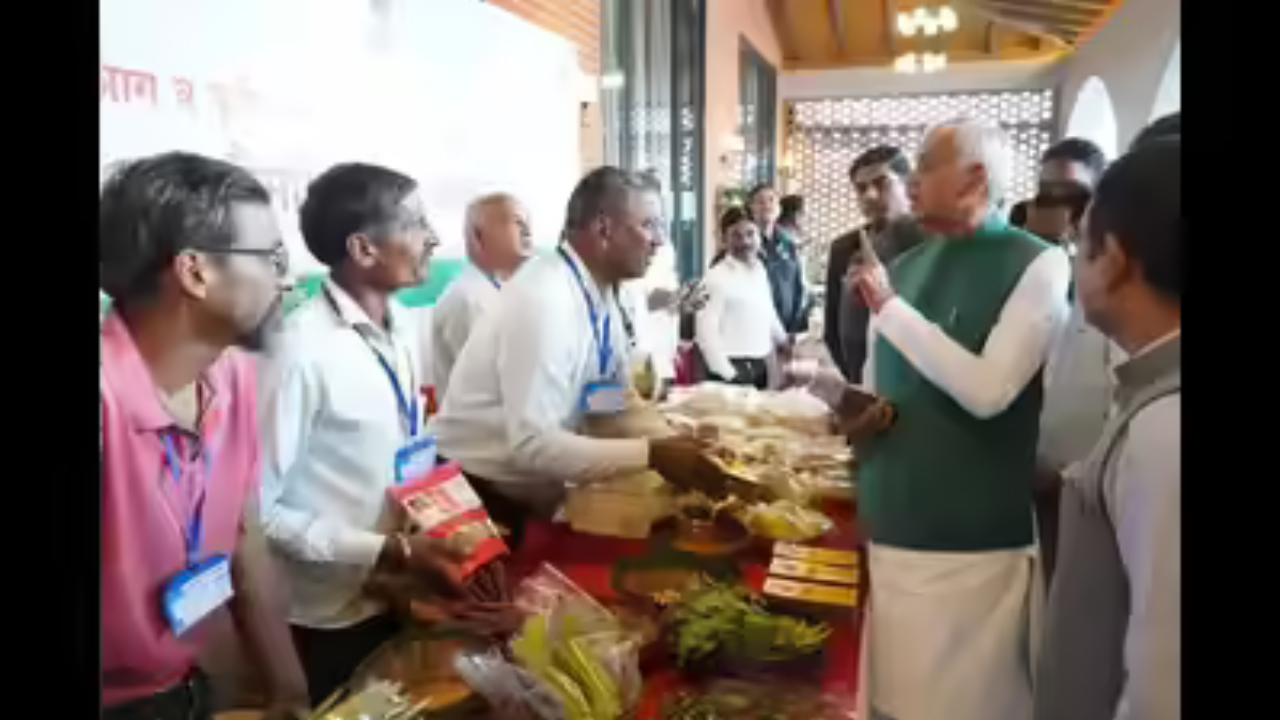
After the formal programme concluded, Governor Devvrat visited various farmers’ stalls set up at the event. The stalls showcased locally produced natural fertilizers, composting methods, organic seeds, and innovative farming solutions developed by rural entrepreneurs. The Governor interacted personally with farmers, listened to their challenges, and praised their efforts to protect the environment while ensuring food security.
Farmers from Nashik and nearby regions shared their success stories and experiences after shifting to natural farming. Many expressed that natural methods not only improved soil health but also yielded better quality produce with lower input costs.
Towards a Sustainable Future
The day-long dialogue created a vibrant platform for knowledge exchange and collective learning. Agricultural officials pledged to organize similar interactions across districts to encourage more farmers to adopt chemical-free practices. Experts at the event emphasized that government support, market access, and consumer awareness are key to scaling up natural farming in India.
The Natural Farming Dialogue at Mohadi reflected a growing movement across Maharashtra and the country—one that aims to rebuild farming as a profitable, sustainable, and environment-friendly occupation. With leaders like Governor Acharya Devvrat advocating for change, natural farming is steadily gaining ground as the foundation for India’s agricultural future.
As the event concluded, participants left inspired by the Governor’s message and Sahyadri Farm’s example, reaffirming their commitment to soil conservation, healthy food production, and rural prosperity.