

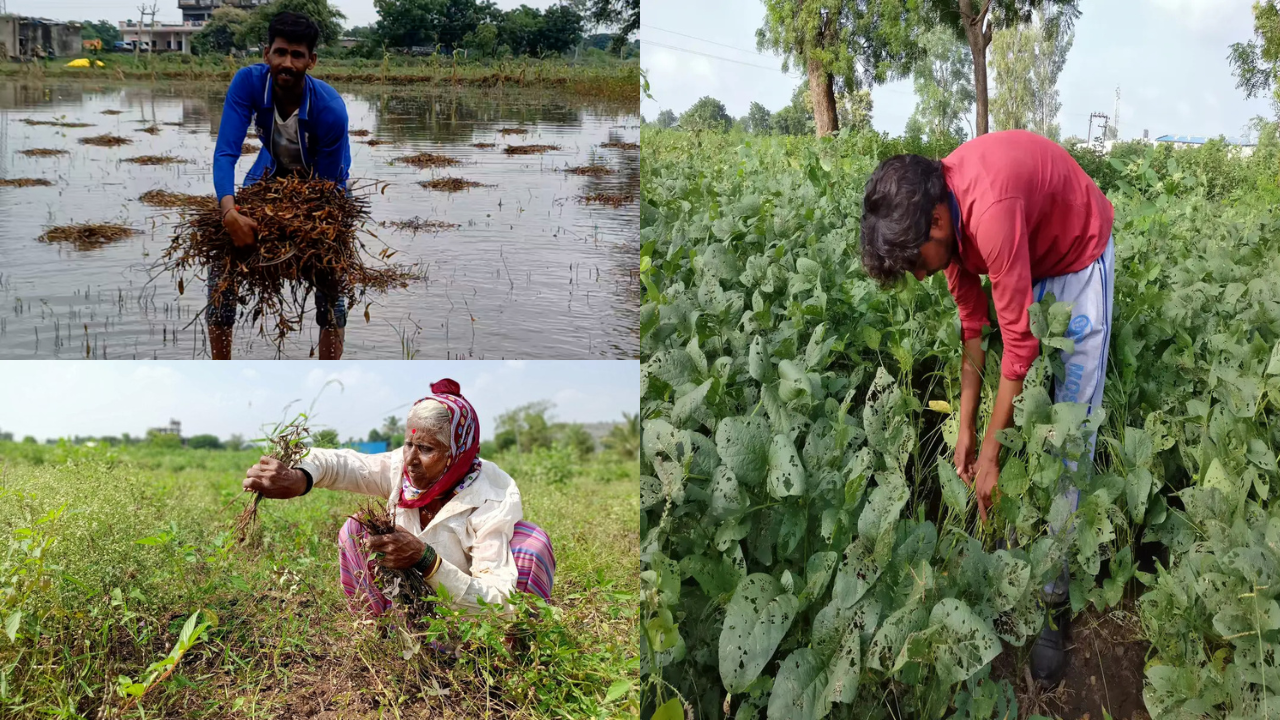
Farmers across several soybean-producing regions of India have intensified their protests after significant crop losses caused by erratic weather and poor wet market conditions. With mounting pressures from input costs, declining crop prices, and lack of adequate support measures, farmer unions are now pressing state and central governments for immediate financial relief and long-term structural reforms.
The protests, which began at a local scale in soybean-growing belts of Maharashtra and Madhya Pradesh, have now started spreading to other agricultural states. Farmers argue that heavy rainfall during critical harvesting periods has led to massive damage in soybean crops, directly impacting both their income and the broader agrarian economy.
Impact of Soybean Crop Losses
Soybean, a vital oilseed and pulse crop in India, plays a major role in the livelihoods of lakhs of farmers. India is one of the largest soybean producers globally, with central Madhya Pradesh, Maharashtra, and Rajasthan accounting for most of the cultivation. This season, however, farmers report that unseasonal rains and excessive soil moisture created conditions for crop destruction and fungus infections, leaving fields unharvestable in many parts.
According to farmer associations, nearly 30-40% of soybean yield has been adversely impacted in the last few weeks, though independent assessments are still underway. In addition to weather-related losses, low demand in wet markets and depressed market prices are compounding the financial stress of farmers.
“The losses have been devastating. We had invested heavily in seeds, fertilizers, and pesticides, and now the crop is rotting in the fields because the rains did not stop on time,” said a farmer from Vidarbha who participated in demonstrations. “The current market rates are not even covering our input costs.”
Wet Market Conditions and Farmer Distress
Apart from climatic uncertainties, the condition of agricultural wet markets has also emerged as a pressing challenge. Farmers complain that mandis are not offering remunerative prices for their produce due to oversupply, lack of processing support, and competition from imports. In several districts, soybean prices have fallen far below the Minimum Support Price (MSP), leaving cultivators dependent on distressed sales.
Agricultural experts suggest that weak infrastructure in rural markets, lack of storage facilities, and inadequate procurement mechanisms are exacerbating the crisis. In some regions, the disruptions in transportation due to late monsoon rains further delayed the movement of crops to mandis, intensifying the distress.
Growing Farmer Protests
Angered by the mounting burden, farmer unions have moved to organize statewide demonstrations, rallies, and sit-ins. Their demands include:
- Compensation for soybean crop losses due to excessive rainfall.
- Assured procurement of soybean at or above MSP.
- Establishment of better storage, processing, and mandi infrastructure.
- Financial aid packages for small and marginal farmers facing debt.
- Long-term measures for crop insurance reforms and climate-resilient farming.
“Farmers are facing an unprecedented situation. The government must announce immediate relief for soybean cultivators and prevent them from sliding further into debt. If support is not extended, thousands of farming families will be forced toward distress migration,” said a union leader addressing a rally in Bhopal.
Government Response and Possible Interventions
The Ministry of Agriculture has acknowledged the reports of crop damage and has instructed state administrations to conduct surveys and send proposals for compensation. Early discussions indicate the possibility of relief under the Pradhan Mantri Fasal Bima Yojana (PMFBY) and the State Disaster Relief Funds (SDRF).
Officials have also hinted at reviewing procurement mechanisms to ensure farmers receive prices close to MSP in the coming weeks. However, farmer leaders argue that insurance disbursals are often delayed, and compensation announced in previous years has either been inadequate or failed to reach beneficiaries on time.
Analysts believe that without urgent intervention, India’s soybean market could witness long-term instability, affecting both edible oil supply and rural employment.
Broader Implications for Rural Economy
The crisis in soybean cultivation is also raising concerns about its ripple effects across the rural economy. Soybean is not just a cash crop but also pivotal in the production of oil, cattle feed, and processed food items. With losses mounting, India may experience higher dependence on imports for edible oil, leading to inflationary pressures.
Furthermore, the loss of farmer income can significantly reduce rural consumption demand, affecting industries linked with agriculture. Policy experts argue this highlights the importance of diversifying crop insurance schemes, investing in irrigation, and promoting climate-smart agriculture.
Voices from the Ground
Several farmers interviewed in wet market areas of Maharashtra’s Amravati and Madhya Pradesh’s Sehore echoed similar grievances. While some complained about the absence of government procurement centers at the right time, others highlighted the high cost of borrowing from private lenders.
“In every season, we risk our lives and savings on agriculture, but one spell of untimely rain is enough to destroy everything. If the government does not stand with us now, the future of soybean farming will be very bleak,” said another farmer.
The Road Ahead
The coming weeks will be critical for the government as farmer protests gain traction. With assembly elections around the corner in some states, responses to farmer concerns could also impact the political narrative. The broader agricultural community is watching closely whether authorities will announce a substantial relief package or structural reforms addressing climate change adaptation, digital market infrastructure, and assured procurement.