Bengaluru (Bellandur) | December 20
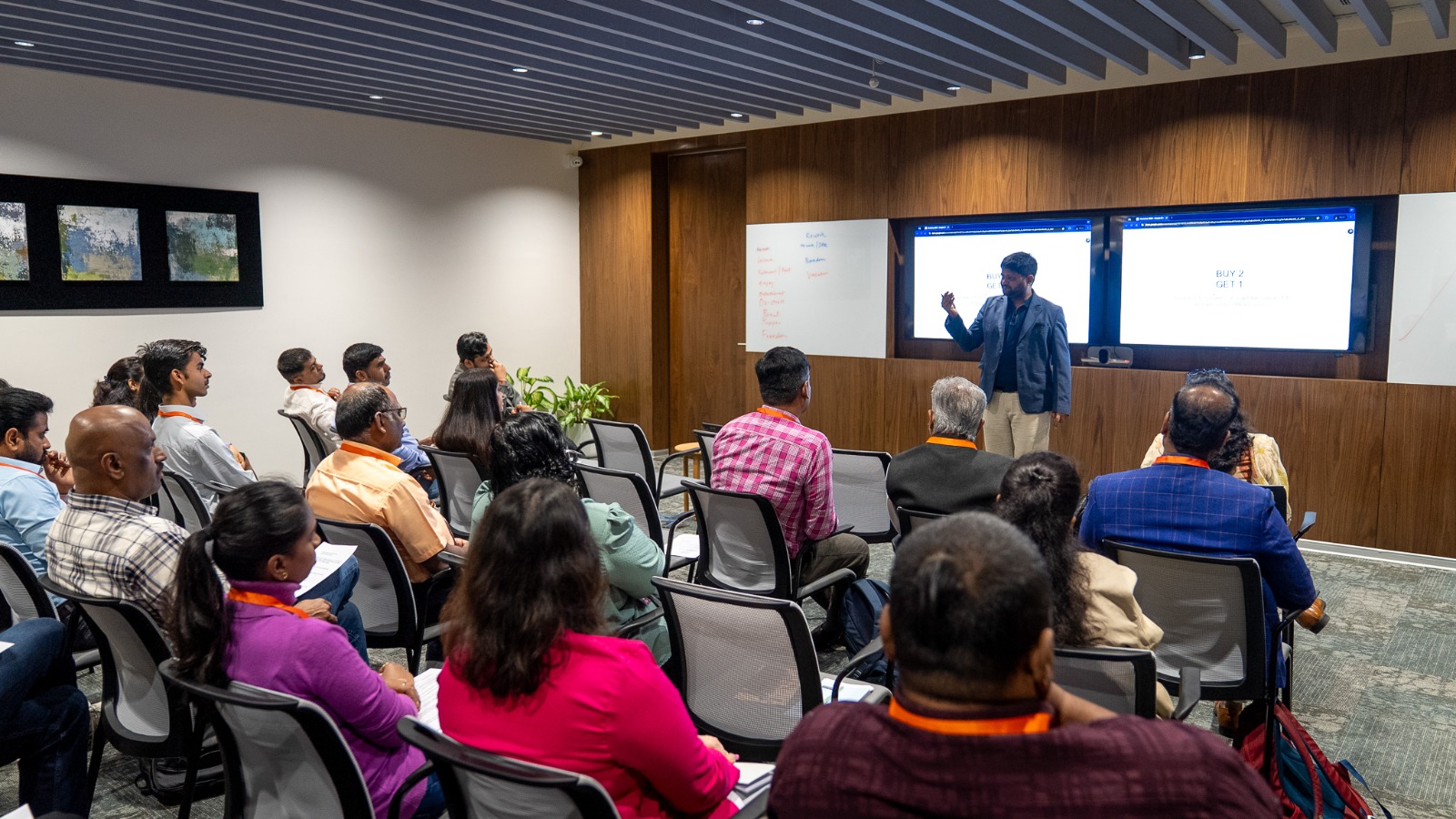
In today’s workplaces, organisations are increasingly recognising that performance is not driven by systems alone, but by the energy and engagement of employees. As businesses face constant change, the ability to sustain employee motivation has become a strategic priority. This perspective was explored at the “HR to CEO” workshop conducted by Ethika Insurance Broking Pvt. Ltd. in Bellandur, Bengaluru.
The workshop focused on redefining HR’s role in shaping employee experience and organisational outcomes. Rather than positioning HR as a support function, the session examined how HR can act as a strategic driver of employee energy and productivity.
The session was led by Susheel Agrawal, who introduced the concept of HR as a Chief Energy Officer, responsible for maintaining the emotional and motivational climate of the organisation.
“When employee energy is high, performance follows. When it drops, even the best systems struggle,” Agrawal observed.
Understanding Employee Energy
Participants discussed how employee energy is influenced by everyday workplace experiences. Factors such as workload balance, clarity of expectations, recognition, and leadership behaviour play a critical role in shaping how employees feel at work.
The workshop highlighted that HR is uniquely positioned to influence these factors through policy design, communication frameworks, and engagement initiatives.
By focusing on employee energy, HR can proactively address burnout and disengagement before they affect performance.
Linking Energy to Business Outcomes
A central theme of the workshop was the connection between employee energy and business outcomes. Participants explored how low energy manifests in delayed decision-making, reduced collaboration, and higher attrition.
The concept of Return on Happiness (ROH) was introduced as a way to measure the impact of employee experience on productivity. Rather than viewing happiness initiatives as optional, the workshop positioned them as strategic investments.
Participants shared examples where improvements in engagement led to tangible business benefits, including higher efficiency and stronger retention.
HR’s Role in Sustaining Engagement
The workshop also examined HR’s role in sustaining engagement over time. Participants discussed how one-time initiatives often fail to create lasting impact if not supported by consistent practices.
HR professionals were encouraged to adopt a long-term approach—embedding engagement into performance systems, leadership behaviour, and organisational processes.
By doing so, HR can help organisations maintain stable performance even during periods of change.
Redefining Success for HR
The session concluded with reflections on how HR success should be measured. Participants agreed that HR’s effectiveness lies not only in compliance or execution, but in its ability to influence energy, engagement, and outcomes.
The “HR to CEO” workshop reinforced a growing realisation across industries: HR’s strategic value lies in its ability to connect employee experience with business success.
Through this initiative, Ethika Insurance Broking Pvt. Ltd. continued to advance conversations around the evolving role of HR in modern organisations.