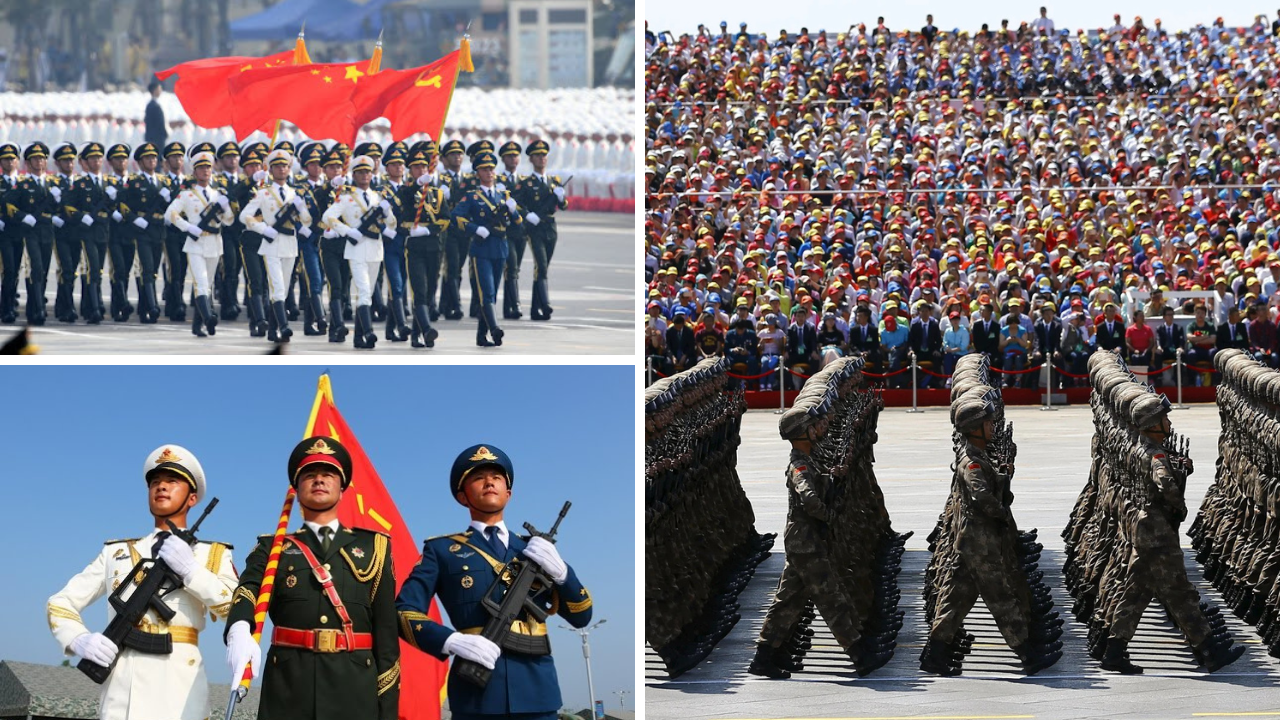
The government of the People’s Republic of China has announced plans to hold a large-scale military parade in Beijing on September 3, 2025, commemorating the 80th anniversary of Japan’s surrender in World War II. The event, which will be attended by top Chinese leadership, foreign dignitaries, and global media, is expected to showcase China’s military might, technological advancements, and reaffirm its position as a leading regional and global power.
The parade, organized in Beijing’s iconic Tiananmen Square, will feature thousands of troops from the People’s Liberation Army (PLA), cutting-edge missile systems, modern armored vehicles, advanced drones, and the latest in air defense technologies. Alongside the military display, the Chinese government has indicated that the parade will carry strong symbolic significance, underlining China’s role in resisting foreign aggression during WWII and highlighting its journey toward becoming a major world power.
Honoring History and Sending a Message
According to the Chinese Ministry of Defense, the event is designed not only to honor the sacrifices made during the war but also to promote a spirit of national unity and resilience. “This parade marks a significant milestone in our nation’s history. It reminds the world of the immense contributions and sacrifices made by the Chinese people during World War II,” said a spokesperson.
Observers, however, note that such displays also serve a broader strategic purpose. The 80th anniversary comes at a time when China’s relations with several neighbors remain complex, particularly amid disputes over trade, border security, and growing regional competition. Analysts believe the parade will be closely scrutinized by both allies and rivals, as it provides rare insights into China’s latest military capabilities and defense preparedness.
Regional Context: India’s Agni-5 Missile Test
The announcement of the Beijing parade coincides with renewed focus on India’s strategic defense capabilities. Earlier this month, India successfully conducted a test of its Agni-5 intercontinental ballistic missile (ICBM), a weapon with a range exceeding 5,000 kilometers, capable of reaching deep into northern China. The Agni-5 is a key part of India’s nuclear deterrent strategy, signaling New Delhi’s ability to safeguard its sovereignty and maintain a credible minimum deterrence against potential threats.
The successful test has not gone unnoticed in Beijing, where strategic planners remain attentive to India’s defense modernization efforts. Experts suggest that while both nations publicly emphasize dialogue and cooperation, underlying tensions along the disputed Himalayan border and broader geopolitical competition continue to shape their defense postures.
Broader Geopolitical Implications
China’s upcoming parade is also seen as a reflection of Beijing’s determination to project strength in the face of external pressures, including trade frictions with major economies and heightened scrutiny of its regional activities in the South China Sea and Indo-Pacific.
Regional defense analysts note that such parades are not merely ceremonial. They are carefully choreographed demonstrations of capability, designed to reassure domestic audiences while signaling deterrence to potential rivals. With participation from advanced divisions of the PLA Air Force and Navy, the September 3 parade is expected to reinforce China’s message of readiness and resilience.
Meanwhile, India’s missile test underscores the strategic balance of power in Asia, where both New Delhi and Beijing seek to secure influence. India’s move highlights its pursuit of self-reliance in defense technology and its commitment to safeguarding national interests amid shifting global dynamics.
International Reactions Expected
The announcement of the Beijing parade has already drawn attention from across the world. Diplomatic observers suggest that several countries, particularly those with historical ties to WWII, may send representatives to attend. At the same time, Western powers are expected to monitor the parade closely for signs of China’s next-generation missile and naval capabilities.
For India, the Agni-5 test has been widely interpreted as a step toward consolidating its strategic deterrent against both China and Pakistan. Experts highlight that while New Delhi has maintained a no-first-use nuclear policy, its advancements in long-range strike capability provide it with credible leverage in regional power dynamics.
Balancing Celebration with Security
While commemorating an event of immense historical significance, China’s parade also unfolds against a backdrop of delicate international relations. Both Beijing and New Delhi remain locked in negotiations over their contested border, even as trade and economic cooperation continue. Analysts suggest that the combination of China’s military showcase and India’s missile success reflects the ongoing delicate balance between competition and coexistence in Asia.
As September 3 approaches, global attention will turn to Beijing to witness what is expected to be one of the largest military parades in recent years. For China, the event is an opportunity to reassert national pride, highlight military modernization, and remind the world of its pivotal role in WWII history. For the region, however, the parade is also a reminder of the evolving strategic realities that define Asia today.
With India’s Agni-5 test adding a new dimension to regional security calculations, observers believe that both countries will continue to walk a fine line between deterrence and diplomacy. The anniversary parade, though rooted in history, serves as a vivid reflection of the present—and a window into the challenges and aspirations shaping the future of Asia.