
Wheat procurement rates revised; modern cluster projects to strengthen rural economy
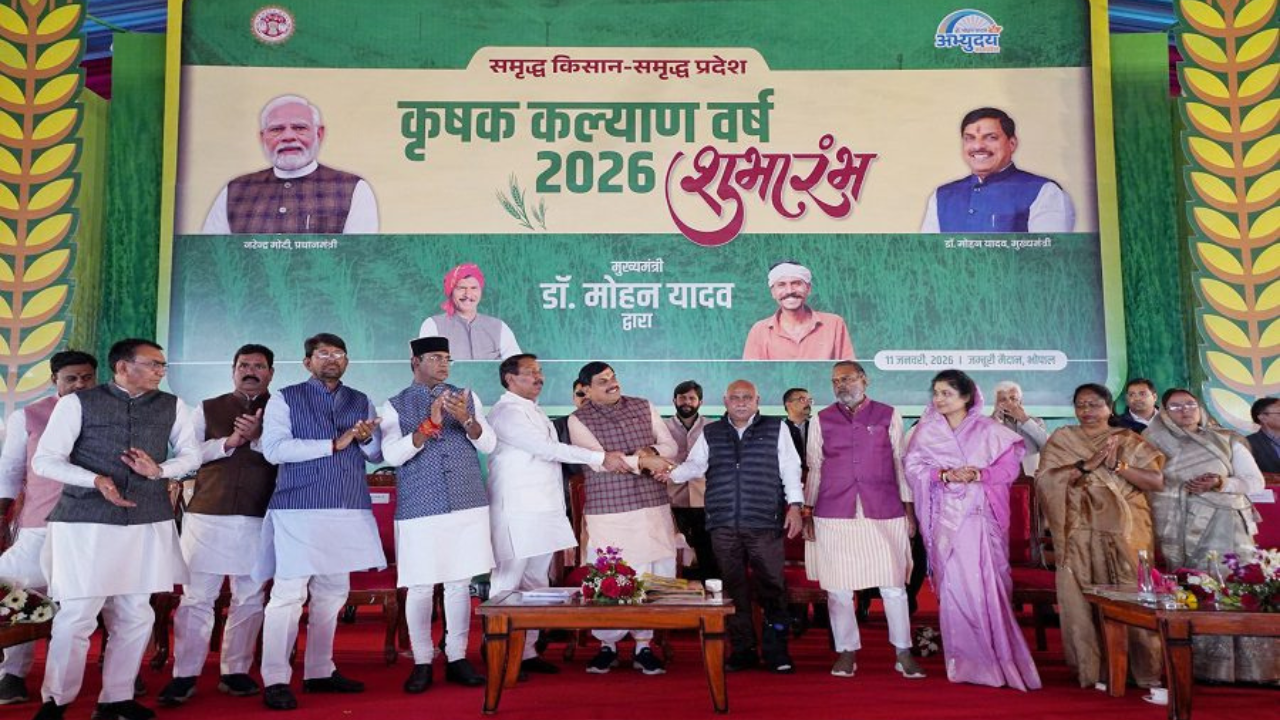
In a major step aimed at uplifting the state’s farming community, Madhya Pradesh Chief Minister Dr. Mohan Yadav has announced a significant decision for wheat-growing farmers. The state government will increase the procurement price of wheat for the upcoming season while simultaneously launching agricultural cluster development projects that could raise farm income by up to 40 percent.
The announcement brings renewed optimism among farmers in the state’s wheat belt—covering regions such as Vidisha, Sehore, Ujjain, and Hoshangabad—known for contributing a major share of India’s total wheat yield. Experts are calling this a visionary move that could accelerate Madhya Pradesh’s journey toward becoming the “Agricultural Powerhouse” of the country.
A Vision for Prosperous and Independent Farmers
Speaking about the initiative, Chief Minister Dr. Mohan Yadav said,
“A prosperous farmer means a prosperous state. Our goal is not just to boost production but to ensure fair prices, stable markets, and technological growth for every cultivator.”
The state government has finalized a plan to provide a financial bonus on top of the central government’s Minimum Support Price (MSP) for wheat. The bonus amount will be credited directly to farmers’ accounts, ensuring transparency and timely disbursement.
Alongside price revision, the government will promote modern farming techniques, sustainable irrigation, and better soil health management to increase per-acre productivity and profitability.
Cluster-Based Agricultural Development Projects
One of the most promising aspects of the new plan is the Cluster Farming Project, which works on the principle of collective development and resource sharing. Under this model, the government will identify potential zones or “clusters” for specific crops, focusing on modernized farming, scientific soil testing, and direct market linkages.
Key features of the cluster initiative include:
- Collaborative farming model: Encouraging farmers in nearby areas to pool resources, share equipment, and collectively market their produce.
- Access to modern technology: Providing advanced machinery, drone spraying tools, and digital soil health monitoring systems at subsidized rates.
- Direct market linkages: Connecting farmer groups directly with food processing companies and exporters to help them earn better profit margins.
- Skill and training centers: Organizing workshops to promote smart farming techniques, precision agriculture, and methods to reduce input costs.
Officials claim these clusters will not only improve output but also reduce post-harvest losses and increase farmers’ net income by up to 40 percent in the medium term.
A Multi-Front Strategy for Rural Growth
To complement this initiative, the Madhya Pradesh government is implementing a multi-tier plan to modernize the state’s entire agricultural landscape.
- The upcoming “Back to Farm” Mission will focus on promoting indigenous seeds and traditional organic practices.
- The “Drone in Agriculture” program will expand aerial survey and fertilizer spraying techniques to increase efficiency.
- The state’s Agricultural Innovation Labs will strengthen the collaboration between universities, startups, and local co-operatives to drive technological breakthroughs.
In addition, the government aims to enhance micro-irrigation coverage, especially in water-scarce districts, and introduce digital platforms where farmers can track market prices, input subsidies, and government benefits in real time.
Economic Experts Hail the Decision
Agricultural economists and rural policy experts have praised the move, describing it as a “timely rural stimulus.”
According to Dr. Anil Joshi, an agricultural economist based in Bhopal:
“The increase in wheat procurement prices will boost farmers’ purchasing power, circulate capital in rural markets, and stimulate small-scale industries. Cluster farming, meanwhile, will modernize rural supply chains.”
He added that Madhya Pradesh already ranks among India’s top wheat-producing states, and this decision will further consolidate its leadership by improving both yield quality and market competitiveness.
Positive Reaction from Farmers’ Community
Across the state, farmers have welcomed the state government’s decision with enthusiasm. In Ujjain district, farmers’ groups stated that the revised wheat price would help them offset rising input costs for fertilizers, labor, and irrigation.
Shivnarayan Patel, a wheat farmer from Vidisha, said,
“For the first time, we feel the government truly understands our struggle. Wheat prices have remained nearly stagnant for years despite higher expenses. This increase gives us new hope.”
However, some farmer organizations have emphasized the need to ensure on-time procurement and payment, pointing out logistical challenges in remote regions. Officials from the agriculture department assured them that new online monitoring systems would make the process faster and more transparent.
Boost for Agro-Industries and Rural Employment
The upward revision in wheat prices is also expected to benefit food processing units, flour mills, cold storage, and packaging industries that rely heavily on local supply.
With the cluster model set to create strong linkages between production and processing, new agro-based micro and small enterprises (MSMEs) are expected to emerge across districts.
This could generate thousands of new jobs, particularly for rural youth and women involved in grading, packaging, and value addition. The government has hinted at special incentives for entrepreneurs willing to set up agro-industrial units in rural clusters.
Towards a Digital and Sustainable Agriculture Ecosystem
The state’s agricultural roadmap for the next three years focuses on achieving “Digital Agriculture Transformation.” Farmers will soon be provided access to a single digital platform for crop planning, weather forecasting, market price data, and input guidance.
Authorities are developing a mobile app that integrates all major farming services — from soil testing reports and crop insurance to real-time mandi prices. The goal is to empower farmers with data-driven decisions instead of relying on middlemen or local traders.
These technological reforms, combined with financial support and cluster planning, are expected to mark the beginning of a new green revolution in Madhya Pradesh.
A Definite Step Toward Prosperity
Chief Minister Mohan Yadav’s announcement signifies more than a policy change — it outlines a comprehensive growth vision for rural India. With a balanced focus on financial support, technology integration, and cooperative development, the state has embraced a modern and inclusive model of agricultural progress.
As farmers look forward to the harvest season, the collective optimism signals a transition toward self-reliant, tech-enabled, and globally competitive farming. Stakeholders believe this initiative will not only enhance productivity but also strengthen food security at the national level.