
From Mahayuti’s political hold to rural distress and urban reforms, the year defined Maharashtra’s cautious progress.
MUMBAI: The year 2025 turned out to be a phase of political consolidation, economic ambition, and social tension for Maharashtra. As the calendar closes, the state finds itself steady in governance but wrestling with fiscal pressures, rural distress, and persistent urban challenges.
Political Consolidation Under Mahayuti
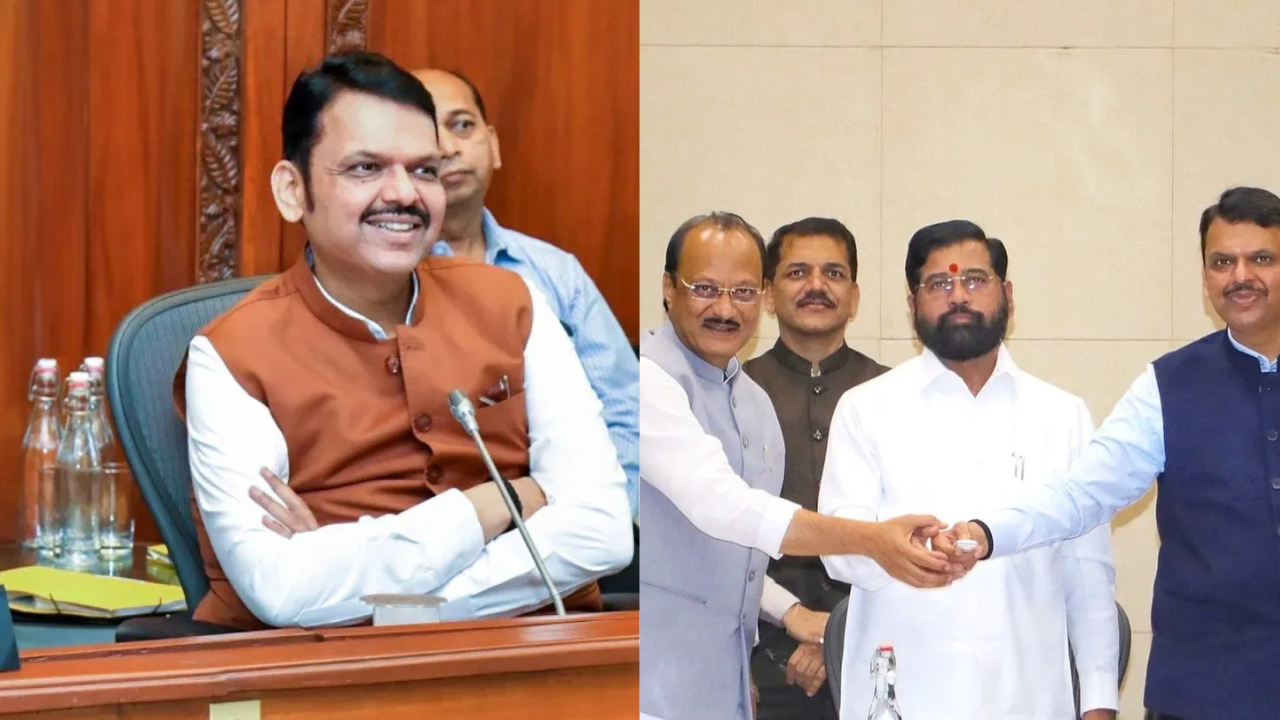
Maharashtra’s politics through 2025 continued to revolve around the ruling Mahayuti coalition, led by the Bharatiya Janata Party (BJP). The year reinforced the alliance’s grip over state politics, especially after the local body elections, where the BJP showcased strong organisational strength across municipal councils and nagar panchayats.
The Opposition, however, struggled to regain lost ground after setbacks in both Assembly and local polls, creating an image of a fragmented political space. Several district and taluka-level leaders switched sides, but the ruling front’s control remained intact.
Major political debates of the year centred around Maratha and OBC reservation demands. Pro-Maratha activist Manoj Jarange-Patil and OBC leader Chhagan Bhujbal emerged as key voices on these sensitive issues. The government’s decision to issue Kunbi certificates to eligible Marathas helped calm tensions, while a Cabinet panel was formed to safeguard OBC interests.
Economic Momentum With Fiscal Concerns
On the economic front, Maharashtra retained its position as one of India’s leading industrial and investment hubs. The state pushed ahead with large-scale projects in manufacturing, logistics, renewable energy, and services, supported by strong infrastructure development in metro and industrial corridors.
The government projected optimism over agreements signed at the World Economic Forum (WEF) in Davos, stating that MoUs worth over ₹15 lakh crore are moving into implementation. It also plans to finalise new high-value investment pacts at the upcoming 2026 WEF summit.
Maharashtra continued to attract the highest share of Foreign Direct Investment (FDI) in the country, accounting for over 34 percent of the national total. However, this economic strength coexisted with serious fiscal concerns.
Public debt touched ₹9.34 lakh crore, with a revenue deficit of ₹45,891 crore and a fiscal deficit of ₹1,36,235 crore. Rising expenditure on salaries, pensions, and interest payments forced the government to balance between welfare spending and fiscal discipline.
Despite these challenges, Maharashtra remained one of the top contributors to GST collections, reflecting resilience in its formal economy. Economists, however, warned that long-term revenue sustainability would require structural reforms and better expenditure management.
Rural Strain and Agrarian Distress
For rural Maharashtra, 2025 was a difficult year marked by erratic weather and economic stress. Uneven rainfall and flooding hit crop yields across Vidarbha, Marathwada, and western Maharashtra. Farmers faced distress due to price fluctuations and crop losses, prompting the state to launch a ₹32,000 crore relief package.
While the aid offered partial relief, farmer organisations continued to demand broader support, including loan waivers and more effective crop procurement schemes. The recurring pattern of natural disruptions underlined the need for climate-resilient agriculture and improved rural planning.
Safety, Crime, and Youth Challenges
Law and order issues remained under the spotlight in 2025. Urban centres like Mumbai, Pune, and Nagpur saw rising cases of cybercrime, drug trafficking, and crimes against women and children. The government extended efforts to modernise the police force, conducting large recruitment drives that attracted lakhs of young aspirants—reflecting both job demand and youth anxiety over employment.
In eastern Maharashtra, anti-Maoist operations made progress, but officials said that lasting peace would depend on parallel improvements in infrastructure, education, and livelihoods.
Infrastructure Progress and Urban Strains
Infrastructure remained Maharashtra’s strongest performance area. The year saw significant progress in metro rail projects, coastal road works, expressways, and renewable energy networks. Urban transport expansion across major cities was aimed at boosting mobility and investment potential.
However, challenges in urban governance persisted. The monsoon season once again exposed drainage failures in Mumbai and nearby regions. Issues of housing affordability, pollution, and traffic congestion continued to dominate civic conversations.
Health, Education, and Social Developments
In the social sector, both healthcare and education needed deeper reform. While the government invested in expanding medical infrastructure, remote and tribal districts still faced service gaps. Incidents of malnutrition and poor healthcare access highlighted growing inequalities between rural and urban populations.
Education also sparked political storms. The government’s decision to introduce Hindi as a third language in schools faced strong opposition from parties, academics, and social groups. The backlash created a rare moment of unity between estranged leaders Uddhav and Raj Thackeray, who came together under the banner of Marathi pride. Their renewed collaboration set the stage for an alliance in the Brihanmumbai Municipal Corporation (BMC) elections, with a common goal to protect the interests of Marathi-speaking citizens and counter the BJP’s influence in Mumbai.
Looking Ahead to 2026
As Maharashtra moves into 2026, it carries forward a sense of guarded continuity. The balance between economic ambition and fiscal responsibility will remain crucial. The government is expected to strengthen policy implementation under its long-term goal of ‘Viksit Maharashtra 2047’, envisioning a five-trillion-dollar economy.