

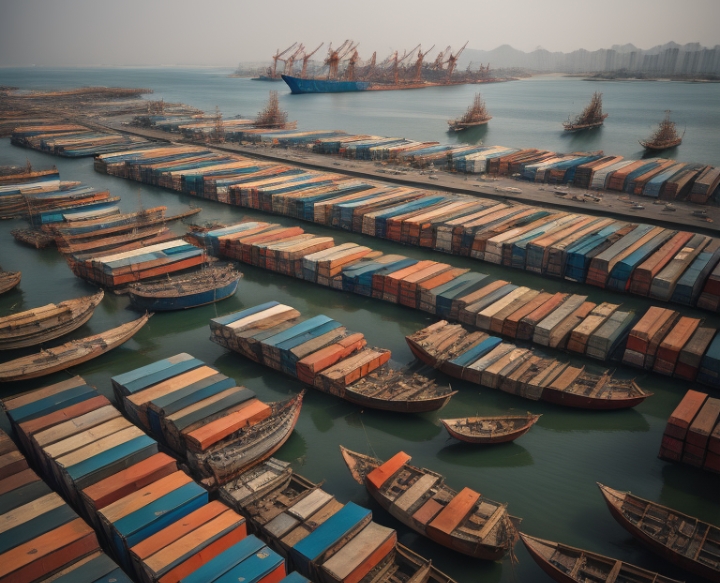
Role of Ports in Elevating Country’s Economy
- Ports play a crucial role in elevating the economy of a country, serving as vital gateways for international trade and commerce. They are the epicenters of economic activity, facilitating the movement of goods, people, and capital. In the context of India, which has a rich maritime history and an extensive coastline, the significance of ports cannot be overstated. This article delves into the multifaceted role of ports in boosting the Indian economy, with a focus on key examples and recent developments.
**1. Trade Facilitation and Global Connectivity** (Ports in Economy)
Ports are the linchpin of international trade, as they serve as interfaces between the domestic and global markets. India’s ports, such as the Jawaharlal Nehru Port (Nhava Sheva) in Mumbai and the Chennai Port, act as essential conduits for imports and exports. A significant portion of India’s foreign trade is conducted through these ports, making them vital for economic growth.
In recent years, the Indian government has invested in enhancing the connectivity and efficiency of these ports, enabling faster turnaround times for ships and reducing trade barriers. Initiatives like the Sagarmala project aim to improve port infrastructure and connectivity, further integrating India with the global supply chain.
**2. Employment Generation**
Ports (Economy )are major employers in the regions where they are situated. From dockworkers to port management staff, they provide jobs to a diverse range of skilled and unskilled labor. The employment opportunities created by ports have a cascading effect on the local economy, as they stimulate demand for goods and services in the surrounding communities.
For instance, the Kandla Port in Gujarat employs thousands of people directly and indirectly, contributing significantly to the state’s economy. The presence of ports fosters economic activity and job creation, thereby reducing unemployment and poverty levels in the vicinity.
Also Read: https://happenrecently.com/repasts-pies-and-puddings-british-cooking-a-work-of-artificer-not-art/
**3. Revenue Generation**
- Ports are not just conduits for goods; they are also a significant source of revenue for the government. Through customs duties, port fees, and other charges, ports contribute substantial funds to the national treasury. The revenue generated from ports can be channeled into essential public services, infrastructure development, and poverty alleviation programs.
- For instance, the Port of Kolkata has consistently contributed a significant share of revenue to the West Bengal government, enabling investments in critical sectors like education, healthcare, and infrastructure.
- **4. Industrial Growth and Special Economic Zones**
- Ports often serve as catalysts for industrial growth in their hinterlands. The establishment of Special Economic Zones (SEZs) in proximity to ports has become a prominent strategy to promote manufacturing and exports. These SEZs offer incentives and a favorable business environment for companies looking to set up operations near ports, fostering economic growth.
- A notable example is the Ennore SEZ near Chennai, which has attracted investments from various industries, including automotive, electronics, and textiles. The presence of a port ensures a smooth supply chain for these industries, leading to increased production and exports.
**5. Tourism and Economic Diversification**
Ports can also be gateways for the tourism sector, contributing to economic diversification. Cruise tourism, in particular, has gained momentum in India, with ports like Mumbai and Kochi welcoming international cruise liners. These cruise ports stimulate the local economy by creating opportunities for tourism-related businesses, including hotels, restaurants, and tour operators.
The economic diversification brought about by cruise tourism helps reduce dependency on traditional sectors and increases the resilience of the local economy.
**6. Regional Development and Inland Connectivity**
In many cases, ports act as the driving force for regional development. The development of adequate infrastructure around ports, such as road and rail networks, results in improved inland connectivity. This, in turn, encourages investment in logistics and warehousing, further boosting economic activity.
An example of this is the development of the Dedicated Freight Corridors (DFCs) in India, connecting major ports with key production and consumption centers. The Western Dedicated Freight Corridor, for instance, connects the ports of Jawaharlal Nehru Port and Mundra with the northern hinterlands, facilitating the seamless movement of goods.
**7. Trade Balance and Foreign Exchange Earnings**
Ports play a pivotal role in influencing a nation’s trade balance. They enable the export of domestically produced goods and the import of essential raw materials and finished products. A favorable trade balance, with higher exports compared to imports, can lead to an increase in foreign exchange earnings, which can be utilized to bolster the country’s foreign reserves.
For example, the export of goods such as textiles, automotive components, and pharmaceuticals through Indian ports contributes significantly to India’s foreign exchange earnings, supporting the stability of the rupee and reducing vulnerability to external economic shocks.
**8. Environmental Considerations and Sustainability**
While ports offer numerous economic advantages, they also pose environmental challenges. Ensuring sustainability in port operations is crucial to mitigate the adverse effects of pollution, habitat destruction, and climate change. Port authorities worldwide are increasingly adopting eco-friendly practices, such as using cleaner fuels, implementing waste management systems, and preserving sensitive coastal ecosystems.
- In India, the Jawaharlal Nehru Port has initiated several sustainability projects, including the deployment of electric vehicles, rainwater harvesting, and the promotion of cleaner technologies to reduce the environmental footprint.
**9. Future-Proofing for Economic Growth**
The role of ports in elevating the Indian economy is poised to expand further in the coming years. As India focuses on increasing its share in global trade and attracting foreign investments, port infrastructure will continue to be a linchpin of this strategy.
The government’s “Sagarmala” initiative, launched in 2015, is a testament to this commitment. It aims to modernize port facilities, enhance connectivity, and develop new ports to harness India’s vast maritime potential. Investments in the maritime sector will not only foster economic growth but also increase the resilience of India’s supply chains.
**Conclusion**
Indian ports have played a pivotal role in elevating the nation’s economy, connecting it to the world and providing a strong foundation for trade and industrial growth. The impact of ports extends beyond their immediate vicinity, influencing regional development, employment generation, revenue generation, and trade balance.
However, it is crucial to balance economic growth with sustainability, ensuring that port operations are environmentally responsible. As India continues to pursue its economic growth ambitions, investments in port infrastructure, connectivity, and efficiency will remain a critical component of the country’s economic development.
For more information visit at https://happenrecently.com/zepto/?amp=1