
Indian nuclear technology startup SUK-M has raised its first institutional funding round, a pre-seed investment led by Chennai-based deeptech venture capital firm Speciale Invest. The round was co-led by Navam Capital, with participation from BYT Capital and two angel investors. The company has not disclosed the amount raised.
The funding was announced on November 25 and will support the development of a compact thorium-based micro-modular nuclear reactor designed in India. SUK-M describes itself as India’s first thorium-based micro-modular nuclear technology venture.
The startup will use the capital to move from founder-funded research and computer simulations towards laboratory and experimental testing. It plans to establish a dedicated experimental facility and recruit scientists and engineers in India to refine the reactor design and assess its safety features.
What SUK-M is building
SUK-M is developing a micro-modular reactor built around Generation IV molten salt reactor technology. Each reactor unit is designed to generate either 10 megawatts of electricity or 30 megawatts of heat, and is intended to be transportable by road or rail so it can be deployed close to industrial users.
The reactor uses a proprietary uranium-thorium fuel system. The design aims to integrate elements of India’s three-stage nuclear programme within a single reactor architecture, bringing thorium into use earlier than the staged plan intends.
The company is targeting industrial applications that need reliable electricity and high-temperature heat, including steel plants, data centres and hydrogen production facilities.
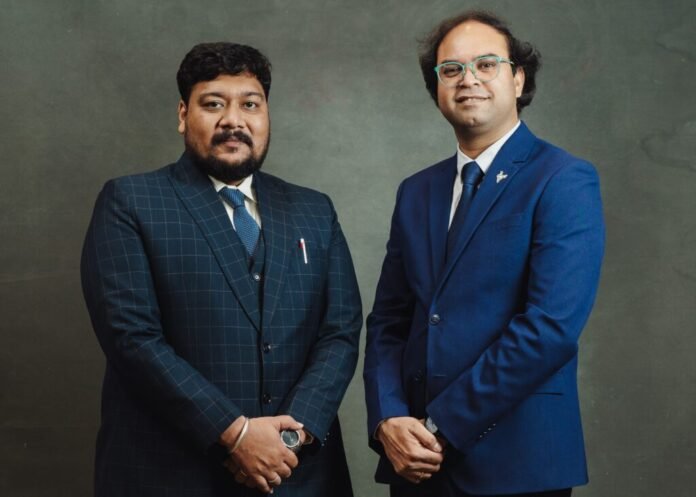
SUK-M was founded in April 2021 by Dr Nitendra Singh and Dr Samyak Munot, and is being developed by IYNS Techsolutions NX Pvt. Ltd. The company describes its mission as “Indian Nuclear Programme 2.0”, a youth-led, industry-driven initiative to develop indigenous reactor technology and build the domestic supply chains needed to support it.
“Dr Bhabha set out a long-term vision for thorium in India. With SUK-M, we want young scientists and engineers in India to revisit this vision with an innovative perspective and take that work forward by designing an indigenous reactor technology,” said Nitendra Singh, co-founder of SUK-M.
What the funding will be used for
The pre-seed round funds three things: an experimental facility where the team can test key parts of the reactor design using laboratory measurements rather than simulations alone; hiring, as SUK-M recruits scientists and engineers in India; and engagement with prospective industrial customers to understand their electricity and heat requirements.
The team has completed initial computer simulations. Laboratory testing is the next step, and the project remains at an early stage, with technical feasibility, safety, regulatory compliance and commercial viability still to be demonstrated.
Investors framed the round as a bet on India’s thorium resources and its deep pool of nuclear engineering talent. BYT Capital founder and managing partner Amit Chand described the investment as a commitment to nurturing India’s next generation of nuclear scientists and engineers.
“Abundant, affordable energy expands an economy. It lowers costs for industry and opens room for new sectors to grow. India holds roughly a quarter of the world’s known thorium deposits, so building reactors around thorium is a practical route to energy security at scale. SUK-M is designing that capability in India, and we are glad to back the team early,” said Vishesh Rajaram, founding partner at Speciale Invest.
“Navam is delighted to back SUK-M in this pathbreaking effort. India is starting to harness its deep human capital pool in this domain and we expect to see a phase shift in nuclear tech innovation in the coming decade,” said Rajeev Mantri, founder and managing partner at Navam Capital.
Why thorium matters for India
India holds approximately a quarter of the world’s known thorium deposits, according to the company’s press release. That makes thorium-based technology a strategically important area of research, since it builds energy capability around a domestic resource rather than imported fuel.
The development effort draws on the three-stage nuclear power programme formulated by Dr Homi J. Bhabha, which envisaged large-scale use of India’s thorium resources in its third stage.
The funding also comes as India’s Nuclear Energy Mission aims to bring at least five domestically developed small modular reactors into operation by 2033 and to reach 100 gigawatts of nuclear power capacity by 2047. Indigenous reactor designs, including micro-modular units for industrial use, are part of that push.
The road from simulation to testing
For SUK-M, the months ahead are about proving the design in the laboratory. The planned facility will let the team measure how key parts of the reactor behave under real conditions and refine the design based on those measurements, including assessments of its safety features.
Beyond the reactor itself, the company aims to build Indian capabilities across the full reactor lifecycle, from design and manufacturing to operation and decommissioning, along with the domestic supply chains a home-grown reactor programme would need.
If the technology works as designed, indigenous micro-modular reactors could open another pathway for India to strengthen its advanced energy ecosystem. That outcome depends first on the experimental validation the new funding is meant to deliver.
Frequently Asked Questions
How much did SUK-M raise?
SUK-M has not disclosed the amount of its pre-seed round. The round was led by Speciale Invest, co-led by Navam Capital, with participation from BYT Capital and two angel investors.
What is SUK-M building?
SUK-M is building a thorium-based micro-modular nuclear reactor using Generation IV molten salt reactor technology. Each unit is designed to generate about 10 megawatts of electricity or 30 megawatts of heat and to be transportable by road or rail.
What will the funding be used for?
The capital will establish an experimental testing facility, recruit scientists and engineers in India, and move the reactor from computer simulations to laboratory testing, while the company engages prospective industrial customers.

