
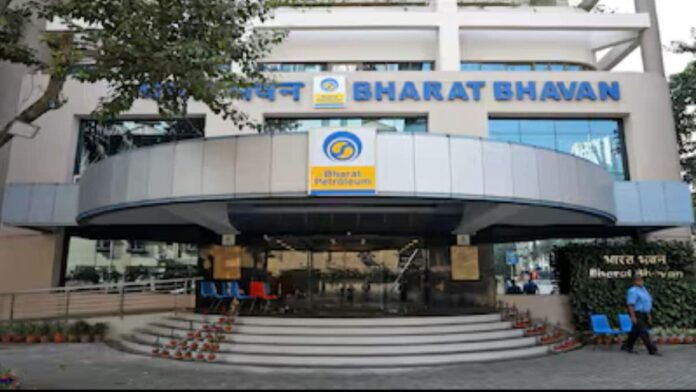
Bharat Petroleum Corporation Ltd (BPCL) has approved its largest investment decision to date, a Rs 1.27 lakh crore greenfield refinery and petrochemical complex at Ramayapatnam in Andhra Pradesh, as the state-run refiner moves to close its fuel deficit and cut India’s dependence on imported polymers.
The board cleared the proposal at its meeting on Saturday, 28 November 2026, according to a BPCL exchange filing. The project will be built through a wholly owned subsidiary of the company and is subject to government, statutory and regulatory approvals.
What the board approved
The board approved an estimated gross capital expenditure of Rs 1,26,656 crore for setting up the greenfield refinery and petrochemical complex and associated facilities at Ramayapatnam. The estimate carries a variation of plus or minus 20 per cent, which means the final cost could land anywhere between roughly Rs 1.01 lakh crore and Rs 1.52 lakh crore.
The approval follows earlier intimations from the company dated 24 December 2024 and 28 October 2025, when BPCL first flagged the project to the stock exchanges. Saturday’s board meeting converted that plan into a formal investment approval.
The company has scheduled the estimated commercial operation of the complex for July 2032, giving the project a build timeline of a little over five years from approval.
A 10.5 MMTPA integrated complex
The Ramayapatnam complex will combine a 9 million metric tonnes per annum (MMTPA) refinery with a 1.5 MMTPA mixed-feed ethylene cracker and downstream petrochemical units. The combined throughput of the complex will be 10.5 MMTPA, with a petrochemical intensity of about 34 per cent.
That scale matters because BPCL currently operates an installed refining capacity of 35.3 MMTPA, and its capacity utilisation stood at 116.6 per cent in financial year 2025-26. The company is effectively running its existing refineries above their rated capacity, so the new complex adds real headroom rather than just replacing old units.
The integrated design is the point of the project. Refining crude and cracking it into petrochemicals at the same site lets BPCL capture more value from every barrel, instead of selling fuels alone and leaving the higher-value chemicals business to others.
How the project will be funded
BPCL plans to fund the Rs 1,26,656 crore investment through a combination of equity and debt raised by the wholly owned subsidiary. Financing arrangements with lenders are currently being finalised, the company said in its filing.
The board has also approved an equity infusion of up to Rs 44,330 crore into the subsidiary, in one or more tranches. That figure includes an earlier approved equity contribution of up to Rs 4,900 crore.
The equity infusion is subject to approval from the Cabinet Committee on Economic Affairs (CCEA) and other applicable approvals. Until that clearance comes through, the funding plan cannot be closed, and the project cannot move into full execution.
Why BPCL is building it
According to the company, the project is intended to address its widening deficit in key transportation fuels and India’s growing petrochemical supply gap. India still imports a large share of the polymers and chemicals that feed its packaging, automotive, construction and consumer goods industries.
The filing said the integrated complex is expected to strengthen product availability, reduce import dependence on key polymers, improve value realisation through refinery-petrochemical integration and diversify BPCL’s earnings. It is also aimed at supporting downstream chemical and polymer industries that depend on a steady domestic supply of feedstock.
For BPCL, the petrochemical push is also a hedge. Fuel demand growth is expected to slow over the coming decade as electric vehicles spread, while demand for petrochemicals keeps rising. A refinery that can swing more of its output into chemicals is better placed for that shift.
What happens next
The project now moves into the approvals phase. BPCL needs government, statutory and regulatory clearances before construction can begin, and the CCEA must sign off on the equity infusion into the subsidiary.
Only after those approvals and the closure of financing will the company be able to award construction contracts and start building at Ramayapatnam. The July 2032 commercial operations target leaves room for that process, but any delay in clearances would push the date out.
Shares of BPCL ended at Rs 308.25 on Friday, 27 November, up by Rs 0.60, or 0.20 per cent, on the BSE, ahead of the board’s Saturday decision.
Frequently Asked Questions
How much is BPCL investing in the Andhra refinery?
BPCL’s board has approved an estimated capital expenditure of Rs 1,26,656 crore, or about Rs 1.27 lakh crore, for a greenfield refinery and petrochemical complex at Ramayapatnam in Andhra Pradesh. The estimate carries a variation of plus or minus 20 per cent.
When will the Ramayapatnam complex start operations?
The company has targeted July 2032 for commercial operations of the complex. That date depends on government, statutory and regulatory clearances, and on the Cabinet Committee on Economic Affairs approving the equity infusion.
How will BPCL fund the project?
The project will be funded through a combination of equity and debt raised by a wholly owned subsidiary of BPCL. The board has approved an equity infusion of up to Rs 44,330 crore into the subsidiary, subject to CCEA approval, and financing arrangements with lenders are being finalised.

