


In a landmark move aimed at tackling the housing crisis and curbing the adverse effects of over-tourism, the Spanish government has ordered global vacation rental giant Airbnb to remove nearly 66,000 property listings that violate national and regional housing regulations.
The directive, announced by Pablo Bustinduy, Spain’s Minister for Social Rights, Consumer Affairs, and the 2030 Agenda, comes as tensions flare across the country, with residents demanding urgent action to reclaim urban spaces increasingly dominated by short-term tourist accommodations.
“This is a decisive step in restoring balance to our cities and prioritizing the right to housing over speculative and unregulated tourist rentals,” Bustinduy stated. “The properties in question have breached various norms governing tourist-use housing, contributing to spiralling rental prices and the displacement of local residents.”
Mounting Pressure from Citizens and Local Authorities
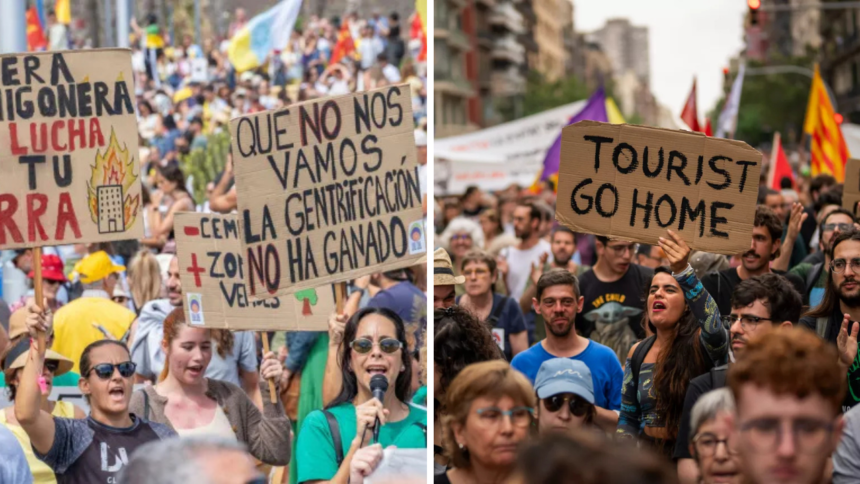
The government’s clampdown follows a wave of protests against over-tourism, which has been reshaping Spain’s urban and island landscapes. Over the weekend, thousands of demonstrators took to the streets of the Canary Islands, voicing frustration over the unsustainable influx of tourists that has strained infrastructure, inflated housing costs, and disrupted community life.
Similar protests have erupted in cities like Barcelona, Madrid, Valencia, and Seville, where locals face mounting difficulties in securing affordable housing as properties are increasingly repurposed for short-term tourist rentals.
Housing affordability has now eclipsed unemployment and economic growth as Spaniards’ top concern, according to recent national surveys. The average rental prices in major cities have surged by over 30% in the past five years, forcing many families and young professionals to the urban periphery or into precarious housing conditions.
A Comprehensive Regulatory Crackdown
The move against Airbnb forms part of a broader strategy by the Spanish government to enforce existing housing laws and clamp down on illegal tourist accommodations. In collaboration with regional governments and municipal authorities, the Ministry for Consumer Affairs has identified tens of thousands of listings operating without the required permits, violating zoning regulations, or failing to comply with consumer protection standards.
“While tourism remains a vital pillar of Spain’s economy, it cannot come at the expense of our residents’ fundamental rights,” Bustinduy emphasized. “Platforms like Airbnb must operate within the legal frameworks that ensure fair competition, urban sustainability, and social cohesion.”
Airbnb has been given a deadline to comply with the delisting orders, failing which the company could face substantial fines and further legal action. Spanish authorities are also working on strengthening enforcement mechanisms, including digital monitoring and cooperation with tax agencies, to prevent future violations.
Airbnb’s Response and Industry Implications
In response to the government’s directive, an Airbnb spokesperson acknowledged the receipt of the removal order and expressed the company’s willingness to collaborate with Spanish authorities.
“We are committed to working with governments to ensure our platform supports responsible tourism and complies with local regulations,” the spokesperson said. “However, it’s crucial to strike a balance that also allows hosts to share their homes and benefit from tourism in a fair and regulated manner.”
The order is expected to send ripples across the short-term rental industry, with other platforms likely to face similar scrutiny. Analysts predict that stricter enforcement in Spain could set a precedent for other European nations grappling with housing crises exacerbated by unchecked tourist accommodations.
Political and Social Reactions
The government’s decisive action has been met with widespread approval from housing rights groups, urban planners, and community organizations who have long campaigned for stricter controls on short-term rentals.
“Today’s move is a victory for residents who have been fighting to reclaim their neighborhoods,” said María González, spokesperson for the advocacy group Right to Housing Now. “For too long, platforms like Airbnb have profited from regulatory loopholes while communities have paid the price through rising rents and social displacement.”
However, critics argue that a blanket removal of listings could hurt small-scale hosts who rely on short-term rentals for supplemental income, particularly in rural areas where tourism provides vital economic support. Industry associations have called for more nuanced regulations that differentiate between professional operators and individual homeowners.
Towards Sustainable Tourism and Housing Equity
The Spanish government has reiterated its commitment to developing a sustainable tourism model that aligns with the UN’s 2030 Sustainable Development Goals (SDGs), particularly those focused on sustainable cities, reduced inequalities, and responsible consumption.
“Our aim is not to wage war against tourism but to ensure it evolves in a way that is equitable and environmentally responsible,” Bustinduy noted. “Spain can and must lead the way in showing that tourism and housing rights are not mutually exclusive.”
As Spain braces for another record-breaking tourist season, the success of this regulatory crackdown could define the future of urban living in some of Europe’s most visited destinations. For millions of Spaniards, the message from Sunday’s protests and the government’s response is clear: the right to a home is non-negotiable.