


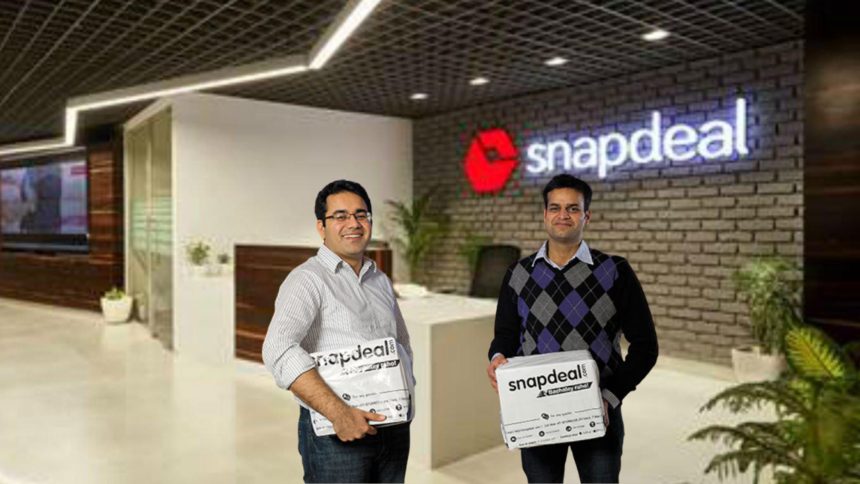
Snapdeal, one of India’s leading e-commerce platforms, co-founded by Kunal Bahl and Rohit Bansal, continues to solidify its position as the go-to marketplace for value-conscious consumers. As the digital commerce space evolves with fierce competition, Snapdeal’s co-founders are doubling down on their unique strategy of serving the next billion Indian consumers through a curated, budget-friendly platform designed specifically for Bharat — India beyond metros.
Kunal Bahl and Rohit Bansal, alumni of Wharton and IIT Delhi respectively, embarked on their entrepreneurial journey in 2010 with a vision to democratize online commerce. From humble beginnings as a daily deals platform, the duo transformed Snapdeal into a comprehensive online marketplace that serves millions of customers across India’s heartland.
Over the years, while the industry saw intense competition from giants like Amazon and Flipkart, Bahl and Bansal steered Snapdeal onto a differentiated path. “We realized that the majority of Indian consumers are extremely value-conscious. They are not necessarily looking for premium brands but are searching for good quality, affordable products. That’s where Snapdeal found its true calling,” said Kunal Bahl, Co-founder and CEO of Snapdeal.
Rohit Bansal, Co-founder and COO, added, “Our focus has always been on building a platform that is not only easy to use but also resonates with the aspirations of middle India. Snapdeal is not trying to outspend global giants; we are out-serving them by understanding the nuances of Bharat.”
A Business Model Rooted in Affordability and Access
Snapdeal’s business model is centered on offering a vast assortment of unbranded, high-quality products across categories like fashion, home & kitchen, personal care, and electronics accessories, all at value-for-money prices. Instead of replicating the models of high-inventory marketplaces, Snapdeal partners with lakhs of small and medium enterprises (SMEs), manufacturers, and sellers who understand the needs of budget-conscious buyers.
“By working closely with sellers and eliminating unnecessary supply chain costs, we pass the benefit directly to the end consumer. It’s a win-win that has helped us build a loyal customer base in Tier 2, 3, and 4 cities,” explained Bansal.
This strategy has allowed Snapdeal to tap into a massive, underserved segment of India’s e-commerce market — customers who are coming online for the first time and are more sensitive to price, trust, and simplicity.
Tech-Enabled Innovations for Bharat
Under the leadership of Bahl and Bansal, Snapdeal has invested in building a tech ecosystem tailored for non-metro users. Their mobile-first platform, intuitive regional language interfaces, and lightweight app design ensure that Snapdeal is accessible even on low-end smartphones and slower internet connections.
Moreover, the company has introduced features like video catalogues, vernacular support, and AI-driven recommendations that simplify the shopping experience for first-time internet users.
“Our mission is to enable the next 500 million Indians to shop online. For them, e-commerce must be frictionless, trustworthy, and affordable. That’s the gap Snapdeal is filling,” said Bahl.
Building a Sustainable & Profitable Business
While many e-commerce firms chased growth through aggressive discounting, Snapdeal chose a path of prudent financial management. The company reported operational profitability in multiple recent quarters, a testament to its sustainable business model.
“We are proud that Snapdeal is among the few e-commerce companies in India that have built a robust, capital-efficient business. Profitability and scale are not mutually exclusive if you focus on the right customer segment”.
Investors have taken notice. Snapdeal’s steady focus on value commerce has attracted support from marquee investors like SoftBank, Temasek, BlackRock, and Premji Invest. In 2024, Snapdeal also revived its plans for an IPO, indicating confidence in its long-term growth trajectory.
The Road Ahead: Expanding the Value Commerce Ecosystem
Looking ahead, Kunal Bahl and Rohit Bansal are committed to further enhancing Snapdeal’s ecosystem. Plans include:
- Expanding logistics infrastructure in Tier 3 and 4 towns to ensure faster deliveries.
- Onboarding over 100,000 new sellers from non-metro cities in the next 18 months.
- Investments in AI/ML-powered personalization to improve product discovery for users with diverse needs.
- Collaborations with regional artisans and manufacturers to promote locally-made products under India’s ‘Vocal for Local’ initiative.
The founders are also exploring partnerships with offline Kirana stores to create a phygital (physical + digital) network that bridges the gap between e-commerce and traditional retail in small towns.
“Snapdeal’s journey is far from over. In fact, we believe the next decade belongs to value commerce. As more Indians come online, their first shopping experience should be simple, delightful, and affordable — and that’s the experience Snapdeal promises,” concluded Bahl.
About Snapdeal
Established in 2010 by Kunal Bahl and Rohit Bansal, Snapdeal is India’s leading value-focused e-commerce platform. With a mission to serve Bharat, Snapdeal offers a wide range of quality products at affordable prices, connecting millions of buyers with trusted sellers across the country.