


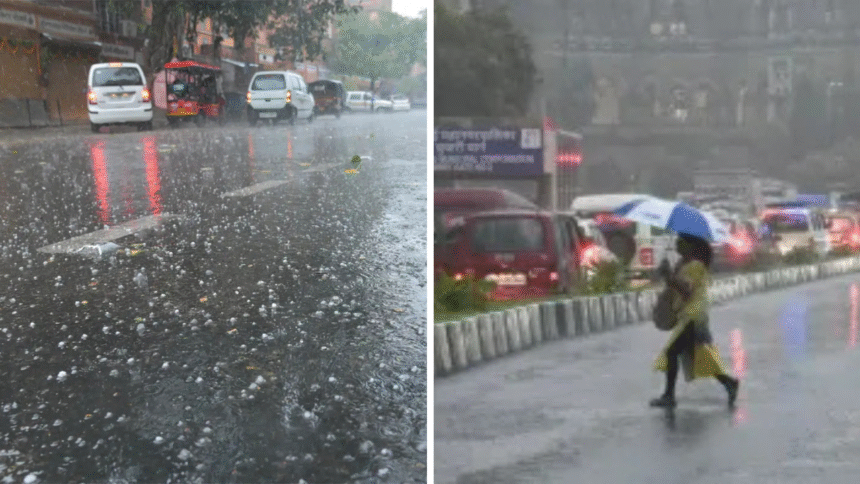
After weeks of relentless downpours that battered many regions across Maharashtra, a brief pause in heavy rainfall has brought temporary respite to residents. However, the India Meteorological Department (IMD) has forecast that light to moderate showers will continue in parts of the state until October 3, particularly in the Marathwada and Vidarbha regions. Relief and rehabilitation work remains ongoing in flood-affected districts as authorities strive to restore normalcy.
Temporary Relief Across the State
Over the past few days, large parts of Maharashtra have witnessed reduced rainfall activity, offering crucial relief to flood-hit communities. For farmers, transport operators, and daily wage earners, this pause has created a much-needed window for urgent recovery work.
In districts like Jalna, Beed, and Aurangabad in Marathwada, and Nagpur, Yavatmal, and Chandrapur in Vidarbha, the water levels of swollen rivers have begun to recede. Village roads that were cut off due to waterlogging are gradually opening up, enabling movement of relief supplies.
State authorities, however, have cautioned citizens not to assume the monsoon is over, noting that moderate showers are still likely across eastern and central Maharashtra until the first week of October.
IMD Forecast: More Showers Until October 3
According to the latest IMD bulletin, the rainfall activity is expected to persist in isolated to scattered form in Marathwada and Vidarbha through October 3. Weather scientists attribute this spell to a low-pressure area developing over the Bay of Bengal, with moisture-laden winds affecting central Indian states including Maharashtra.
While Mumbai, Pune, and western Maharashtra may see only light drizzles in some areas, eastern parts could receive moderate rainfall, keeping agriculture-related challenges in focus.
The IMD has also issued advisories for farmers to avoid water-intensive practices for the next few days and delay harvesting wherever possible.
Flood-Affected Regions Focus on Relief
Even as rains ease in many districts, the scars of last week’s flash floods remain visible. Several villages in Kolhapur, Sangli, and Nashik had faced severe waterlogging after torrential showers overloaded rivers like Panchganga, Godavari, and Krishna.
Relief camps run by district administrations continue to house families displaced by the damage. Teams of the National Disaster Response Force (NDRF), along with local volunteers, are still assisting stranded populations in vulnerable pockets.
Chief Minister Eknath Shinde held a review meeting with officials earlier this week, directing them to fast-track damage assessment and distribution of compensation. He also appealed to district authorities to give priority to rebuilding damaged roads, bridges, and irrigation channels critical for both villagers and farmers.
Farmers Await Rabi Preparations
The monsoon pause has been both a relief and a source of anxiety for Maharashtra’s agrarian community. In Vidarbha, which has a significant cotton and soybean belt, many farmers have been able to save their standing crops thanks to the slightly drier spell over the past two days. However, concern lingers about crop damage due to the earlier deluge.
In Marathwada, where water scarcity is a recurrent challenge, reservoirs have filled significantly this season, boosting prospects for the upcoming rabi sowing. Agricultural experts suggest that moderate rain till October 3 may actually aid soil moisture retention, provided there are no excessive showers.
Officials from the state agriculture department noted that district-level teams are closely monitoring crop conditions and coordinating with farmers. Special advisories on pest control and crop insurance claims are also being circulated.
Urban Challenges and Infrastructure Response
In urban centers like Mumbai, Thane, and Pune, civic authorities utilized the lull in rains to expedite drainage clearance, pothole repairs, and restoration of waterlogged zones. Several daily commuters welcomed the reduced rainfall, reporting smoother transport conditions on Tuesday and Wednesday.
Mumbai Metropolitan Region Development Authority (MMRDA) officials said that while flooding hotspots like Sion, Kurla, and Andheri receded significantly, preparedness measures remain in place in case of further rainfall.
Meanwhile, power supply companies in Nashik and Nagpur have launched drives to restore supply in flood-hit pockets where substations and wires were damaged.
Government and NGO Efforts
The state disaster control cell confirmed that over 12,000 people were shifted to safer locations last week. Relief material including food grains, medicine, and potable water continues to be dispatched to affected areas.
Several non-governmental organizations have stepped in to distribute clothing, sanitary supplies, and ration kits. Community kitchens run by local groups in Sangli and Beed districts are serving hundreds of meals daily for those still unable to return home.
State Health Department teams remain alert to prevent the outbreak of vector-borne diseases such as dengue, chikungunya, and malaria, which often rise in post-flood conditions. Mobile clinics have been deployed in rural Vidarbha to ensure quick medical care reaches vulnerable populations.
Citizens Urged to Remain Cautious
Authorities have reiterated safety advisories to citizens, urging them to avoid venturing near overflowing rivers, barrages, and waterlogged low-lying areas. With isolated showers likely until October 3, caution has been advised for both rural farmers working in fields and urban commuters travelling daily.
Meteorologists expect rainfall activity to taper off more visibly by the end of this week, marking the gradual withdrawal of the southwest monsoon in Maharashtra.